An Iranian government spokeswoman acknowledged Friday that the country is facing economic pressure and shortages, insisting that officials do not deny the difficulties confronting regular Iranians.
Fatemeh Mohajerani, speaking at the opening of a 64-bed hospital in the western Ilam Province, said U.S. sanctions had impacted the implementation of infrastructure projects across the country.
“The government does not deny the economic pressure on the people and the shortages, and whenever we have spoken to the people honestly and transparently, the people have also cooperated with the officials,” she said, according to Iran’s state news agency IRNA.
She said delays in completing infrastructure projects “should not be attributed to the inefficiency of managers, because the severe sanctions have affected the process of securing resources and implementing projects.”
Mohajerani said Iran’s government would continue efforts to complete unfinished projects despite the constraints.
Iran’s Central Bank Governor Abdolnaser Hemmati, meanwhile, was quoted on Friday as telling state television that the bank would intervene in the foreign currency exchange market “in a timely and forceful manner” when necessary, acknowledging that the war with the U.S. had caused “abnormal fluctuations in the market.”
Morteza Nikoubazl/NurPhoto/Getty 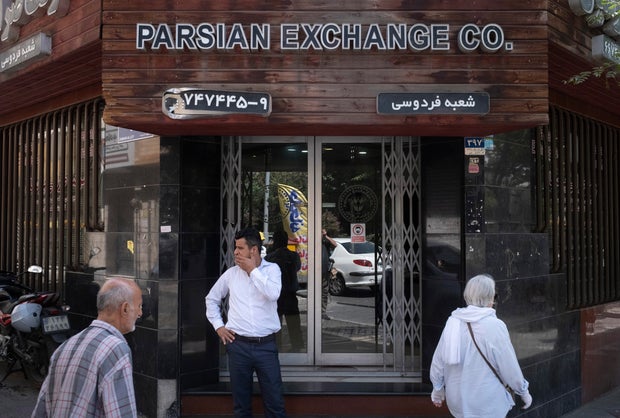
“Whenever rates move away from economic realities, intervention will take place so that market traders do not regard the fluctuations as one-way,” he said, without laying out any specific plans.
The value of Iran’s currency, the rial, has been falling for years under foreign sanctions pressure, and the U.S. military blockade of Iranian oil exports has depleted it further and sent inflation to record levels in the Islamic Republic. As of Friday, one U.S. dollar was worth a record 2.2 million rials on the black market, which is how most Iranians and visitors to the country access foreign currency.
There is a sharp gap between that rate, however, and the official rate determined by the government, which, as of Friday, put the rial at about 42,000 to the dollar. The vast gulf in the official exchange rate and the rate paid by virtually all normal Iranians has fueled concern over currency volatility and the rising cost of imports and other goods inside the country.

