Home Blog Page 97

Republican leaders announce two-track plan to end the DHS shutdown

0


WASHINGTON — House and Senate Republican leaders jointly announced a plan Wednesday they said would end the shutdown of the Department of Homeland Security that caused major airport delays.

“In the coming days, Republicans in the Senate and House will be following through on the President’s directive by fully funding the entire Department of Homeland Security on two parallel tracks: through the appropriations process and through the reconciliation process,” House Speaker Mike Johnson, R-La., and Senate Majority Leader John Thune, R-S.D., said in a statement.

The two leaders were vague about the exact plan, but it appears to closely resemble the Senate’s preferred path from Friday.

Johnson and Thune heavily implied that it would be for the Senate to, once again, pass a bill it approved unanimously last week, a move that could be attempted as early as Thursday.

It would fund all of DHS except ICE and Customs and Border Protection, which Democrats won’t agree to fund without reforms to immigration enforcement operations. Those two agencies already have separate funding.

House Republican leaders trashed that bill and rejected it Friday, but now appear ready to back down and accept the Senate plan. They would have to vote to pass it through the House.

GOP leadership had no immediate comment on the timing for a vote. Both chambers are scheduled to be on recess until April 13.

Then Republicans would fund ICE and CBP in a separate party-line “budget reconciliation” bill that can bypass a filibuster and get approved without any Democratic votes. The timing for that is even less clear.

Johnson and Thune said the “two-track” plan would “fully reopen the Department, make sure all federal workers are paid, and specifically fund immigration enforcement and border security for the next three years so that those law-enforcement activities can continue uninhibited.”

A White House official told NBC News that the administration supports the Johnson-Thune plan.

Earlier on Wednesday, Trump called on Republicans to pass the party-line bill “no later than June 1st.” The president threw the earlier plans to reopen DHS into chaos last week when he declined to comment on the Senate bill, which led to House Republicans rejecting it.

DHS has been shut down for more than a month, with employees for the TSA, FEMA and other agencies going for weeks without pay. Trump signed an executive order last week to pay TSA employees, but the legality and length of that plan is murky.

Senate Minority Leader Chuck Schumer, D-N.Y., slammed Republicans for having “derailed a bipartisan agreement” for days, “making American families pay the price for their dysfunction.”

“Throughout this fight, Senate Democrats never wavered. We were clear from the start: fund critical security, protect Americans, and no blank check for reckless ICE and Border Patrol enforcement,” he said Wednesday. “We were united, held the line, and refused to let Republican chaos win.”

On Friday, House Minority Leader Hakeem Jeffries, D-N.Y., said, “House Democrats are prepared to support the bill to end the Trump-Republican shutdown of the Department of Homeland Security, make sure TSA agents are paid, stand up for FEMA and for the Coast Guard, for our cyber security professionals, and stop inconveniencing Americans.”


Source link

UNM launches campus commuting survey

0


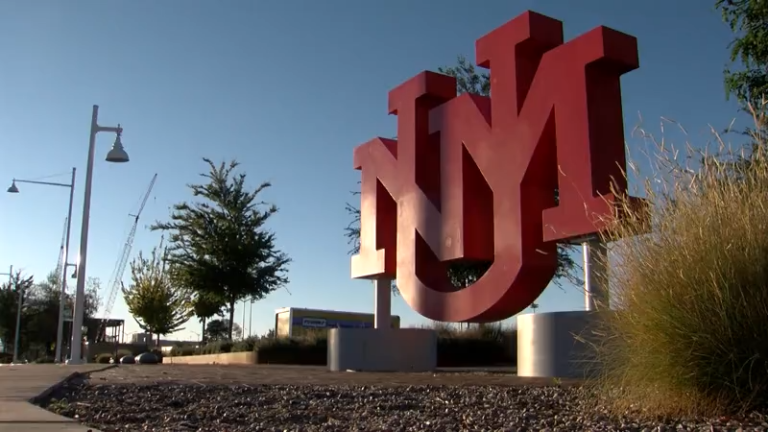
ALBUQUERQUE, N.M. (KRQE) –  The University of New Mexico is seeking the public’s input on campus commuting as part of the university’s parking and sustainability initiatives for Earth Month. UNM Office of Sustainability, Parking and Transportation Services, and Lobo Energy Inc. are asking for feedback about campus transportation used by students, staff, and the public. As part […]


Source link

Texas Singer Tanner Usrey Arrested on Felony Drug Charges

0


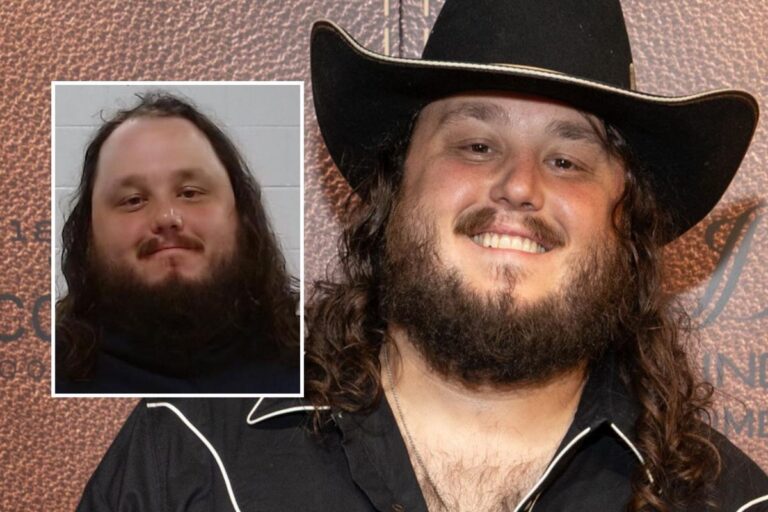
Texas-based singer-songwriter Tanner Usrey was arrested on driving while intoxicated (DWI) and drug charges in Collin County, Texas, Taste of Country has confirmed.

He’s facing two felony drug charges, including one for fentanyl or fentanyl-derived substances.

Why Was Tanner Usrey Arrested?

According to the Collin County Sheriff’s Office, Usrey was arrested on Monday (March 30).

Court records show three charges.

One is Usrey’s second DWI, a Class A misdemeanor in Texas that can result in jail time, fines or a driver’s license suspension of between 6 months and 2 years.

The other two — both drug charges — are felonies. Usrey was charged with drug possession of a substance in penalty group 1/1-B.

Tanner Usrey Arrest

Collin County Sheriff’s Department

Penalty Group 1 includes cocaine, heroin, methamphetamine, opium and oxycodone.

The “1-B” group specifically refers to fentanyl and fentanyl-derived substances, according to Texas legislature.

The 1-B group was added to Texas’ Health and Safety Code in 2021, specifically to address the national opioid crisis and fentanyl’s role in rising opioid-related deaths.

The new classification allows for harsher penalties for those convicted of possessing the substance.

Read More: See the Best + Worst Celebrity Mug Shots

Usrey’s charge is for possession of between 4-200 grams of the substance, a second-degree felony that can result in a sentence of between 2 and 20 years in state prison, or a fine of up to $10,000.

The singer was also hit with another possession charge in Penalty Group 2, which includes drugs like MDMA, psilocybin, amphetamines and THC concentrates. That’s also a second-degree felony charge.

What Happens Next in Tanner Usrey’s Court Case?

Usrey was released from jail the same day of his arrest after posting his $12,500 bond.

He had an initial hearing on Monday, and an ignition interlock device was ordered for his vehicle, per court records.

Who Is Tanner Usrey?

A Texas native who cites Whiskey Myers, George Strait and Wade Bowen as major influences, Tanner Usrey has been steadily climbing in country music since signing his label deal in 2023.

His songs have been featured on Yellowstone and Landman, as well as on the soundtrack of Twisters.

In February, a Wyoming man was arrested after allegedly sending death threats to Usrey over Facebook.

Read More: Wyoming Man Arrested for Allegedly Threatening Country Singer’s Life

That arrest took place ahead of a show Usrey was booked to play in Rapid City, S.D. The man allegedly told Usrey not to perform at that show, implying that he might suffer a fate similar to Charlie Kirk — the conservative commentator who was assassinated last September — if he did.

Following the arrest, Usrey went ahead with the show as scheduled.

11 Great Country Songs About Getting Arrested

Gallery Credit: Billy Dukes


Source link

Lilly’s Obesity Pill Approval Kicks Off New Front in Weight-Loss Drug Wars

0


The drugmaker’s pill will take on a rival from Novo Nordisk in the booming multibillion-dollar obesity drug market.


Source link

NCAA imposes steep penalties for ‘ghost’ transfers, but many doubt they will stick

0


The NCAA Division I Cabinet approved emergency legislation Wednesday designed to stop programs from signing players who circumvent the transfer portal, but the coaches, general managers and attorneys who know the issue best are divided on whether the rules will hold.

As with most issues regarding player eligibility and movement in college sports, challenges may loom in the courtroom next fall.

The legislation approved Wednesday imposes severe penalties on programs that accept players who transfer without entering the portal: a half-season suspension for the head coach from all coaching, recruiting and administrative duties, and a fine equal to 20% of the school’s football budget. 

“I am grateful the DI Cabinet approved the FBS Oversight Committee’s recommendation to impose significant penalties on head coaches and programs who circumvent transfer rules, along with immediate accountability,” Vanderbilt coach Clark said in a statement released by the NCAA. “This is a necessary step to address a critical roster management issue facing our sport and to protect the integrity of football’s transfer window.”

The idea behind the emergency legislation stemmed from the elimination of a second portal window in April, and rising fear that players would ignore the rules, unenroll from schools and go elsewhere after spring practices.

“It’s going to add legal chaos,” an AAC head coach told CBS Sports, “But it will keep rosters mostly intact — until one player wins a lawsuit.”

Eroding NCAA authority

That fear is grounded in reality. The courts have not been kind to the NCAA in recent years. Athletes have filed a wave of legal challenges at nearly every corner of the organization’s authority. Since the $2.8 billion House v. NCAA resolution, individual players have won injunctions forcing the NCAA to grant extra eligibility. The NCAA has won some of those cases, but the uncertainty alone carries enormous consequences about whether Wednesday’s legislation survives a court challenge.

Still, others believe the severity of the penalties is enough to change behavior. 

“If they actually do it to somebody who violates it, absolutely, it’ll work,” one ACC head coach said.

Coaches doubt the rule will have teeth

However, cynicism and skepticism have seeped into the system following years of rulebreakers going unpunished and legal filings that have rendered the NCAA impotent in certain areas.

“There’s no way in hell any of this shit holds up,” an SEC head coach told CBS Sports. “If a kid gets kicked off a team, he can’t join another team?”

Indeed, such circumstances have already occurred in college football, and it’s believed those examples prompted the FBS Oversight Committee to implement new rules to slow coaches’ tampering within the system and to prevent players from attempting to circumvent the portal. Illinois‘ Bret Bielema Lea were the primary sponsors of the legislation, sources told CBS Sports.

Two high-profile moves outside the portal window last year exposed the NCAA’s structural gap, thereby helping two playoff-contending programs. Wisconsin defensive back Xavier Lucas was denied entry into the transfer portal and opted to unenroll from school before choosing to play for MIami. The Badgers sued the Hurricanes for tampering, arguing Lucas was under contract. Miami played him anyway, and the Hurricanes ran to the College Football Playoff national championship. 

Last spring, BYU quarterback Jake Retzlaff faced a seven-game suspension for an honor code violation after both portal windows had already closed, so he unenrolled from BYU, enrolled at Tulane as a walk-on and was eventually put on scholarship. He started for the Green Wave, throwing for 3,168 yards and 15 touchdowns while leading the program into the College Football Playoff. BYU had no recourse. 

If both moves happened now, those schools would face significant penalties.

One Big Ten general manager still has doubts the NCAA’s new penalties will curb the behavior.

“Nothing even came of Xavier Lucas leaving for Miami last year — other than the fact he played for a national title,” he said. “There are no teeth right now. Until someone really gets hammered for something, no one is scared. If I’m a blue-blood program, what is there to be scared of? The NCAA is going to go for the low-hanging fruit and not the big boys.”

An SEC general manager echoed the concerns, pointing to staffing and logistical challenges at schools and within the NCAA’s enforcement unit.

“Legal chaos,” he said. “None of these rules hold any weight and are hard to enforce without constant audits, which nobody has the manpower to do effectively.”

Darren Heitner, the attorney who represented Lucas, believes court cases are on the horizon if the NCAA enforces penalties. Courts have repeatedly constrained the organization’s ability to restrict athlete movement and compensation. Most recently, Ole Miss quarterback Trinidad Chambliss was granted a sixth year of eligibility in a Mississippi court. Virginia quarterback Chandler Morris is seeking similar relief.

Heitner believes the NCAA’s attempt to model roster control on NFL structures is misguided because the NFL’s legal protection flows from collective bargaining — a mechanism the NCAA has long resisted and lacks. The legislation, Heitner wrote in his newsletter last week, might buy the NCAA a few months of order as it heads into fall camp.

 “But the moment a coach gets suspended or a school gets fined, expect the courtroom filings to begin,” he said. “And given the current judicial climate around college sports, I would not bet on the NCAA successfully defending these rules, at least not in their current form.”

What a court case might look like is also a fascinating question.

“The one thing I’m really interested in is who are they suing?” a Big 12 head coach said. “The whole deal is the penalty is not on the kid, the penalty is on the coach and the school. That’s what’s going to be really interesting.”

On paper, the legislation makes it catastrophically expensive for a program to use him, but it does not make the math impossible. Whether a program — particularly a blue-blood with resources and lawyers — decides those penalties are worth absorbing, and whether the NCAA has the will and manpower to catch them if they do, remains the central unanswered question. 

The ‘tampering’ problem

The NCAA has yet to punish a power program on tampering allegations, even as coaches continue to point fingers and make accusations. Clemson‘s Dabo Swinney made the biggest swing this offseason, accusing Ole Miss coach Pete Golding of tampering with linebacker Luke Ferrelli, a former Cal player who enrolled at Clemson in January only to leave the program for Ole Miss days after the portal closed. 

Swinney alleged Golding texted Ferrelli while he was sitting in an 8 a.m. class, asking about his buyout and sending a photo of a $1 million contract offer. Swinney submitted documentation to the NCAA and went public with the allegations in a 25-minute press conference. Golding has denied the characterization of events, saying the recruitment began before Ferrelli ever arrived in Clemson. The NCAA has not weighed in publicly.

The Big Ten sent a letter to the NCAA last month arguing that existing tampering rules “cannot be credibly or equitably enforced” and called for a moratorium on investigations while new rules are written. 

“These rules were not designed for a world in which student-athletes are compensated market participants making annual decisions with significant economic consequences,” the conference’s letter read, according to ESPN. “The collision between the old rules and new reality is producing outcomes that harm the population that the rules were designed to protect.” 

It’s going to take an act of Congress

Meanwhile, legislation that would fundamentally change college sports and rules enforcement — and potentially provide the NCAA and its membership legal protections ––was given a second wind last month in Washington, D.C. President Trump formed five committees last week, with dozens of collegiate and professional sports leaders tasked with providing suggestions to the President as Republicans continue to push the SCORE Act through Congress.

Wednesday’s vote to curb blind transfers is a narrow answer to a larger problem, and like so many NCAA rules before it, may ultimately be decided in a courtroom.

The Big Ten, in its letter to the NCAA last month, encapsulated the severity of the unknowns facing college sports.

“The system of college sports is under tremendous stress, both internally and externally,” the conference warned. “Systems adapt or they break.”




Source link

Activist ship’s collision with krill trawler off Antarctica called “deliberate attack”

0


A ship operated by a group founded by anti-whaling activist Paul Watson collided with an industrial krill trawler in Antarctica in what the ship’s Norwegian owner said was a “deliberate attack” that endangered its crew and could’ve caused a disaster in the same environmentally sensitive waters the activists claim they want to protect.

A two-minute video provided to The Associated Press by the Aker QRILL Co. shows the moment Tuesday when the M/V Bandero, operated by the Captain Paul Watson Foundation, slowly steams toward the stern of the fishing vessel, hitting its port side at a slight angle.

The collision underscores the growing battle in the frigid waters of the Southern Ocean over the future of Antarctic krill, a shrimplike crustacean central to the diet of whales and critical buffer to global warming that’s also in demand for use in health supplements, fishmeal and other products.

Antarctica Krill Ship Collision

In this image taken from video provided by the Aker Qrill Company shows an activist ship, operated by the Captain Paul Watson Foundation, crashing into the Antarctic Sea, a vessel operated by Aker Qrill Company, on Wednesday, April 1, 2026, in Antarctica. 

Aker Qrill Company via AP


Aker said Wednesday that the Bandero came within centimeters of striking a diesel tank on its vessel, the Norwegian-flagged Antarctic Sea, and put at risk a habitat teeming with multiple whale species, seals and seabirds — all feeding on the Southern Ocean’s abundant but environmentally sensitive krill population.

The company said its multinational crew was shaken but unharmed and it would pursue all available legal action.

“Our crew were put at risk in some of the most remote waters on Earth, and only luck avoided potential environmental damage,” Aker CEO Webjørn Barstad said in a statement.

“If the steel plates (…) had ruptured, it could have caused a spill. It was probably just luck that it didn’t cause more damage,” Barstad told the Reuters news agency.

In a statement to Reuters, the Captain Paul Watson Foundation said that it was “an accidental collision” and that it was committed to “lawful, responsible, non-violent action in defense of marine ecosystems”.

In its own news release, the foundation characterized its actions as “aggressive nonviolence.” It said the crew, led by French activist Lamya Essemlali, managed to disrupt all krill fishing during a five-hour “direct intervention” against two Aker-owned vessels. It also provided images showing the crew launching giant metal net shredding devices intended to disrupt fishing.

“David-and-Goliath scenario”  

Watson himself was not on the ship, which departed Australia last month as part of what the Watson foundation called Operation Krill Wars.

“Throughout the encounter, the crew witnessed Antarctic wildlife in the surrounding waters, including penguins, seals, and even a whale, underscoring what was at stake as a small ship challenged a powerful industrial krill operation in a stark David-and-Goliath scenario,” the foundation said in a statement.

Watson founded the global Sea Shepherd conservation movement in the 1970s and for decades won a fearsome reputation for ramming vessels and other aggressive tactics in confrontations on the high seas that repeatedly landed him in jail. He was last detained in Greenland for five months in 2024 on a Japanese warrant that was later rejected by Denmark. Japan’s coast guard sought his arrest over an encounter in 2010 in which he was accused of ordering a captain of his ship to throw explosives at what the Japanese labeled a whaling research ship.

Last year, Interpol removed its most-wanted designation for Watson over the 2010 incident. Watson told CBS News in 2014 that the warrant was issued for trespassing and said that “it’s all very political.” 

While the Canadian-American citizen in the past has drawn support from Hollywood celebrities, his hard-line tactics have split the movement he started, with affiliates in France and Brazil rallying behind his newly created namesake foundation while Sea Shepherd Global and 20 national affiliates focus more on watchdog patrols on the high seas, policy action and supporting law enforcement in poorer countries where illegal fishing is rampant.

Fishing in Antarctica for krill surged to a record last season, forcing an early closure of fishing activity for the first time.

Aker is the world’s largest harvester of krill, responsible for over half the world’s catch.

“The krill are taken directly from the feeding grounds of whales, seals and penguins and expanding krill extraction poses a serious threat to the Antarctic ecosystem,” the Captain Paul Watson Foundation said in its statement. “Krill are a foundational species, serving as the primary food most marine life, without krill the entire food chain would collapse.”

The remote fishery is managed by the Commission for the Conservation of Antarctic Marine Living Resources, an international organization composed of 27 nations and the European Union.

Any investigation into the incident, including possible criminal prosecution, is likely to commence at the Mongolia-flagged Bandero’s next port of call. Under international maritime law, an overtaking vessel has an obligation to stay clear of any nearby ship it’s passing.

Bandero is named after the tequila company owned by John Paul DeJoria, an American billionaire who founded Paul Mitchell hair care products and has been a longtime supporter of Watson’s endeavors.


Source link

Artemis II launch updates for NASA’s moon mission

0


LIVE: Artemis II prepares for launch from Kennedy Space Center

WESH logo

Updated: 12:42 PM MDT Apr 1, 2026

Editorial Standards

Artemis II is preparing for launch from the Kennedy Space Center, where the rocket will carry the Orion spacecraft for a second time, on its journey around the moon – an update to the original plan, which put astronauts on the surface. See live coverage of the launch countdown in the video above.The earliest the rocket will launch is 6:24 p.m. on April 1.Artemis II countdown On Wednesday, launch day, tanking operations to load fuel into the Space Launch System rocket will begin at 7:45 a.m., nearly 12 hours before the launch window opens at 6:24 p.m.The fueling process will take hours. NASA builds in extra time in case something comes up.They could enter a “hold,” where they pause operations to fix any issues along the way. At 12:44 p.m., the crew begins dressing in launch and entry spacesuits.At about 1:44 p.m., the crew will head to the pad.At 5:54 p.m., NASA’s test director will conduct a final briefing.The launch window opens at 6:24 p.m. The crewFour astronauts are aboard NASA’s Space Launch System.Commander: Reid WisemanPilot: Victor GloverMission Specialist: Christina KochMission Specialist: Jeremy Hansen The path Artemis Program OverviewArtemis is NASA’s long-term Moon exploration campaign.The program’s main goals include returning humans to the moon, building a sustained lunar presence, maturing technology and operations needed for human missions to Mars, and doing this all with international and commercial partners.The missions are each designated to different milestones, strategies and individual goals.Artemis IThis mission is complete.It was an uncrewed integrated flight test of the Space Launch System, which is a heavy-lift rocket that launches crews and large cargo toward the moon, and Orion, which is a crew spacecraft that carries astronauts to lunar orbit and returns them to Earth.SLS and Orion went around the moon and came back to Earth.The purpose of this mission was to validate deep-space performance and reentry before flying with a crew.>> Relive the launch of Artemis I here.Artemis IIThis mission is planned.Artemis II will be the first crewed mission to the moon, with the plan to fly around itThe purpose of the crewed flight is to prove life support, operations and high-speed returns with astronauts.Artemis III (This mission has changes as of Feb. 27)This mission is planned.Artemis III will be the first crewed lunar landing of the program, targeting the lunar South Pole region.The 10-day mission will include field geology, sample collection/return and deployed experiments.Four astronauts will launch in Orion, two will land on the moon for surface work, and then they will return to Orion for the journey back to Earth.Artemis IV and beyondThe future missions will aim to expand on capabilities toward sustained operations on the moon, such as more surface time, more cargo and infrastructure delivery, increased use of Gateway as a staging node, and progression toward an “Artemis Base Camp” style sustainable presence.Why the lunar South Pole?It has scientifically valuable terrain and ancient geology.It contains regions with water ice and other volatiles in permanently shadowed areas, which is key for science and potential resources.Its challenging conditions will help prove the systems needed for Mars-class missions.More information

Artemis II is preparing for launch from the Kennedy Space Center, where the rocket will carry the Orion spacecraft for a second time, on its journey around the moon – an update to the original plan, which put astronauts on the surface.

See live coverage of the launch countdown in the video above.

The earliest the rocket will launch is 6:24 p.m. on April 1.


Artemis II countdown

On Wednesday, launch day, tanking operations to load fuel into the Space Launch System rocket will begin at 7:45 a.m., nearly 12 hours before the launch window opens at 6:24 p.m.

The fueling process will take hours. NASA builds in extra time in case something comes up.

They could enter a “hold,” where they pause operations to fix any issues along the way.

At 12:44 p.m., the crew begins dressing in launch and entry spacesuits.

At about 1:44 p.m., the crew will head to the pad.

At 5:54 p.m., NASA’s test director will conduct a final briefing.

The launch window opens at 6:24 p.m.


The crew

Four astronauts are aboard NASA’s Space Launch System.

  • Commander: Reid Wiseman
  • Pilot: Victor Glover
  • Mission Specialist: Christina Koch
  • Mission Specialist: Jeremy Hansen

The path


Artemis Program Overview

Artemis is NASA’s long-term Moon exploration campaign.

The program’s main goals include returning humans to the moon, building a sustained lunar presence, maturing technology and operations needed for human missions to Mars, and doing this all with international and commercial partners.

The missions are each designated to different milestones, strategies and individual goals.

Artemis I

  • This mission is complete.
  • It was an uncrewed integrated flight test of the Space Launch System, which is a heavy-lift rocket that launches crews and large cargo toward the moon, and Orion, which is a crew spacecraft that carries astronauts to lunar orbit and returns them to Earth.
  • SLS and Orion went around the moon and came back to Earth.
  • The purpose of this mission was to validate deep-space performance and reentry before flying with a crew.

>> Relive the launch of Artemis I here.

Artemis II

  • This mission is planned.
  • Artemis II will be the first crewed mission to the moon, with the plan to fly around it
  • The purpose of the crewed flight is to prove life support, operations and high-speed returns with astronauts.

Artemis III (This mission has changes as of Feb. 27)

    • Artemis III will be the first crewed lunar landing of the program, targeting the lunar South Pole region.
    • The 10-day mission will include field geology, sample collection/return and deployed experiments.
    • Four astronauts will launch in Orion, two will land on the moon for surface work, and then they will return to Orion for the journey back to Earth.

Artemis IV and beyond

  • The future missions will aim to expand on capabilities toward sustained operations on the moon, such as more surface time, more cargo and infrastructure delivery, increased use of Gateway as a staging node, and progression toward an “Artemis Base Camp” style sustainable presence.

Why the lunar South Pole?

    • It has scientifically valuable terrain and ancient geology.
    • It contains regions with water ice and other volatiles in permanently shadowed areas, which is key for science and potential resources.
    • Its challenging conditions will help prove the systems needed for Mars-class missions.

More information


Source link

Sturgill Simpson Announces 2026 Tour Dates With the Dark Clouds

0


Johnny Blue Skies (a.k.a. Sturgill Simpson) and his band the Dark Clouds will hit the road this fall in support of their latest album, Mutiny After Midnight

The 29-date “Mutiny for the Masses Tour” will kick off Sept. 4 at the Moody Center in Austin and wrap Oct. 30 at the Rupp Arena in Lexington, Kentucky. Tickets will go on sale this Friday, April 10, at 10 a.m. local time, with presales slated to begin April 8 at 10 a.m. local time. In an effort to combat scalping, Simpson will be using Ticketmaster’s Face Value Exchange and AXS Resale platforms so fans can resell tickets to other fans at the original price point. 

The Mutiny for the Masses Tour marks Simpson’s first run since his extensive tour in support of 2024’s Passage du Desir (his first album under the Johnny Blue Skies moniker). That run earned rave reviews and established JBS and the Dark Clouds as one of the best live bands working now. The group played for about three hours every night, and shows were regularly recorded professionally and released the next day. This upcoming run will likely feature more marathon sets, with no opener scheduled to join JBS and the Dark Clouds.

Mutiny After Midnight was released on March 13, with the album only available on CD, vinyl, and cassette. While the album was put on YouTube for a week ahead of its official release, it has otherwise yet to hit streaming services. (Though as of today, April 1, it’s available to buy as a digital download via iTunes.)

In a statement, Simpson said he would probably put the album up on streaming “at some point,” and explained his physical-only release strategy as a way to “support and show solidarity with independent record shops and to promote an increasingly bygone physical and tangible connection between music and music fans.” (The move also helped Mutiny After Midnight hit Number Three on the Billboard 200 albums chart, matching the peak achieved by his landmark 2016 LP A Sailor’s Guide to Earth.)

Trending Stories

To follow up Mutiny After Midnight, JBS and the Dark Clouds are also prepping a special seven-inch for Record Store Day, April 18. The single will feature two covers, a rendition of Procol Harum’s “A Whiter Shade of Pale” and William Bell’s “You Don’t Miss Your Water.”

Johnny Blue Skies and the Dark Clouds 2026 Tour Dates
Sept. 4 – Austin, TX @ Moody Center
Sept. 6 – Rio Rancho, NM @ Rio Rancho Events Center
Sept. 8 – Glendale, AZ @ Desert Diamond Arena
Sept. 9 – Santa Barbara, CA @ Santa Barbara Bowl
Sept. 11 – Inglewood, CA @ Kia Forum
Sept. 13 – San Diego, CA @ Viejas Arena
Sept. 15 – Berkeley, CA @ The Greek Theatre
Sept. 18 – Seattle, WA @ Climate Pledge Arena
Sept. 19 – Vancouver, BC @ Pacific Coliseum
Sept. 21 – Eugene, OR @ Matthew Knight Arena
Sept. 23 – Denver, CO @ Ball Arena
Sept. 26 – Kansas City, MO @ T-Mobile Center
Sept. 27 – St. Paul, MN @ Grand Casino Arena
Sept. 29 – Chicago, IL @ United Center
Oct. 2 – Nashville, TN @ Bridgestone Arena
Oct. 3 – Indianapolis, IN @ Gainbridge Fieldhouse
Oct. 6 – St. Louis, MO @ Enterprise Center
Oct. 7 – Columbus, OH @ Nationwide Arena
Oct. 9 – Pittsburgh, PA @ Petersen Events Center
Oct. 10 – Detroit, MI @ Little Caesars Arena
Oct. 13 – Boston, MA @ TD Garden
Oct. 15 – Philadelphia, PA @ Xfinity Mobile Arena
Oct. 16 – Brooklyn, NY @ Barclays Center
Oct. 18 – Washington DC @ Capital One Arena
Oct. 21 – Raleigh, NC @ Lenovo Center
Oct. 23 – Charleston, SC @ Credit One Stadium
Oct. 25 – Atlanta, GA @ State Farm Arena
Oct. 27 – New Orleans, LA @ Lakefront Arena
Oct. 30 – Lexington, KY @ Rupp Arena


Source link

Costliest Autism-Therapy Firm—Which Was Barred from Medicaid—Is Closing

0


A rival provider with 14 centers that recently settled civil allegations of fraudulent Medicaid billing is to take over operations at Piece by Piece Autism Centers facilities.


Source link

Attorneys: Amputee cornhole pro Webber fired gun in self-defense

0


LA PLATA, Md. — Dayton Webber, the quadruple amputee cornhole player facing murder charges, intends to argue that he acted in self-defense when he shot a passenger in his vehicle last week, his attorneys indicated in a court hearing Wednesday.

Webber, a former pro in the American Cornhole League, has been accused of shooting Brad Wells while they were traveling in Webber’s vehicle outside La Plata, Maryland, on March 22. The two had a verbal argument before the shooting, the other passengers in the vehicle told police. Webber’s attorneys argued it was “a clear-cut case of self-defense.”

“Dayton Webber is not guilty,” said Hammad S. Matin, one of his attorneys. “Dayton was terrified of being killed. Dayton knew that he had to shoot or be killed.”

Webber’s attorneys brought up the notion of self-defense at a bond hearing for their client in Charles County District Court — the first since Webber was extradited from Virginia earlier this week. He appeared remotely, wearing an orange jumpsuit as he was shown on a video monitor in the courtroom.

Though Matin argued that Webber would not be a flight risk and did not pose a risk to the community, Charles County District Court Judge Patrick Divine ultimately sided with the state prosecutor, Karen Piper Mitchell, and ordered that he continue to be held without bond.

Piper Mitchell noted that Webber could be a flight risk because he was arrested across state lines in Charlottesville, Virginia, after allegedly shooting Wells in Maryland. She added that he owns multiple weapons and has been known to fire them from a second-story window in his home.

“He remains a danger,” Piper Mitchell said during the hearing.

Piper Mitchell demurred when asked in a news conference outside the courthouse about the self-defense claims. “Defense has to represent their client in the best way they can,” she said.

The hearing brought forward new details about a case that has generated national headlines over the past week.

Piper Mitchell told the court that Webber and Wells had been “arguing for some time” before the alleged shooting, and the argument revolved around Wells’ continued friendship with a person Webber believed had stolen guns from him.

She also said police found a gun in the car consistent with the murder weapon as well as a box matching the weapon at Webber’s house. Webber’s attorneys did not address the discovery of the weapon during the bond hearing but said their client is a legal gun owner and had a concealed carry permit.

Both Piper Mitchell and Webber’s attorneys referenced an argument between Webber and Wells in 2024, when Webber allegedly ordered Wells to leave his property. Piper Mitchell said Webber is reported to have fired a gunshot in Wells’ direction as he left. Webber’s attorneys said their client fired a gunshot in the air. No charges were filed.

Webber’s attorneys said Wells had threatened Webber at the time and had “a history of violence.” Anita Stewart Murchison, Wells’ mother, questioned the attorneys’ claims and told ESPN that Wells wasn’t a violent person, describing him as mild-mannered and shy. She said she was “relieved” about the judge’s ruling.

The two passengers in the backseat of the car during the shooting told police that Webber had asked them to move Wells’ body out of the car, but they declined and fled. When asked about this claim, Webber’s attorneys said there was “no evidence” that the witnesses were asked to “alter evidence, to lie, to cover anything up.”

Piper Mitchell said the police investigation is ongoing and that the state’s attorney office would not identify the passengers by name at this stage.

Wells’ body was found in the yard of a house about 10 miles away from where police believe the shooting occurred, while Webber was located at a hospital in Charlottesville. Matin said in court that Webber called him from the hospital, where he was suffering from anxiety and having a panic attack.

Police also found Webber’s white Tesla at a gas station next door, and Piper Mitchell said the vehicle had only enough battery remaining to travel 40 miles.

So far, police have obtained a search warrant for Webber’s car’s thumb drive to “preserve any video evidence” of the alleged crimes caught on the Tesla’s multiple exterior cameras, according to Virginia court records. They also examined Webber’s clothing and took DNA swabs from his arms, according to a copy of the search warrant obtained by ESPN.

Webber, 27, is a lifelong resident of La Plata who listed his occupation in court records as “motivational speaker.”

In a 2023 profile, Webber’s parents told ESPN that his arms and legs were amputated when he was 10 months old to save his life after he contracted a blood infection that led to sepsis. He went on to become a professional cornhole player for at least two years, while being crowned Maryland’s best cornhole player in 2020. He last appeared in the ACL rankings in the 2023-24 season.

In a statement Tuesday, the Charles County Sheriff’s Office acknowledged Webber’s “specific medical and mobility needs” as a quadruple amputee. Piper Mitchell said the Charles County Detention Center already has accommodations under the Americans with Disabilities Act and Webber could make additional requests if needed.

Webber’s next court appearance is scheduled for May 6.


Source link