Home Blog Page 904

The Beautiful Reason Naomi Judd Ditched Her Birth Name

0


The world knew her as Naomi Judd, but did you know that the Judds matriarch was born under a completely different name? That’s right: The country superstar was originally Diana Ellen Judd.

She legally changed her name to Naomi early on in the Judds’ career, and she’s not the only one: Her daughter and Judds band mate Wynonna Judd also legally changed her name from her birth moniker, Christina Claire Ciminella.

That last name comes from Naomi’s first husband, Michael Ciminella, who Naomi married in 1964. Ciminella isn’t Wynonna’s biological father — that would be Charles Jordan, who abandoned Naomi while she was pregnant — but Naomi did give her daughter the Ciminella name for a few years, before reverting to Judd after Naomi and Ciminella divorced in 1972.

After Naomi — then known as Diana — split from Ciminella, she didn’t think twice about changing her name back to Judd. “If I called for pizza or dry cleaning, they’d put it under S or Z,” she said of that decision, according to correspondent and author Bob Millard’s 1988 Penguin Random House biography, The Judds. “I was having a time with this long name. Whatever I did, it gave me troubles, and I did not feel like a Ciminella. I was a Judd and darned proud of it.”

At the same time, she decided to look for a new first name, too. According to Millard’s book, Naomi felt that the name Diana didn’t fit “her own spiritual, rural Kentucky conception of her true heritage.” She searched the Bible for women whose stories bore similarities to her own, and settled on Naomi.

Known best as the mother-in-law of Ruth, the Biblical Naomi moves to a foreign land with her husband and two sons. While away from her native home, Naomi’s husband and both sons — who’ve gotten married in the meantime — die, and Naomi is left with her two daughters-in-law, with whom she has grown very close. Naomi ultimately makes her return to Bethlehem with one of her daughters, Ruth, while the other, Orpah, stays in the family’s adopted homeland of Moab.

Naomi Judd was the mother of two daughters — Wynonna, with whom she would go on to form the Judds and become legendary in the country sphere, and actor Ashley Judd — and it’s easy to draw parallels between her life and the biblical Naomi. But those parallels were largely prophetic: At the time Naomi Judd legally took her first name, her two daughters were still young.

After Naomi’s name change, Wynonna��— then Christina Ciminella — decided to take on a new identity of her own.

“Ciminella was so Italian, and it always sounded like that disease salmonella,” she says in Millard’s book, adding that she got the idea for her first name as she was embracing a life in music, and looking for a moniker that would reflect that.

“I got the name from a song called ‘Route 66,'” Wynonna explains. “There’s a line that says, ‘Flagstaff, Arizona, don’t forget Wynona.’ So I just decided to change it. I know people probably think I changed for professional reasons, but that’s not why.”

Additionally, according to Millard, Naomi suggested that her second daughter, Ashley, consider changing her name — she even suggested that she go by Ramona to rhyme with Wynonna. Ashley declined, but did decide to start going by Ashley Judd, though her legal name remains Ashley Ciminella.

Naomi Judd died on Saturday (April 30) after a long fight with mental illness. The Judds were inducted into the Country Music Hall of Fame just one day later, on Sunday (May 1). See pictures from across the Judds’ career in the gallery below.

The Judds’ Career in Pictures:


Source link

How the Bears’ second-half adjustments led to a wild-card win

0


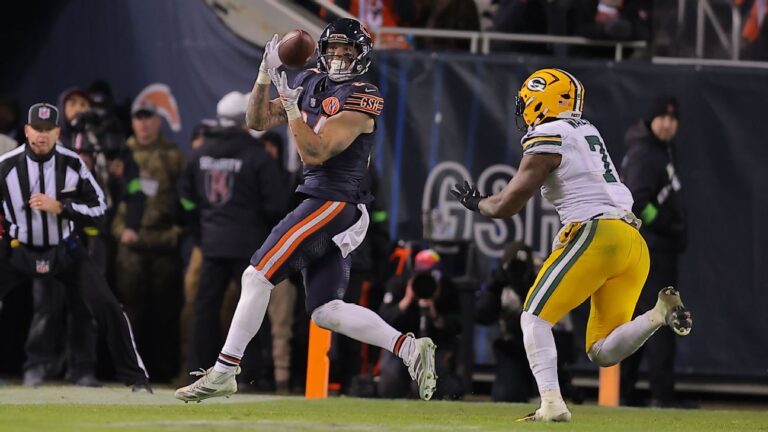
In the Bears’ postgame locker room after their 31-27 victory over the Packers in the NFL playoffs‘ wild-card round Saturday night, running back Kyle Monangai celebrated the team’s seventh comeback win of the season. On one hand, they’ve done it seven times, but surely this one — the Bears’ first home postseason game in eight years — felt a little different during halftime.

“Nah,” Monangai said. “Same old.”

Trailing 21-3 to the Packers at halftime, the Bears erased an 18-point deficit — the fourth-biggest comeback in franchise history, and the largest in the team’s postseason history. They’re only the fourth team to win a postseason game when entering the fourth quarter trailing by 15-plus points.

But these Bears don’t feel the difference of the moment but rather the familiar embrace of an old friend: adversity. After the game, coach Ben Johnson recalled a day in training camp during which the team watched the film of the Patriots’ legendary Super Bowl comeback against the Falcons, coming back from a 28-3 deficit. “That was my message to the group,” Johnson said of his halftime speech. “Just reminding them that this has been done before. Rather than saying, ‘Oh, woe is me,’ or ‘Oh crap, we’re in a hole,’ it’s more, ‘This is a great opportunity to turn this around into a game we’ll never forget.’ And that’s what they did.'”

The halftime locker room is a special place for Chicago — it’s where adjustments are made. League-leading adjustments. In the second half, the Bears’ offense tops the league in EPA per play. Chicago’s yards per play jumps from 5.3 in the first half to 6.1 in the second half (second best in the NFL). And the Bears’ points per drive jumps from 2.05 in the first half to 2.88 in the second (fourth best).

In three games against the Packers this season, the Bears averaged 0.5 points per drive in the first half … and 3.85 in the second.

This isn’t all coaching adjustments, of course. Just as every Bear was unfazed by the deficit, quarterback Caleb Williams was unfazed by the unlikelihood. Facing a fourth-and-8 with the game on the line and guiding a Bears offense that was 1-for-5 on fourth down to that point in the game, Williams made one of his most spectacular throws in a season defined by magic.

That’s not coaching, that’s uncoachable. That’s the sort of franchise-defining, future-altering talent that gets drafted No. 1 by a listless franchise in need of a savior QB. These were 27 hard-earned yards of Williams’ 361 in the game — the most by a Bears quarterback in a playoff game in franchise history.

Williams wasn’t the only offensive standout Saturday night, though. Rookie tight end Colston Loveland had 137 receiving yards, just shy of the record (142 yards) for a rookie tight end in a postseason game. As much as the Bears are a second-half team, Loveland is a second-half player. Since Week 9, Loveland has averaged 66.7 yards per game, which is 20th among all pass catchers and third, only to George Kittle and Trey McBride, among tight ends. Good company.

On Saturday night, Loveland tallied 115 of his 137 receiving yards in the second half, including three corner routes that were all oh-so-effortlessly open against the Packers’ defense. (Hello, halftime adjustments.)

Loveland was also the target during the successful 2-point conversion, which gave the Bears a four-point lead late in the fourth. The Bears called an isolation route for Loveland, who beat linebacker Nick Niemann in the front corner of the end zone. These isolation routes typically go to star receivers. The Bears called it for their rookie tight end.

“I know Caleb has an immense amount of trust in [Loveland],” Johnson said postgame. “He’s one of the first ones in the building every single day. He’s always studying his playbook while he’s eating breakfast. He’s always the last one off the practice field doing the JUGS machine. He’s been a model of consistency, which, for a rookie, speaks volumes. As a coaching staff, we really lean on him.”

There is not a second-half comeback without second-half stops, and the Bears’ defense found them somehow. On four first-half drives, the defense gave up three touchdowns and a field goal attempt as the half expired. Johnson’s aggressive fourth-down decisions were panned because of the defense’s vulnerability.

To start the second half? Three-and-out, three-and-out, five-and-out, three-and-out. Those drives collected only one first down, never reset the field position and took only 6 minutes, 13 seconds off the game clock. As the offense labored to find its footing, the defense gave it chance after chance after chance.

The Bears’ defense hasn’t been a second-half unit this season, so much as an opportunistic one, leading the regular season in takeaways (33). But the turnovers never came in this game. The Packers’ sixth offensive lineman, Darian Kinnard, fumbled (you read that right) into wide-open space, but it bounced out of defensive tackle Gervon Dexter Sr.’s hands. Cornerback Tyrique Stevenson forced an airborne Christian Watson to fumble inches from the goal line, but the ball landed right at Romeo Doubs‘ feet. Corner Nahshon Wright, who tied for second in the league in interceptions with five, had one in his sights until Jayden Reed interfered with the catch.

Instead, it was the consistent run defense, which allowed only 6 yards on seven carries in the second half. It was the presence of Kyler Gordon, the slot corner who returned from injury, didn’t play a snap on the first two drives, took over for Nick McCloud and brought renewed physicality to the position. It was the much-needed appearance of the pass rush, which pressured Love on 32% of his second-half dropbacks, as compared with 18% in the first half.

“Obviously [Dennis Allen] got really aggressive: corner blitzes, sending Brisker,” safety Kevin Byard III said postgame. “And in coverage, we just covered a little bit better, got some [pass breakups] … we just executed better. The belief in this team, going in halftime not where we wanted to be. But there was no panic. We just knew it was going to take one play at a time, and that’s what we did.”

Byard is the veteran voice on the young squad, one of a precious few Bears with postseason experience. He knows what it’s like to play win-or-go-home football; Allen, the Bears’ defensive coordinator and longtime Saints defense coach, knows what it’s like to play win-or-go-home football. But Williams, Loveland and the Bears’ offense know what it’s like to play second-half football.

Put it together, and you get a statement postseason win — an emphatic stamp of belonging. Lucky or not, improbable or not, young or not, the Bears are here. They won a postseason game — and against the Packers no less. Eight teams will remain in the NFL playoffs by the time the dust settles on wild-card weekend, and the Bears are one of them.

That, no matter what Monangai thinks, is not “same old.”


Source link

Olympians can teach us to redefine what it means to be successful

0


If winning gold medals were the only standard, almost all Olympic athletes would be considered failures.Video above: Amber Glenn opens up about mental health, coming out and her figure skating journeyA clinical psychologist with the United States Olympic and Paralympic Committee, Emily Clark’s job when the Winter Games open in Italy on Feb. 6 is to help athletes interpret what it means to be successful. Should gold medals be the only measure?Part of a 15-member staff providing psychological services, Clark nurtures athletes accustomed to triumph but who invariably risk failure.The staff deals with matters termed “mental health and mental performance.” They include topics such as motivation, anger management, anxiety, eating disorders, family issues, trauma, depression, sleep, handling pressure, travel and so forth.Clark’s area includes stress management, the importance of sleep and getting high achievers to perform at their best and avoid the temptation of looking only at results.”A lot of athletes these days are aware of the mental health component of, not just sport, but of life,” Clark said in an interview with The Associated Press. “This is an area where athletes can develop skills that can extend a career, or make it more enjoyable.” The United States is expected to take about 235 athletes to the Winter Olympics, and about 70 more to the Paralympics. But here’s the truth.”Most of the athletes who come through Team USA will not win a gold medal,” Clark said. “That’s the reality of elite sport.”Here are the numbers. The United States won gold medals in nine events in the last Winter Games in Beijing in 2022. According to Dr. Bill Mallon, an esteemed shoulder surgeon and Olympic historian, 70.8% of Winter and Summer Olympic athletes go to only one Olympics.Few are famous and successful like swimmer Michael Phelps, or skiers Mikaela Shiffrin or Lindsey Vonn.Clark said she often delivers the following message to Olympians and Paralympians: This is a once-in-a-lifetime chance. Focus on the process. Savor the moment.”Your job is not to win a gold medal, your job is to do the thing, and the gold medal is what happens when you do your job,” she said.”Some of this might be realigning what success looks like,” she added. “And some of this is developing resilience in the face of setbacks and failure.”Clark preaches staying on task under pressure and improving through defeat.”We get stronger by pushing ourselves to a limit where we’re at our maximum capacity — and then recovering,” she said. “When we get stressed, it impacts our attention. Staying on task or staying in line with what’s important is what we try to train for.” Kendall Gretsch has won four gold medals at the Summer and Winter Paralympics. She credits some of her success to the USOPC’s mental health services, and she described the value this way.”We have a sports psychologist who travels with us for most our season,” she said. “Just being able to touch base with them … and getting that reminder of why are you here? What is that experience you’re looking for?”American figure skater Alysa Liu is the 2025 world champion and was sixth in the 2022 Olympics. She’s a big believer in sports psychology and should be among the favorites in Italy.”I work with a sport psychologist,” she said without giving a name. “She’s incredible — like the MVP.”Of course, MVP stands — not for Most Valuable Person or Most Valuable Player — for “Most Valuable Psychologist.””I mean, she’s very helpful,” Liu added. American downhill skier Vonn will race in Italy in her sixth Olympics. At 41, she’s coming off nearly six years in retirement and will be racing on a knee made of titanium.Two-time Olympic champion Michaela Dorfmeister has suggested in jest that Vonn “should see a psychologist” for attempting such a thing in a very dangerous sport where downhill skiers reach speeds of 80 mph.Vonn shrugged off the comments and joked a few months ago that she didn’t grow up using a sport psychologist. She said her counseling came from taping messages on the tips of her skis that read: “stay forward or hands up.””I just did it myself,” she said. “I do a lot of self-talk in the starting gate.” “Sleep is an area where athletes tend to struggle for a number of reasons,” Clark said, listing issues such as travel schedules, late practices, injuries and life-related stress.”We have a lot of athletes who are parents, and lot of sleep is going to be disrupted in the early stages of parenting,” she said. “We approach sleep as a real part of performance. But it can be something that gets de-prioritized when days get busy.”Clark suggests the following for her athletes — and the rest of us: no caffeine after 3 p.m., mitigate stress before bedtime, schedule sleep at about the same time daily, sleep in a dark room and get 7-9 hours.Dani Aravich is a two-time Paralympian — she’s been in both the Summer and Winter Games — and will be skiing in the upcoming Paralympics. She said in a recent interview that she avails herself of many psychological services provided by the USOPC.”I’ve started tracking my sleep,” she said, naming Clark as a counselor. “Especially being an athlete who has multiple jobs, sleep is going to be your No. 1 savior at all times. It’s the thing that, you know, helps mental clarity.” Clark agreed.”Sleep is the cornerstone of healthy performance,” she added.

If winning gold medals were the only standard, almost all Olympic athletes would be considered failures.

Video above: Amber Glenn opens up about mental health, coming out and her figure skating journey

A clinical psychologist with the United States Olympic and Paralympic Committee, Emily Clark’s job when the Winter Games open in Italy on Feb. 6 is to help athletes interpret what it means to be successful.

Should gold medals be the only measure?

Part of a 15-member staff providing psychological services, Clark nurtures athletes accustomed to triumph but who invariably risk failure.

The staff deals with matters termed “mental health and mental performance.” They include topics such as motivation, anger management, anxiety, eating disorders, family issues, trauma, depression, sleep, handling pressure, travel and so forth.

Clark’s area includes stress management, the importance of sleep and getting high achievers to perform at their best and avoid the temptation of looking only at results.

“A lot of athletes these days are aware of the mental health component of, not just sport, but of life,” Clark said in an interview with The Associated Press. “This is an area where athletes can develop skills that can extend a career, or make it more enjoyable.”

The United States is expected to take about 235 athletes to the Winter Olympics, and about 70 more to the Paralympics. But here’s the truth.

“Most of the athletes who come through Team USA will not win a gold medal,” Clark said. “That’s the reality of elite sport.”

Here are the numbers. The United States won gold medals in nine events in the last Winter Games in Beijing in 2022. According to Dr. Bill Mallon, an esteemed shoulder surgeon and Olympic historian, 70.8% of Winter and Summer Olympic athletes go to only one Olympics.

Few are famous and successful like swimmer Michael Phelps, or skiers Mikaela Shiffrin or Lindsey Vonn.

Clark said she often delivers the following message to Olympians and Paralympians: This is a once-in-a-lifetime chance. Focus on the process. Savor the moment.

“Your job is not to win a gold medal, your job is to do the thing, and the gold medal is what happens when you do your job,” she said.

“Some of this might be realigning what success looks like,” she added. “And some of this is developing resilience in the face of setbacks and failure.”

Clark preaches staying on task under pressure and improving through defeat.

“We get stronger by pushing ourselves to a limit where we’re at our maximum capacity — and then recovering,” she said. “When we get stressed, it impacts our attention. Staying on task or staying in line with what’s important is what we try to train for.”

Kendall Gretsch has won four gold medals at the Summer and Winter Paralympics. She credits some of her success to the USOPC’s mental health services, and she described the value this way.

“We have a sports psychologist who travels with us for most our season,” she said. “Just being able to touch base with them … and getting that reminder of why are you here? What is that experience you’re looking for?”

American figure skater Alysa Liu is the 2025 world champion and was sixth in the 2022 Olympics. She’s a big believer in sports psychology and should be among the favorites in Italy.

“I work with a sport psychologist,” she said without giving a name. “She’s incredible — like the MVP.”

Of course, MVP stands — not for Most Valuable Person or Most Valuable Player — for “Most Valuable Psychologist.”

“I mean, she’s very helpful,” Liu added.

American downhill skier Vonn will race in Italy in her sixth Olympics. At 41, she’s coming off nearly six years in retirement and will be racing on a knee made of titanium.

Two-time Olympic champion Michaela Dorfmeister has suggested in jest that Vonn “should see a psychologist” for attempting such a thing in a very dangerous sport where downhill skiers reach speeds of 80 mph.

Vonn shrugged off the comments and joked a few months ago that she didn’t grow up using a sport psychologist. She said her counseling came from taping messages on the tips of her skis that read: “stay forward or hands up.”

“I just did it myself,” she said. “I do a lot of self-talk in the starting gate.”

“Sleep is an area where athletes tend to struggle for a number of reasons,” Clark said, listing issues such as travel schedules, late practices, injuries and life-related stress.

“We have a lot of athletes who are parents, and lot of sleep is going to be disrupted in the early stages of parenting,” she said. “We approach sleep as a real part of performance. But it can be something that gets de-prioritized when days get busy.”

Clark suggests the following for her athletes — and the rest of us: no caffeine after 3 p.m., mitigate stress before bedtime, schedule sleep at about the same time daily, sleep in a dark room and get 7-9 hours.

Dani Aravich is a two-time Paralympian — she’s been in both the Summer and Winter Games — and will be skiing in the upcoming Paralympics. She said in a recent interview that she avails herself of many psychological services provided by the USOPC.

“I’ve started tracking my sleep,” she said, naming Clark as a counselor. “Especially being an athlete who has multiple jobs, sleep is going to be your No. 1 savior at all times. It’s the thing that, you know, helps mental clarity.”

Clark agreed.

“Sleep is the cornerstone of healthy performance,” she added.



Source link

Takeover of Greenland ‘would be the end of NATO’

0


  • Now Playing

    Sen. Murphy: Takeover of Greenland ‘would be the end of NATO’

    01:23

  • UP NEXT

    Mayor Frey: There is ‘deep mistrust’ around ICE shooting probe

    00:59

  • CENTCOM posts video of strikes on ISIS site in Syria

    00:20

  • CBP confronted after questioning man at gas station

    01:17

  • Old Christmas trees collected to feed goats

    00:54

  • Growing protests after ICE-involved shooting

    00:46

  • Ex-husband arrested in connection with Ohio murders

    00:35

  • U.S. carries out strikes against ISIS targets in Syria

    00:21

  • Dog flies through car windshield after police chase

    00:19

  • Minneapolis mayor calls out ‘agitators’ during protests

    00:35

  • Paraglider survives fall into ocean after malfunction

    00:24

  • Video captures Renee Good’s car crashing after shooting

    00:29

  • Minneapolis protesters hold noise demonstration

    00:58

  • DHS identifies 2 people shot by Border Patrol in Portland

    01:12

  • Families mourn as Israeli strikes continue in Gaza

    00:30

  • Trump says Denmark should not have claim to Greenland

    00:37

  • Rep. Omar: ‘Complete outrage’ in Minneapolis after ICE shooting

    02:22

  • Dozens missing in deadly Philippines garbage avalanche

    00:29

  • ICE officer’s video shows moments before Minn. shooting

    00:47

  • DHS releases photos of two people shot by Border Patrol

    00:36

Democratic Sen. Chris Murphy of Connecticut says an annexation of Greenland “would be the end of NATO” and lead to a larger conflict between the U.S. and Europe.


Source link

TESTAMENT’s ALEX SKOLNICK Reflects On The Vibe Between Thrash Metal Bands In The ’80s & The Rare Time It Got Tense

0


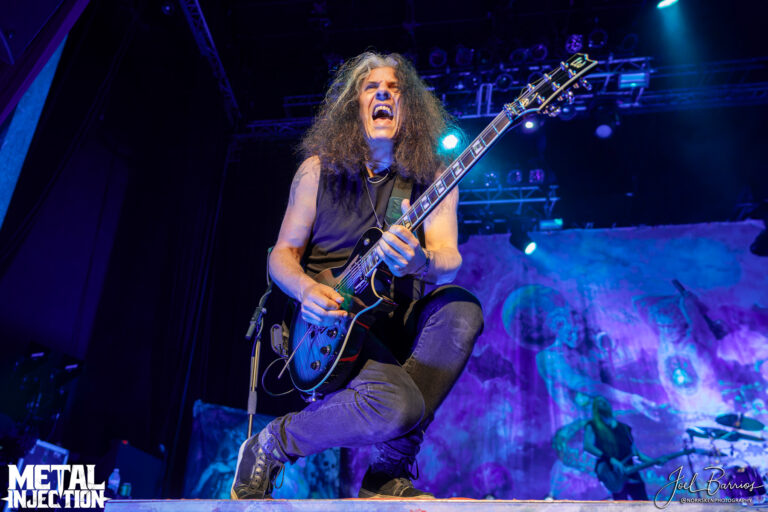
People love to rewrite thrash history as a nonstop rivalry. When Testament‘s Alex Skolnick got asked, in a recent interview with Tone-Talk, about the “vibe between thrash bands in the mid-to-late ’80s”, and whether there was “major rivalry and competition among the bands or more camaraderie and encouragement”, his answer leaned heavily toward unity, with one specific exception.

“Interesting question. I think overall more camaraderie and encouragement, because I don’t think any of the bands ever sounded the same. I grew up listening to Exodus and early Metallica. I discovered Metallica. They were already touring for the first record. By the time I played on my first record, Metallica was off to the races; they were already on Master Of Puppets.

Slayer had a few records out; I think Reign In Blood came out the same year. Anthrax had a few records out; they’d already been through a couple of singers. So all those bands — even Megadeth had a couple records out — they were already off and running, so I never really saw them as competition,” Skolnick explained.

He continued, explaining that the closest thing to a competitive flashpoint came when Exodus replaced their singer and grabbed someone from Skolnick‘s camp: “I think the only time where I did feel a sense of competition was after I’d been in my band for about a year — yeah, I think it was just over a year — Exodus parted ways with their singer [Paul Baloff], and they poached our singer [Steve ‘Zetro’ Souza, from the pre-Testament band Legacy].

Gary Holt is a great friend — Slayer [and] Exodus guitarist Gary Holt — I’m actually reading his book A Fabulous Disaster: From The Garage To Madison Square Garden, The Hard Way now, and I just got to the part where he’s talking about that. And I didn’t know this.”

“Apparently, they had split from their singer, Paul Baloff — may he rest in peace — either way. We didn’t know that at the time, but at the time we thought, ‘Oh, they’re coming after our guy. They’re trying to be more like us.’ And so there was a little sense of competition.

“But then we found a new guy — his name’s Chuck Billy, and he’s still in the band today. And it kind of made us sound really different, and we couldn’t have sounded like Exodus. And then they found a different sound once they had their singer, Steve ‘Zetro’ Souza, who had been in our band. So only for that time period, suddenly it felt, like, ‘Okay…’ It’s like a team. ‘Oh, they took our guy.’ But other than that, no — I think everybody got along surprisingly well, especially for how crazy everybody was. It was kind of a hard-partying scene. [We were] young and wild… And everybody’s great friends now,” Skolnick added.

He also broke down how he approaches the two-guitar setup in Testament, and how that compares to other heavy bands: “Yeah, I think it’s different for everybody. There are different types of two-guitar situations. I think for the genre that I came up in, which became known as thrash heavy metal, yeah, you had to have two guitars; it’s two-guitar music.

“So all the essential thrash bands — I mean, Metallica is not really a thrash band now; they’re mega supergroup, but they started out kind of leading this thrash movement with two guitars. Megadeth, two guitars, Slayer, two guitars, and it was modeled after groups like Iron Maiden and Judas Priest.

“And there are different types of situations. There are some groups where you have — Scorpions, for example. You have one guy who’s just the rhythm guy, main songwriter, Rudolf Schenker. AC/DC [is] the same model. And then you have other groups where you have somebody who’s, they’re the same ability [and] they play similar solo styles — Iron Maiden, Judas Priest — and it’s always different.

“And then you have somewhere — Megadeth is a good example where there’s a guy that’s very dedicated and more of a virtuoso player, but another guy that also plays solos — Dave Mustaine — and he’s got his own personality. And you have to figure out what type of group it is.”

Skolnick got specific about where he fits next to Eric Peterson, including how solos land song-to-song: “When we started out, Eric Peterson didn’t play many solos. He was more of influenced by groups like Motörhead and Venom, and just sort of more raw, heavy stuff. And I was coming from [Eddie] Van Halen, Randy Rhoads; I’d studied with [Joe] Satriani. But over the years, he’s developed a style.”

“So I think nowadays it’s a little more like Megadeth, where he’s kind of like the raw player, but he’s got his sound, and he’s like the Mustaine, and I’m the Marty [Friedman] or the Kiko [Loureiro],” he continued.

“And every song is different too. There are certain songs where it fits to have one guy or to have another. If it’s a solo like ‘Practice What You Preach’, where it goes through a number of different keys, tempos, and modes, that’s probably for me. But then we’ve got some newer stuff, a song like one of the new singles, ‘Shadow People’, where it’s just this raw vamp, and he plays great over that. So, you have to evolve and you have to work it out. You have to figure out, what kind of band are you? Are you the AC/DC type or the Scorpions type where it’s rhythm and lead guy, or is it two lead guys, or is it somewhere in the middle? So it’s different for every band.”


Source link

Why This Billionaire Holds a Family Meeting About Money Once a Quarter

0


In our first episode of “The WSJ Money Interview,” Kenn Ricci shares how he talks to his kids about money.


Source link

National Western celebrates 120 years with opening of new facility

0


National Western Headquarters
The National Western Stock Show signaled the start of its 120th edition on Saturday with the opening of its new world headquarters – The Legacy.


Source link

Bob Weir, Grateful Dead guitarist and founding member, dies at 78

0


“Bobby will forever be a guiding force whose unique artistry reshaped American music.”


Source link

Trump briefed on new options for military strikes in Iran, source says

0


President Trump was briefed on new options for military strikes in Iran, a senior U.S. official confirmed Sunday.

Mr. Trump appeared to lay out his red line for action on Friday when he warned that if the Iranian government began “killing people like they have in the past, we would get involved.”

“We’ll be hitting them very hard where it hurts,” he said at the White House. “And that doesn’t mean boots on the ground, but it means hitting them very, very hard where it hurts.”

On social media, Mr. Trump offered his support for the protesters, saying that “Iran is looking at FREEDOM, perhaps like never before. The USA stands ready to help!!!”

Mr. Trump’s warnings come as nationwide unrest challenging Iran’s theocracy crossed the two-week mark. At least 538 people have died in violence surrounding the demonstrations, U.S.-based activists said, with fears the death toll is far higher. More than 10,600 people have been arrested, the Human Rights Activists News Agency said.

The New York Times and The Wall Street Journal, citing anonymous U.S. officials, first reported Saturday night that Mr. Trump had been given military options but hadn’t made a final decision. The WSJ reports that Trump will receive further options on Tuesday.

The U.S. has not moved any forces in preparation for potential military strikes. 

America has many capabilities and options, and cyber attacks could be among them, according to a U.S. official who also confirmed that the Trump administration approves of Elon Musk’s decision to make Starlink terminals available in Iran. That satellite-based internet service could help protestors bypass government restrictions amid the ongoing communications blackout. Starlink did not respond to CBS inquiries.

The U.S. already has heavy sanctions on Iran’s regime, and in recent weeks has added to them. Energy Secretary Chris Wright said on “Face the Nation with Margaret Brennan” on Sunday that Mr. Trump has “moral support” for actions in Iran. He declined to answer a question about whether the U.S. would interdict vessels carrying Iranian oil for trading on the black market.

“I think the people in Iran are rising up because they feel there’s a strong America that has their back,” Wright said.

Iran’s theocratic rulers continue to claim that the protesters are agitators influenced by the U.S. and Israel. Secretary of State Marco Rubio and Israeli Prime Minister Benjamin Netanyahu spoke Saturday about the protests and other regional issues, according to US officials.

Mohammad Bagher Qalibaf, Iran’s parliament speaker and a hardliner who has run for the presidency in the past, warned Sunday that the U.S. military and Israel would be “legitimate targets” if the U.S. strikes the Islamic Republic.

“In the event of an attack on Iran, both the occupied territory and all American military centers, bases and ships in the region will be our legitimate targets,” Qalibaf said, according to the Associated Press. “We do not consider ourselves limited to reacting after the action and will act based on any objective signs of a threat.”

On Friday, Ali Khamenei, the Supreme Leader of Iran, said on X: “Our enemies don’t know Iran. In the past, the US failed due to their flawed planning. Today too, their flawed scheming will cause them to fail.”

There are currently 2,000 U.S. troops next door in Iraq, stationed on bases that have previously been targeted by Iranian-backed militias. There are also U.S. forces throughout the Mideast region, including significant hubs in Qatar, home of U.S. Central Command, and Bahrain, where the U.S. Navy’s Mideast-based 5th Fleet is stationed.

Back in June, Iran launched a missile strike on the Al Udeid Air Base in Qatar in retaliation for the U.S. airstrikes on three Iranian nuclear facilities.

Democratic Sen. Tim Kaine of Virginia, who is on the Senate Foreign Affairs Committee, said on “Face the Nation” that U.S. military action in Iran now to help the protesters would be a “massive mistake.” 

“It would have the effect of giving the Iranian regime the ability to say it’s the U.S. that’s screwing our country up,” Kaine said. “Right now, Iranians are blaming, appropriately, the regime for screwing up the country.” 

Kaine called for maintaining the sanctions pressure, noting that it had been successful against the Assad regime in Syria. Last December, armed rebels previously aligned with terror groups finally ousted Assad from power after a 14 year civil war.

“U.S. military action would bring back the painful history of the U.S. toppling the Iranian prime minister back in the 1950s and would give the regime the ability to blame their own failures on the United States,” he added.

When asked on Sunday if shooting protesters would be the “red line” for Mr. Trump that would trigger U.S. action, a senior U.S. official declined to explicitly confirm it, saying “only Trump can determine what the red line is.”

The White House and U.S. State Department have declined to answer questions about specific military options being considered.

The demonstrations began Dec. 28 over the collapse of the Iranian rial currency, which trades at over 1.4 million to $1, as the country’s economy is squeezed by international sanctions imposed in part to curb its nuclear program. The protests intensified and grew into calls directly challenging Iran’s theocracy.


Source link

Bob Weir Did Something Incredible After Naomi Judd Died

0


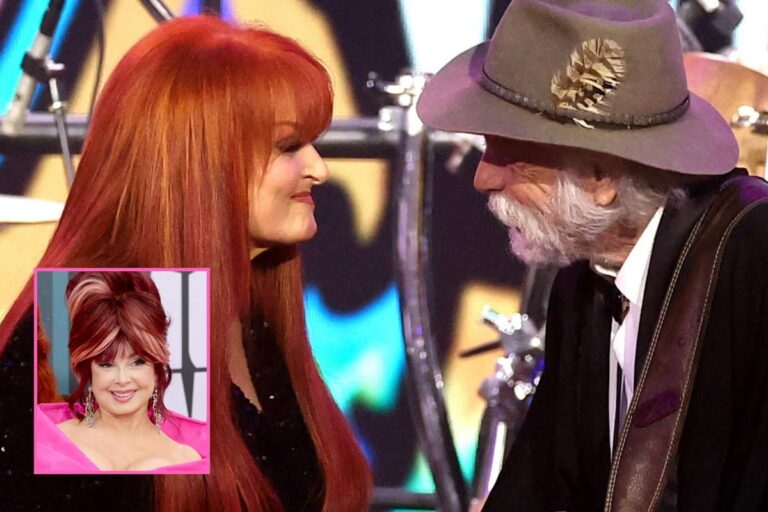
Many fans know that The Judds had a professional connection to The Grateful Dead’s Bob Weir. He and Wynonna Judd most recently shared the stage in January 2025 for the MusiCares Person of the Year ceremony.

But what fans might not know is just how deep their personal bond was. In fact, Wynonna Judd claims Weir as “family.”

Read More: Bob Weir’s Last Concert Was a Joyous Celebration

After Weir’s death on Saturday (Jan. 10), Wynonna Judd shared a story that shows the powerful friendship she and her late mother, Naomi Judd, shared with Weir through the years.

This story took place just after Naomi’s death in late April 2022.

What Did Bob Weir Do For The Judds After Naomi Judd’s Death?

Wynonna Judd recounted this memory as part of a tribute to Weir, who she said will always be known as Sir Robert Weir to her.

“My heart is broken over this loss,” she admitted.

“When Mom passed, we held our {private} celebration of life in Nashville,” she remembered. “Sir Robert got the call & showed up with no questions asked.”

“No publicity, no cameras, not even an expectation for him to take the stage — but he insisted on showing up in the best way he knew how,” Wynonna continued. “He joined the stage with my family, friends and musical peers. I will FOREVER honor the friendship that turned into family.”

What is Wynonna Judd’s History With Bob Weir?

Wynonna Judd has performed with Weir many times in recent years, starting in February 2020, when he joined her band The Big Noise at a tour stop in San Francisco.

Among the songs they played was the 1984 Judds classic, “Why Not Me,” along with multiple other The Judds and Grateful Dead songs.

That same month, they released a studio cover of the Grateful Dead’s “Ramble on Rose,” which was among the songs they played live at that San Francisco show.

“They say that when the student is ready, the teacher appears,” Judd said in a press statement at that time. “Robert Weir showed up in my life just in time. And I am so very thankful to have yet another opportunity to celebrate our musical gifts together!”

That song would find a home on Judd’s Recollections album, which also included covers of songs by Nina Simone and John Prine.

They also shared the stage at Nashville’s Ryman Auditorium in 2022 and at Brandi Carlile‘s Girls Just Wanna Weekend festival in 2023.

What Else Did Wynonna Judd Say About Bob Weir’s Death?

Judd shared snapshots of many of those performances they shared together, as well as some behind-the-scenes shots of her and Weir.

Matt Winkelmeyer, Getty Images

Matt Winkelmeyer, Getty Images

“At times he was a tough nut to crack, but I will always take pride in the fact that I could get him to laugh,” she wrote. “Sir Robert Weir…you have left a lasting imprint on my life.”

“The world lost a legend, I lost a friend,” the singer added.

Remembering the Country Stars Who Died in 2025

Several of the Grand Ole Opry’s most well-known stars are included among nearly 40 stories of country singers who died in 2025.

The year was also hard on celebrities attached to popular TV shows. Here is a list of the most notable deaths from this year, including several iconic songwriters, beloved hitmakers and famous spouses.

Gallery Credit: Sterling Whitaker


Source link