Bill Barnwell is a senior NFL writer for ESPN.com. He analyzes football on and off the field like no one else on the planet, writing about in-season X’s and O’s, offseason transactions and so much more.
He is the host of the Bill Barnwell Show podcast, with episodes released weekly. Barnwell joined ESPN in 2011 as a staff writer at Grantland.
The Patriots outlasted the Broncos in the snow to win 10-7 in the AFC Championship Game, while the Seahawks slid past the Rams in a high-scoring NFC Championship Game, winning 31-27. The result: The Patriots and Seahawks are going to Super Bowl LX on Feb. 8.
Did the Patriots simply benefit from Bo Nix not being in the Broncos’ lineup, or was this a statement game for the defense? Did Sam Darnold exorcise his Rams demons and prove he can win the big game? And were coaching decisions to blame for both the Broncos and Rams?
Sam Darnold finally came through. Regardless of what happens in the Super Bowl, Darnold has officially completed the rewrite of his career and gone from disappointing draft pick and journeyman to a meaningful part of a great team. And now, after definitively conquering a Rams team that seemed to have carved out a home in Darnold’s head, he’s one win away from a Super Bowl title nobody could have expected.
Even as Darnold rose from the depths of the time he spent with coaches Adam Gase and Matt Rhule on hopeless teams, it was always easy to qualify his successes. He was playing in a dream situation with the Vikings in 2024 given the coaching staff and playmakers, and advanced metrics saw him as something closer to an average quarterback. His brutal end to that season against the Lions and Rams in consecutive weeks convinced the Vikings that they were better off moving forward with J.J. McCarthy as a less-expensive solution under center.
Darnold joined the Seahawks, and for three months, he was the NFL’s most efficient QB. That success, however, also came within a play-action-heavy scheme and with a breakout superstar in receiver Jaxon Smith-Njigba, and when Darnold met the Rams again in Week 11, he cratered in a 21-19 loss. The 2018 No. 3 pick dropped from first in the NFL in Total QBR before the Rams game to 27th the rest of the way.
Even as the Seahawks beat the Rams in their December rematch, the story of that game was more about what surrounded Darnold. He averaged less than 1 air yard per throw in the first half, as the Seahawks tried to limit Darnold’s exposure to the Rams’ pass rush. Darnold threw two picks, giving him six in two games against Los Angeles, but he made a handful of important throws during the team’s fourth-quarter comeback and in overtime to help lead the Seahawks to a 38-37 victory.
The Seahawks hadn’t needed Darnold since then; they had relied on their defense and a resurgent running game to fuel their success down the stretch. That wasn’t the case Sunday. Running back Kenneth Walker III had a great game in terms of making unblocked or underblocked defenders miss, but Seahawks backs turned 22 carries into just 66 rushing yards. And a dominant Seahawks defense came up with a critical stop in the fourth quarter to hold on to a four-point lead, but the Rams again had little trouble marching up and down the field, averaging more than 8 yards per play and scoring 27 points. The Seahawks needed a great game from Darnold.
They got one. Darnold went 25-of-36 for 346 yards with three touchdown passes. His 82.9 Total QBR was the second-best performance by a quarterback this postseason, trailing only Josh Allen‘s herculean effort to beat the Jaguars in the wild-card round. Without much of a running game throughout the night, Darnold thrived as a dropback passer, throwing for a season-high 248 yards and two touchdowns without play fakes. The game was put on Darnold’s shoulders, and he repeatedly responded with accurate throws.
Perhaps as important, the negative plays that sparked so much frustration against the Rams in the past mostly disappeared. Darnold wasn’t intercepted and put only one ball in danger all night. He took three sacks, two of which came on plays in which pass rushers were instantly on Darnold, leaving him no choice but go down and eat the football.
Darnold’s struggles dealing with sustained pressure have been career-altering moments in the past, but he went 5-of-11 for 102 yards and hit all three of his touchdown passes against pressure. The visible panic and frustration Darnold has shown at times, particularly against these Rams, simply wasn’t there. Darnold had been on either side of the timing paradigm, either trying to extend plays and taking too many sacks or getting sped up and getting the ball out too quickly while getting tricked into interceptions. He was repeatedly on time, even under pressure, in the NFC title game.
play
0:16
Sam Darnold throws a dime to JSN for a TD
Sam Darnold throws a 14-yard touchdown pass to Jaxon Smith-Njigba to give the Seahawks a 17-13 lead vs. the Rams.
Organizationally, it seemed the Seahawks realized that their only way through the Rams was with Darnold involved and playing well, too. There was no repeat of the hide-the-QB game plan from the first half of Week 16, as Darnold hit Rashid Shaheed up the sideline for 51 yards on the first third down of the game and averaged 8.6 air yards per throw during Sunday’s contest.
And after the Seahawks got their fourth-quarter stop and handed the ball back to Darnold with a four-point lead, Seattle was able to bleed the Rams dry of timeouts and burn most of the remaining clock by staying aggressive and throwing the football. Darnold dropped back five times on second and third downs, and he rewarded the Seahawks for their faith. On a second-and-6 inside Seattle’s 10-yard line, offensive coordinator Klint Kubiak dialed up hard play-action and trusted Darnold to turn his back to the defense without giving the ball up. And the QB made the correct decision to check down to Walker, who ran away from a tackle and picked up a first down.
Darnold missed an open Shaheed on the ensuing second down on one of his worst throws of the night, but he made up for it by hitting Cooper Kupp on a crosser on the next play to pick up another first down. With 3:05 to go on the next second down, the Seahawks went back to play-action, and Darnold escaped the pocket to hit Smith-Njigba for another first down on the run. And with 2:17 left, another boot off play-action drew a holding penalty on Rams cornerback Cobie Durant, preventing Los Angeles from getting the ball back with anything more than a prayer. Darnold also hung on to the ball on the ensuing third down when nobody blocked defensive tackle Braden Fiske, who ran over the Seattle quarterback on what appeared to be a busted play.
It’s not dismissing Darnold’s performance to say that his receivers helped. Shaheed, who had previously made a massive impact as a runner and return man without really contributing as a receiver, finally brought in a deep shot in the opening quarter. Smith-Njigba made a spectacular one-handed catch and spun Kam Curl around on a corner-post route for a 42-yard gain. Kubiak got Smith-Njigba wide open for a touchdown on a blown coverage, lining the star wideout up in the backfield and running him into the end zone on a sail route. Kupp picked up three critical third downs. Heck, Jake Bobo stepped in and ran a post-corner route of his own for a score.
Of course, having a great game against the Rams doesn’t inoculate Darnold from struggling in the future. He’ll be criticized if he doesn’t play well in the Super Bowl. But the idea that having Darnold as your quarterback was disqualifying to your chances of competing for a title? That the journeyman QB would fold when the games really mattered against great defenses? Those lines of thought are out the window. Darnold just outplayed and beat the likely MVP in Matthew Stafford to go to a Super Bowl. For so long, Darnold’s past has felt like prologue. Now, it’s just the past.
The Rams, meanwhile, will feel like their 2025 losses all blend together. While Stafford and the offense turned the ball over six total times in two inexplicable defeats to the Falcons and Panthers, L.A.’s four other losses generally shared similar scripts. The Rams had weaknesses, and those weaknesses were exploitable. And while they had enough talent and star power to cover up those problems, subpar execution at the wrong time had a way of costing them close games against upper-echelon competition.
If the Rams were losing a big game this season, this was the typical script:
1. The special teams were a disaster. The Rams finished the season 26th in DVOA there, and even that might undersell how dramatically Sean McVay’s special teams came up short in key moments. A pair of blocked field goals cost them a win over the Eagles in Week 3. Another block and a miss helped decide a loss to the 49ers in Week 5. The Rams also missed a 48-yard field goal and allowed a Shaheed punt-return touchdown to help fuel the comeback win by the Seahawks in Week 16, leading McVay to fire special teams coordinator Chase Blackburn two days later.
Things haven’t gotten much better since then, although the Rams had previously managed to overcome those issues. The Panthers blocked an Ethan Evans punt with 4:18 to go in the fourth quarter in the wild-card round, turning the ensuing short field into a touchdown to take the lead. Evans then managed only a 33-yard punt late in the fourth quarter against the Bears, setting Chicago up at midfield as it drove for the game-tying touchdown at the end of regulation. In both cases, the Rams were able to win the game despite those issues.
They weren’t quite as lucky Sunday. This time, punt returner Xavier Smith was to blame. The 28-year-old muffed two punts, and he fell on the first, but wasn’t as lucky on the second, as Smith fell over in what must have felt like slow motion before the ball bounced off his body early in the third quarter. The Seahawks recovered on Los Angeles’ 17-yard line, and Darnold hit Bobo for a touchdown on the next play. It was the only turnover of the game, and the short field was likely the difference in what was otherwise a very close contest.
Dareke Young was the Seahawks player who initially pressured Smith and then recovered the loose ball. He ran past Rams cornerback Emmanuel Forbes Jr. on punt coverage. Forbes’ performance Sunday was part of another common problem for the Rams in their losses …
2. Teams were able to pick on the cornerbacks. This was the clear weak spot on GM Les Snead’s roster, but the Rams trusted that their scheme and pass rush would be enough to cover for an underwhelming crew of cornerbacks. The only significant move they made to add talent at the position was trading for Titans cornerback Roger McCreary, who didn’t play for most of the regular season. Forbes outplayed expectations after struggling to live up to his draft stock in Washington, but teams were able to pick on him in key spots, including plays in the Rams’ loss to the Eagles and on a pair of fourth-down scores in their loss to the Panthers in Week 13.
play
0:16
Cooper Kupp gets controversial first down late in 4th
Cooper Kupp makes a clutch catch for the Seahawks that the referees rule a first down in a critical moment.
The Rams have spent the entire postseason cycling through their options at corner. Ahkello Witherspoon sustained a shoulder injury early in the wild-card win over the Panthers, ending his season, which led the Rams to bring back Darious Williams, who was a healthy scratch for that contest. Forbes also suffered a shoulder injury and played just four snaps in the Rams’ win over the Bears last week, leading to larger roles for Williams and McCreary.
Forbes practiced in full on Friday and had no injury designation heading into the game, but despite being one of the team’s regular corners alongside Durant for most of the year, he didn’t play a single defensive snap in the first half of Sunday’s loss. Forbes did play on special teams, which seemed to suggest that he might not be able to tackle if used on defense — but then the Rams put the third-year pro on the field for 24 defensive snaps in the second half. If Forbes was healthy enough to play defense after halftime, why wasn’t he on the field beforehand?
The answer is the Rams were probably desperate to get Williams off the field at that point. The veteran, whose spot on the roster has likely been a product of his $8 million in salary guarantees this season, was a liability for the Rams early in this game. Shaheed simply torched the 32-year-old for a 51-yard gain on the opening series, with an ankle tackle required to save a touchdown. On the next snap, Williams played off-coverage against Smith-Njigba, with the Seahawks throwing a one-step hitch to their star wideout, who simply vaporized Williams with a juke. Smith-Njigba then picked up 16 yards on a curl against Williams in the second quarter. In all, Williams played just nine defensive snaps in the third quarter and none in the fourth.
Williams wasn’t the only cornerback who struggled. Durant had a key third-down pass breakup, but he allowed a touchdown pass to Bobo, appeared to be one of the defenders involved in the blown coverage on the Smith-Njigba score, gave up a critical third-down conversion to Kupp on the final drive and finished the day by being flagged for holding on Kupp to all but end the game.
3. A fourth-down play goes awry. Some of those fourth downs were kicks, but the Rams’ loss to the 49ers swung on a red zone fumble by Kyren Williams and a subsequent fourth-down failure in overtime, when McVay regretted dialing up a duo run for Williams on fourth-and-1 in the red zone while trailing by three. The 49ers stuffed it for no gain to end the game.
Last time, McVay blamed himself. This time, after the Rams were stopped on fourth-and-4 from the 6-yard line with 4:59 to go, he had a more curious culprit. I’m not sure I’ve ever heard a coach blame the other team busting a coverage for stopping their fourth-down play, but that’s exactly what McVay did after the game: “They kinda lucked into having two guys peel on Kyren right there. I know that can’t be part of their design. So it was a fortuitous bust by them.”
I wouldn’t judge Seahawks fans for seeing that quote and screaming about sour grapes, but let’s understand what happened from McVay’s perspective, too. On the fourth-and-4, the Seahawks were crowding the line of scrimmage and showing a zero blitz, suggesting to Stafford that he needed to get the ball out quickly. At the snap, they actually dropped out and rushed only three, bracketing Puka Nacua in the slot.
McVay has grown fond of throwing the ball to Williams on third and fourth downs this season on choice routes, where Williams has a lot of open space and the ability to break inside or outside depending on the leverage of the coverage. It’s a natural place to go with the football when we consider how much attention teams are putting on Nacua and Davante Adams in key spots. Williams is never getting double-covered in those situations, and if the Rams create space for him with their route distribution, it’s almost impossible for the defender to be right.
On this play, Williams released upfield and headed toward the end zone. The end man on the line was safety Julian Love, who looked like he was beat quickly by Williams while trying to drop into coverage, but edge rusher DeMarcus Lawrence also dropped off and ran with Williams, taking away the quick throwing lane for Stafford, who had to work elsewhere. The veteran eventually forced a throw to Terrance Ferguson against tight coverage from Devon Witherspoon, with the pass falling incomplete. Fortuitous coverage bust? Or did Mike Macdonald recognize McVay’s tendency of creating space for Williams in key spots and double the right guy at the right time? Ultimately, it doesn’t matter; the Rams failed on a key fourth down, and they never came close to taking the lead again.
There was another factor that hasn’t typically been a problem in 2025. McVay has massively improved his game management and fourth-down decision-making this season after lagging behind the rest of the league for most of his tenure as a head coach. On Sunday, though, McVay made two obvious mistakes, and they might very well have changed the game.
Late in the third quarter, the Rams got a huge break courtesy of Seahawks corner Riq Woolen, who dropped a pick, was then flagged for taunting to give the Rams a first down, and then immediately allowed a long touchdown pass to Nacua on the next play. While the Rams were perhaps still emotionally recovering on the sideline from Woolen’s vicious taunting, McVay made a simple mistake.
The touchdown put the Rams down five at 31-26, pending the extra point. McVay kicked. There’s not a huge win probability swing by kicking there, given how much time was left, but ESPN’s win probability model suggests that teams should go for two in that situation if they have even a 33% chance of converting. The Rams, with a historically efficient rushing attack, certainly would trust their chances of converting at a higher rate.
Coaches aren’t necessarily thinking about those endgame scenarios late in the third quarter, and there’s an old coaching trope about how teams shouldn’t go for two until the fourth quarter, even if the current score suggests that a 2-pointer would be valuable. It’s one of those numbers-based arguments that never seems to hold up under scrutiny. Conservative coaches and announcers often justify taking the points and kicking field goals early in games by using the present score and plugging in what a field goal would do; indeed, we’ll talk in a minute about the Broncos, who were supposed to take the points and go up 10-0 to make the game a two-score contest in the second quarter.
play
0:16
Seahawks get critical fourth-down stop in red zone
Devon Witherspoon breaks up Matthew Stafford’s pass to Terrance Ferguson in the end zone on fourth down.
Why should the present score matter if you take the points but not matter if you’re going for two? The benefits of going for two down five are obvious: You’d need a touchdown to win whether you’re down four or five, but if you get the 2-pointer, you’d be down three and can tie the game with a field goal. You wouldn’t know if you’ll need that 2-pointer, but you also don’t know whether that field goal to make it a two-possession game in the first half will end up being essential by the end of the day, either.
Computers can do a better job of sorting through all the various scenarios of how many possessions are left and how likely each team is to score in advance of a 2-point decision like that, but the simplest argument is to act on what the score is right now. And after a 28-point third quarter, neither team scored in the fourth, meaning that the Rams really did need that 2-pointer.
If the Rams had failed and stayed down five, their endgame wouldn’t have changed. If they had succeeded and been down three, of course, the Rams could have kicked a field goal to tie the game with 4:59 to go on fourth-and-4. Instead, down by four points, they had no choice but to try scoring a touchdown.
The other mistake came on the ensuing possession. While the refs ruled that Kupp’s catch on third-and-7 gave the Seahawks a first down, the initial replays seemed to hint that the veteran wideout might have been just short of the sticks. McVay called his second timeout, then had his challenge flag in his hand, but he didn’t risk using his final timeout to challenge the spot.
This was a clear mistake. Given a tight spot and the game situation, McVay very clearly should have just thrown the challenge flag to have the spot reviewed as opposed to calling a traditional timeout. If the challenge had failed, nothing would have changed: The Rams would have essentially burned a timeout to stop the clock. And if the challenge succeeded, of course, the Rams wouldn’t have lost a timeout and could have used it to stop the clock in advance of a fourth-down decision by Seattle.
Coaches don’t want to waste challenges, but there was virtually no downside here. The Rams were a minute away from the two-minute warning, at which point all challenges come from the replay booth. McVay had two challenges remaining. Unless he thought that the initial spot was ruled short on the field, believed it was fourth down and used his timeout before learning otherwise, this was a missed opportunity.
play
0:31
Rams’ botched punt return leads to Seahawks TD
Xavier Smith muffs a punt for the Rams and Dareke Young recovers, setting up a Jake Bobo touchdown for the Seahawks on the next play.
Those decisions didn’t single-handedly decide the game, but the Rams stacked some sloppy decision-making and work on the field. Stafford and the rest of the offense couldn’t overcome those mistakes.
Nobody said it had to be pretty. The most memorable game of the 2001 Patriots’ trip to the Super Bowl was their divisional-round win over the Raiders in Foxborough. While we call that the “Tuck Rule” game because of the fateful call that overturned a Tom Brady fumble, the most impressive play from that matchup was Adam Vinatieri‘s 45-yard field goal in whiteout conditions to tie the game with 27 seconds to go. The legendary kicker then hit a 23-yarder in overtime, sending the Pats to the AFC title game and eventually to a stunning Super Bowl victory.
Sunday’s win over the Broncos won’t be quite as memorable. It was decided by a 23-yard field goal from Andy Borregales, but that kick came early in the third quarter and was the only successful try out of five attempts by the two kickers in this game. Conditions were fine during the first half, but by midway through the third quarter, weather took over the contest and reduced the game to something out of the 1970s, both in terms of play selection and video fidelity.
The Broncos managed just 32 yards and one first down over their five possessions in the second half. Jarrett Stidham got off to a solid start, but after the first quarter, his 26 dropbacks produced just 37 net yards. Denver’s best chance of scoring in the second half came after a brutal 33-yard punt by Bryce Baringer, which handed the Broncos the ball in field goal range, only for Wil Lutz‘s 45-yard kick to be blocked.
Stidham made the game’s biggest mistake, though. Facing pressure on a third-and-4, he drifted backward and tried to get outside the pocket to avoid an intentional grounding penalty. Stidham tried to flip the ball out just as he was hit by Christian Elliss. The play was initially ruled as grounding before being reevaluated as a backward pass and fumble. The Pats were denied a defensive touchdown by the referees blowing the play dead, but Drake Maye ran a touchdown in from 6 yards out to tie the game at 7.
The Broncos will feel like they missed an opportunity. Maye and the Patriots’ offense did little in this game, struggling to consistently move the ball even before the weather arrived. Just two of New England’s 12 drives yielded more than one first down. Denver safety Talanoa Hufanga dropped what would have been an interception on the Pats’ opening series of the game, with the Broncos fooling Maye in coverage as the second-year star tried to throw a slant to Stefon Diggs.
If Stidham just goes down for a harmless sack on that third-and-4 and the Broncos punt the ball away, they might have been OK. The weather might have kept the Patriots from having any chance of scoring in the fourth quarter.
Sean Payton was second-guessed during and after the game for deciding against kicking a field goal to go up 10-0 early in the second quarter. With Denver facing a fourth-and-1 on New England’s 14-yard line, the ESPN Analytics model was very comfortable with Payton’s decision at the time. (Running the ball might have been preferable, though, to the Broncos putting the ball in the hands of their backup quarterback.)
Payton might have wanted to play for a low-scoring game if he knew the weather system was going to be as severe as it was by the second half, but the way the game played out is evidence of how valuable a touchdown can be in this sort of contest. If the Broncos kick a field goal and nothing else changes, the score’s 10-10, and the game goes to overtime, where they have a 50-50 shot of winning. If they convert and score a touchdown and nothing else changes, they win 14-10 and go to the Super Bowl. Given how little the Patriots were able to do on offense, 14 points might very well have been insurmountable.
The other what-if will be more painful, given that the Broncos didn’t haveBo Nix on Sunday. Nix had his ups and downs this season, but he was essentially a league-average starter for the second consecutive year, and that’s a lot better than Stidham, who wasn’t able to do much after the scripted plays ran out. He hit Marvin Mims Jr. with a great throw past a flat-footed Christian Gonzalez for a 52-yard gain to set up Denver’s only touchdown. But Stidham’s six other throws of 10 or more yards downfield produced just 6 yards.
play
0:19
Drake Maye runs in for a Pats TD in the AFC Championship
Drake Maye calls his own number to find the end zone and level the score for the Patriots in the AFC Championship.
Ending the year without Nix was obviously unlucky, and the Broncos were without wideout Troy Franklin and lost fellow wideout Pat Bryant to an injury for the second consecutive week. But this was a relatively healthy team in 2025, with Nix and safety Brandon Jones (who was hurt late in the year) as the only starters to finish the season on injured reserve. The Broncos were also one of the league’s oldest teams on a snap-weighted age basis, and so while the Broncos do have some young stars, Payton has relied on veterans and free agent additions to help make them competitive. That nearly led them to a Super Bowl, but after going 9-2 in one-score games and adding a 10th close win against the Bills last week, the Broncos weren’t able to squeak out another narrow win at home in the AFC Championship Game.
Given those factors, it’s tough to imagine them being back here again in 2026, although it’s fair to say there weren’t many people who expected the Broncos to be hosting the Patriots in this game at the start of the season, either.
As for the Patriots, well, they might be even more difficult to evaluate now than they were before the postseason. Before the playoffs, everybody could agree that Maye was playing lights-out football and that the Pats had benefited from playing an easy schedule. They eventually finished, per Pro-Football-Reference.com‘s methodology, with the 10th-easiest regular-season schedule for any team since the 1970 AFL-NFL merger. The postseason was supposed to be a test of whether the Patriots were for real.
Winning means you pass the test, of course, but it’s not exactly happening the way we would have expected. Maye has struggled through a difficult postseason, running a 51.1 Total QBR, which was roughly about what Tyler Shough had during the regular season. He has held on to the ball too long, fumbled six times and thrown two interceptions, although he was able to make it through Sunday’s game without turning the ball over.
Maye has made a handful of perfect throws during this run, including a flea-flicker to Mack Hollins that served as his only completion of more than 10 yards on Sunday. He has also made an impact with his legs, which was Maye’s primary contribution in the Pat’s win over the Broncos. He turned 10 carries into 65 yards, including a 6-yard touchdown and scrambles of 13, 16 and 28 yards, which set up the game-winning field goal and two Borregales misses. Maye sealed the AFC up by keeping the ball on a third-down naked bootleg and outrunning Jonah Elliss to the sideline for a first down to end the game. It wasn’t a memorable passing performance, but Maye still found a way to add meaningful value on a day when the Pats couldn’t do much on offense.
And ironically enough, if Maye does end up winning the Super Bowl, this will go down as one of the more impressive runs through defensive juggernauts by any quarterback in recent memory. By EPA per play rankings, Maye has already beaten the third- (Texans), sixth- (Chargers) and seventh-best (Broncos) defenses in football. He’s about to face the best by this metric in the Seahawks in Super Bowl LX. I won’t argue that he has been anywhere near as impressive in the playoffs as he was during the regular season, but if Maye wins in two weeks, there can’t be many quarterbacks who have beaten four of the league’s top seven defenses in a single postseason run.
Instead, the story of the playoffs for the Patriots has been their defense. While advanced metrics were still fond of Maye even after adjusting for quality of opposition, the same wasn’t true for the defense. New England’s defense finished the season 23rd in DVOA and 18th in ESPN’s Football Power Index. The Pats lost star defensive tackle Milton Williams to a midseason ankle injury before returned in Week 18, but they weren’t rated as a top-10 unit even before he went down.
Since the start of the postseason, though, the Pats have suffocated opposing offenses. They’ve allowed a total of 26 points through three games. With the offense struggling, Zak Kuhr’s defense has also faced a ton of possessions, making that an even more impressive figure. The Pats are allowing just 0.72 points per drive in the playoffs. Since 2000, the only team to play three postseason games on their side of the bracket and allow fewer points per drive is the 2000 Ravens, who were one of the most dominant defenses in NFL history.
Of course, as always with the 2025 Patriots, there are reasons to be skeptical. Every team the Pats have faced was compromised by injuries. The Chargers were down their top two offensive tackles (Joe Alt and Rashawn Slater) and couldn’t protect Justin Herbert. The Texans entered their divisional-round game withoutNico Collins and then lostDalton Schultz in the first half, costing C.J. Stroud his top two receivers. And the Broncos were starting Stidham, who hadn’t thrown an NFL pass in two years, with a trip to the Super Bowl on the line. Throw in some messy weather to help out the defense, and we can talk ourselves into the Pats’ defense being a mirage.
The truth is somewhere in between. This unit was unlucky in terms of red zone performance during the regular season, ranking fifth by EPA per play outside the red zone and 28th inside the 20. The Patriots really did miss Williams, who had three of the team’s five quick pressures on Sunday. K’Lavon Chaisson has had a career year, and he had a much-needed solid performance with Harold Landry IIIsidelined, but the strength of the Pats’ pass rush is the interior pressure from Williams and Christian Barmore.
play
0:45
Christian Gonzalez gets big INT late for Pats
Jarrett Stidham looks deep, but Christian Gonzalez comes away with the ball as the Patriots take over late in the AFC Championship.
Their other strength is at cornerback, and that’s where the story might crystallize. When the Patriots signed Carlton Davis III this offseason in free agency, it seemed they were establishing a clear plan of playing plenty of man coverage. The Pats had been one of the league’s most man-heavy defenses under Bill Belichick and Jerod Mayo, and in Gonzalez, they already possessed one of the league’s finest young cover corners. Combining Gonzalez and Davis gave the Pats the freedom to do whatever they wanted in coverage.
During the regular season, though, the Pats didn’t really play much man, perhaps to make life easier for rookie safety Craig Woodson. They were in man coverage just 37.2% of the time, which ranked 23rd in the league. While Kuhr went to playing man more than 50% of the time in the Pats’ Week 15 loss to the Bills, they were generally a zone coverage team. That extended through the first two weeks of the postseason.
On Sunday, though, the Patriots played man on 50% of Stidham’s dropbacks. They dominated Denver’s receivers in the process. Stidham went 11-of-16 for 97 yards against zone looks, but the Broncos starter was 6-of-15 for just 36 yards with a touchdown and an interception (by Gonzalez) against man coverage. Getting into man looks allowed the Pats to blitz Stidham more than 40% of the time, and he averaged just 2.5 yards per pass attempt against the blitz.
Were the Patriots willing to lean into man coverage only because of the presence of Stidham and the dismal weather in Denver? Or was this a sign that they’re going to be more aggressive playing man in the Super Bowl? Belichick was famously insistent on stopping the opposing team’s top playmaker in big games. And while the Pats could try sticking Gonzalez on Smith-Njigba, Belichick typically preferred to bracket or double-team the opposing team’s star while sticking his best cover corner on the opposing team’s second-best wideout.
There’ll be plenty of more time to talk about that in next week’s Super Bowl preview, but on Sunday, the Pats were able to get aggressive on defense and squeak out a close victory.
Quieter weather has moved back into New Mexico after this weekend’s winter storm. Temperatures will stay cool, but slowly warm through the week. It was a bitterly cold morning across parts of New Mexico, with several locations breaking record cold low temperatures. Roswell shattered a record low, dropping to -6°. Roswell has also broken a […]
DAKAR, Senegal — The sun has not yet risen in Senegal’s capital, Dakar, but about 100 people in swimsuits and life jackets already crowd a section of beach, ready for aquagym class.
In the chilly Atlantic, 63-year-old Aminata Sall is soon kicking in rhythm with others, foam noodles tucked under her arms. On the beach, people with limited mobility are buried knee-deep in the sand and gently rotate their torsos in a therapy session meant to ease pain.
Sall’s doctor once warned her she could lose the ability to walk within five years because of rheumatoid arthritis, an autoimmune disease that causes pain, stiffness and swelling in the lining of joints and can cause severe damage if left untreated.
“The shock was enormous,” she said. “I stayed at home for almost a year, doing nothing.” Then one morning she wandered down to a beach in Dakar’s Ngor neighborhood and saw people exercising in the water.
“I asked what they were doing, and they told me to try,” she said. “I’m still walking.”
Senegal’s first aquagym program with its low-impact exercises has drawn praise from health professionals for helping people with reduced mobility caused by chronic illnesses such as heart disease, stroke and arthritis.
As life expectancy rises sharply across Africa, these diseases have become more common, often leaving older adults with pain and limited mobility. But prevention, diagnosis and rehabilitation services have not kept pace on a largely youthful continent whose public health systems prioritize infectious diseases, maternal care and children.
Many older people have little access to geriatricians or other doctors and tend to forego diagnostics or treatment to cut costs.
The aquagym emerged little over a decade ago as a rare, low-cost option to relieve pain and improve mobility.
After Sall was diagnosed with her autoimmune condition, she said her doctor told her she would need surgery at a cost of about $10,000, which she could not afford. She was prescribed an anti-inflammatory drug, but it was later taken off the market due to complications.
“That’s when I started losing hope,” she said. “Some mornings, a blocked vertebra or swollen ankles would leave me unable to move all day.”
In Senegal, most medical care is paid out of pocket. Public insurance coverage is limited, and private plans remain unaffordable for many. Costly procedures like surgery are often not covered.
“A lot of people don’t come to us until things get really bad, and by then it’s much harder and more expensive to treat them,” said Dr. Seydina Ousmane Ba, director of the National Orthopedic Prosthetics and Rehabilitation Center in Dakar.
Khadija Wade, 76, has spinal stenosis, a degenerative condition that can compress and irritate the nerves in the spinal cord. She was diagnosed three years ago and her condition worsened after her husband died earlier this year.
“I became very sedentary. I could spend an entire month at home without walking,” Wade said.
Many suggested she see a specialist in Italy or France, but visas are hard to obtain for many Senegalese and treatment abroad is costly.
Last month, Wade began aquagym classes on her doctor’s recommendation. She said she is already seeing results.
“I came to my first session with a cane, but now I can walk without it,” she said.
People with reduced mobility in West Africa face especially steep hurdles, said Clément Philit, director of Handicap International in Senegal. Public spaces and transport are often inaccessible, and specialized health care and rehab services are scarce, he said.
“Aquagym has benefits you don’t always get on land,” Ba said. “The water supports your body, reduces pain and makes movement easier, so patients can exercise more comfortably.”
The program’s founder and head coach, 69-year-old Ndiamé Samb, previously worked as a firefighter specializing in underwater operations before becoming a lifeguard in 1988, teaching swimming to older people.
Samb is a member of the Lebu, considered the Indigenous people of Dakar’s peninsula, who have maintained strong cultural and spiritual ties to the ocean.
While training in Paris, Samb discovered aquagym and its benefits. His classes in Dakar are among the few in the world that are held in the sea rather than a pool. Public pools remain rare, and the sea is free.
“At first it was just eight or 10 people coming to the class,” Samb said. “But now, we sometimes get up to 200 people per session and have a total of around 600 students.”
The low-cost aquagym classes — 300 CFA francs ($0.50) per session — are led by volunteer coaches. The fees are used to keep the center running and buy equipment, along with a $3,000 subsidy the city granted this year.
Samb’s brother Alassane, 60, a lifeguard and licensed massage therapist, guides new participants and said some even come from France and the United States for treatment.
As the day’s session ends, Sall walks out of the water with a smile. She attends three times a week.
“What keeps me coming back is seeing other people not giving up,” she said.
The Associated Press receives financial support for global health and development coverage in Africa from the Gates Foundation. The AP is solely responsible for all content. Find AP’s standards for working with philanthropies, a list of supporters and funded coverage areas at AP.org.
Metalcore quartet Mire have just announced their forthcoming record, Pale Reflection, due out on April 10th, delivering the news alongside a brand new single, the album’s title track, “Pale Reflection” and an accompanying music video. Consisting of vocalist BentonMcKibben, guitarist NickHipa (ex-AsILayDying), bassist/guitarist RyanGlisan (ex-Allegaeon), and drummer JPAndrade, it’s the first Mire record with this lineup.
The track dropped this past Friday, with Hipa saying that they were, “stoked to finally release some new @thebandmire music! The best time to drop new tunes was actually in 2023 when we had the whole record written, the second best time was in 2024 after we finally found the time to track it. [Everyday] life, responsibilities, and logistics proved to be formidable obstacles for those targets though, so the THIRD best time is right now.
Today we’re releasing the first single “Pale Reflection,” which is the title track off our upcoming album Pale Reflection. It is the first to feature our rad new drummer @johnpaulondrums and was mostly recorded at @atriumaudio in Lititz, PA, by the super talented and very chill duo of @grantrmcfarland and @carsonslovak who also handled mixing and mastering.”
GrantMcFarland and CarsonSlovak are known for their work with AugustBurnsRed and TheLastTenSecondsOfLife, and so, there’s hope that there will be more of this kind of material to come.
The new single is available for streaming on Bandcamp, and Pale Reflection is available for pre-order here. You can find the album’s tracklist, and the brand new music video, below.
Pale Reflection Tracklist:
“Pale Reflection”
“Cultures of Violence”
“The Master”
“Where I Belong”
“Great Pain”
“Human Condition”
“Significance Plague”
“Which One Am I”
“Send Us”
Want More Metal? Subscribe To Our Daily Newsletter
Enter your information below to get a daily update with all of our headlines and receive The Orchard Metal newsletter.
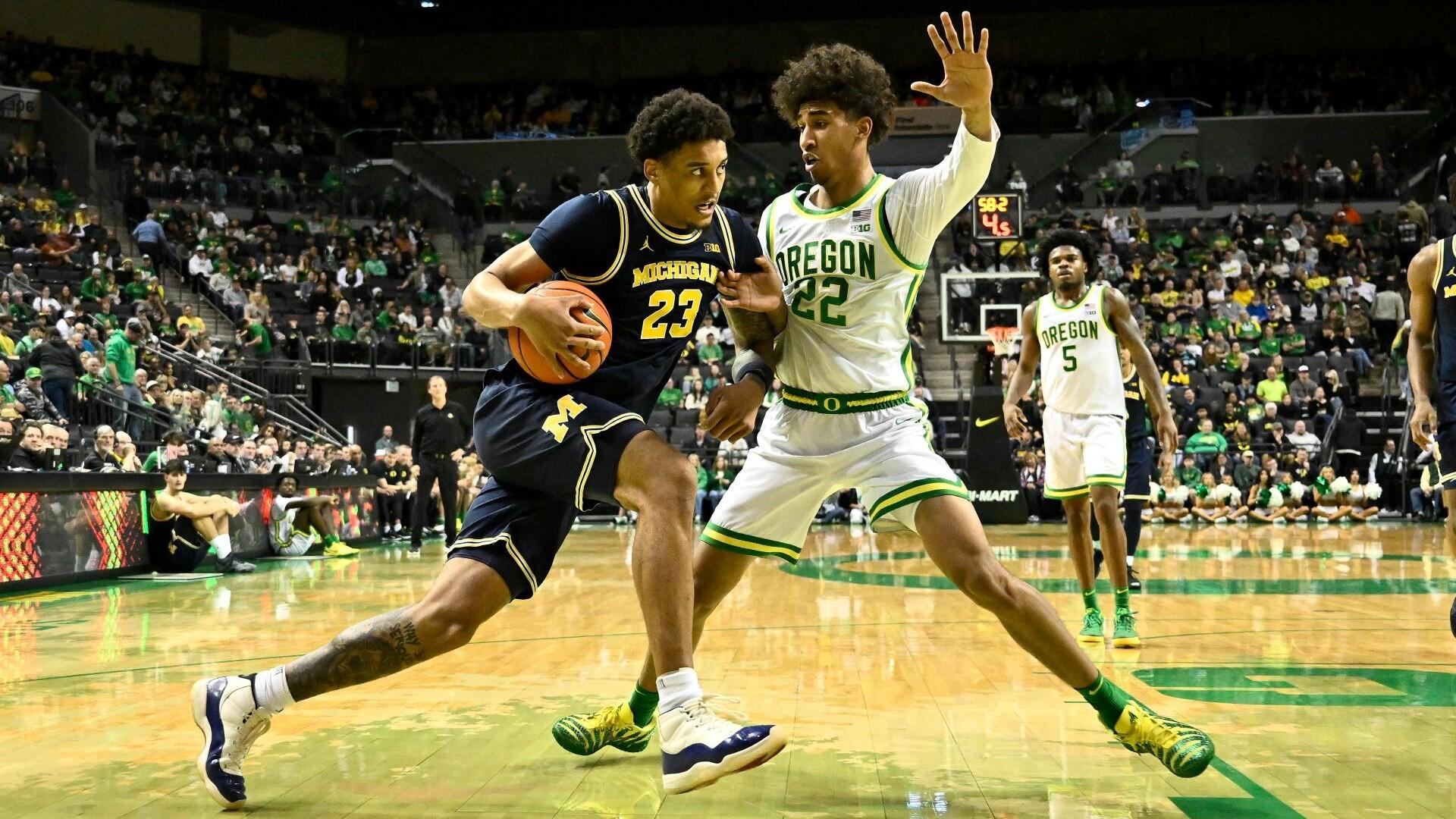
The seventh-ranked Nebraska Cornhuskers will look to move closer to Big Ten Conference supremacy when they take on the third-ranked Michigan Wolverines in a key clash on Tuesday night. Nebraska is coming off a 76-57 win at Minnesota on Saturday, while Michigan downed Ohio State 74-62 on Friday. The Cornhuskers (20-0, 9-0 Big Ten), who hold a one-game lead over Michigan, Michigan State and Illinois, are 5-0 on the road this season. The Wolverines (18-1, 8-1 Big Ten), who have won four in a row since losing 91-88 to Wisconsin on Jan. 10, are 9-1 on their home court.
Tipoff from Crisler Center in Ann Arbor, Mich., is set for 7 p.m. ET. Michigan leads the all-time series 23-5, including a 12-1 edge in games played in Ann Arbor. Michigan is a 10.5-point favorite in the latest Nebraska vs. Michigan odds from DraftKings Sportsbook, while the over/under for total points scored is 154.5. Before making any Michigan vs. Nebraska picks, check out the men’s college basketball predictions and betting advice from the SportsLine Projection Model.
The SportsLine Projection Model simulates every college basketball game 10,000 times and it enters Week 13 on a sizzling 10-1 run on its top-rated over/under college basketball picks dating back to last season, and it is on a 6-0 roll on college basketball side picks. Anyone following its college basketball betting advice at sportsbooks and on betting apps could have seen strong returns.
SportsLine’s model is going Over on the total (154.5 points). The Over has hit in four of the last six meetings between the teams. Nebraska is 6-4 against the spread in its last 10 games, while Michigan is 3-7 ATS in its last 10.
The model projects the Cornhuskers to have five players register 11 points or more, including Pryce Sandfort’s projected 17 points. The Wolverines, meanwhile, are projected to have five players score 9.9 or more points, led by Yaxel Lendeborg, who is projected to score 14.9 points. The model projects a combined total of 156 points as the Over clears in well over 50% of simulations.
Iran’s bloody crackdown on nationwide protests killed at least 6,126 people while many others still are feared dead, activists said Tuesday, as a U.S. aircraft carrier group arrived in the Mideast to lead any American military response to the crisis.The arrival of the USS Abraham Lincoln aircraft carrier and guided missile destroyers accompanying it provide the U.S. the ability to strike Iran, particularly as Gulf Arab states have signaled they want to stay out of any attack despite hosting American military personnel.Video above: Donald Trump says Iran wants to negotiate with the U.S. after his threat to strike the countryTwo Iranian-backed militias in the Mideast have signaled their willingness to launch new attacks, likely trying to back Iran after U.S. President Donald Trump threatened military action over the killing of peaceful protesters or Tehran launching mass executions in the wake of the demonstrations.Iran has repeatedly threatened to drag the entire Mideast into a war, though its air defenses and military are still reeling after the June war launched by Israel against the country.Both the Houthis and Kataib Hezbollah sat out from Israel’s 12-day war on Iran that saw the United States bomb Iranian nuclear sites. The hesitancy to get involved shows the disarray still affecting Iran’s self-described “Axis of Resistance” after facing attacks from Israel during its war on Hamas in the Gaza Strip.Activists offer new death tollThe new figures Tuesday came from the U.S.-based Human Rights Activists News Agency, which has been accurate in multiple rounds of unrest in Iran. The group verifies each death with a network of activists on the ground in Iran.It identified the dead as including at least 5,777 protesters, 214 government-affiliated forces, 86 children and 49 civilians who weren’t demonstrating. The crackdown has seen over 41,800 arrests, it added.The Associated Press has been unable to independently assess the death toll given authorities cutting off the internet and disrupting calls into the Islamic Republic.Iran’s government has put the death toll at a far lower 3,117, saying 2,427 were civilians and security forces, and labeled the rest “terrorists.” In the past, Iran’s theocracy has undercounted or not reported fatalities from unrest.That death toll exceeds that of any other round of protest or unrest there in decades, and recalls the chaos surrounding Iran’s 1979 Islamic Revolution.The protests in Iran began on Dec. 28, sparked by the fall of the Iranian currency, the rial, and quickly spread across the country. They were met by a violent crackdown by Iran’s theocracy, the scale of which is only starting to become clear as the country has faced more than two weeks of internet blackout — the most comprehensive in its history.Iran’s U.N. ambassador told a U.N. Security Council meeting late Monday that Trump’s repeated threats to use military force against the country “are neither ambiguous nor misinterpreted.” Amir Saeid Iravani also repeated allegations that the U.S. leader incited violence by “armed terrorist groups” supported by the United States and Israel, but gave no evidence to support his claims.Iranian state media has tried to accuse forces abroad for the protests as the theocracy remains broadly unable to address the country’s ailing economy, which is still squeezed by international sanctions, particularly over its nuclear program.Some Iranian-backed militias suggest willingness to fightIran projected its power across the Mideast through the “Axis of Resistance,” a network of proxy militant groups in Gaza, Lebanon, Yemen, Syria and Iraq, and other places. It was also seen as a defensive buffer, intended to keep conflict away from Iranian borders. But it has collapsed after Israel targeted Hamas, Hezbollah in Lebanon and others during the Gaza war. Meanwhile, rebels in 2024 overthrew Syria’s Bashar Assad after a yearslong, bloody war in which Iran backed his rule.Video below: Thousands demonstrate in LA in support of protesters in IranYemen’s Houthi rebels, backed by Iran, have repeatedly warned they could resume fire if needed on shipping in the Red Sea, releasing old footage of a previous attack Monday. Ahmad “Abu Hussein” al-Hamidawi, the leader of Iraq’s Kataib Hezbollah militia, warned “the enemies that the war on the (Islamic) Republic will not be a picnic; rather, you will taste the bitterest forms of death, and nothing will remain of you in our region.”The Lebanese militant group Hezbollah, one of Iran’s staunchest allies, refused to say how it planned to react in the case of a possible attack.“During the past two months, several parties have asked me a clear and frank question: If Israel and America go to war against Iran, will Hezbollah intervene or not?” Hezbollah leader Sheikh Naim Kassem said in a video address.He said the group is preparing for “possible aggression and is determined to defend” against it. But as to how it would act, he said, “these details will be determined by the battle and we will determine them according to the interests that are present.” Associated Press writers Edith Lederer at the United Nations and Abby Sewell in Beirut contributed to this report.
DUBAI, Dubai —
Iran’s bloody crackdown on nationwide protests killed at least 6,126 people while many others still are feared dead, activists said Tuesday, as a U.S. aircraft carrier group arrived in the Mideast to lead any American military response to the crisis.
The arrival of the USS Abraham Lincoln aircraft carrier and guided missile destroyers accompanying it provide the U.S. the ability to strike Iran, particularly as Gulf Arab states have signaled they want to stay out of any attack despite hosting American military personnel.
Video above: Donald Trump says Iran wants to negotiate with the U.S. after his threat to strike the country
Two Iranian-backed militias in the Mideast have signaled their willingness to launch new attacks, likely trying to back Iran after U.S. President Donald Trump threatened military action over the killing of peaceful protesters or Tehran launching mass executions in the wake of the demonstrations.
Iran has repeatedly threatened to drag the entire Mideast into a war, though its air defenses and military are still reeling after the June war launched by Israel against the country.
Both the Houthis and Kataib Hezbollah sat out from Israel’s 12-day war on Iran that saw the United States bomb Iranian nuclear sites. The hesitancy to get involved shows the disarray still affecting Iran’s self-described “Axis of Resistance” after facing attacks from Israel during its war on Hamas in the Gaza Strip.
Activists offer new death toll
The new figures Tuesday came from the U.S.-based Human Rights Activists News Agency, which has been accurate in multiple rounds of unrest in Iran. The group verifies each death with a network of activists on the ground in Iran.
It identified the dead as including at least 5,777 protesters, 214 government-affiliated forces, 86 children and 49 civilians who weren’t demonstrating. The crackdown has seen over 41,800 arrests, it added.
The Associated Press has been unable to independently assess the death toll given authorities cutting off the internet and disrupting calls into the Islamic Republic.
Iran’s government has put the death toll at a far lower 3,117, saying 2,427 were civilians and security forces, and labeled the rest “terrorists.” In the past, Iran’s theocracy has undercounted or not reported fatalities from unrest.
Vahid Salemi
Vehicles drive past portrait of the late Iranian revolutionary founder Ayatollah Khomeini, left, and Supreme Leader Ayatollah Ali Khamenei, in downtown Tehran, Iran, Sunday, Jan. 25, 2026.
That death toll exceeds that of any other round of protest or unrest there in decades, and recalls the chaos surrounding Iran’s 1979 Islamic Revolution.
The protests in Iran began on Dec. 28, sparked by the fall of the Iranian currency, the rial, and quickly spread across the country. They were met by a violent crackdown by Iran’s theocracy, the scale of which is only starting to become clear as the country has faced more than two weeks of internet blackout — the most comprehensive in its history.
Iran’s U.N. ambassador told a U.N. Security Council meeting late Monday that Trump’s repeated threats to use military force against the country “are neither ambiguous nor misinterpreted.” Amir Saeid Iravani also repeated allegations that the U.S. leader incited violence by “armed terrorist groups” supported by the United States and Israel, but gave no evidence to support his claims.
Iranian state media has tried to accuse forces abroad for the protests as the theocracy remains broadly unable to address the country’s ailing economy, which is still squeezed by international sanctions, particularly over its nuclear program.
Some Iranian-backed militias suggest willingness to fight
Iran projected its power across the Mideast through the “Axis of Resistance,” a network of proxy militant groups in Gaza, Lebanon, Yemen, Syria and Iraq, and other places. It was also seen as a defensive buffer, intended to keep conflict away from Iranian borders. But it has collapsed after Israel targeted Hamas, Hezbollah in Lebanon and others during the Gaza war. Meanwhile, rebels in 2024 overthrew Syria’s Bashar Assad after a yearslong, bloody war in which Iran backed his rule.
Video below: Thousands demonstrate in LA in support of protesters in Iran
Yemen’s Houthi rebels, backed by Iran, have repeatedly warned they could resume fire if needed on shipping in the Red Sea, releasing old footage of a previous attack Monday. Ahmad “Abu Hussein” al-Hamidawi, the leader of Iraq’s Kataib Hezbollah militia, warned “the enemies that the war on the (Islamic) Republic will not be a picnic; rather, you will taste the bitterest forms of death, and nothing will remain of you in our region.”
The Lebanese militant group Hezbollah, one of Iran’s staunchest allies, refused to say how it planned to react in the case of a possible attack.
“During the past two months, several parties have asked me a clear and frank question: If Israel and America go to war against Iran, will Hezbollah intervene or not?” Hezbollah leader Sheikh Naim Kassem said in a video address.
He said the group is preparing for “possible aggression and is determined to defend” against it. But as to how it would act, he said, “these details will be determined by the battle and we will determine them according to the interests that are present.”
Associated Press writers Edith Lederer at the United Nations and Abby Sewell in Beirut contributed to this report.
Carrie Underwood last embarked on a full-scale tour in 2023 with her Denim & Rhinestones Tour, which ran from October 15, 2022, through March 17, 2023, across the United States.
Since wrapping that tour, the “Southbound” singer has not returned to the road for another full-blown tour.
Why Does Carrie Underwood Not Tour Anymore?
It appears Underwood’s schedule is filled with other priorities. Between her role on American Idol and her life as a mom, wife, philanthropist, radio host, author and entrepreneur, touring extensively across the country may no longer fit into her current routine.
On the business side, her fitness app, Fit52, launched in 2020 and has continued to operate successfully since then.
Underwood is also the voice of NFL Sunday Night Football and the founder of the C.A.T.S. Foundation, which supports her hometown community through education, animal welfare and local services.
Is Carrie Underwood Touring in 2026?
No. Carrie Underwood shut down fans’ hopes of a 2026 tour with just one word during a recent appearance on Jimmy Kimmel Live! while promoting the upcoming season of American Idol.
Underwood and her fellow American Idol judges, Luke Bryan and Lionel Richie, were nearing the end of their interview when Kimmel casually asked the trio about their tour plans for 2026.
After wrapping up the Denim & Rhinestones Tour in early 2023, she shifted to a lighter schedule that included select standalone concerts, festival appearances, and an extended Las Vegas residency.
By anchoring herself in Las Vegas, Underwood proved she doesn’t necessarily need to take her shows on the road. Her popularity is strong enough that fans are willing to travel to see her — instead of the other way around.
Let’s take a look at some of the other milestones Underwood has achieved since winning American Idol.
20 Things Carrie Underwood Has Done Since Winning ‘American Idol’
Carrie Underwood has been, well, busy since winning Season 4 of American Idol in 2005. Since the confetti fell, the country singer has released nine albums and embarked on seven tours. She’s also tried her hand at acting and launched a handful of businesses.
Over the years she’s become one of the biggest success stories to come out of the show, winning countless awards and amassing a staggering net worth of over $100 million.
Keep scrolling to see 20 things Underwood has done since her time on the reality singing competition.
PICTURES: See Inside Carrie Underwood’s Breathtaking Nashville Mansion
Carrie Underwood and her husband, Mike Fisher, owned a 4-bedroom, 4-bathroom, 2-half-bathroom home in an affluent Nashville suburb called Brentwood. The 7,000-square-foot mansion features a wet bar, fitness center and tennis court, as well as a four-car garage, walk-out basement with heated marble floors and extra appliances, including a sub-zero fridge and wine fridge. That house is where Underwood suffered a devastating fall in 2017.
The couple sold the luxurious home for $1,410,000 in March of 2019, after they moved into the massive dream home that they had spent several years building from scratch.