Home Blog Page 629

Next Gen Stats provide a new way to find betting value in Super Bowl LX

0


Welcome to the next generation of Super Bowl props — literally. When the NFL first installed chips in every player’s shoulder pads nearly a decade ago, I doubt the league imagined wagers being placed on the player-tracking data being collected … but here we are.

And, in my view, it represents a great spot to find betting value. Because, who the heck knows how often a player reaches 19 mph as a ball carrier? We can be that someone.

So, just for the Super Bowl, I’ve spent the past week researching these props and building models to try to forecast these Next Gen Stats-based categories. Let’s dive in and hopefully find some winners.

Note: Odds by DraftKings Sportsbook and subject to change.


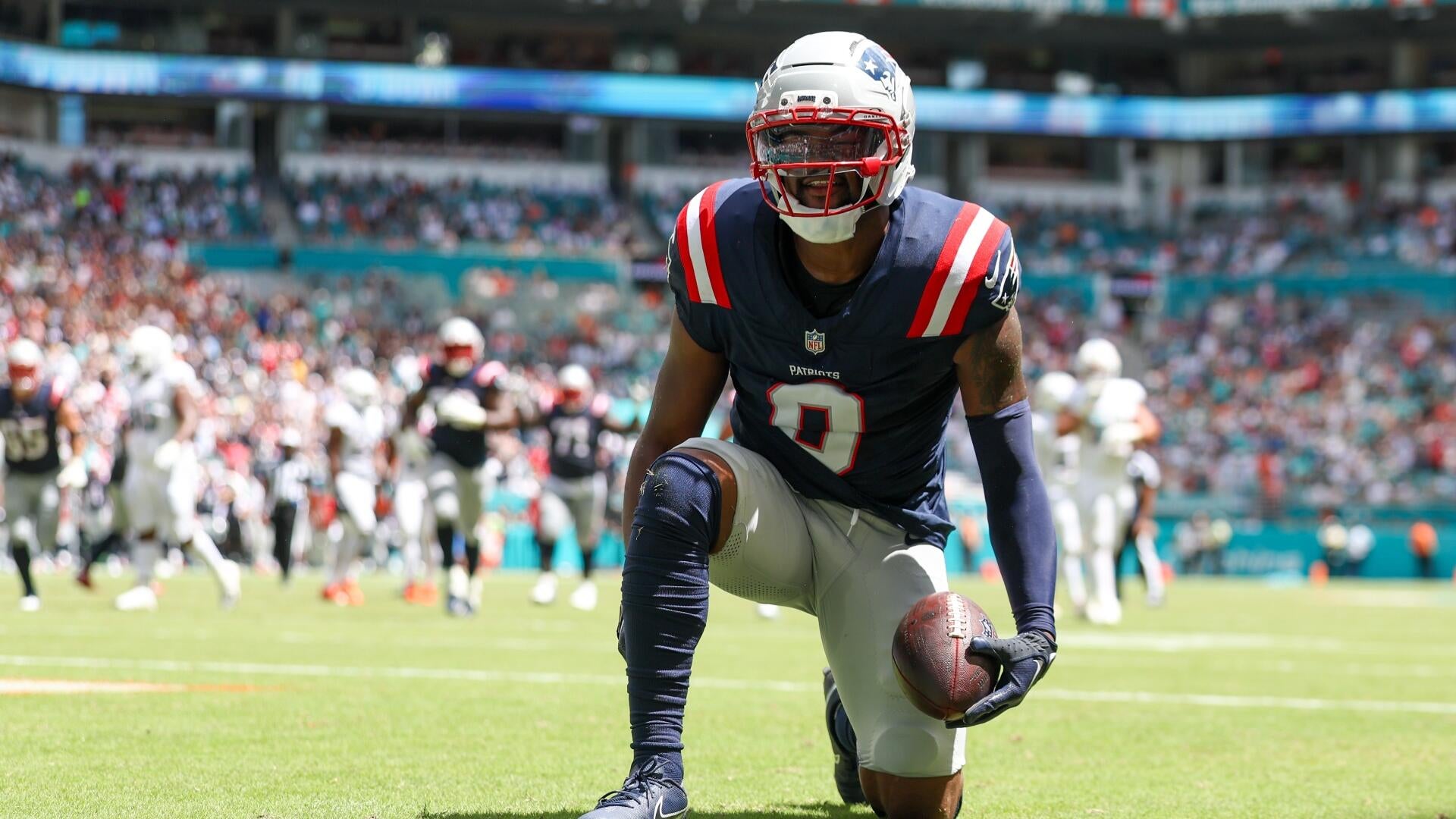
Stefon Diggs fastest ball carry speed UNDER 18.5 mph (-160)

This is my favorite Super Bowl bet, period. When I saw my model’s take — that Diggs had an 88% chance to go under this number — I assumed I’d made a mistake along the way. So, as a quick baseline check, I went back to see how many times Diggs had gone over that line this season. The answer? One time. He hit 18.7 mph during Week 16. That’s it!

Ball carrier max speed doesn’t have that much to do with how fast a player would run on a track. Instead, it’s about the context in which a player is carrying the ball. A straight-line sprint to the end zone? That’s when players hit 21 or even 22 mph. But Diggs is not that type of player. He’s not typically streaking downfield on a go route, catching a pass past the last defender and running toward the end zone.

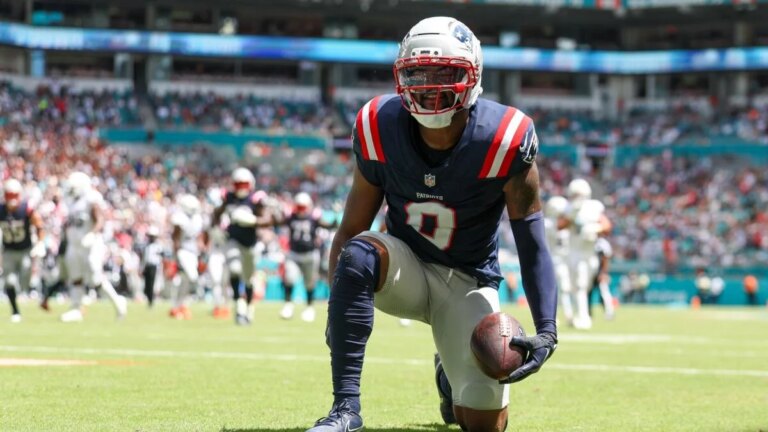
Kayshon Boutte to record the most air yards on a single reception (+500)

To call Boutte a downfield player is selling short just how extreme his route tree is. Among wide receivers with at least 300 routes run this season, playoffs included, Boutte had the highest percentage of deep fades or go routes (30%). That’s well ahead of Quentin Johnston, who finished a distant second at 23%, and more than double the average player (12%). Boutte doesn’t always catch passes, but when he does, they’re typically downfield. I make the fair price here +379.

Boutte fastest ball carry speed UNDER 18.5 mph (-105)

Wait a minute. Didn’t we just talk about how Boutte is a downfield receiver and therefore someone who is particularly likely to hit a top speed?

That’s true, but there are two reasons we should still bet this under:

  1. Boutte simply doesn’t get that many chances; he needs the ball in his hands to record a qualifying fastest speed for this category. His receptions prop heading into this Super Bowl is 2.5 — shaded toward the under — and that is a feature in the model.

  2. We’re not betting a tail outcome here. The air yards prop above is a multi-way market where we’re focused on the extremes. But this one is measuring Boutte’s median outcome, and despite his speed upside, Boutte’s median outcome top speed is sneaky low.

Mack Hollins fastest ball carry speed UNDER 19.5 mph (-180)

The same logic applies for Hollins as it does for Boutte, except Hollins isn’t the same level of vertical threat as Boutte is.

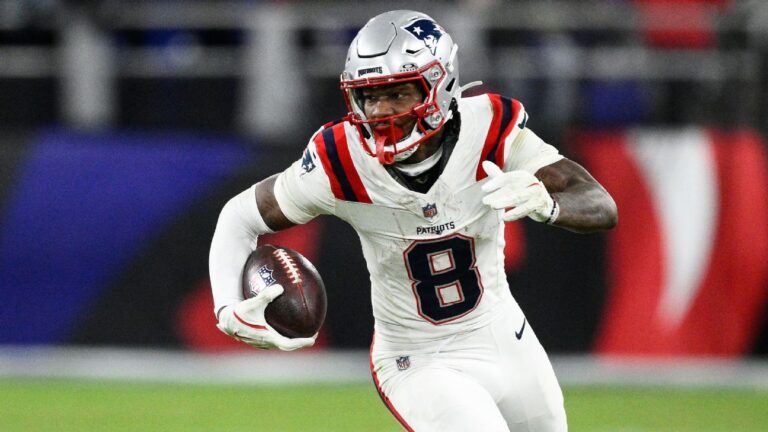
Rhamondre Stevenson fastest ball carry speed OVER 16.5 mph (-125)

Finally, an over! Although Stevenson is not known for his breakaway capability, what he does bring to the table is a ton of (forecasted) opportunity. Stevenson’s rushing attempts line is set at 14.5, in addition to a 3.5 receptions prop line. He just needs to break through on one of those plays to get us the win here.

Stevenson has gone over this line in 12 of 17 games this season, and he wasn’t always getting this heavy of an (expected) workload, either.

George Holani to record the most YAC on a single reception (25-1)

Unlike the highest air yards prop, this category includes wide receivers, tight ends and running backs all as feasible candidates to win it. And although no single player is particularly likely to win — I make Jaxon Smith-Njigba the favorite at just a 14.5% chance — Holani appears to be a value at this price. With Zach Charbonnet out, Holani will get some work. And last week he ran a route on 35% of the Seahawks’ dropbacks and recorded three receptions. That’s enough to give him a fighting chance in this category.


Source link

Greek police detain 313 in raid at university after mob attacked police

0


THESSALONIKI, Greece — Authorities in Greece on Saturday detained 313 people in a raid on the university campus of the country’s second-largest city, Thessaloniki, after riot police were attacked by mobs of people hurling more than 100 Molotov cocktails.

Greek police said roving groups of people wearing hoods emerged from the campus of the Aristotle University of Thessaloniki in the predawn hours Saturday to attack a squad of riot police. The unit is usually deployed some distance from the campus to quell any disturbances after all-night parties that take place on university grounds.

Police said all 313 people were released without being charged.

Such attacks against riot police near the university campus are not uncommon but it’s the first time that so many people were detained after such a clash during which an unusually high number of firebombs was used.

Riot police used tear gas and stun grenades to beat back the attackers. One officer was taken to a military hospital for burns to his face and leg while a 21-year-old civilian was treated for respiratory problems, police said.

The university said in a statement that off-campus “extremists” in conjunction with some individuals from within university grounds had committed the attacks. They said an investigation is underway to determine if any students had taken part. They added that no permission had been granted for any party to take place on university grounds.


Source link

How The Doux uses AI to engage community

0


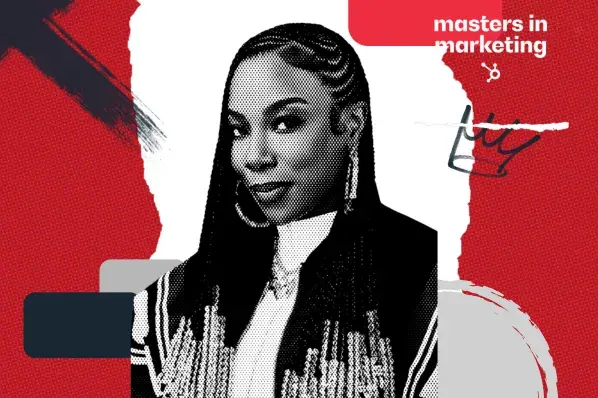
“I think we’re moving into a space where most beauty companies are tech companies,” says Maya Smith.

Community members angry after Metro Court officer seen parked in handicapped parking getting coffee

0


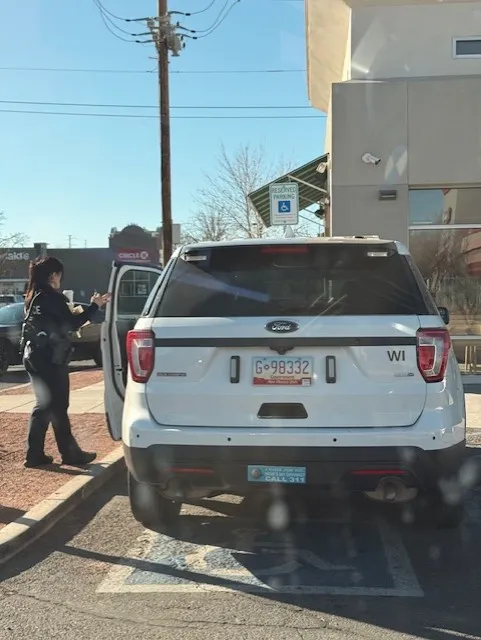
ALBUQUERQUE, N.M. (KRQE) – A driver is upset after spotting a law enforcement vehicle parked in a handicap spot at an Albuquerque Starbucks. She claims that the officer did not appear to be engaged in any official police business. The person who took the photo stated that she needed the handicap space for her elderly […]


Source link

HASTE THE DAY Announce First Album In A Decade, Dissenter; Share Ferocious New Single “Shallows”

0


The Indiana-bred metalcore staples Haste The Day have announced a brand-new album titled Dissenter, set to arrive May 1 via Solid State Records. It marks the band’s first full-length release since 2015’s Coward and their first album in more than a decade, following years of dormancy and a slow-burn reunion that reignited fan excitement.

Alongside the announcement, the band has shared a visualizer for the new single “Shallows,” a track that finds Haste The Day locking back into the sound that once made them a defining force of 2000s metalcore.

“‘Shallows’ captures the core of what we set out to create on this record — aggressive, melodic metalcore,” the band explain. “Driven by high-energy riffs, heavy breakdowns, and a memorable chorus, the song balances nostalgia with contemporary influence. Lyrically, it confronts disillusionment, corruption, and the cost of defiance.”

Haste The Day first signaled their return in 2024 with the release of the standalone single “Burn,” their first new music in nearly ten years. That same year, they made a highly anticipated appearance at Furnace Fest, where the response made one thing abundantly clear: the demand hadn’t gone anywhere.

With Dissenter, Haste The Day sound like a band coming full circle. The album rekindles the spark at the heart of their signature style by sharpening the edges, tightening the melodies, and expanding the scope with cinematic ambition. It’s a record that taps directly into who they were, while pushing forward together with renewed purpose.

Since emerging at the turn of the century, Haste The Day have clung tightly to their integrity. After early scene staples Burning Bridges and When Everything Falls, vocalist Stephen Keech made his formal debut on Pressure the Hinges, ushering in an era that produced fan-favorite releases like Dreamer, the seminal Attack of the Wolf King, and Coward.

The latter proved especially impactful, earning the band their second straight Top 20 entry on Billboard’s Top Rock Albums chart and a second Top 10 placement on the Hard Rock Albums chart. Along the way, they toured with artists ranging from Hollywood Undead to Norma Jean, cementing their reputation as both scene leaders and road-tested lifers.

Want More Metal? Subscribe To Our Daily Newsletter

Enter your information below to get a daily update with all of our headlines and receive The Orchard Metal newsletter.


Source link

Biogen Revenue Down as Multiple Sclerosis Sales Slide

0


Biogen swung to a loss as results were hurt by a double-digit decline in revenue from its core multiple sclerosis treatments.


Source link

2026 Super Bowl longshot parlay, SGP, player props from proven computer model

0


From Super Bowl props like Kenneth Walker III anytime touchdown (-190) to Patriots vs. Seahawks (-4.5) picks against the spread, to over/under picks (45.5), to money-line picks (Seahawks -230, Patriots +190), your 2026 Super Bowl parlay can go in a number of different directions. Another option is guessing the margin of victory of the game, and there’s an NFL betting trend that could help in that regard. Entering Super Bowl 60 three of the last four editions of The Big Game have been decided by exactly 3 points. So, you could back the game’s winning margin to be exactly 3 points in a 2026 Super Bowl SGP, which would return +475.

Seattle winning by 3 points has +950 NFL prop odds, while New England doing the same carries +1100 odds. You could also make NFL bets on winning bands, such as the Seahawks prevailing by 1-6 points (+275) or New England winning by 1-6 points at +300. But if you want to increase your potential winnings exponentially, then you could string one of these wagers with others into a lucrative Super Bowl same-game parlay. Before making any Super Bowl 60 picks and NFL parlays, you need to see the epic Super Bowl LX same game parlay from SportsLine’s proven model that pays out $15,000 on just a $10 bet.

The model, which simulates every NFL game 10,000 times, is up well over $7,000 for $100 players on top-rated NFL picks since its inception. The model enters the 2026 Super Bowl on a 53-37 run on top-rated picks dating back to 2024. Anybody following its NFL betting picks at sportsbooks and on betting sites could have seen strong returns.

Now that the simulation model has had a chance to digest the Super Bowl 60 NFL odds, it’s locked in its betting picks to form a longshot NFL parlay that could pay out $15,000 for a $10 bettor. You can only see the picks and full parlay by heading to SportsLine.

Top 2026 Super Bowl parlay picks

For Super Bowl LX, one of the picks featured in the longshot parlay is Patriots receiver Kayshon Boutte as an anytime TD scorer (+330). Despite ranking 68th amongst wideouts in catches (33) in the regular season, Boutte was 18th in positional receiving touchdowns (6). He added another score in the divisional round and then got a red-zone target in the AFC Title Game. While Seattle has an elite defense, through the air is where to exploit that unit. Eight of the last 10 touchdowns the Seahawks have allowed have been via the pass, including all three they gave up in the NFC title game.

Boutte has more touchdowns this season than the Pats leading receiver, Stefon Diggs, despite the latter having twice as many targets and receptions. The model projects Boutte to score 0.31 touchdowns, which matches Hunter Henry for the highest amongst all Patriots and brings great value to these plus-money odds as one leg of a Super Bowl SGP. See the rest of the picks in the Super Bowl LX same game parlay hereand you can bet Boutte as an anytime TD scorer using the DraftKings promo code, which offers $300 in bonus bets if your bet wins right here:

How to make NFL parlay picks for a payout of $15,000

The parlay also includes three additional Super Bowl picks from SportsLine’s NFL model, including a must-see first NFL touchdown-scorer prop that pays out 25-1. You can only see the Seahawks vs. Patriots picks and the full parlay at SportsLine.

What are the top NFL picks for Super Bowl LX that can be combined into an NFL SGP that returns $15,000 on just a $10 bet, and which optimal first touchdown scorer prop pays out 25-1? Visit SportsLine now to see the top Patriots vs. Seahawks picks from SportsLine’s proven model that can be combined for a parlay that pays $15,000, and find out.


Source link

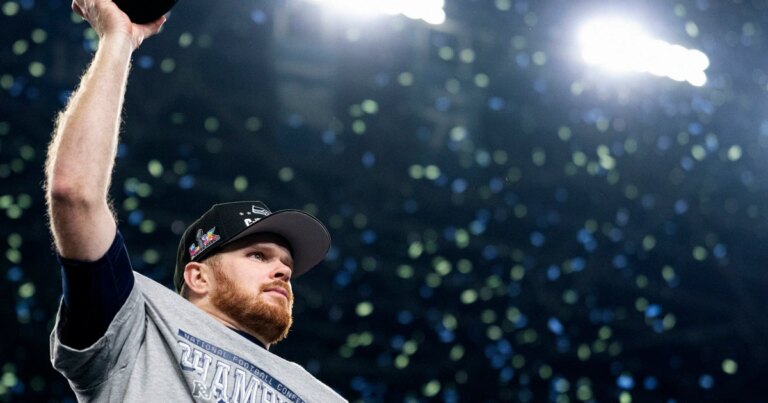
How Seattle’s Sam Darnold went from NFL castoff to Super Bowl QB

0


About a decade ago, the last time the Seahawks and Patriots played in the Super Bowl, Michael Gervais stood on the Seattle sideline as the final moments played out: the Seahawks marching downfield, Malcolm Butler’s shocking interception, Seattle left slack-jawed as New England celebrated.

Gervais isn’t a player or a coach. He’s a performance psychologist. After that game, he played an important role: helping the Seahawks process the gut-wrenching loss. Gervais had been hired a few years prior by Pete Carroll, then the Seahawks’ head coach, who believed in developing players mentally, not just physically, at a time when sports psychology wasn’t as mainstream.

“He made it part of the water we were drinking,” Gervais told NBC News. “It was part of the air we were breathing. It was embedded through the culture.”

This season, the Seahawks’ culture had a new project: the redemption of quarterback Sam Darnold.

Once labeled a draft bust, Darnold had been cast aside by a number of teams. During those years, he had gone looking for better coaching, had rebuilt his confidence and finally landed with the Seahawks, a team that happened to prioritize the mental part of the game.

Darnold has played so well this year that he’s led Seattle all the way to the Super Bowl, where the Seahawks will play — guess who — the New England Patriots on Sunday. On the biggest stage imaginable, Darnold will have a chance to exorcise Seattle’s demons and complete his own arc from castoff to champion.

“He understands how much his team believes in him and has his back,” Seattle coach Mike Macdonald, Carroll’s successor, said at a news conference this week. “So just keep firing away, man, keep being you.”

Darnold always had the pedigree of a Super Bowl quarterback. Growing up in San Clemente, California, he was graded as a top high school recruit and started at USC for two years, becoming a hero after he mounted a comeback win over Penn State in the 2017 Rose Bowl. He had a big arm and flashed athleticism. Pundits applauded when the Jets took him No. 3 in the 2018 draft.

But for his first five seasons, Darnold found himself stuck on dysfunctional teams — first the New York Jets and later the Carolina Panthers. In that time, the Jets and Panthers cycled through four head coaches and five offensive coordinators, including interim coaches replacing those fired midseason. On those teams, Darnold threw almost as many interceptions as touchdowns.

He had two low points in 2019, his second year in the league.

That September, the Jets were playing the Cleveland Browns on “Monday Night Football.” Darnold had just been diagnosed with mononucleosis, the ailment sometimes described as “kissing disease,” and was home recovering.

During the broadcast, ESPN displayed a graphic showing Darnold looking serious and pointing out toward the viewer in the type of pose seen on old Uncle Sam posters. Next to him were the words: “OUT INDEFINITELY MONONUCLEOSIS.” Immediately, it went viral on social media.

“He was getting made fun of pretty good on the internet for a couple weeks,” Jordan Palmer, Darnold’s longtime personal quarterback coach, told NBC News. “He just had to sit at his house. Things weren’t going well. Now everyone gets to make fun of you.”

Later that season, the Jets were playing on “Monday Night Football” again, this time against the Patriots — and Darnold had one of the worst games of his life. He turned over the ball five times and the Jets lost 33-0. He was also wearing a microphone for the TV broadcast. At one point, ESPN caught him talking on the bench during a vulnerable moment.

“Seeing ghosts,” he said.

That went viral, too. People made more jokes. Here was evidence the Patriots had rattled Darnold to the point he didn’t seem to know what he was doing. “Seeing ghosts,” Palmer explained, is actually a common phrase among coaches.

“Just eyes all over the place,” Palmer said. “Feels like there’s more than 11 [defenders] out there. Sometimes that’s because the quarterback has no idea what he’s doing, and sometimes that’s because the quarterback could’ve been better prepared for that situation. And I’m not weighing in on which one it was.”

In 2023, Darnold became a free agent for the first time. He turned down “much better opportunities,” Palmer said, to sign with the San Francisco 49ers, to spend a season backing up Brock Purdy and being coached by Kyle Shanahan, a leading NFL offensive mind.

Palmer compared it to a businessperson returning to school for an executive training program. “They go back there to get a different perspective, maybe a different way of thinking about the same problem they always see,” he said. “It was a year of just resetting. Go to practice where you’re not preparing for the game, you’re just getting better yourself.”


Source link

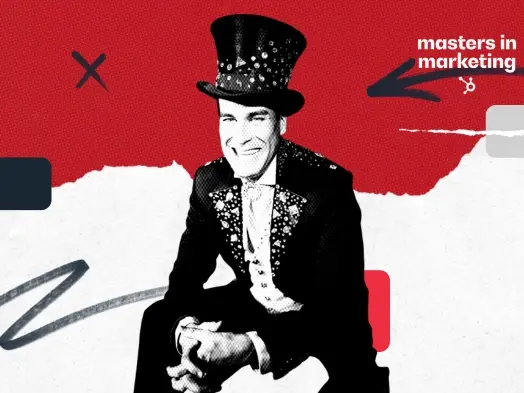
Lessons on leadership from a literal ringmaster

0


Lights dim. Sounds hush. The aerialist spins into the air. Sequins sparkle in the warm light of a followspot, and my weird little brain wonders: “What does marketing look like for a travelling circus where every other week brings a totally new market?

A brief history of Valentine’s Day — and how it became romantic

0


Valentine’s Day didn’t start with candy hearts or roses — or a Roman fertility festival, though there was one in mid-February. The first love notes signed “Your Valentine” likely were not sent by an imprisoned St. Valentine either. I hope I’m not breaking any hearts when I tell you the popular legends you’ve heard about Valentine’s Day are precisely that — legends.The real history of Valentine’s Day, short version, is this: The original holiday was a Christian feast day in honor of a saint. The romantic holiday we celebrate today is largely unrelated. It probably originated with medieval poetry and the start of bird-mating season, which at the time was viewed by many as the beginning of spring. Why call it Valentine’s Day if it’s not about St. Valentine? Simple. In the Middle Ages, it was a common way to refer to Feb. 14. Who was St. Valentine, and was he a real person?St. Valentine is believed to be based on a combination of two Christians by that name. Legend holds that both were executed on Feb. 14, though in different years, possibly during the reign of Roman Emperor Claudius II in the 3rd century. (There was also allegedly a third St. Valentine who died in Africa, but historical evidence of him is scant.) Legend says that one of these martyrs, Saint Valentine of Terni, had officiated weddings for Roman soldiers in secret, going against the emperor’s wishes and leading some to see him as a proponent of love.Another story says that St. Valentine wrote the first “valentine” greeting to a young woman whom he tutored and fell in love with while he was imprisoned, according to later legend.But these anecdotes connecting St. Valentine to a celebration of love — and the holiday we know today — are only legends. So little historical information is known about the martyrs named St. Valentine that the Roman Catholic Church removed St. Valentine’s feast from its calendar in 1969. However, St. Valentine is still recognized, and the feast exists in older calendars and other Christian traditions. Did Valentine’s Day come from the Roman festival Lupercalia? Here’s what we know. There was a mid-February fertility festival in ancient Rome called Lupercalia. Dedicated to the Roman pastoral and fertility god Faunus and the Roman founders Romulus and Remus, it was marked by fertility rites that included animal sacrifices. (In other words, not super romantic.)In the late fifth century, Pope Gelasius I condemned the celebration of Lupercalia. It’s often asserted that he added St. Valentine’s Day to the Church calendar to counter Lupercalia, but there’s no solid historical evidence to support this idea.Moreover, there’s no clear historical link between Lupercalia and the modern-day secular version of Valentine’s Day, even though their dates coincide. When did Valentine’s Day become a romantic holiday?In the Middle Ages, Valentine’s Day began to evolve into the romantic holiday it is now — and we might have the poet Geoffrey Chaucer to thank.The late scholar Jack B. Oruch, a University of Kansas English professor, determined that Chaucer was the first to link love with St. Valentine’s Day in his 14th-century works “The Parliament of Fowls” and “The Complaint of Mars,” thus inventing Valentine’s Day as we know it today. At the time of Chaucer’s writing, Feb. 14 was considered the first day of spring in Britain because it was the beginning of the bird mating season — perfectly appropriate for a celebration of affection. In fact, Chaucer’s “The Parliament of Fowls” is all about birds (albeit anthropomorphized ones) gathering to choose their mates:“For this was on Saint Valentine’s day, When every fowl comes there his mate to take.”—The Parliament of Fowls, 1381Why didn’t Chaucer write “For this was on February 14…”? It would not have been the convention of the times. In a blog post for The Folklore Society, folklorist Jacqueline Simpson writes: “In the Catholic Church every day in the year celebrates at least one saint, and for a public who had no printed calendars it was easier to remember dates by names than by figures.”Why do we celebrate Valentine’s Day today?Poets like Chaucer and, two centuries later, Shakespeare helped popularize Valentine’s Day as a romantic holiday, and it stuck — though it began with relatively simple traditions compared to today.Early on, people celebrated by penning and exchanging love letters on Feb. 14. The oldest known Valentine’s Day love letter was written in French in 1415 (after Chaucer, before Shakespeare). In that missive, Charles, Duke of Orleans, who was then a prisoner of war held in the Tower of London, wrote to his wife, Bonne of Armagnac. The mid-19th century marked the beginning of many of our commercialized Valentine’s Day traditions. Victorian men wooed women with flowers, and Richard Cadbury created the first heart-shaped box of chocolates in 1868. Also around this time, the “Mother of the American Valentine”, Esther Howland, only in her early 20s, popularized store-bought English-style valentines in America thanks to her assembly line process that made elaborate cards affordable.Taking a cue from the popularity of valentines, The New England Confectionery Company, or NECCO, began stamping out an early version of Conversation Hearts — though the sweet messages weren’t heart-shaped until 1902.By the early 1910s, an American company that would one day become Hallmark began distributing its more official “Valentine’s Day cards.” The rest, as they say, is history.Who is Cupid, and why is he part of Valentine’s Day? Cupid — that winged baby boy often seen on Valentine’s Day cards and paraphernalia — is another symbol of this love-filled holiday. It’s unclear exactly when Cupid was brought into the Valentine’s Day story, but it’s certainly clear why. In Roman mythology, Cupid was the son of Venus, goddess of love and beauty. He was known for shooting arrows at both gods and humans, causing them to fall instantly in love with one another.

Valentine’s Day didn’t start with candy hearts or roses — or a Roman fertility festival, though there was one in mid-February. The first love notes signed “Your Valentine” likely were not sent by an imprisoned St. Valentine either.

I hope I’m not breaking any hearts when I tell you the popular legends you’ve heard about Valentine’s Day are precisely that — legends.

The real history of Valentine’s Day, short version, is this: The original holiday was a Christian feast day in honor of a saint. The romantic holiday we celebrate today is largely unrelated. It probably originated with medieval poetry and the start of bird-mating season, which at the time was viewed by many as the beginning of spring.

Why call it Valentine’s Day if it’s not about St. Valentine? Simple. In the Middle Ages, it was a common way to refer to Feb. 14.

Who was St. Valentine, and was he a real person?

St. Valentine is believed to be based on a combination of two Christians by that name. Legend holds that both were executed on Feb. 14, though in different years, possibly during the reign of Roman Emperor Claudius II in the 3rd century. (There was also allegedly a third St. Valentine who died in Africa, but historical evidence of him is scant.)

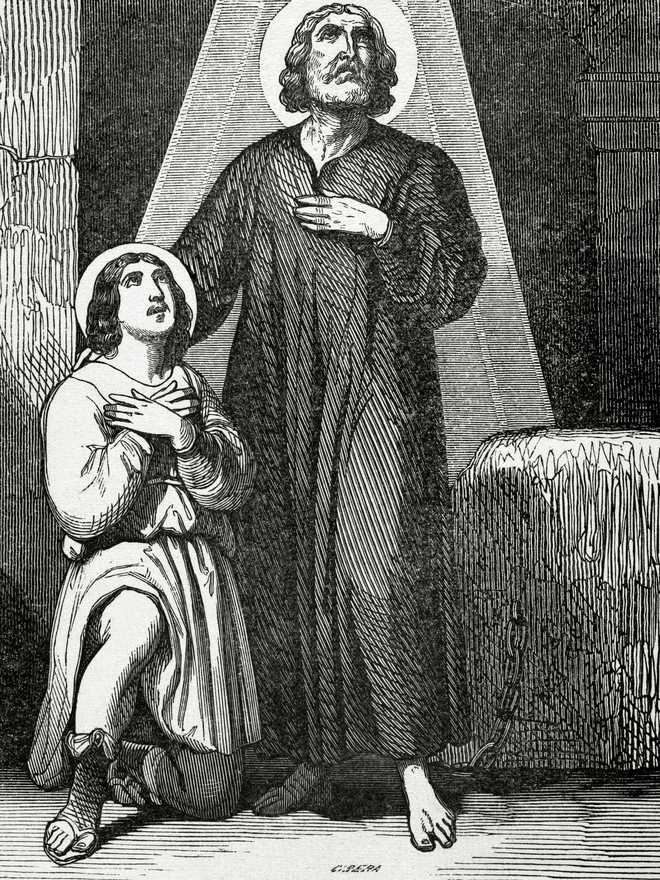
Legend says that one of these martyrs, Saint Valentine of Terni, had officiated weddings for Roman soldiers in secret, going against the emperor’s wishes and leading some to see him as a proponent of love.

saint valentine, roman saint.

Getty ImagesPHAS

An engraving from 1754 of Saint Valentine of Terni

Another story says that St. Valentine wrote the first “valentine” greeting to a young woman whom he tutored and fell in love with while he was imprisoned, according to later legend.

But these anecdotes connecting St. Valentine to a celebration of love — and the holiday we know today — are only legends. So little historical information is known about the martyrs named St. Valentine that the Roman Catholic Church removed St. Valentine’s feast from its calendar in 1969. However, St. Valentine is still recognized, and the feast exists in older calendars and other Christian traditions.

Did Valentine’s Day come from the Roman festival Lupercalia?

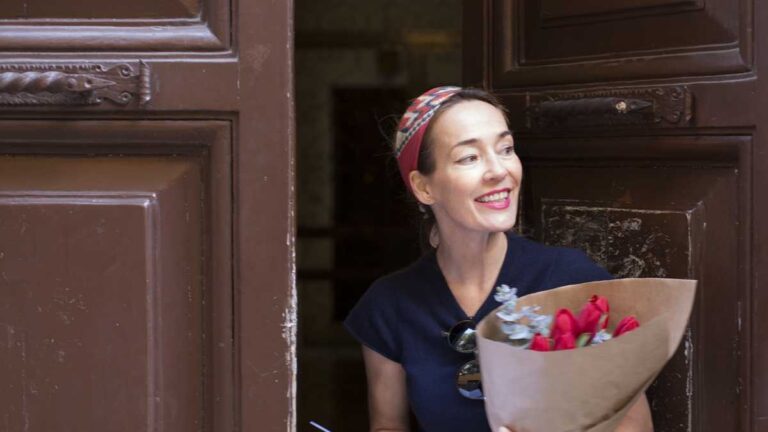
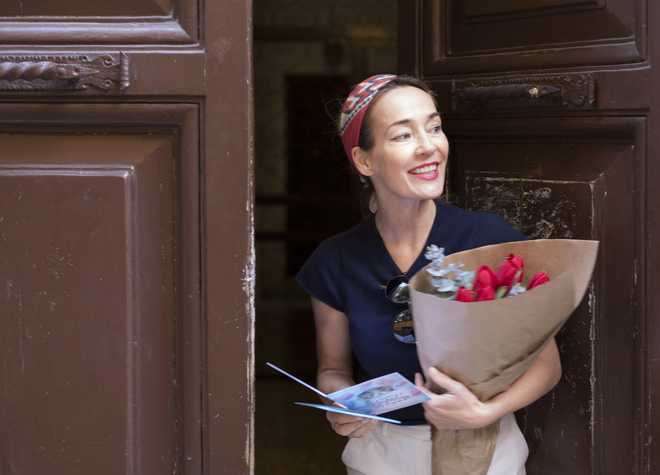
woman receiving a flower bouquet with greeting card

Getty ImagesKathrin Ziegler

A Valentine’s Day in Rome—a far cry from the ancient festival of Lupercalia

Here’s what we know. There was a mid-February fertility festival in ancient Rome called Lupercalia. Dedicated to the Roman pastoral and fertility god Faunus and the Roman founders Romulus and Remus, it was marked by fertility rites that included animal sacrifices. (In other words, not super romantic.)

In the late fifth century, Pope Gelasius I condemned the celebration of Lupercalia. It’s often asserted that he added St. Valentine’s Day to the Church calendar to counter Lupercalia, but there’s no solid historical evidence to support this idea.

Moreover, there’s no clear historical link between Lupercalia and the modern-day secular version of Valentine’s Day, even though their dates coincide.

When did Valentine’s Day become a romantic holiday?

In the Middle Ages, Valentine’s Day began to evolve into the romantic holiday it is now — and we might have the poet Geoffrey Chaucer to thank.

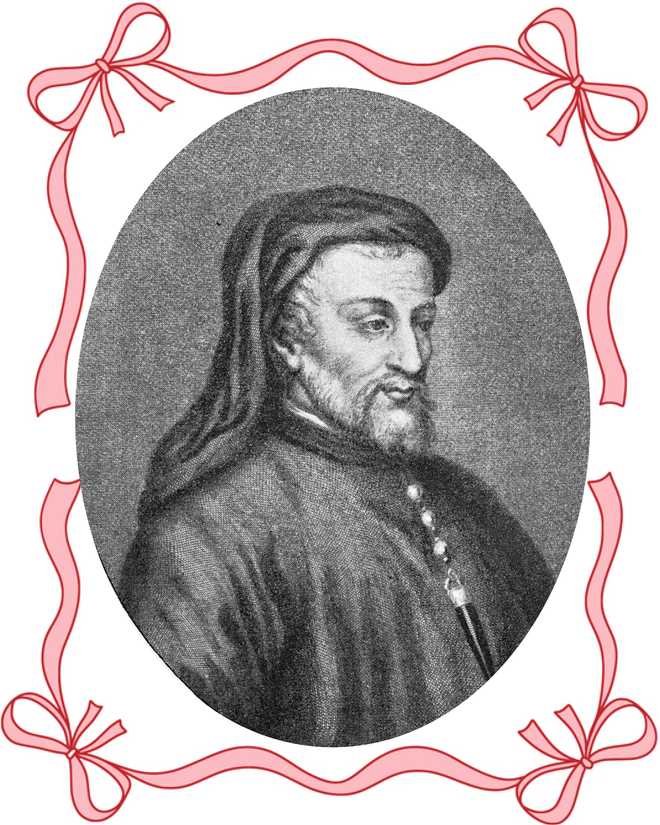
The late scholar Jack B. Oruch, a University of Kansas English professor, determined that Chaucer was the first to link love with St. Valentine’s Day in his 14th-century works “The Parliament of Fowls” and “The Complaint of Mars,” thus inventing Valentine’s Day as we know it today.

portrait of chaucer within a decorative border featuring ribbons

Getty ImagesChaucer: Bildagentur-online, ribbon: iStock

In his poetry, Chaucer was the first to link Valentine’s Day with romantic love.

At the time of Chaucer’s writing, Feb. 14 was considered the first day of spring in Britain because it was the beginning of the bird mating season — perfectly appropriate for a celebration of affection.

In fact, Chaucer’s “The Parliament of Fowls” is all about birds (albeit anthropomorphized ones) gathering to choose their mates:

“For this was on Saint Valentine’s day,
When every fowl comes there his mate to take.”
—The Parliament of Fowls, 1381

Why didn’t Chaucer write “For this was on February 14…”? It would not have been the convention of the times. In a blog post for The Folklore Society, folklorist Jacqueline Simpson writes: “In the Catholic Church every day in the year celebrates at least one saint, and for a public who had no printed calendars it was easier to remember dates by names than by figures.”

Why do we celebrate Valentine’s Day today?

Poets like Chaucer and, two centuries later, Shakespeare helped popularize Valentine’s Day as a romantic holiday, and it stuck — though it began with relatively simple traditions compared to today.

Early on, people celebrated by penning and exchanging love letters on Feb. 14. The oldest known Valentine’s Day love letter was written in French in 1415 (after Chaucer, before Shakespeare). In that missive, Charles, Duke of Orleans, who was then a prisoner of war held in the Tower of London, wrote to his wife, Bonne of Armagnac.

The mid-19th century marked the beginning of many of our commercialized Valentine’s Day traditions. Victorian men wooed women with flowers, and Richard Cadbury created the first heart-shaped box of chocolates in 1868.

Also around this time, the “Mother of the American Valentine”, Esther Howland, only in her early 20s, popularized store-bought English-style valentines in America thanks to her assembly line process that made elaborate cards affordable.

valentine

Getty ImagesHeritage Images

A valentine with lace from 1879

Taking a cue from the popularity of valentines, The New England Confectionery Company, or NECCO, began stamping out an early version of Conversation Hearts — though the sweet messages weren’t heart-shaped until 1902.

By the early 1910s, an American company that would one day become Hallmark began distributing its more official “Valentine’s Day cards.” The rest, as they say, is history.

Who is Cupid, and why is he part of Valentine’s Day?

Valentines Day History

Universal Images Group / Getty Images

A Valentine’s Day postcard from 1910. 

Cupid — that winged baby boy often seen on Valentine’s Day cards and paraphernalia — is another symbol of this love-filled holiday. It’s unclear exactly when Cupid was brought into the Valentine’s Day story, but it’s certainly clear why. In Roman mythology, Cupid was the son of Venus, goddess of love and beauty. He was known for shooting arrows at both gods and humans, causing them to fall instantly in love with one another.


Source link