Lawmakers and the White House offered no signs of compromise Sunday in their battle over oversight of federal immigration officers that has led to a pause in funding for the Department of Homeland Security.A partial government shutdown began Saturday after congressional Democrats and President Donald Trump’s team failed to reach a deal on legislation to fund the department through September. Democrats are demanding changes to how immigration operations are conducted after the fatal shootings of U.S. citizens Alex Pretti and Renee Good by federal officers in Minneapolis last month.Congress is on recess until Feb. 23, and both sides appear dug into their positions. The impasse affects agencies such as the Transportation Security Administration, the Federal Emergency Management Agency, U.S. Coast Guard, the Secret Service, U.S. Immigration and Customs Enforcement, and U.S. Customs and Border Protection.The work at ICE and CBP goes on unabated because Trump’s tax and spending cut law from 2025 provided billions more to those agencies that can be tapped for deportation operations. About 90% of DHS employees were to continue working during the shutdown, but do so without pay — and missed paychecks could mean financial hardships. Last year there was a record 43-day government shutdown.White House border czar Tom Homan said the administration was unwilling to agree to Democrats’ demands that federal officers clearly identify themselves, remove masks during operations and display unique ID numbers.“I don’t like the masks, either,” Homan said, But, he said, “These men and women have to protect themselves.”Democrats also want to require immigration agents to wear body cameras and mandate judicial warrants for arrests on private property.Senate Minority Leader Chuck Schumer, D-N.Y., said Democrats are only asking for federal agents to abide by rules followed by law enforcement agencies around the country.“And the question that Americans are asking is, ‘Why aren’t Republicans going along with these commonsense proposals?’” Schumer said. “They’re not crazy. They’re not way out. They’re what every police department in America does.”Sen. Markwayne Mullin, R-Okla., said he could back Democrats calls to equip immigration officers with body cameras and would support efforts to bolster training. But he balked at their demands that federal officers remove masks and clearly identify themselves, noting some officers taking part in immigration enforcement operations have faced doxing and other harassment.“What are you going to do, expose their faces so you can intimidate their families?” Mullins said. “What we want is ICE to be able to do their job. And we would love for local law enforcement and for states to cooperate with us.”Republican Sen. Katie Britt of Alabama, a Trump ally who had pushed for a two-week extension of DHS funding while negotiations continued, said it was “shortsighted of Democrats to walk away” from talks.Trump made enforcement of the nation’s immigration laws a centerpiece of his 2024 campaign for the White House and he promised to be aggressive in detaining and deporting people living in the United States without legal permission.DHS reports it has deported more than 675,000 migrants since Trump’s return to office last year and claims some 2.2 million others have “self-deported” as the Republican president has made his immigration crackdown a priority.“President Trump is not going to back away from the mission, the mission that American people said they wanted him to complete, and that is securing our border and making sure that we actually do interior enforcement,” Britt said.Homan was on CBS’ “Face the Nation,” Schumer and Mullin appeared on CNN’s “State of the Union” and Britt was interviewed on “Fox News Sunday.”
WEST PALM BEACH, Fla. —
Lawmakers and the White House offered no signs of compromise Sunday in their battle over oversight of federal immigration officers that has led to a pause in funding for the Department of Homeland Security.
A partial government shutdown began Saturday after congressional Democrats and President Donald Trump’s team failed to reach a deal on legislation to fund the department through September. Democrats are demanding changes to how immigration operations are conducted after the fatal shootings of U.S. citizens Alex Pretti and Renee Good by federal officers in Minneapolis last month.
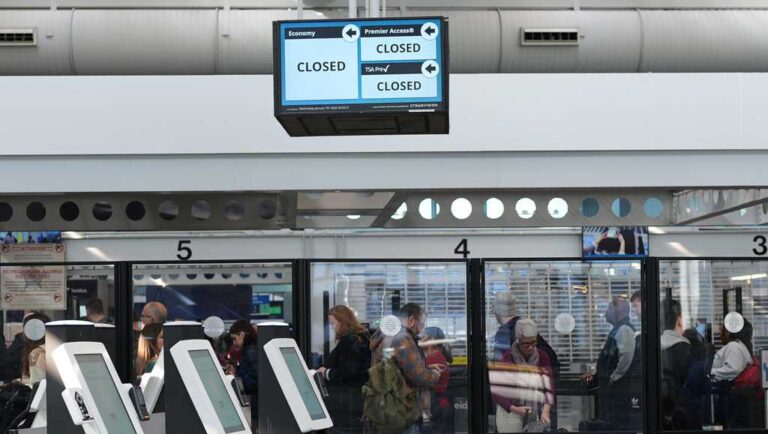
Congress is on recess until Feb. 23, and both sides appear dug into their positions. The impasse affects agencies such as the Transportation Security Administration, the Federal Emergency Management Agency, U.S. Coast Guard, the Secret Service, U.S. Immigration and Customs Enforcement, and U.S. Customs and Border Protection.
The work at ICE and CBP goes on unabated because Trump’s tax and spending cut law from 2025 provided billions more to those agencies that can be tapped for deportation operations. About 90% of DHS employees were to continue working during the shutdown, but do so without pay — and missed paychecks could mean financial hardships. Last year there was a record 43-day government shutdown.
White House border czar Tom Homan said the administration was unwilling to agree to Democrats’ demands that federal officers clearly identify themselves, remove masks during operations and display unique ID numbers.
“I don’t like the masks, either,” Homan said, But, he said, “These men and women have to protect themselves.”
Democrats also want to require immigration agents to wear body cameras and mandate judicial warrants for arrests on private property.
Senate Minority Leader Chuck Schumer, D-N.Y., said Democrats are only asking for federal agents to abide by rules followed by law enforcement agencies around the country.
“And the question that Americans are asking is, ‘Why aren’t Republicans going along with these commonsense proposals?’” Schumer said. “They’re not crazy. They’re not way out. They’re what every police department in America does.”
Sen. Markwayne Mullin, R-Okla., said he could back Democrats calls to equip immigration officers with body cameras and would support efforts to bolster training. But he balked at their demands that federal officers remove masks and clearly identify themselves, noting some officers taking part in immigration enforcement operations have faced doxing and other harassment.
“What are you going to do, expose their faces so you can intimidate their families?” Mullins said. “What we want is ICE to be able to do their job. And we would love for local law enforcement and for states to cooperate with us.”
Republican Sen. Katie Britt of Alabama, a Trump ally who had pushed for a two-week extension of DHS funding while negotiations continued, said it was “shortsighted of Democrats to walk away” from talks.
Trump made enforcement of the nation’s immigration laws a centerpiece of his 2024 campaign for the White House and he promised to be aggressive in detaining and deporting people living in the United States without legal permission.
DHS reports it has deported more than 675,000 migrants since Trump’s return to office last year and claims some 2.2 million others have “self-deported” as the Republican president has made his immigration crackdown a priority.
“President Trump is not going to back away from the mission, the mission that American people said they wanted him to complete, and that is securing our border and making sure that we actually do interior enforcement,” Britt said.
Homan was on CBS’ “Face the Nation,” Schumer and Mullin appeared on CNN’s “State of the Union” and Britt was interviewed on “Fox News Sunday.”
I never thought I‘d see the day when “Googling” something and sifting through links would become passé. But, like many marketers over the last year, I’m seeing a massive shift in how people find brands, products, and answers online.
More and more consumers are getting their answers directly from AI platforms like ChatGPT, and marketers are leveraging generative engine optimization (GEO) tactics to boost brand awareness and get cited by AI answer engines.
Not sure if GEO is worth all the hype? No worries, I rounded up some Generative Engine Optimization statistics to show you how crucial GEO is in modern digital marketing.
Table of Contents
Why generative engine optimization is so important now
Generative engine optimization is crucial to digital marketing now because the way consumers search for products and services has changed significantly over the last few years. When I first entered the digital marketing industry, consumers typically searched for answers by plugging inquiries into search engines like Google.
They’d then browse the top links Google provides until they found the answers they were looking for.
Now, consumers are asking questions to AI systems like ChatGPT, Google AI, and Perplexity, and these systems are providing direct answers rather than links for users to sift through. As a result, many businesses are seeing a drop in website traffic.
Now, to keep up with how people are discovering brands and businesses, marketers must shift from optimizing for SERPs (SEO) to optimizing for AI-powered answer engines; in other words, General Engine Optimization (GEO).
GEO enables making content easily accessible to Large Language Models (LLMs), so it can be summarized and cited in AI-generated answers.
Generative engine optimization statistics marketing leaders should know
Here are some facts I’ve gathered about the use and importance of generative engine optimization, ranging from user adoption to SERP changes to the most cited content formats.
User Adoption
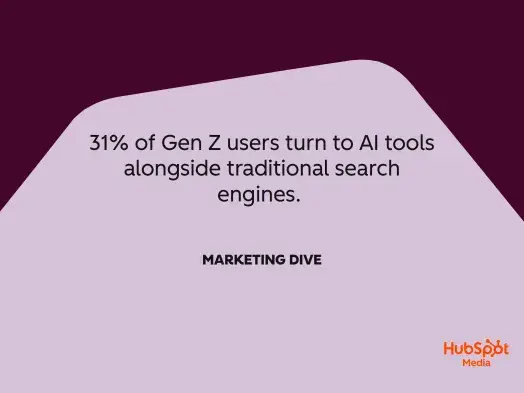
1. 31% of Gen Z users turn to AI tools alongside traditional search engines.
Pro Tip: To simplify this complexity, tools like HubSpot’s AEO Grader can help you quickly assess how well your content is optimized for AI answer engines, providing actionable recommendations without the steep learning curve.
3. Early adopters say GEO-ready content is discovered up to 10x faster by generative engines compared to relying on organic SEO alone.
4. Gen AI search visitors are expected to surpass traditional search by 2028.
6. According to reports from Averi and DataSlayer, ChatGPT reached 800 million weekly active users as of October 2025, doubling from 400 million in February. According to HubSpot’s State of AI Marketing Report, marketers are responding to this surge by rapidly adopting AI-powered tools to stay competitive in this evolving landscape.
SERP Changes
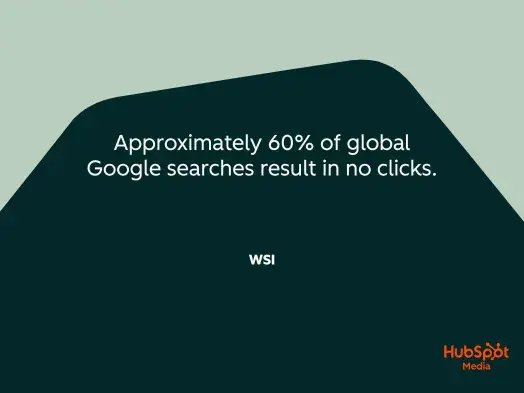
7. Approximately 60% of global Google searches result in no clicks.
8. The September 2025 “num=100” update led to 77% of sites seeing a drop in total impressions in tracking tools.
9. AI Overviews now list an average of 5 sources.
10. In January 2025, 91.3% of queries that triggered an AI Overview were informational. By October, that share was down to 57.1%, and the share of commercial and transactional AIOs
rose.
11. Reddit saw a 450% increase in AI citations from March to June 2025, with the platform now accounting for 21% of Google AI Overview citations.
12. The top 5 domains capture 38% of citations, the top 10 secure 54%, and the top 20 command 66%, making it extremely difficult for smaller publishers, niche sites, and emerging voices to gain AI visibility.
Behavior shifts
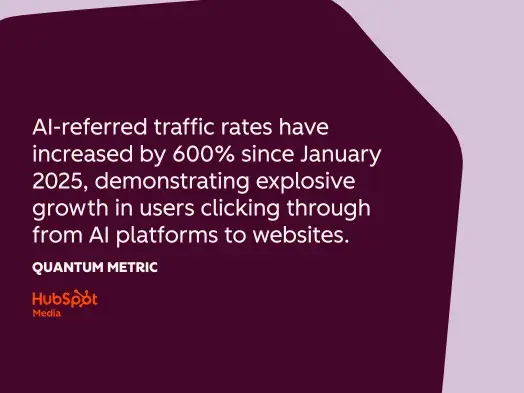
13. AI-referred traffic rates have increased by 600% since January 2025, demonstrating explosive growth in users clicking through from AI platforms to websites.
14. 39% of consumers, and over half of Gen Z, are already using AI for product discovery, with younger demographics leading adoption. HubSpot’s State of AI Marketing Report confirms this behavioral shift, showing that forward-thinking marketers are already restructuring their content strategies to meet consumers where they’re searching.
16. 83% of users find AI-powered search tools more efficient than traditional engines, indicating strong user satisfaction driving continued adoption.
17. ChatGPT prompt volume jumped nearly 70% from January to June 2025, demonstrating rapid acceleration in AI search adoption.
18. Studies show that when AI summaries were present, users clicked on traditional search links in only 8% of visits—compared to 15% when no AI summaries appeared, representing a 54% drop in click-through rates.
19. 80% of consumers rely on AI-written summaries for at least 40% of their searches, fundamentally changing how people consume information online.
Most Cited Content Formats
20. Video is the single most cited content format across every vertical, with YouTube alone accounting for nearly a quarter of all citations, making it the leading content type for AI citations.
21. FAQs are the format most cited by generative AI engines because they answer specific questions directly, matching how users query AI systems.
22. LLMs are 28-40% more likely to cite content with clear formatting—hierarchical headings, bullet points, numbered lists, and tables, demonstrating the importance of structured presentation. Creating this structured, citation-worthy content at scale is easier with platforms like HubSpot’s Content Hub, which helps teams produce, organize, and optimize content with built-in AI assistance while maintaining the quality standards that AI engines prioritize.
23. Listicles achieve a 25% citation rate versus 11% for narrative blog posts and opinion pieces, showing structured formats significantly outperform traditional content.
24. Comparative listicles, how-to guides, and FAQs are the most cited formats across platforms, with answer-first formatting being particularly effective.
Frequently Asked Questions about Generative Engine Optimization statistics.
How fast can we see impact from GEO?
Unlike traditional SEO, which can take 6-12 months, AI visibility improvements can appear within weeks—especially on platforms like Perplexity that conduct real-time web searches. Structural optimizations, such as schema and formatting, can impact citations within 30-60 days, while building original research and authority signals typically takes 3-6 months.
The fastest gains come from adding specific statistics and structured answers to existing high-performing content, with tactical changes improving visibility within 30 to 45 days.
What tools do we need to implement GEO effectively?
Start by assessing your current content with HubSpot’s AEO Grader to identify quick wins.
For ongoing optimization and content creation, HubSpot’s Content Hub offers AI-powered writing assistance with built-in structure optimization, while Marketing Hub provides the analytics infrastructure to track AI referral traffic and measure GEO performance alongside your traditional marketing metrics
How do we avoid quality issues when scaling AI-assisted content?
Most content cited in AI Overviews is at least partially AI-generated—proving that AI-assisted content doesn’t hurt rankings when it maintains quality.
The key is combining AI efficiency with human expertise: use AI to generate structured frameworks, data-driven outlines, and first drafts, but always have subject-matter experts refine the content to add proprietary insights, verify accuracy, and ensure it is genuinely citation-worthy rather than just technically optimized.
Focus on extractability over word count—content must answer questions directly in 40-60 word blocks with clear attribution to sources.
When should you prioritize GEO over traditional SEO projects?
Prioritize GEO when your target audience shows high AI search adoption rates (especially B2B buyers, Gen Z, or technical audiences), when you’re in industries where informational queries dominate, and 60% of searches end without clicks, or when your competitors are already earning AI citations.
Since 99% of AI Overviews cite pages from the organic top 10, you should focus on GEO after establishing strong traditional SEO foundations—think of it as “SEO plus” rather than a replacement. The highest ROI comes from optimizing content that already ranks well but isn’t yet earning AI citations.
How do we report GEO results to executives?
Track five core metrics: citation frequency (how often your brand appears in AI responses for target queries), brand visibility score (your citation rate relative to competitors), AI share of voice (your percentage of total category mentions), sentiment of citations (positive/neutral/negative), and conversion rates from AI traffic.
Present the business case clearly: AI search visitors convert at 4.4x the rate of traditional organic search, making each AI citation significantly more valuable than conventional traffic metrics.
Include competitive benchmarking showing how often competitors appear versus your brand, and demonstrate progress with month-over-month citation growth across platforms like ChatGPT, Perplexity, and Google AI Overviews.
I’m a sucker for a good travel rewards card. Over the years, I’ve collected a small handful of them — not because I love juggling annual fees, but because the right cards can save you a lot of money on flights, hotels, and travel perks you’d otherwise pay out of pocket for.
Not only do I have a bunch for my personal expenses but I have a couple for this business too. One of my favorite business credit cards is the Capital One Venture X Business Credit Card. It’s Capital One’s top-tier business product. I love it because there’s a big welcome offer, lounge access to over 1,300 airport lounges, annual travel credits, and a simple 2x reward on all spending (which ensures you are always earning multiples miles per dollar spent).
To help you decide if this card is for you, here’s my full review of the card and why I love it so much:
What is the Capital One Venture X Business Card?
The Capital One Venture X Business Credit Card is a travel rewards card issued by Capital One. It comes with a $395 annual fee that is way lower than the other premium business cards out there. And I think you can easily get way more value than the annual fee costs. Here’s a quick look at the main perks:
Earn 150,000 bonus miles once you spend $30,000 in the first 3 months from account opening
2 miles per $1 on all purchases, no category restrictions
5× miles on flights booked through Capital One Travel
10× miles on hotels and rental cars booked through Capital One Travel
$300 annual travel credit (through Capital One Business Travel)
Every year, you’ll get 10,000 bonus miles after your account anniversary date.
Enjoy access to 1,300+ airport lounges worldwide, including Capital One Lounge locations and Priority Pass™ lounges, after enrollment
Up to $120 statement credit for TSA Precheck or Global Entry
No foreign transaction fees
Using Your Capital One Miles
Capital One miles can be redeemed in a few ways. One is by booking travel directly through Capital One’s portal. While I usually don’t recommend booking through credit card portals, to fully benefit from the Venture X’s travel credit (and to get the 5x and 10x miles offers) you’ll need to use their portal.
Another option is to use your miles to get reimbursed for any travel purchase. For 90 days after making such a purchase, you can reimburse yourself at a redemption rate of one cent per mile. After 90 days, and for all other purchases, you can use miles as cash back, at a redemption rate of 0.5 cents per mile (but avoid doing this, as it’s not a good value).
You can also use your Capital One miles in the Capital One Entertainment portal to book tickets for concerts, sports events, and more. Occasionally, Capital One offers cardholder-only events and presale opportunities too. While you’ll get just 0.8 cents per mile for tickets (not the best value), it’s still a fun and unique way to redeem miles.
However, you’ll get the most out of your miles by transferring them to Capital One’s 15+ airline and hotel partners. While the actual value varies based on what you book, you can usually find airline and hotel redemptions worth much more than the aforementioned one cent per mile. (The process is pretty straightforward and can be done through your Capital One account.)
Here are Capital One’s current travel partners:
Accor Live Limitless
Aeromexico Club Premier
Air Canada Aeroplan
Air France/KLM Flying Blue
Avianca LifeMiles
British Airways Executive Club
Cathay Pacific Asia Miles
Choice Privileges
Emirates Skywards
Etihad Airways Guest
EVA Air Infinity MileageLands
Finnair Plus
I Prefer Hotel Rewards
Japan Airlines Mileage Bank
Qantas Frequent Flyer
Qatar Airways Privilege Club
Singapore Airlines KrisFlyer
TAP Portugal Miles&Go
Turkish Airlines Miles&Smiles
Virgin Red
Wyndham Rewards
Pros of the Venture X Business Card
As someone who travels constantly for work, I’m always looking for ways to earn miles faster and make airport life a little less painful. I like this card for the simple 2x miles on everything. I use a lot of other cards that can get you 3 or 4x on certain categories like advertising or non-portal travel spend like flights and hotels. But when it comes to dining, museums, transportation, etc, there’s not a lot of ways to get more than 2x per dollar spent on a business card. So, I use this Venture X for anything I can’t get more than 2x per dollar.
Here’s a deep dive into some of the main perks:
$300 Travel Credit Each year, you get a $300 credit toward bookings made through Capital One Business Travel (flights, hotels, or car rentals). If you’re already booking travel regularly, this credit is basically free money — and it immediately drops your effective annual fee from $395 to $95.
The catch? You do have to book through Capital One’s travel portal. It’s powered by Hopper, so the interface is clean and prices are usually competitive. I’ve found some good deals there.
Lounge Access You get access to Capital One Lounges and Priority Pass lounges. Capital One’s own lounges are actually great — spacious, modern, good food — though they’re still limited location. But they are expanding how many they have and I personally think they are way better than the other lounges competitor banks have. You also get Priority Pass access t o over 1,300 lounges globally, which is a common but really nice perk.
Anniversary Bonus Every year on your account anniversary, you’ll get 10,000 bonus miles (worth about $100 toward travel). It’s a nice “thank you” that helps offset the annual fee even further.
Should You Get This Card?
The Capital One Venture X Business Credit Card is best for small- to medium-sized business owners who travel regularly and can put at least $30,000 to ensure they meet the welcome offer requirements.
Overall, I think the Capital One Venture X Business is one of the best-value premium business cards out there right now. It’s not as benefit-packed or as flashy as the The Business Platinum Card® from American Express or the Chase Sapphire Reserve for Business?, but it’s easier to use, has a less expensive annual fee, gets you lounge access, and an easy to understand earning structure.
It’s one of the cards I use the most often for my business. I highly recommend getting it.
Stop paying full price for travel!
Download my free guide to points and miles and learn how to use points and miles for free travel! It’s how all the pros travel so much! In this guide, I’ll show you:
How to Pick a Credit Card
How to Earn Up to 10x Miles on Your Spending
How to Redeem Your Points
And a Ton of Other Money Saving Tips!
Book Your Trip: Logistical Tips and Tricks
Book Your Flight Find a cheap flight by using Skyscanner. It’s my favorite search engine because it searches websites and airlines around the globe so you always know no stone is being left unturned.
Book Your Accommodation You can book your hostel with Hostelworld. If you want to stay somewhere other than a hostel, use Booking.com as it consistently returns the cheapest rates for guesthouses and hotels.
Don’t Forget Travel Insurance Travel insurance will protect you against illness, injury, theft, and cancellations. It’s comprehensive protection in case anything goes wrong. I never go on a trip without it as I’ve had to use it many times in the past. My favorite companies that offer the best service and value are:
Want to Travel for Free? Travel credit cards allow you to earn points that can be redeemed for free flights and accommodation — all without any extra spending. Check out my guide to picking the right card and my current favorites to get started and see the latest best deals.
Need a Rental Car? Discover Cars is a budget-friendly international car rental website. No matter where you’re headed, they’ll be able to find the best — and cheapest — rental for your trip!
Need Help Finding Activities for Your Trip? Get Your Guide is a huge online marketplace where you can find cool walking tours, fun excursions, skip-the-line tickets, private guides, and more.
Ready to Book Your Trip? Check out my resource page for the best companies to use when you travel. I list all the ones I use when I travel. They are the best in class and you can’t go wrong using them on your trip.
The latest Borgata Sportsbook promo code unlocks for New Jersey players a bet $20, get $100 in bonus bets welcome offer. While there are many national brands in the sports betting space, there’s always something nice about having a local product for local users. And for sports bettors in the state of New Jersey, that local product is Borgata Sportsbook, available exclusively to New Jersey users.
In this review, we’ll walk you through Borgata Sportsbook, its features, and overall user experience for bettors looking to wager on sports in New Jersey for NHL, NBA and college basketball.
While Borgata Sportsbook is only available in New Jersey, users in NJ and Pennsylvania can access Borgata’s online casino.
Borgata promo code review and details
As of February 2026, new customers at Borgata Sportsbook can receive $100 instantly in bonus bets when they create an account and place a first wager of at least $20 on any game. The $100 in bonus bets may be used to place another bet at Borgata Sportsbook, may not be withdrawn or cashed out by participants, and are forfeited when used to place another bet. Bonus Bets expire within seven days of being acquired.
Borgata Sportsbook promo terms & conditions
Borgata Sportsbook’s new user promo is available to users who have never created a Borgata account before
New users must be 21 or older and located in the state of New Jersey
Bonus bets will be received upon a first wager of at least $20
Bonus bets will expire after seven days
Bonus bets cannot be withdrawn or cashed out and are forfeited when used to place another bet.
Bonus bets are lost if bets placed with such credits do not win.
How does the Borgata promo compare to other sportsbook promos?
By comparison, here is a look at some of the best sportsbook promos offered by national sportsbook brands.
Sportsbook
Bonus offer
Promo code
Borgata
Bet $20, Get $100 in bonus bets instantly
CBSB100
FanDuel
Bet $5, Get $100 in bonus bets if your first bet wins
No code required
DraftKings
Bet $5, get $200 in bonus bets if your first bet wins
No code required
BetMGM
Up to $1,500 in bonus bets back if your first bet loses
CBSSPORTS
Caesars
First Bet Matched up to $250 as a Bonus Bet Win or Lose
CBS250BM
Fanatics
10 x $100 Bet Match in FanCash
CBSFAN
bet365
Bet $5, Get $150 in bonus bets win or lose
CBSBET365
Types of welcome promos
The welcome promo offered to new Borgata Sportsbook customers is a conditional “bet-and-get” style promo. With these types of promotions, you generally need to place a bet of at least a certain amount to receive a certain amount of bonus bets, but in this case, there is no condition of winning the initial bet, as is the case at some sportsbooks. These welcome promos are considered to be geared towards beginners or smaller bettors, and they’re a great way to maximize the winnings and satisfaction of the user’s initial experience.
The BetMGM bonus code follows the “first bet offer” style of promo. You can bet up to $1,500 on your first bet and get it back as bonus bets if you lose.
The Fanatics Sportsbook promo code has its own unique structure. Bet insurance is FanCash back if your wager loses, but instead of having the insurance only apply to your first bet with the sportsbook, Fanatics gives you bet insurance in FanCash on one wager each day for 10 consecutive days after account creation, up to $200 in FanCash per day. That’s up to $2,000 in total FanCash after 10 days.
How to sign up for Borgata Sportsbook and claim the promo
(Note: Borgata Sportsbook is currently only available to users in the state of New Jersey.)
Click the CLAIM BONUS button on this page and download the Borgata Sportsbook app or click here
Sign up and register your account
Deposit at least $20 into your account
Place your first wager of at least $20
Receive $100 in bonus bets instantly
How to place a bet on Borgata Sportsbook
Betting on Borgata Sportsbook is a simple and straightforward process that resembles most other major sportsbooks. Simply select a bet that you want to wager on, and it’ll instantly appear on your betslip where you can then enter the amount of money you want to wager.
Let’s suppose I want to bet on Christopher Bell to win this weekend’s NASCAR race at +1000 odds. If I choose to place Bell on my betslip, I’ll then be given the opportunity to place my wager (In this case, a $10 bet would pay me $100 if Bell wins) and file my bet. The whole process is easy and, quite frankly, foolproof.
Additional promos and bonuses
In addition to the welcome promo we’ve covered, Borgata Sportsbook also offers its existing users several offers and promotions.
Best promos for existing users this week
NHL Hat Trick Jackpot: Opt in to the Hat Trick Jackpot promotion and place a $10+ anytime goal scorer bet, up to one eligible bet per game. If your player scores 3+ goals during that game, you’ll win a share of $10,000 in Bonus Bets.
NHL No SweatToken: Get bonus bets back if your hockey wager loses.
Any Sport Parlay Boost: Boost your potential payout on a winning parlay in any sport.
Cash Out Feature
Whether you place a straight bet or parlay, Borgata Sportsbook offers you the option of cashing out early and collecting your winnings even when the final outcome of the bet has yet to be determined. The amount that can be collected is based on the current results of the game, and this can be a useful feature considering how quickly things can change in any given sport.
Daily Odds Boost
With the daily odds boosts offered by Borgata Sportsbook, you can place bets at a slightly enhanced price, maximizing your potential winnings at no additional out-of-pocket cost.
Borgata Sportsbook user experience
Much like other sportsbooks in the industry, Borgata Sportsbook offers an intuitive user experience that makes betting easy, whether through their app or through their desktop site. As part of Borgata Online’s overall casino, the desktop site gives users easy access to the other gaming options offered by Borgata, including casino games, arcade games, poker and more.
Naturally, Borgata’s betting markets include football, baseball, basketball and hockey in addition to other sports like soccer, tennis, and MMA. But there’s a great deal of sports to bet on beyond that, including Aussie Rules football, badminton, biathlon, boxing, cricket, cycling, darts, golf, handball, lacrosse, NASCAR, Formula 1 and other motorsports (including IndyCar, NHRA, etc.), rugby league, rugby union, snooker, softball, table tennis and volleyball.
Borgata app design, speed, functionality
The Borgata Sportsbook app offers a streamlined, user-friendly betting experience designed for both casual and seasoned bettors. It features an intuitive interface with quick navigation to popular markets, live betting options, and regularly updated odds. The app’s integration with Borgata’s rewards program allows users to earn points with every wager, which can be redeemed for bonuses or perks at Borgata properties.
Performance is generally smooth, with fast load times and minimal lag, and the app supports secure payment options for deposits and withdrawals. Overall, it delivers a polished mobile experience that mirrors the brand’s reputation for quality in the betting space.
Borgata app vs. desktop site (ratings as of February 16, 2026)
Apple App Store (iOS): 4.7/5 stars (2,509 reviews)
Google Play (Android): 3.9/5 stars (127 reviews)
While the Borgata Sportsbook app and the Borgata website provide access to the same betting markets, odds, and promotions, the main difference lies in convenience and layout. The app is optimized for mobile use, allowing bettors to place wagers quickly from anywhere and receive instant push notifications for score updates or bet results.
The betting site, on the other hand, offers a more expansive view of available markets and is better suited for in-depth browsing, especially when managing multiple bets or exploring detailed statistics on a larger screen.
In essence, the app prioritizes portability and speed, while the website offers a more spacious, desktop-friendly betting environment.
Borgata Sportsbook responsible gambling tools
Borgata Sportsbook offers GameSense as a resource to its users, outlining ways to make sure gambling remains a fun activity while also offering help for those struggling with a gambling problem. In promoting responsible gambling, Borgata Online has adopted the following principles:
Gambling should be a fun activity and enjoyed as a form of entertainment.
Borgata Online is committed to embedding Responsible Gambling across all Company activities.
Borgata Online recognizes that, while the vast majority of individuals are able to enjoy gambling in a responsible and healthy way, some individuals unfortunately experience problems related to their gambling.
Borgata Online believes in the power of informed choice to prevent gambling-related harm, and provides responsible gambling tools, responsible gambling information, odds, and resources to empower its customers to make appropriate choices related to their gambling.
Borgata Online stands by its customers and will make every reasonable effort to assist those who are experiencing gambling-related problems.
Borgata Online believes in a shared responsibility approach to addressing problem gambling and is committed to working with government, academia, problem gambling treatment and advocacy groups, the communities in which we operate, and our customers to promote responsible gambling and address problem gambling.
Borgata Online is committed to evaluating and continuously improving its responsible gambling program and initiatives.
Borgata Sportsbook offers several national and state resources for problem gambling, including the New Jersey Problem Gambling Hotline at 1-800-GAMBLER.
Borgata Sportsbook banking methods
Here is a look at the deposit and withdrawal methods available for users at Borgata. While there are reviews for both deposits and withdrawals, users should see their transactions processed within the given times.
Deposit Method
Deposit Type
Payment Processing Time
Visa
Visa Fast Funds – Debit card/Prepaid card
Within 30 minutes
Mastercard
Mastercard Send – Debit card
Within 30 minutes
PayPal
eWallet
Within 30 minutes
Venmo
eWallet
Within 30 minutes
Apple Pay
eWallet
Within 30 minutes
VIP Preferred
Bank Transfer
Within 30 minutes
Online Banking
Bank Transfer
Within 30 minutes
Instant Banking
Bank Transfer
Within 30 minutes
Play+ PrepaidCard
Prepaid Card
Within 30 minutes
Borgata Casino cage
Cash
Instantly
Withdrawal Method
Withdrawal Type
Payment Processing Time
Visa
Visa Fast Funds – Debit card/Prepaid card
Within 24 hours
Mastercard
Mastercard Send – Debit card
1-3 business days
PayPal
eWallet
Within 24 hours
Venmo
eWallet
Within 24 hours
Apple Pay
eWallet
1-3 business days
VIP Preferred
Bank Transfer
2-4 business days
Online Banking
Bank Transfer
2-4 business days
Instant Banking
Bank Transfer
2-4 business days
Play+ PrepaidCard
Prepaid Card
Within 24 hours
Borgata Casino cage
Cash
Within 10-12 hours
Check by Mail – applicable in NJ
Check
7-21 business days
Borgata Sportsbook FAQ
How do you get Borgata Sportsbook’s promo?
After registering for a Borgata Sportsbook account, deposit and make a bet of at least $20 to instantly receive $100 in bonus bets with promo code CBSB100.
Where is Borgata Sportsbook available?
Borgata Sportsbook is currently available exclusively to users in the state of New Jersey.
How can you contact Borgata Sportsbook?
Borgata Sportsbook offers a 24/7 customer support chat, and you may also email Borgata Sportsbook via their website.
Agreements between Immigration and Customs Enforcement and local law enforcement that allow officers to make federal immigration arrests have increased by 950% in the first year of President Donald Trump’s second term, according to a new analysis of ICE data.
As of Jan. 26, there were 1,168 agencies with officers trained to help ICE, up from 135 during the Biden administration and 150 at the end of Trump’s first term, according to the analysis by FWD.US, a nonpartisan policy organization.
The Trump administration has called on local law enforcement to support its growing deportation operations nationwide, reviving a controversial “task force” model that allows local police officers to be deputized by ICE to stop people and make arrests based on suspicion that someone is in the country illegally.
Under the program, police are “deputized” to ICE while they’re also expected to continue doing their regular work. The Dallas Police Department recently rejected a proposal to join, citing concerns that their officers would be pulled away from their normal duties.
And the Montgomery County, Maryland, district attorney and police chiefs association said in a joint statement that none of its departments had signed any agreements with ICE. The county borders Washington, D.C.
“The Montgomery County Detective Bureau and police departments in Montgomery County do not enforce civil immigration orders; enforceable warrants must be signed by a judge,” the statement read.
But in New Orleans, while local leaders do not want to participate, Republican Gov. Jeff Landry issued an executive order directing state law enforcement agencies to help in federal immigration operations, including encouraginglocal departments to sign on to the ICE program.
Law enforcement officers watch as people demonstrate outside the federal building in St. Paul, Minn., in January. Victor J. Blue / Bloomberg via Getty Images
The “task force” model was discontinued by the Obama administration in 2012 in part over accusations of racial profiling by local officers in Maricopa County, Arizona, and Alamance County, North Carolina. The Trump administration restarted the program in early 2025, with new funding and incentives for states, local police departments and sheriff’s offices.
ICE’s advertising for the program promised to give law enforcement agencies $7,500 for equipment per trained officer; $100,000 for new vehicles and overtime pay of up to 25% of an officer’s salary.
The analysis shows 39 states have policing agencies now participating, but didn’t give the total number of officers now working with ICE.
The states with the most participating agencies were Florida, with 342 agreements, Texas, with 296 agreements, Tennessee, with 63 agreements, Pennsylvania, with 58 agreements and Alabama with 52 agreements, according to the analysis by FWD.US, which advocates for immigration and criminal justice reforms.
State and local police agencies and sheriffs departments potentiallystand to gain between $1.4 billion and $2 billion this year if they agree to participate because of the large infusion of cash from Trump’s One Big Beautiful Bill, the organization predicted.
“This amount would dwarf all other federal funding for local law enforcement,” the FWD.US report found.
Sixty percent of those surveyed in the week after the death of Alex Pretti in Minnesota somewhat or strongly disapproved of Trump’s actions on border security and immigration. Another 40% approved of Trump on the issue, including 27% who strongly approved and 13% who somewhat approved.
Most of the criticism over immigration enforcement tactics have been focused on federal officers, who have surged operations in Minneapolis, Los Angeles, New Orleans, Chicago and elsewhere. But as more and more local police are trained to make immigration arrests, that could change.
“I suspect we will start to hear more of those stories,” said Felicity Rose, vice president of criminal justice research and policy at FWD.US who analyzed the data. Last time the model was in place, she said, “there were a lot of effects on communities, including reduced attendance at schools, reduced health care access, all the things we see when ICE comes to town when people are afraid to leave their houses.”
“The fear is that the quotas and surveillance we have seen from ICE is spreading across the country in a wider way,” she said.
The Trump administration has championed the program. ICE said on its website that it “recognizes the importance of its relationships with law enforcement partners—including state, local, and tribal agencies—to carry out its critical mission.”
By delegating duties, the program makes it possible to better protect “the homeland through the arrest and removal” of immigrants “who undermine the safety of our nation’s communities and the integrity of U.S. immigration laws,” ICE said on its website.
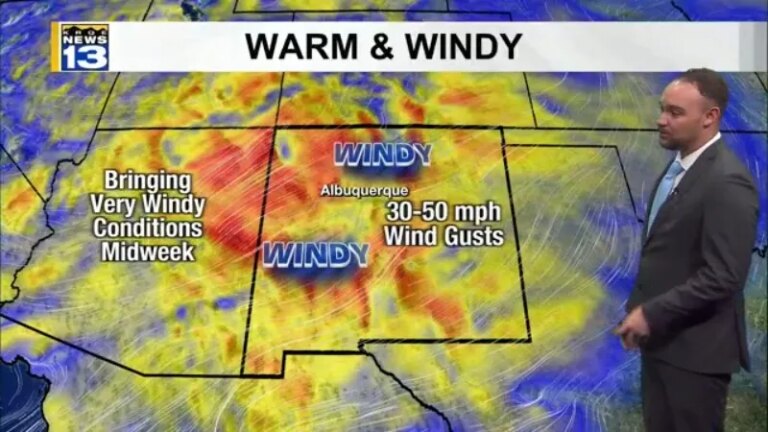
NEW MEXICO (KRQE) – Partly cloudy skies moved into parts of New Mexico today as warmer temperatures returned as well. Partly cloudy skies will persist overnight tonight and through the majority of the week. South-southwesterly upper-level winds continue to increase to start the week. This will continue the warming trend into Monday. Near record high temperatures […]
I’ve been traveling for close to twenty years. In that time, the airline industry has changed a lot. The use of points and miles has become widespread, round-the-world tickets have gone the way of the dodo, airlines have consolidated, and there has been an explosion of budget airlines.
Over the last few years, the cost of airline tickets has steadily risen. They get more and more expensive while their prices often seem illogical.
Since ticket pricing is an arcane and misunderstood subject, I want to take some time to explain why your airplane ticket costs what it does.
A Look at the Airline Industry
Ticket prices have increased over the decade for several reasons. For starters, the industry has consolidated a lot over the last few decades. Thanks to bankruptcies and mergers, there are now only three major alliance airlines (American, Delta, and United) in the United States. And, with the recent bankruptcy of Spirit and the merger of Alaska and Hawaiian, there’s even less competition outside the Big 3.
In Canada, there are only two major airlines – WestJet and Air Canada.
In Europe, Air France–KLM, British Airways IAG, and Lufthansa control the bulk of the market. (Though, thankfully, in Europe, there are lots of budget airlines to choose from.)
As airlines have partnered up, merged, or gone bankrupt, there is little incentive to provide low fares to win your business. After all, when only one or two airlines are flying a route, airlines know you don’t have much choice. Less competition means higher prices.
Secondly, the price of airline fuel has increased tremendously. Back in 2017, jet fuel cost $1.37 per gallon. In 2024, it is $6.49 per gallon! Airlines have simply passed that fivefold increase on to the consumer.
Thirdly, airline taxes and security fees have increased a lot, adding to the cost of your ticket. Ever fly into London? Half the ticket price is made up of fees and taxes!
Finally, demand fell following the 2008 recession, and to compensate, airlines reduced both the number of routes they offered and the frequency of their flights. Fuller planes mean more passenger revenue and fewer costs for the airline.
That trend greatly accelerated during COVID. When COVID shut down global travel, airlines mothballed many of their older planes and laid off many of their staff. When travel restrictions were lifted and more people started flying again, they didn’t have enough planes or staff to return to a pre-COVID schedule. This decrease in the supply of flights, coupled with the surge in demand for travel, meant that airlines had little incentive to lower prices.
According to Rick Seaney of Farecompare.com, “Before 2008, things were in favor of the passengers. After the 2009 crisis, the scale of justice tipped towards the airlines.”
Taken together, a consolidated airline industry that is facing more costs is simply less likely to generally offer lower fares.
How Airlines Determine Pricing
Prices go up and down for many reasons. There are four major factors that drive prices are competition, supply, demand, and oil prices.
Together, those four things affect something called “the load factor.” Airlines want to fill their planes and maximize profits, and they do this by calculating a plane’s load factor. Essentially, this is the percentage of seats sold on a flight. They want this number to be as high as possible.
To get the highest possible load factor, airlines will constantly change prices based on the four categories above in order to get people to buy tickets.
Airlines use dynamic pricing models and artificial intelligence (AI) to figure out the maximum value they can get for each seat. Have you ever wondered why airlines seem to callously raise their prices after a big event spikes demand? They aren’t. The AI is. All it sees is sky-high demand and adjusts accordingly to its programming. More demand = higher prices.
These advanced computer systems constantly compare booking trends to past sales history, major events, concerts, sporting events, weather, and competitor behavior. They can look at consumer searching and booking behavior and process lots and lots of data and change prices on the fly (no pun intended) in hopes of getting the best price possible.
All of this is why one day a flight may cost $100, then $400 the next, and then back to $100 the day after that. As people buy seats on a flight, airlines raise prices, and when demand falls (at a certain price point), they lower prices until fewer and fewer seats are available, then they will raise prices again. It’s a delicate balance designed to ensure maximum revenue. It’s why prices are cheapest for 5 AM flights, more expensive over the holidays, and through the roof during peak season or if there’s a major sports event in town.
After all, you can’t add more seats to a plane, so all they can do to raise revenue is charge higher fares!
It’s also why prices might change in seconds. It’s not because they are tracking your cookies, it’s because the AI is responding to real-time changes in seats. Think about it. How many booking companies are out there? Lots! All of them are reserving seats. Millions of people fly each day and, with limited routes, it’s easier to fill planes, so the AI doesn’t need to discount fares as much as it had to in the past.
On a US domestic flight, there might be 10–15 different price points. If the load factor is low and demand is low, an airline will increase the availability of cheap fares. If the load factor is high and demand is high, the airline will raise prices.
As Rick said, the airline is advantaged now.
But it’s not impossible to find a cheap ticket. There are many, many ways to find cheap airfare. To avoid being the person who paid the most for their ticket, the main thing to do is to be flexible.
Airlines are constantly changing prices to increase revenue, hoping to get people into the highest price buckets possible. “About three months before, airlines start to manage those bottom price points,” Rick says. That means airlines begin to look at historical trends and current seat sales to figure out whether they will release those really rock-bottom fares or keep prices high.
If you’re booking inside a month, you’re playing into the airline’s hands. When your dates are no longer flexible, you’ll pay whatever they charge.
To find out how to navigate this system and get a cheap flight, check out these articles I wrote:
The days of cheap airfares are long over. They aren’t coming back, and the prices you see now are the new normal for airline tickets. They are simply going to cost a lot more, especially if you don’t find the sweet spot when prices are their lowest.
But by understanding how tickets are priced, you can avoid being the person who pays the most.
How to Travel the World on $75 a Day
My New York Times best-selling book to travel will teach you how to master the art of travel so that you’ll get off save money, always find deals, and have a deeper travel experience. It’s your A to Z planning guide that the BBC called the “bible for budget travelers.”
Book Your Flight Find a cheap flight by using Skyscanner. It’s my favorite search engine because it searches websites and airlines around the globe so you always know no stone is being left unturned.
Book Your Accommodation You can book your hostel with Hostelworld. If you want to stay somewhere other than a hostel, use Booking.com as it consistently returns the cheapest rates for guesthouses and hotels.
Don’t Forget Travel Insurance Travel insurance will protect you against illness, injury, theft, and cancellations. It’s comprehensive protection in case anything goes wrong. I never go on a trip without it as I’ve had to use it many times in the past. My favorite companies that offer the best service and value are:
Want to Travel for Free? Travel credit cards allow you to earn points that can be redeemed for free flights and accommodation — all without any extra spending. Check out my guide to picking the right card and my current favorites to get started and see the latest best deals.
Need a Rental Car? Discover Cars is a budget-friendly international car rental website. No matter where you’re headed, they’ll be able to find the best — and cheapest — rental for your trip!
Need Help Finding Activities for Your Trip? Get Your Guide is a huge online marketplace where you can find cool walking tours, fun excursions, skip-the-line tickets, private guides, and more.
Ready to Book Your Trip? Check out my resource page for the best companies to use when you travel. I list all the ones I use when I travel. They are the best in class and you can’t go wrong using them on your trip.
• Joined ESPN in 2009 • An FIA accredited F1 journalist since 2011
Multiple Authors
Formula 1’s new era was always going to bring questions, but its first week of serious running has raised more than most. Preseason testing in Bahrain has offered flashes of performance and plenty of data, yet little in the way of firm answers about how the sport’s new landscape is really shaping up.
On track, the stopwatch has told a shifting story, with different teams looking quick at different moments and no clear benchmark emerging amid a game of smoke and mirrors.
Off the track, the uncertainty has been matched by unimpressed drivers and tension behind the scenes. Technical interpretations, competitive suspicion and safety concerns have all surfaced as the paddock tries to define the boundaries of the new rules. With one more test still to come, ESPN makes sense of a fascinating three days in Sakhir.
Who’s fastest?
Headline lap times in preseason testing are often misleading, but this year’s competitive picture has been made even murkier by new power unit regulations and, increasingly, a degree of politics at play.
Ask Mercedes who’s got the fastest package and they say Red Bull. Ask Red Bull and they say they’re fourth behind Ferrari, Mercedes and McLaren.
Ferrari point to Red Bull and Mercedes as the teams ahead of them, while world champions McLaren are convinced all three of their aforementioned rivals have the edge.
On paper, F1’s latest generation of power units are remarkable things, capable of producing three times as much electrical power as their predecessors and harvesting twice as much energy around a lap. But in reality that equation means they spend most of a lap starved of energy, meaning simply pushing to the limit is no longer a guaranteed route to the fastest lap time as the battery will soon be depleted.
“It’s ridiculously complex,” seven-time champion Lewis Hamilton said. “I sat in a meeting the other day and they’re talking us through it — it’s like you need a degree to fully understand it.”
One person in the paddock who undoubtedly has the qualifications to get his head around the challenges at play is Williams team principal James Vowles, and like all the best engineers he was able to summarise it in a satisfyingly concise manner.
“Think about it this way,” he said, “in one braking zone, you can nearly fill the battery up, but in half a straight, you can deplete the entire battery.”
It’s no surprise, therefore, that “energy management” became the main talking point in Bahrain this week. Put simply, the more effectively you can harvest energy around the lap under braking and in corners, the more you have to spend on the straights and the faster your eventual lap time will be.
That can mean drivers are no longer pushing to the limit in corners in the knowledge that sacrificing a bit of lap time there will come with the benefit of gaining more time back on the straights. Figuring out how best to balance that equation, especially for a single flying lap, has been a steep learning curve for teams this week, and one that has resulted in a quick-shifting picture of who is actually fastest.
Mercedes insists Red Bull, which is using its own power unit for the first time, has found a way of deploying more energy on certain straights than any other team, with both team boss Toto Wolff and George Russell saying the advantage their rivals have found is worth as much as a second per lap.
“They’re not just a small step ahead,” Russell said. “You’re talking in the order of half a second to a second in deployment over the course of a lap, so it’s pretty scary to see that difference.”
McLaren’s Lando Norris, whose car is also powered by a Mercedes engine, added: “When someone just has a deployment advantage, that’s just a beautiful bit of lap time to have in your pocket. Without trying, you can just go quicker.”
But ask Red Bull’s technical director Pierre Wache if he feels his team is the benchmark and he points back at his rivals.
“We are not the benchmark, for sure,” he said. “We see clearly the top three teams as Ferrari, Mercedes and McLaren. They are in front of us from our analysis, and we are behind.
“That is where we think we are at the moment. It is difficult to say about the other because the level of fuel they run, the level of power they run is difficult to say, but it’s currently our analysis and it could be wrong.”
Away from the top four teams, and underlining the view that the competitive picture is constantly evolving, Alpine managing director Steve Nielsen said his data has shown different power unit manufacturers looking strongest on an almost daily basis.
“Honestly, if you’d asked me that in Barcelona [at the first test] I would’ve probably said Mercedes is head and shoulders above the rest. If you’d asked me that on Wednesday [in Bahrain], I would probably have said Red Bull are the benchmark. If you’d asked me yesterday [Thursday], I would’ve said ‘wow, you want to see Ferrari’s long run.'”
Nielsen also stressed that all teams will have learned from each other over the week by analysing different approaches to deploying energy around the lap and will likely converge towards the best solutions as a result.
“I mean, we’re shameless plagiarists, all of us,” he said. “We’ll look at anything anybody else can do on the track, off the track, and if we like it, we’ll steal it. And looking at their speeds, cornering speeds, how they deploy, all of that stuff. We’re all doing it to each other.”
Combine those different approaches to energy deployment with all the other usual testing caveats, such as fuel loads and differing track conditions, and trying to read anything meaningful into the lap times is something of a fool’s errand. Some long run data from Friday suggested the Mercedes and Ferrari had the edge over McLaren, but it is only a small snapshot of a much wider picture that will likely change again when testing resumes in Bahrain next week.
“It’s a challenge but it’s a good fun challenge for the engineers, for the drivers,” Norris said. “It’s different, you have to drive it in a different way and understand things differently and manage things differently.
“But you still get to drive cars and travel the world and have a lot of fun. So, no nothing to complain about.”
Although not all drivers sided with one of the extremes being forwarded by Norris and Verstappen, all of them seemed to agree the 2026 regulations were certainly “different.” Just from standing trackside there are two fairly big changes to driving style that are both visible and audible. Some drivers (although notably not those with Ferrari engines) are reaching for first gear in Bahrain’s three slowest corners — Turn 1, 8 and 10.
By engaging first gear, the engine revs much higher than it would in second or third, helping to charge the battery while also keeping the turbo spinning at a higher speed to give optimum boost pressure on the exit of the corner and avoid a phenomenon known as turbo-lag.
“I think the one challenge that we’re facing with is using very low gears in the corners, so, to give an example, here in Bahrain, usually the first corner is a third gear corner,” Russell said. “In the previous generation, now we’re having to use first gear to keep the engine, the revs very high to keep the turbo spinning, this is probably the one thing that is quite annoying and isn’t that intuitive.
“Imagine when you drive to the supermarket in your car and you get to the roundabout and you put it in third gear to drive around the roundabout, but suddenly the person next to you says put it in first gear — everything is like wham, revving. For that reason you don’t go in the roundabout to the supermarket in first gear if you’re driving at a sensible speed, but this is the same thing, the car and the engine is designed to go around this corner in third gear, but because of the turbo and the boost and all of this you’ve got to keep the engine revs very high, which means you have to take first gear. The car isn’t really designed to do that, but we’re working around it.”
Another obvious change is slower speeds through fast corners. In some cases there is little to gain by deploying battery power in the high-speed corners, and so it makes more sense to lift a little.
Fernando Alonso, who has been racing in Bahrain since it first joined the calendar in 2004, said it has changed the approach to the high-speed Turn 12 from the cockpit of his Aston Martin.
“Here in Bahrain it has been historically Turn 12 that is a very challenging corner,” he said. “So you used to choose your downforce level to go through Turn 12 just flat, and so you would remove downforce until you are in Turn 12 just flat with new tyres.
“So it was then driver skill that was the decisive factor to go fast in a lap time.
“Now in Turn 12 we are like 50 kph slower because we don’t want to waste energy there and we want to have it all on the straights. So to do Turn 12 instead of going at 260 kph, we are at 200 kph — even our chef [in Aston Martin’s hospitality] can drive the car in Turn 12 at that speed. But you don’t want to waste energy because you want to have it on the straights.
“So I understand Max’s comments because from a driver you would like to make the difference in the corner, driving those 5 kph faster than the others, but now you are dictated by how much energy your engine will have on the next straight.”
It should be said that telemetry data showed Alonso was taking more speed into Turn 12 than his rivals and then needing to lift the throttle while the others stayed flat, but the point of taking slower speeds through the fastest corners still stands.
Power politics
With the added complication of the new rules has come a significant amount of paranoia among teams around what their rivals are doing. Heading into this week’s test, Mercedes’ interpretation of the rules regarding the engine’s compression ratio was a key topic and by the end of the three days it was no closer to being resolved.
The controversy centres around the reduction of the compression ratio from 18:1 in 2025 to 16:1 this year to make it easier for new power unit manufacturers to compete in the sport.
The regulations state that the compression ratio will be measured at ambient temperatures, and it seems Mercedes has found a way to comply with the test when the engine is cold but achieve a higher compression ratio — and therefore more power output — when the engine is running hot.
The FIA has declared its intention to “solve” the issue ahead of the first race of the season and avoid the situation being referred to the stewards or decided in court. One possibility is to change the rules so that the compression ratio limit of 16:1 explicitly applies when the engine is hot, but to push the change through it would require the support of the FIA, FOM and all of Mercedes’ power unit rivals.
There is a feeling among the rivals that Mercedes has been hiding its true performance in testing to prevent the FIA and FOM from siding against the German manufacturer.
“Mercedes are showing some very impressive things, sometimes, but I would say they are hiding a lot more,” Charles Leclerc said on Friday. “I would expect them especially to be a bit ahead of us.”
Verstappen took a more direct aim at Wolff’s assertion that Red Bull has the benchmark power unit.
“For me personally, it’s more like diversion tactics,” Verstappen said. “But that’s okay. I mean, I focus on what we’re doing here with the team. Because honestly, for us, there’s still so much to learn. This new ruleset is so complex that we just want to do our laps and just go from there, to be honest.”
Wolff claims any advantage is only worth “a couple” of horsepower and maintains the FIA was kept in the loop throughout the development of the engine. A change to the rules will need to be made ahead of the looming engine homologation deadline of March 1, and it is not yet clear what it would mean for Mercedes and its three engine customers, McLaren, Alpine and Williams.
Another issue up for debate ahead of the season opener in Australia centres around race starts. Following multiple practice starts by drivers this week in Bahrain, it became clear just how difficult it will be to make a clean getaway using the new power units.
Until the car is over 50km/h the regulations state the power unit cannot deploy any of its electrical boost, meaning the initial getaway is reliant entirely on the V6 turbo engine. Under the previous set of regulations an element of the power unit’s hybrid system, known as the MGU-H, was used to spool the turbo to provide the optimum boost pressure for the start, but the MGU-H was removed as part of the changes to the power unit this year.
As a result, the V6 engine now needs to be revved in advance to build up boost pressure and minimise a common phenomenon in turbocharged engines known as turbo-lag. During practice starts in Bahrain, cars could be observed revving hard for over ten seconds to build turbo boost before finally making their getaway.
There is a belief that the current start procedure — which sees five red lights illuminated at one second intervals before all five are extinguished and the race gets underway — will not provide enough time for drivers arriving at the back of the grid to prepare their turbo in time for a clean start.
The concern is that a significant variation in start qualities up and down the grid could result in collisions.
“We need to make sure that the race start procedure allows all cars to have the power unit ready to go because the grid is not the place in which you want to have cars slow in taking off the grid,” McLaren boss Andrea Stella said.
“This is of bigger interest than any competitive interest. I think all teams and the FIA should play the game of responsibility when it comes to what is needed in terms of race start procedure. I’m thinking about the timings, for instance, the timing of the lights, the timing before the lights.
“They need to be in the right place to make sure that, first of all, it’s a safe phase of the way we go racing.”
The issue is further complicated as Ferrari is believed to have opted for a smaller turbocharger to combat turbo-lag.
A report by The Race claims the Italian team initially raised the issue but was not listened to by its rivals and has since blocked a more recent attempt to change the start procedure.
Stella also raised concerns about overtaking and the possibility of collisions caused by drivers lifting and coasting along straights to harvest energy. He claims changes to the regulations to prevent such issues are “simple”, although those changes would likely be centered on the rules around harvesting and deploying energy, which some teams are clearly doing a better job at than others. All three of the concerns raised by Stella are expected to be discussed at next week’s meeting of the F1 Commission on Wednesday.
In short, far more will be at stake at the final preseason test than the relatively simple matter of who has the fastest car.
Washington — U.S. military forces boarded another sanctioned tanker in the Indian Ocean after tracking the vessel from the Caribbean Sea in an effort to target illicit oil connected to Venezuela, the Pentagon said Sunday.
Venezuela had faced U.S. sanctions on its oil for several years, relying on a shadow fleet of falsely flagged tankers to smuggle crude into global supply chains. President Trump ordered a quarantine of sanctioned tankers in December to pressure then-President Nicolás Maduro before Maduro was apprehended in January during an American military operation.
Several tankers fled the Venezuelan coast in the wake of the raid, including the ship that was boarded in the Indian Ocean. The Defense Department said in a post on X that U.S. forces boarded the Veronica III, conducting “a right-of-visit, maritime interdiction and boarding.”
“The vessel tried to defy President Trump’s quarantine – hoping to slip away,” the Pentagon said. “We tracked it from the Caribbean to the Indian Ocean, closed the distance, and shut it down.”
Video posted on social media by the Pentagon shows U.S. troops boarding the tanker:
We defend the Homeland forward. Distance does not protect you.
Overnight, U.S. forces conducted a right-of-visit, maritime interdiction and boarding of the Veronica III without incident in the INDOPACOM area of responsibility.
The Veronica III is a Panamanian-flagged vessel under U.S. sanctions related to Iran, according to the website of the Treasury Department’s Office of Foreign Assets Control. The Panama Maritime Authority said Sunday in a brief statement that the ship was no longer registered there and had been canceled in December 2024.
The Veronica III left Venezuela on Jan. 3, the same day as Maduro’s capture, with nearly 2 million barrels of crude and fuel oil, TankerTrackers.com posted Sunday on X.
“Since 2023, she’s been involved with Russian, Iranian and Venezuelan oil,” the organization said.
Samir Madani, co-founder of TankerTrackers.com, told The Associated Press in January that his organization used satellite imagery and surface-level photos to document that at least 16 tankers left the Venezuelan coast in contravention of the quarantine.
The Trump administration has been seizing tankers as part of its broader efforts to take control of the Venezuela’s oil. The Pentagon did not say in the post whether the Veronica III was formally seized and placed under U.S. control, and later told the AP in an email that it had no additional information to provide beyond that post.
Last week, the U.S. military boarded a different tanker in the Indian Ocean, the Aquila II. The ship was being held while its ultimate fate was decided by the United States, according to a defense official who spoke last week on condition of anonymity to discuss ongoing decision-making.
Monarch butterflies wintering in the mountains of western Mexico have survived January’s arctic blast, according to scientists studying the impact of the cold air on their overwintering sites.”There was a lot of concern that the arctic blast would reach all the way down to their overwintering sites. But it appears that it did not,” said Emily Geest from the Oklahoma City Zoo.Despite the close brush with the arctic intrusion, Geest noted that monarchs are surprisingly resilient to cold, emphasizing the importance of moisture.”They can tolerate temperatures as low as 18 degrees Fahrenheit, even though freezing occurs near 32 degrees. They can tolerate so long as they don’t have moisture on their bodies,” she said.In previous years, such as 2002 and 2016, the reserve saw a combination of cold and moisture, leading to significant declines in monarch numbers that took years to recover.However, reports from Mexico suggest that it’s been a positive overwintering year.”Some of the reports coming out of Mexico suggest that it’s been a really good overwintering year. The population is as big as it’s ever been, but we’ll have to see what happens,” Geest said.Monarchs are expected to begin their migration back north in a few weeks, arriving in Oklahoma by early April.Excitingly, monarchs tagged in Oklahoma last fall have been found at the overwintering sites.”We just found out a few days ago that at least two of them were found again in the overwintering sites – so we’re really excited to see what happens with these monarchs,” Geest said.However, the lingering drought in Oklahoma poses a potential concern for the butterflies upon their return, as rainfall is crucial for their food source.”They need plants – they need flowers and nectar. And if we persist into a drought, things may stay dry. There may not be enough nectar for them,” Geest said.
Monarch butterflies wintering in the mountains of western Mexico have survived January’s arctic blast, according to scientists studying the impact of the cold air on their overwintering sites.
“There was a lot of concern that the arctic blast would reach all the way down to their overwintering sites. But it appears that it did not,” said Emily Geest from the Oklahoma City Zoo.
Despite the close brush with the arctic intrusion, Geest noted that monarchs are surprisingly resilient to cold, emphasizing the importance of moisture.
“They can tolerate temperatures as low as 18 degrees Fahrenheit, even though freezing occurs near 32 degrees. They can tolerate so long as they don’t have moisture on their bodies,” she said.
In previous years, such as 2002 and 2016, the reserve saw a combination of cold and moisture, leading to significant declines in monarch numbers that took years to recover.
However, reports from Mexico suggest that it’s been a positive overwintering year.
“Some of the reports coming out of Mexico suggest that it’s been a really good overwintering year. The population is as big as it’s ever been, but we’ll have to see what happens,” Geest said.
Monarchs are expected to begin their migration back north in a few weeks, arriving in Oklahoma by early April.
Excitingly, monarchs tagged in Oklahoma last fall have been found at the overwintering sites.
“We just found out a few days ago that at least two of them were found again in the overwintering sites – so we’re really excited to see what happens with these monarchs,” Geest said.
However, the lingering drought in Oklahoma poses a potential concern for the butterflies upon their return, as rainfall is crucial for their food source.
“They need plants – they need flowers and nectar. And if we persist into a drought, things may stay dry. There may not be enough nectar for them,” Geest said.