Home Blog Page 422

Cuba’s health care system pushed to the brink by US fuel blockade

0


Cuba’s debilitated health care system has been pushed to the brink of collapse by the U.S. blockading the country’s oil supply, a Cuban official said Friday.The country’s medical system was already perpetually crisis-stricken along with the island’s economy, with lack of supplies, staff and medicine long being the norm. But the turmoil has reached a new extreme in recent weeks. Ambulances are struggling to find fuel to respond to emergencies. Persistent outages have plagued deteriorated hospitals. Flights bringing vital supplies have been suspended as Cuba’s government says it’s now unable to refuel airplanes in its airports.Video above: Mexico at an oil crossroads with Cuba amid US pressureExperts and some leaders of other countries have warned that the island could be on the verge of a humanitarian crisis.In an interview with The Associated Press, Cuba’s Health Minister José Ángel Portal Miranda said that U.S. sanctions are no longer just crippling the island’s economy, they’re threatening “basic human safety.”“You cannot damage a state’s economy without affecting its inhabitants,” Portal said. “This situation could put lives at risk.”According to Portal, 5 million people in Cuba living with chronic illnesses will see their medications or treatments affected. This includes 16,000 cancer patients requiring radiotherapy and another 12,400 undergoing chemotherapy.Cardiovascular care, orthopedics, oncology and treatment for critically ill patients who require electrical backup are among the most impacted areas, he said. Kidney disease treatments and emergency ambulance services have also been added to the list of impacted services.The energy crisis Cuba has been grappling with for years entered new extremes last month when U.S. President Donald Trump signed an executive order that would impose a tariff on any country that sells or provides oil to Cuba. It came just weeks after Trump deposed Venezuelan President Nicolás Maduro and announced no more Venezuelan oil would go to Cuba.Cuba, which produces only 40% of its own fuel and largely depends on oil to power the island, has long relied on allies like Venezuela, Mexico and Russia to fill its energy deficit. But those shipments have now dried up.Trump has openly said that his larger hope is to push regime change in Cuba by intensifying economic pressure on the island, which has already struggled to cope with decades of U.S. sanctions.Cuban people — who the U.S. government has said it seeks to defend — are the ones feeling the harsh ripple effects of the U.S. fuel blockade as hardship mounts every day. Buses have slashed routes, gas has been put under strict rationing and is only being sold in foreign currency, and endemic blackouts have reached a new extreme. “There’s been a drastic change since January,” said Aniliet Rodríguez, a 25-year-old pregnant woman who was admitted that month to a maternal care center for an extreme case of anemia. “There’s no bread, no milk for nutrition … . There are no medicines.”Cuba’s health care system follows a universal and free model, providing local clinics on nearly every block and state subsidized medicine. But it’s also entered a state of crisis in recent years, especially since the COVID-19 pandemic. Thousands of doctors being paid state wages that can hardly afford them a carton of eggs have emigrated from the country and hospitals have rapidly deteriorated.Medicine shortages have forced many to buy them on the black market instead.Such problems are expected to worsen in the coming weeks even though Cuba’s government has struggled to adjust to the new reality, Portal said. Solar panels have been installed in clinics while authorities prioritize care to children and the elderly.But he also said they have placed restrictions on some more energy-reliant technologies like CT scans and laboratory tests, noting doctors will have to rely on more basic methods to treat patients, effectively cutting many off from high levels of care.”We are facing an energy siege with direct implications for the lives of Cubans, for the lives of Cuban families,” Portal said.

Cuba’s debilitated health care system has been pushed to the brink of collapse by the U.S. blockading the country’s oil supply, a Cuban official said Friday.

The country’s medical system was already perpetually crisis-stricken along with the island’s economy, with lack of supplies, staff and medicine long being the norm. But the turmoil has reached a new extreme in recent weeks. Ambulances are struggling to find fuel to respond to emergencies. Persistent outages have plagued deteriorated hospitals. Flights bringing vital supplies have been suspended as Cuba’s government says it’s now unable to refuel airplanes in its airports.

Video above: Mexico at an oil crossroads with Cuba amid US pressure

Experts and some leaders of other countries have warned that the island could be on the verge of a humanitarian crisis.

In an interview with The Associated Press, Cuba’s Health Minister José Ángel Portal Miranda said that U.S. sanctions are no longer just crippling the island’s economy, they’re threatening “basic human safety.”

“You cannot damage a state’s economy without affecting its inhabitants,” Portal said. “This situation could put lives at risk.”

According to Portal, 5 million people in Cuba living with chronic illnesses will see their medications or treatments affected. This includes 16,000 cancer patients requiring radiotherapy and another 12,400 undergoing chemotherapy.

Cardiovascular care, orthopedics, oncology and treatment for critically ill patients who require electrical backup are among the most impacted areas, he said. Kidney disease treatments and emergency ambulance services have also been added to the list of impacted services.

The energy crisis Cuba has been grappling with for years entered new extremes last month when U.S. President Donald Trump signed an executive order that would impose a tariff on any country that sells or provides oil to Cuba. It came just weeks after Trump deposed Venezuelan President Nicolás Maduro and announced no more Venezuelan oil would go to Cuba.
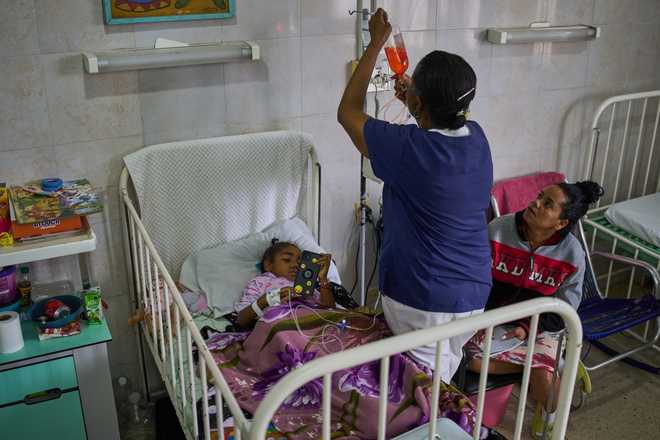
Carolina Silva Matos, a cancer patient, rests in a hospital bed at the National Institute of Oncology and Radiology in Havana, Cuba, Friday, Feb. 20, 2026.

Ramon Espinosa

Carolina Silva Matos, a cancer patient, rests in a hospital bed at the National Institute of Oncology and Radiology in Havana, Cuba, Friday, Feb. 20, 2026.

Cuba, which produces only 40% of its own fuel and largely depends on oil to power the island, has long relied on allies like Venezuela, Mexico and Russia to fill its energy deficit. But those shipments have now dried up.

Trump has openly said that his larger hope is to push regime change in Cuba by intensifying economic pressure on the island, which has already struggled to cope with decades of U.S. sanctions.

Cuban people — who the U.S. government has said it seeks to defend — are the ones feeling the harsh ripple effects of the U.S. fuel blockade as hardship mounts every day. Buses have slashed routes, gas has been put under strict rationing and is only being sold in foreign currency, and endemic blackouts have reached a new extreme.

“There’s been a drastic change since January,” said Aniliet Rodríguez, a 25-year-old pregnant woman who was admitted that month to a maternal care center for an extreme case of anemia. “There’s no bread, no milk for nutrition … . There are no medicines.”

Cuba’s health care system follows a universal and free model, providing local clinics on nearly every block and state subsidized medicine. But it’s also entered a state of crisis in recent years, especially since the COVID-19 pandemic. Thousands of doctors being paid state wages that can hardly afford them a carton of eggs have emigrated from the country and hospitals have rapidly deteriorated.
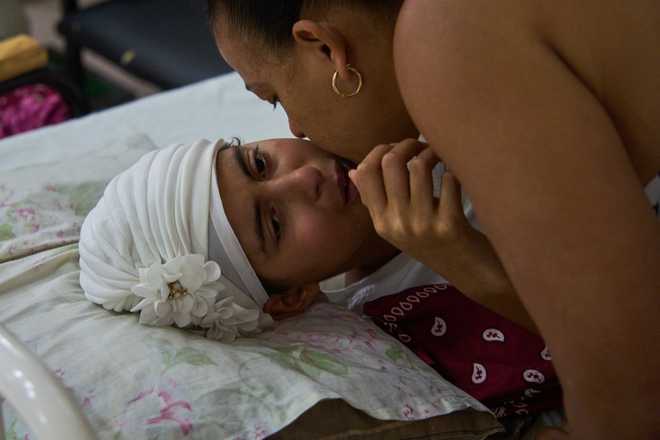
Niala Gonzalez, a cancer patient is kissed by her mother at the National Institute of Oncology and Radiology in Havana, Cuba, Friday, Feb. 20, 2026.

Ramon Espinosa

Niala Gonzalez, a cancer patient is kissed by her mother at the National Institute of Oncology and Radiology in Havana, Cuba, Friday, Feb. 20, 2026.

Medicine shortages have forced many to buy them on the black market instead.

Such problems are expected to worsen in the coming weeks even though Cuba’s government has struggled to adjust to the new reality, Portal said. Solar panels have been installed in clinics while authorities prioritize care to children and the elderly.

But he also said they have placed restrictions on some more energy-reliant technologies like CT scans and laboratory tests, noting doctors will have to rely on more basic methods to treat patients, effectively cutting many off from high levels of care.

“We are facing an energy siege with direct implications for the lives of Cubans, for the lives of Cuban families,” Portal said.


Source link

Investor Ed Garden Builds Stake in Fortune Brands, Seeking New CEO

0


Garden believes the company behind Moen faucets and Master Lock could grow much larger over the next decade.


Source link

USA-Canada gold medal game: Top photos from an Olympic instant classic

0


For the first time since the Miracle on Ice in 1980, Team USA is golden again.

The United States defeated Canada 2-1 in overtime in the 2026 Olympic men’s hockey final, reclaiming the top spot on the podium in a game that felt destined for instant-classic status. Both teams entered undefeated through preliminary and knockout play, setting up a rematch of last year’s 4 Nations Face-Off title game — which Canada won in overtime.

This time, the Americans flipped the script.

From the golden goal to an emotional tribute, the top photos from the game captured every ounce of action.

Hughes’ golden moment

Tied 1-1 after regulation, the Americans needed less than two minutes in 3-on-3 overtime to win the game.

Jack Hughes — noticeably missing teeth after taking a high stick in the third period — took a feed from Zach Werenski and snapped the puck past Jordan Binnington for the winner.


Boldy strikes first

Earlier in the game, Minnesota Wild forward Matt Boldy gave Team USA the early edge with a dazzling puck-juggling goal to make it 1-0.


Makar answers for Canada

Canada didn’t blink.

Cale Makar‘s second-period goal pulled the defending champions level. The shot of Makar displays the heavyweight feel of the matchup as the momentum seemed to shift.


The turning point: MacKinnon’s miss and Hellebuyck’s paddle

The gold medal game may ultimately be remembered for Hughes’ overtime winner, but a memorable sequence came midway through the third period.

Nathan MacKinnon — the NHL’s leading goal scorer, carrying a six-goal cushion atop the league leaderboard — found himself staring at a mostly open net with Connor Hellebuyck sliding out of position. MacKinnon fired an attempt from point-blank range for a goal that would have given Canada a 2-1 lead. Instead, the puck sailed wide.

Later, Hellebuyck delivered what became the save of the tournament.

Midway through the third period, with the game hanging in the balance, Hellebuyck flashed his paddle to deny Devon Toews on what appeared to be a sure goal.

It preserved the tie and gave the Americans a chance to chase history.


Amid the celebration came a poignant moment.

Forward Matthew Tkachuk and defenseman Zach Werenski welcomed the children of their late NHL teammate, Johnny Gaudreau, into Team USA’s postgame photo. The image added emotional weight to an already unforgettable night and displayed how this team’s bond extended beyond the ice.


A celebration 46 years in the making

As the final horn sounded, another image became etched into Olympic history.

Forty-six years to the day after Lake Placid, Team USA once again secured the top spot on the Olympic podium.


Source link

Mexican army kills leader of powerful Jalisco New Generation Cartel during operation to capture him

0


MEXICO CITY — The Mexican army killed the leader of the Jalisco New Generation Cartel, Nemesio Rubén Oseguera Cervantes, “El Mencho, ” on Sunday, decapitating what had become Mexico’s most powerful cartel and giving the government its biggest prize yet to show the Trump administration its efforts.

Oseguera Cervantes was wounded in an operation to capture him Sunday in Tapalpa, Jalisco about a two-hour drive southwest of Guadalajara and he died while being flown to Mexico City, the Defense Department said in a statement. The state is the base of the cartel known for trafficking huge quantities of fentanyl and other drugs to the United States.

During the operation, troops came under fire and killed four people at the location. Three more people, including Oseguera Cervantes, were wounded and later died, the statement said. Two others were arrested and armored vehicles, rocket launchers and other arms were seized. Three members of the armed forces were wounded and receiving medical treatment.

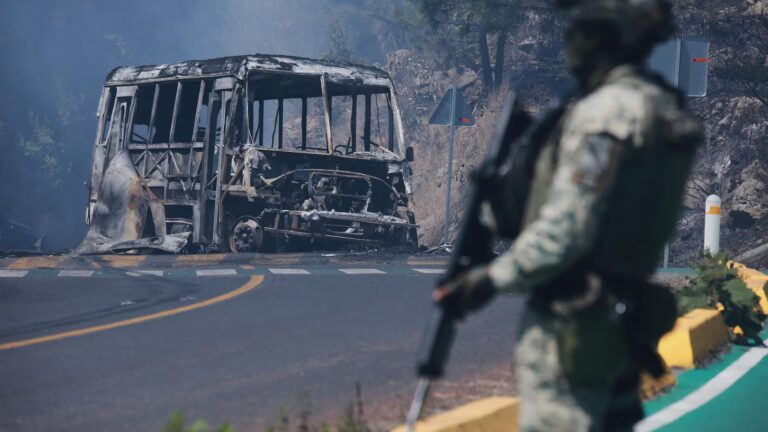
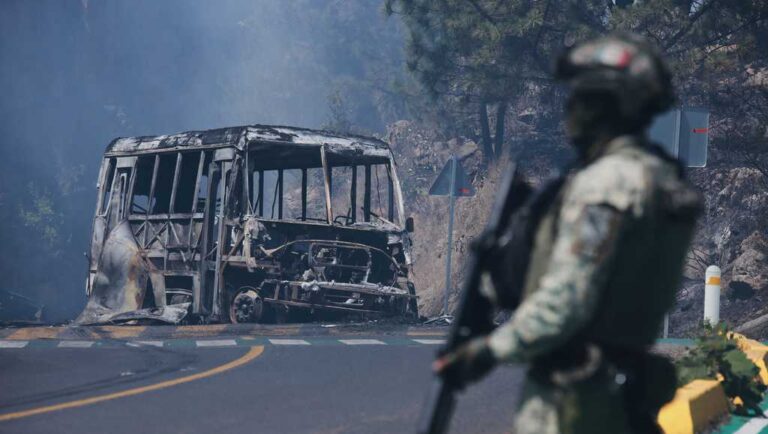
The killing of the powerful drug lord set off several hours of roadblocks with burning vehicles in Jalisco and other states. Such tactics are commonly used by the cartels to block military operations. Jalisco canceled school in the state for Monday.

Videos circulating on social media showed plumes of smoke billowing over the tourist city of Puerto Vallarta in Jalisco, and people sprinting through the airport of the state’s capital in panic. On Sunday afternoon, Air Canada announced it was suspending flights to Puerto Vallarta “due to an ongoing security situation” and advised customers not to go to their airport.

In Guadalajara, the state capital, burning vehicles blocked roads. Mexico’s second-largest city is scheduled to host matches during this summer’s soccer World Cup.

The U.S. State Department warned U.S. citizens in Jalisco, Tamaulipas, Michoacan, Guerrero and Nuevo Leon states to remain in safe places due to the ongoing security operations. Canada’s embassy in Mexico warned its citizens in Puerto Vallarta to shelter in place and generally to keep a low profile in Jalisco.

Jalisco Gov. Pablo Lemus told residents to stay at home and suspended public transportation.

The U.S. State Department had offered a reward of up to $15 million for information leading to the arrest of El Mencho. The Jalisco New Generation Cartel, known as CJNG, is one of the most powerful and fastest growing criminal organizations in Mexico and was born in 2009.

In February, the Trump administration designated the cartel as a foreign terrorist organization.

Mexican President Claudia Sheinbaum, like her predecessor, has criticized the “kingpin” strategy of previous administrations that took out cartel leaders only to trigger explosions of violence as cartels fractured. While she has remained popular in Mexico, security is a persistent concern and since U.S. President Donald Trump took office a year ago, she has been under tremendous pressure to show results against drug trafficking.

The Jalisco cartel has been one of the most aggressive cartels in its attacks on the military — including on helicopters — and is a pioneer in launching explosives from drones and installing mines. In 2020, it carried out a spectacular assassination attempt with grenades and high-powered rifles in the heart of Mexico City against the then head of the capital’s police force and now federal security secretary.

The DEA considers the cartel to be as powerful as the Sinaloa cartel, one of Mexico’s most infamous criminal groups, with a presence in all 50 U.S. states. It is one of the main suppliers of cocaine to the U.S. market and, like the Sinaloa cartel, earns billions from the production of fentanyl and methamphetamines. Sinaloa, however, has been weakened by infighting after the loss of its leaders Ismael “El Mayo” Zambada and Joaquín “El Chapo” Guzmán, both in U.S. custody.

Oseguera Cervantes, 59, was originally from Aguililla in the neighboring state of Michoacan. He had been significantly involved in drug trafficking activities since the 1990s. When he was younger, he migrated to the U.S. where he was convicted of conspiracy to distribute heroin in the U.S. District Court for the Northern District of California in 1994 and served nearly three years in prison.

Following his release from custody, Oseguera Cervantes returned to Mexico and reengaged in drug trafficking activity with drug lord Ignacio Coronel Villarreal, alias “Nacho Coronel.” After Villarreal’s death, Oseguera Cervantes and Erik Valencia Salazar, alias “El 85”, created the Jalisco New Generation Cartel around 2007.

Initially, they worked for the Sinaloa Cartel, but eventually split and for years the two cartels have battled for territory across Mexico.

Since 2017, Oseguera Cervantes has been indicted several times in the United States District Court for the District of Columbia.

The most recent superseding indictment, filed on April 5, 2022, charges Oseguera Cervantes with conspiracy and distribution of controlled substances (methamphetamine, cocaine, and fentanyl) for the purpose of illegal importation into the United States and use of firearms during and in connection with drug trafficking offenses. Oseguera Cervantes is also charged under the Drug Kingpin Enforcement Act for directing a continuing criminal enterprise.

Last year, people searching for missing relatives founds piles of shoes and other clothing, as well as bone fragments at what authorities later said was a Jalisco cartel recruitment and training site.

__

AP writer María Verza contributed to this report.


Source link

Man convicted in hot air balloon pilot carjacking

0


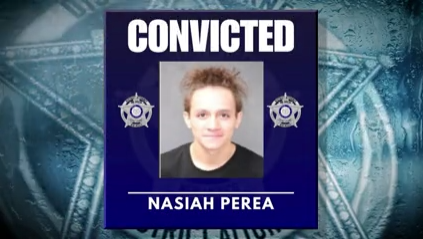
ALBUQUERQUE, N.M. (KRQE) – This week, a jury convicted a man after carjacking a hot air balloon pilot at gunpoint. The victim was on his way to a pilot briefing when Nasiah Perea approached the car, threatened him with a gun, and took his car. Perea is facing up to 15 years for armed robbery, conspiracy, […]


Source link

2026 WNBA Draft: How South Carolina’s Raven Johnson proved she’s a first-round pick while scoring six points

0


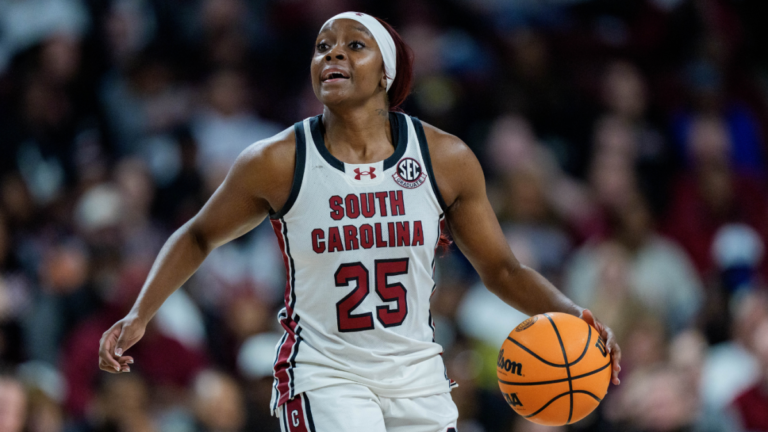
Midway through the second quarter on Sunday afternoon in Columbia, Raven Johnson sprung a trap. Matched up against Cotie McMahon in the corner, Johnson watched and waited while Ole Miss ran a pick-and-roll up top. Then, just as Kaitlin Peterson picked up her dribble and turned to throw the ball out to McMahon, Johson jumped into the passing lane for a steal and took the ball coast-to-coast for a layup. 

Johnson’s bucket put South Carolina ahead by 11, and the Gamecocks led by double digits the rest of the way en route to a dominant 85-48 win that secured the SEC regular season title for the fifth season in a row. Though Johnson only finished with six points in the victory — tied for the fifth-highest total for the Gamecocks — she showed why she deserves to be a first-round pick in the 2026 WNBA Draft. 

Johnson’s WNBA stock has fluctuated throughout her time in college. She helped the Gamecocks win the national championship as a redshirt junior in 2024, and drew rave reviews for her defense against Caitlin Clark in the title game. However, she was unable to build on that momentum last season, and after a disappointing campaign on a personal level, she decided to use her extra year of eligibility to return to school rather than turn pro. 

That proved to be a wise decision. Johnson has bounced back with the best season of her career: 9.8 points, 4.2 rebounds, 5.4 assists and 1.7 steals on 48.7/35.2/84.1 shooting splits. Those aren’t gaudy numbers, and Johnson can still be inconsistent as a scorer, as we saw Sunday, but it’s everything else that’s going to make her a first-round pick. 

2026 WNBA Draft Big Board 1.0: Awa Fam and Olivia Miles stand alone in first tier, UCLA stars dominate top 10

Jack Maloney

2026 WNBA Draft Big Board 1.0: Awa Fam and Olivia Miles stand alone in first tier, UCLA stars dominate top 10

“I think that Raven Johnson does not get the credit that she should. I think she is the best point guard in the country,” Ole Miss coach Yolett McPhee-McCuin said Sunday after Johnson’s excellent two-way performance, which included seven assists, three steals and just one turnover. 

Shutting down McMahon

Johnson is best known for her defense, so let’s start on that side of the ball. 

She spent most of Sunday shadowing McMahon, Ole Miss’s leading scorer and another potential first-round pick in this year’s WNBA draft. McMahon entered the game averaging 20.7 points, and was coming off 39- and 25-point performances. Her hot streak came to an abrupt end

Johnson helped hold McMahon to a season-low two points on 0 of 9 from the field. This was just the second time in McMahon’s career that she’s played at least 10 minutes and failed to make a shot, and her two points were tied for the third-fewest in her career. 

Johnson is only 5-foot-9, but she has a 6-foot-2 wingspan, which is a real benefit against bigger players like the 6-foot McMahon. Throughout the game, Johnson got right into McMahon’s space and prevented her from getting anything going off the dribble. 

Here, early in the third quarter, Johnson picks McMahon up fullcourt and forces her to give up the ball early. Because McMahon is only just inside the halfcourt line, her pass to the wing is longer than usual, which gives Ta’Niya Latson time to pick it off. Johnson doesn’t get any credit for this turnover in the box score, but she caused it. 

A few possessions later, McMahon doesn’t even try to bring the ball up the floor and throws it ahead instead. She gets it back near the top of the key, but Johnson’s pressure immediately forces her backwards, and then Johnson pokes the ball away for what should have been another turnover. 

“I thought our players did a great job, Raven especially,” South Carolina coach Dawn Staley said of her team’s job defending McMahon. “The first line of that defense was so hard, that took her vision down, that occupied her dribble. Raven’s the very best at it.”

Johnson’s ability to mirror McMahon’s movements and weave around screens also made it difficult for Ole Miss to get McMahon going off the ball. Here, in the second quarter, Johnson fights through traffic to get a deflection on a baseline out of bounds play and forces Ole Miss to take the ball out again in the deep corner. 

There is no better point of attack defender in this class than Johnson, and as the WNBA leans more into spacing and 3-point shooting over the coming years, that is going to become an even more valuable skill. 

“Unafraid of a challenge, is willing — she knows. Like, she knew she was gonna have to guard Cotie, she knew she was gonna have to guard Mikayla Blakes. She knows she’s gonna have to guard our opponents’ best perimeter [players], and sometimes small, power forwards,” Staley said of Johnson’s defensive impact. “We’re unafraid to switch if need be because we know Raven’s gonna give it her best shot at defending and making it difficult for people. I see it. I don’t think she gets credit enough for what she’s been doing over her career… She doesn’t have the numbers and the steals and the blocks that we look at… If you really look at what makes our team go defensively, it starts and ends with Raven.”

An improved playmaker

Johnson’s perimeter defense has never been a secret, but there have been questions about her offense. Though she is shooting a career-high 35.2% from 3-point range (on just 2.4 attempts per game), she still offers little as a scorer. Johnson has made real strides as a playmaker, though, and now looks much more like a viable point guard at the next level. 

She finished with seven assists against Ole Miss and easily could have been in double figures in that category if her teammates had helped her out. 

Johnson excels in transition, as we saw time and again Sunday. The weight of her passes were excellent and allowed her bigs to catch the ball in stride to either go up and finish or get fouled. This one in the third quarter to Alicia Tournebize stood out. 

She also showed that she could make high-level passes in the halfcourt, such as this backdoor feed to Tessa Johnson (which should have been converted) and this pocket pass to Madina Okot. 

Additionally, Johnson only had one turnover on Sunday. She’s averaging 1.6 this season and for her career has just 196 turnovers in 3,485 minutes over 143 games. One of the most impressive stats about Johnson’s ability to take care of the ball is that she has 42 games without a turnover, and she played 20-plus minutes in 26 of those contests. 

Would WNBA teams like to see more from Johnson offensively? Sure. In particular, can she become even more consistent from behind the arc to command attention when she doesn’t have the ball? But in an expanding league that’s already lacking point guard depth, Johnson’s ability to run an offense without making mistakes — combined with her elite defense — is going to be attractive to teams. 

“Raven Johnson is a winner,” Staley said after South Carolina defeated LSU earlier this month. “Like, look it up in the dictionary, look it up on your iPhones, Raven Johnson is a winner. She makes plays. Winning plays… She’s probably the one that I’ll miss the most out of all the players that I’ve coached.”


Source link

Here’s the biggest news you missed this weekend

0


Forty-six years to the day since the U.S. men’s hockey team paved the way to Olympic gold with a miracle victory, Team USA earned gold again, this time with a sudden-death stunner.

Jack Hughes scored 1 minute, 41 seconds into overtime, firing the puck between the legs of goaltender Jordan Binnington to beat Canada 2-1 in overtime.

“This is all about our country right now. I love the USA,” Hughes told NBC after the game. “I love my teammates.”

It marked only the third time the U.S. men won Olympic gold, following wins in 1960 and the “Miracle on Ice” team that shocked the Soviet Union on Feb. 22, 1980, then later went on to beat Finland in the gold-medal game.

More Olympics coverage:

  • A celebration of ‘Beauty in Action’: After weeks of competition, the Milan Cortina Olympics closed with a ceremony inside the Verona Arena, a Roman amphitheater and UNESCO World Heritage site. Check it all out here.

Law enforcement shot and killed armed man trying to enter Mar-a-Lago, Secret Service says

U.S. Secret Service agents and a Palm Beach County Sheriff’s Office deputy shot and killed a man who entered the secure perimeter at Mar-a-Lago with “what appeared to be a shotgun and a fuel can,” the Secret Service announced Sunday.

Two law enforcement sources identified the suspect to NBC News as Austin Tucker Martin, a 21-year-old North Carolina man.

Palm Beach County Sheriff Ric Bradshaw said two Secret Service agents went to investigate after the security detail detected that someone entered the Florida club’s perimeter.

“They confronted a white male that was carrying a gas can and a shotgun,” Bradshaw said. “He was ordered to drop those two pieces of equipment that he had with him, at which time he put down the gas can, raised the shotgun to a shooting position.”

No law enforcement officers were injured, the Secret Service said. President Donald Trump was not at Mar-a-Lago during the incident.

Politics in brief

  • A TSA reversal: TSA PreCheck will remain operational for now, a spokesperson for the agency said, reversing earlier indications that the Department of Homeland Security’s expedited screening program would be suspended amid the department’s funding lapse.
  • Editing intelligence: CIA Director John Ratcliffe said that he was directing the agency to retract or substantively edit 19 intelligence reports for “bias” after a review by a Trump-appointed board.
  • Debanking saga: JPMorgan Chase acknowledged for the first time that it closed Trump’s bank accounts in the political and legal aftermath of the Jan. 6 attack.

Northeast braces for historic blizzard, with up to 2 feet of snow expected in some areas

Roughly 35 million people were under blizzard warnings from Maryland to New Hampshire as a powerful winter storm threatened to bring up to 2 feet of snow and strong winds to parts of the region.

The strongest part of the storm was expected to come during the evening and overnight hours into Monday, with the possibility of 2 to 4 inches of snowfall per hour and 50 to 70 mph wind gusts.

Several school districts, including those in New York City and Boston, announced schools will be closed.

This is the first blizzard warning issued for New York City since 2017 and for Philadelphia since 2016. The last time all of New Jersey was under a blizzard warning was in 1996, while the last time all of Delaware was under a blizzard warning was 2010.

Trump says he will raise new global tariff to 15% after Supreme Court setback

Image: President Trump Holds Press Briefing On Supreme Court's Decision To Strike Down His Global Tariffs
President Donald Trump speaks at a White House press briefing Friday.Kevin Dietsch / Getty Images

President Donald Trump said he was hiking his newly announced global tariff to 15%, less than a day after announcing a 10% worldwide duty.

Trump is implementing the new levy under Section 122 of the 1974 Trade Act, which is different from the law under which the prior tariffs were ruled illegal.

Under this law, the tariffs can last for up to 150 days, after which Congress may have to take action to extend them. It’s unclear whether the administration could immediately restart the duty with another executive order after they expire.

More coverage:

  • Global uncertainty, again: U.S. allies across Europe voiced alarm and frustration over the latest move in the president’s frequently evolving tariff threats.
  • Pulling no punches: Conservative Justice Neil Gorsuch took aim at his colleagues for a lack of consistency in approaching broad assertions of presidential power made by Joe Biden and Donald Trump.
  • Revoked presidential backing: Trump withdrew his endorsement of Republican Rep. Jeff Hurd of Colorado, who has been critical of the president’s tariff policies.

They watched ‘Heated Rivalry.’ Then they were overcome with desire to hit the ice.

Meron Menghistab for NBC News

More than half a dozen of the country’s largest LGBTQ hockey leagues said they’ve seen interest from both fans and prospective players spike over the last three months since the success of “Heated Rivalry.”

The show — centered around a romance between two rival pro hockey players — came at a fraught cultural moment for the sport. Multiple National Hockey League teams have recently stopped hosting Pride nights, or face backlash when they do.

Some players in queer leagues said they hope the series will help bring their decadeslong fight to improve the sport they love into the public sphere.

“There’s always work to be done,” said Joey Gale, vice president and co-founder of the Seattle Pride Hockey Association. “But because of all of this new momentum, it feels like we’ve gotten a new spark of energy.”

Notable quote

For most of my life I ate at least one Reese’s Butter Cup per day, and sometimes something seasonal like a Reese’s heart or a Reese’s Christmas tree. But this was inedible. I threw it in the garbage.

Brad Reese, Grandson of Reese’s Peanut Butter Cup Founder

For the grandson of the inventor of the Reese’s Peanut Butter Cup, all it took was one bite of a Valentine’s Day Reese’s Mini Hearts to leave him heartbroken. Hershey’s, which makes the beloved butter cups and seasonal spinoffs like mini-hearts, had replaced the milk chocolate with a chocolate-flavored coating.

In case you missed it


Source link

US State Department urges US citizens to stay safe in Jalisco after El Mencho killing

0


The U.S. State Department warned U.S. citizens in Jalisco, Tamaulipas, Michoacan, Guerrero and Nuevo Leon states to remain in safe places due to ongoing security operations after the Mexican army killed the leader of the Jalisco New Generation Cartel.Nemesio Rubén Oseguera Cervantes, “El Mencho,” was killed on Sunday, decapitating what had become Mexico’s most powerful cartel and giving the government its biggest prize yet to show the Trump administration its efforts.Oseguera Cervantes was wounded in an operation to capture him on Sunday in Tapalpa, Jalisco, about a two-hour drive southwest of Guadalajara, and he died while being flown to Mexico City, the Defense Department said in a statement. The state is the base of the cartel known for trafficking huge quantities of fentanyl and other drugs to the United States.During the operation, troops came under fire and killed four people at the location. Three more people, including Oseguera Cervantes, were wounded and later died, the statement said. Two others were arrested and armored vehicles, rocket launchers and other arms were seized. Three members of the armed forces were wounded and receiving medical treatment.Roadblocks and burning vehiclesThe killing of the powerful drug lord set off several hours of roadblocks with burning vehicles in Jalisco and other states. Such tactics are commonly used by the cartels to block military operations. Jalisco canceled school in the state for Monday.Videos circulating on social media showed plumes of smoke billowing over the tourist city of Puerto Vallarta in Jalisco, and people sprinting through the airport of the state’s capital in panic. On Sunday afternoon, Air Canada announced it was suspending flights to Puerto Vallarta “due to an ongoing security situation” and advised customers not to go to their airport.In Guadalajara, the state capital, burning vehicles blocked roads. Mexico’s second-largest city is scheduled to host matches during this summer’s soccer World Cup.Canada’s embassy in Mexico warned its citizens in Puerto Vallarta to shelter in place and generally to keep a low profile in Jalisco.Jalisco Gov. Pablo Lemus told residents to stay at home and suspended public transportation.US had offered up to $15 million for his captureThe U.S. State Department had offered a reward of up to $15 million for information leading to the arrest of El Mencho. The Jalisco New Generation Cartel, known as CJNG, is one of the most powerful and fastest-growing criminal organizations in Mexico and was born in 2009.In February, the Trump administration designated the cartel as a foreign terrorist organization.Mexican President Claudia Sheinbaum, like her predecessor, has criticized the “kingpin” strategy of previous administrations that took out cartel leaders only to trigger explosions of violence as cartels fractured. While she has remained popular in Mexico, security is a persistent concern and since U.S. President Donald Trump took office a year ago, she has been under tremendous pressure to show results against drug trafficking.Known as aggressive cartelThe Jalisco cartel has been one of the most aggressive cartels in its attacks on the military — including on helicopters — and is a pioneer in launching explosives from drones and installing mines. In 2020, it carried out a spectacular assassination attempt with grenades and high-powered rifles in the heart of Mexico City against the then head of the capital’s police force and now federal security secretary.The DEA considers the cartel to be as powerful as the Sinaloa cartel, one of Mexico’s most infamous criminal groups, with a presence in all 50 U.S. states. It is one of the main suppliers of cocaine to the U.S. market and, like the Sinaloa cartel, earns billions from the production of fentanyl and methamphetamines. Sinaloa, however, has been weakened by infighting after the loss of its leaders Ismael “El Mayo” Zambada and Joaquín “El Chapo” Guzmán, both in U.S. custody.Oseguera Cervantes, 59, was originally from Aguililla in the neighboring state of Michoacan. He had been significantly involved in drug trafficking activities since the 1990s. When he was younger, he migrated to the U.S., where he was convicted of conspiracy to distribute heroin in the U.S. District Court for the Northern District of California in 1994 and served nearly three years in prison.Following his release from custody, Oseguera Cervantes returned to Mexico and reengaged in drug trafficking activity with drug lord Ignacio Coronel Villarreal, alias “Nacho Coronel.” After Villarreal’s death, Oseguera Cervantes and Erik Valencia Salazar, alias “El 85”, created the Jalisco New Generation Cartel around 2007.Initially, they worked for the Sinaloa Cartel, but eventually split, and for years, the two cartels have battled for territory across Mexico.Indicted several times in the United StatesSince 2017, Oseguera Cervantes has been indicted several times in the United States District Court for the District of Columbia.The most recent superseding indictment, filed on April 5, 2022, charges Oseguera Cervantes with conspiracy and distribution of controlled substances (methamphetamine, cocaine, and fentanyl) for the purpose of illegal importation into the United States and use of firearms during and in connection with drug trafficking offenses. Oseguera Cervantes is also charged under the Drug Kingpin Enforcement Act for directing a continuing criminal enterprise.Last year, people searching for missing relatives found piles of shoes and other clothing, as well as bone fragments at what authorities later said was a Jalisco cartel recruitment and training site.__AP writer María Verza contributed to this report.

The U.S. State Department warned U.S. citizens in Jalisco, Tamaulipas, Michoacan, Guerrero and Nuevo Leon states to remain in safe places due to ongoing security operations after the Mexican army killed the leader of the Jalisco New Generation Cartel.

Nemesio Rubén Oseguera Cervantes, “El Mencho,” was killed on Sunday, decapitating what had become Mexico’s most powerful cartel and giving the government its biggest prize yet to show the Trump administration its efforts.

Oseguera Cervantes was wounded in an operation to capture him on Sunday in Tapalpa, Jalisco, about a two-hour drive southwest of Guadalajara, and he died while being flown to Mexico City, the Defense Department said in a statement. The state is the base of the cartel known for trafficking huge quantities of fentanyl and other drugs to the United States.

During the operation, troops came under fire and killed four people at the location. Three more people, including Oseguera Cervantes, were wounded and later died, the statement said. Two others were arrested and armored vehicles, rocket launchers and other arms were seized. Three members of the armed forces were wounded and receiving medical treatment.

Roadblocks and burning vehicles

The killing of the powerful drug lord set off several hours of roadblocks with burning vehicles in Jalisco and other states. Such tactics are commonly used by the cartels to block military operations. Jalisco canceled school in the state for Monday.

Videos circulating on social media showed plumes of smoke billowing over the tourist city of Puerto Vallarta in Jalisco, and people sprinting through the airport of the state’s capital in panic. On Sunday afternoon, Air Canada announced it was suspending flights to Puerto Vallarta “due to an ongoing security situation” and advised customers not to go to their airport.

In Guadalajara, the state capital, burning vehicles blocked roads. Mexico’s second-largest city is scheduled to host matches during this summer’s soccer World Cup.

Canada’s embassy in Mexico warned its citizens in Puerto Vallarta to shelter in place and generally to keep a low profile in Jalisco.

Jalisco Gov. Pablo Lemus told residents to stay at home and suspended public transportation.

US had offered up to $15 million for his capture

The U.S. State Department had offered a reward of up to $15 million for information leading to the arrest of El Mencho. The Jalisco New Generation Cartel, known as CJNG, is one of the most powerful and fastest-growing criminal organizations in Mexico and was born in 2009.

In February, the Trump administration designated the cartel as a foreign terrorist organization.

Mexican President Claudia Sheinbaum, like her predecessor, has criticized the “kingpin” strategy of previous administrations that took out cartel leaders only to trigger explosions of violence as cartels fractured. While she has remained popular in Mexico, security is a persistent concern and since U.S. President Donald Trump took office a year ago, she has been under tremendous pressure to show results against drug trafficking.

Known as aggressive cartel

The Jalisco cartel has been one of the most aggressive cartels in its attacks on the military — including on helicopters — and is a pioneer in launching explosives from drones and installing mines. In 2020, it carried out a spectacular assassination attempt with grenades and high-powered rifles in the heart of Mexico City against the then head of the capital’s police force and now federal security secretary.

The DEA considers the cartel to be as powerful as the Sinaloa cartel, one of Mexico’s most infamous criminal groups, with a presence in all 50 U.S. states. It is one of the main suppliers of cocaine to the U.S. market and, like the Sinaloa cartel, earns billions from the production of fentanyl and methamphetamines. Sinaloa, however, has been weakened by infighting after the loss of its leaders Ismael “El Mayo” Zambada and Joaquín “El Chapo” Guzmán, both in U.S. custody.

Oseguera Cervantes, 59, was originally from Aguililla in the neighboring state of Michoacan. He had been significantly involved in drug trafficking activities since the 1990s. When he was younger, he migrated to the U.S., where he was convicted of conspiracy to distribute heroin in the U.S. District Court for the Northern District of California in 1994 and served nearly three years in prison.

Following his release from custody, Oseguera Cervantes returned to Mexico and reengaged in drug trafficking activity with drug lord Ignacio Coronel Villarreal, alias “Nacho Coronel.” After Villarreal’s death, Oseguera Cervantes and Erik Valencia Salazar, alias “El 85”, created the Jalisco New Generation Cartel around 2007.

Initially, they worked for the Sinaloa Cartel, but eventually split, and for years, the two cartels have battled for territory across Mexico.

Indicted several times in the United States

Since 2017, Oseguera Cervantes has been indicted several times in the United States District Court for the District of Columbia.

The most recent superseding indictment, filed on April 5, 2022, charges Oseguera Cervantes with conspiracy and distribution of controlled substances (methamphetamine, cocaine, and fentanyl) for the purpose of illegal importation into the United States and use of firearms during and in connection with drug trafficking offenses. Oseguera Cervantes is also charged under the Drug Kingpin Enforcement Act for directing a continuing criminal enterprise.

Last year, people searching for missing relatives found piles of shoes and other clothing, as well as bone fragments at what authorities later said was a Jalisco cartel recruitment and training site.

__

AP writer María Verza contributed to this report.


Source link

ALEX VAN HALEN Details New Project With STEVE LUKATHER Built From Unreleased EDDIE Material

0


In a new interview with Gastão Moreira of Kazagastão, Alex Van Halen opened up about the album he is developing with Steve Lukather of Toto, built around previously unreleased material created with his late brother Eddie Van Halen.

Alex revealed that the music dates back to sessions intended for the next Van Halen album before Eddie‘s passing. “Ed and I had a lot of stuff that we made… that we never let go,” Alex explained. “We’re not gonna release it in its embryonic form… It has to be of the quality and the level of where we left it.”

According to Alex, the drums, guitar, and bass were already recorded. Much of the bass was handled by Wolfgang Van Halen, Eddie‘s son and the band’s former bassist. What’s missing now is a vocalist — along with what Alex calls “the glue or the spackle” to properly complete the songs.

Luke is the connective tissue,” Alex said. “He can facilitate things that would’ve taken me 10 times as long… He knows where to put the solo, structure and organization.”

Alex also reflected on “Unfinished,” the last piece of music he and Eddie wrote together, included with the audiobook version of his memoir Brothers. The instrumental track was intentionally left incomplete — a nod to Franz Schubert‘s famous “Unfinished Symphony,” a favorite of their father.

As for vocals on the new material, Alex revealed that Paul Rodgers (of Free) had been a top choice, but ultimately declined. “He knows he can’t do it — which I think is better than saying, ‘Yeah, I can do it,’ and then not be able to do it,” Alex said.

When asked about other possibilities, including Robert Plant of Led Zeppelin, Alex acknowledged the idea but stressed that nothing is set in stone.

With Lukather helping shape the sessions and unreleased Van Halen recordings forming the foundation, Alex remains hopeful the right voice will emerge — and that the project will reach fruition in a way that properly honors his brother’s legacy.

Want More Metal? Subscribe To Our Daily Newsletter

Enter your information below to get a daily update with all of our headlines and receive The Orchard Metal newsletter.


Source link

Wolves condemn ‘abhorrent,’ ‘unlawful’ abuse of Tolu Arokodare

0


Wolves have reported “abhorrent and unlawful” racist abuse against striker Tolu Arokodare, who has become the latest Premier League player to be subjected to discriminatory social media attacks.

Arokodare missed a penalty in Sunday’s 1-0 defeat at Crystal Palace and subsequently received racist abuse from several accounts, according to a club statement.

Sunderland later revealed that Romaine Mundle was the victim of similar attacks after his substitute appearance in the 3-1 loss to Fulham.

The news follows similar treatment doled out to Chelsea defender Wesley Fofana and Burnley’s Hannibal Mejbri, who were targeted online after their teams drew 1-1 on Saturday.

“Wolves are disgusted by numerous instances of racist abuse, from multiple perpetrators, directed at Tolu Arokodare on social media following today’s fixture against Crystal Palace,” the Midlands club said.

“There is no place for racism — in football, online, or anywhere in society. We condemn this abhorrent and unlawful behaviour in the strongest possible terms. Tolu has our full and unwavering support.

“No player should be subjected to such hatred simply for doing their job,” the team said. “We stand firmly alongside him, and alongside all footballers who are forced to endure this abuse from anonymous accounts acting with apparent impunity.

“The club has reported the posts to the relevant platforms and will work with the Premier League and the authorities to help identify those responsible and ensure appropriate action is taken. We will continue to take a zero-tolerance approach to all forms of discrimination.”

Arokodare said in an Instagram story: “It’s still unbelievable to me that we’re playing in a time where people have so much freedom to communicate such racism without any consequences.

“These individuals should have no place in our game and collectively we have to take action to punish everyone who taints the sport like this, no matter who they are.”

Sunderland said: “The abhorrent behaviour displayed by multiple individuals is unacceptable and will not be tolerated by the club under any circumstances.

“The club is actively working with the relevant authorities and online platforms to identify those responsible, and we will take the strongest possible action available to us.

“These individuals do not represent Sunderland AFC, our values, or our community — and they are not welcome on Wearside,” the team said.

Europe’s governing body, UEFA, last week began an investigation into claims by Real Madrid forward Vinícius Júnior that he was racially abused on the pitch by Benfica’s Gianluca Prestianni during a Champions League game in Lisbon. The Argentinian has denied the allegations.

Fofana, who shared images of messages directed to his Instagram account, had earlier offered a pessimistic take on the process.

“2026, it’s still the same thing, nothing changes. These people are never punished,” he posted.

“You create big campaigns against racism, but nobody actually does anything.”

Mejbri had earlier also shared abusive messages he had received and wrote on his Instagram story: “It’s 2026 and there are still people like that. Educate yourself and your kids, please.”

Chelsea said: “We stand unequivocally with Wes. He has our full support, as do all our players who are too often forced to endure this hatred simply for doing their job.

“We will work with the relevant authorities and platforms in identifying the perpetrators and take the strongest possible action.”

Burnley added: “There is no place for this in our society and we condemn it unreservedly.”

Anti-discrimination charity Kick It Out said in a statement Sunday: “Players are standing up to discrimination, and we’ve had record reports to Kick It Out from across football this season, but we recognise the frustration in how it continues to fester online.

“Words matter, but actions are more important. Football is working together to tackle this issue alongside the UK Football Policing Unit and Ofcom, but social media companies must do more to offer protections to players and help improve accountability when incidents occur.”

Information from PA was used in this report.


Source link