Home Blog Page 420

Italy throws farewell party, passes Olympic torch to France

0


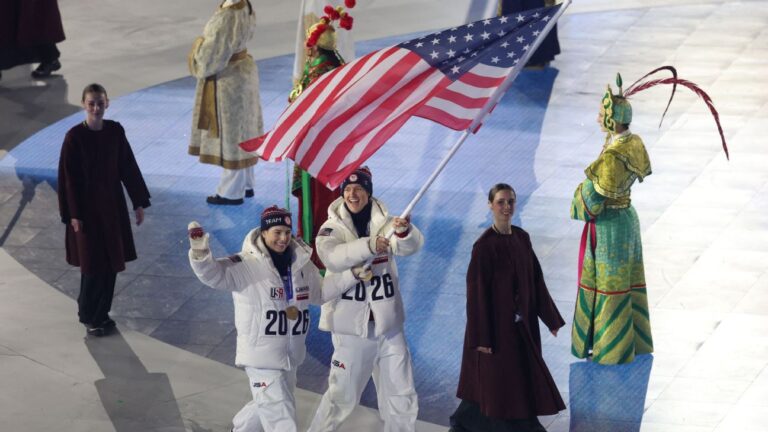
VERONA, Italy — The Milan Cortina Olympics ended Sunday as the twin flames in co-host cities Milan and Cortina d’Ampezzo were extinguished during a closing ceremony inside the ancient Verona Arena, roughly mid-distance between the far-flung mountain, valley and city venues that made these the most spread-out Winter Games ever.

In declaring the 2026 Games over, International Olympic Committee president Kirsty Coventry told local organizers that they “delivered a new kind of winter Games and you set a new, very high standard for the future.”

The next Winter Games will be held in neighboring France, which received the Olympic flag in the official handover earlier in the ceremony. Following the same spread-out model, the 2030 Winter Games will stage events in the Alps and Nice, on the Mediterranean Sea, while speedskating will be held either in Italy or the Netherlands.

A total of 116 medal events were held in eight Olympic sports across 16 disciplines, including the debut of ski mountaineering this year, over the course of 17 days of competition. With the final events wrapping up just hours before the ceremony, the 50-kilometer mass start men’s and women’s cross-country medals were awarded by Coventry inside the Arena.

Host Italy won its highest Winter Olympic tally ever with 30 medals — 10 gold, six silver and 14 bronze, crushing the previous record of 20 set at the Lillehammer Olympics in 1994.

“Your outstanding performance united Italians everywhere and played a fundamental role in the success of the games,” Giovanni Malagò, the president of the Milan Cortina Foundation, told the Italian athletes sitting behind him wearing headbands emblazoned with ”Italia.”

The closing ceremony paid tribute to Italian dance and music — from lyric opera to Italian pop of the 20th century to the DJ beat of Gabry Ponte, who got the 1,500 athletes on their feet and dancing while color confetti exploded on stage. Italian Achille Lauro delivered the last word with the song “Incoscienti Giovani,” or reckless young people, just before athletes who so aptly harnessed their youthful energy for these Games filed out.

The 2½-hour ceremony opened with a whimsical tribute to Italian lyric opera, with the stage director rousing not only the closing ceremony cast, including Achille Lauro, but also long-dormant opera characters tucked away in crates within the amphitheater’s tunnels.

On stage, Madama Butterfly in a bright pink and green costume and Aida in golden tiers were unpacked from mirrored crates while 17th century musicians played the joyous “Libiamo ne’ lieti calici” from “La Traviata,” a nod to the Arena’s long history as the venue for a summer opera festival.

The opera characters, led by the jester Rigoletto, spilled out into the piazza outside, mixing with the bemused athletes who were flag-bearers for their countries, some of whom pulled out their phones to film.

In a later sequence, internationally acclaimed ballet dancer Roberto Bolle made his first-ever aerial performance inside a blazing ring meant to represent the sun. He was lowered to the stage that mimicked the Venetian lagoon, replete with gondolas, where he danced to a haunting song by Italian singer Joan Thiele.

In a key moment, the Olympic flame encased in a Venetian glass vessel was carried into the Arena by Italian gold medalists from the 1994 Lillehammer Games. The Olympic rings illuminated in white appeared high on the stone stairs behind the stage, flanked by national flags, when one raised the flame in the center of the stage.

This was the first Olympics for Coventry, a two-time Olympic champion in swimming, who watched much of the ceremony alongside Italian Prime Minister Giorgia Meloni.

Some 12,000 spectators joined the athletes and officials for the closing ceremony, which was much more intimate affair than the opening ceremony starring Mariah Carey and Andrea Bocelli inside Milan’s San Siro soccer stadium, attended by more than 60,000 people.

The Milan Cortina Games spanned an area of 22,000 square kilometers (8,500 square miles), from ice sports in Milan to biathlon in Anterselva on the Austrian border, snowboarding and men’s downhill in Valtellina on the Swiss border, cross-country skiing in the Val di Fiemme north of Verona and women’s downhill, curling and sliding sports in co-host Cortina d’Ampezzo.

The closing ceremony concluded with the Olympic flames extinguished at the unprecedented two caldrons in Milan and Cortina, viewed in Verona via video link. A light show substituted fireworks, which are not allowed in Verona, to protect animals from being disturbed.

The Milan Cortina Paralympics’ opening ceremony will also take place in the Verona Arena, on March 6, and those Games will run until March 15.
Source link

BBC says racial slur shouted at ‘Sinners’ actors during BAFTAs was result of Tourette syndrome

0


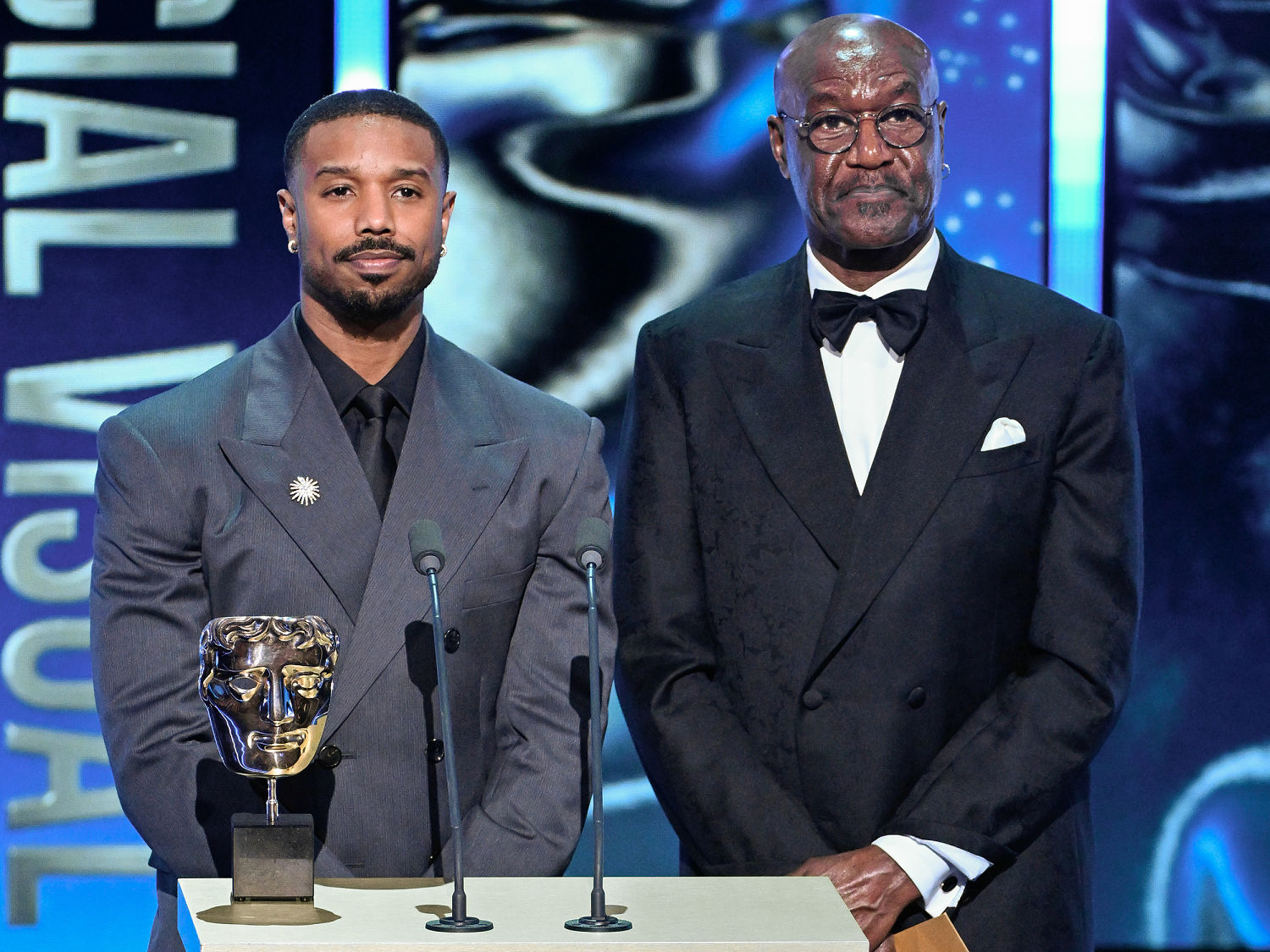
The BBC apologized Sunday for the “strong and offensive language” that was shouted during the taping of the British Academy Film Awards after a clip of an attendee yelling a racial slur at Michael B. Jordan and Delroy Lindo sparked outrage online.

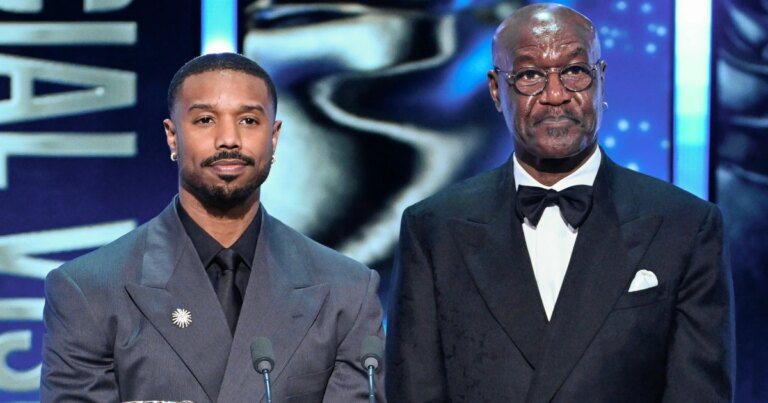
Jordan and Lindo, the stars of “Sinners,” were onstage in London to present the first award of the night, for best visual effects, at the 79th annual awards show, which took place Sunday and aired on the BBC. The actors, who are Black, appeared to pause for a beat after the “N-word” was yelled at them, then continued their presentation.

(NBC News has viewed the moment from the show. A broadcast of the ceremony that aired in the U.S. on E! did not appear to bleep the slur.)

Representatives for the BAFTAs, Jordan and Lindo did not immediately respond to requests for comment. A representative for Versant, which owns E!, did not immediately respond to inquiries before and after its telecast about the slur.

A spokesperson for the BBC attributed the language outbursts to an attendee with Tourette syndrome, which the Centers for Disease Control and Prevention defines as “a condition of the nervous system that causes people to make sudden and repeated twitches, movements, or sounds, called ‘tics.’”

“Some viewers may have heard strong and offensive language during the BAFTA Film Awards 2026,” the spokesperson said in an email statement to NBC News. “This arose from involuntary verbal tics associated with Tourette syndrome, and was not intentional. We apologise for any offence caused by the language heard.”

Variety, which was in the room at London’s Royal Festival Hall as the show was being recorded, reported that the remark as Jordan and Lindo were presenting was not the only outburst. Someone purportedly shouted “shut the f— up” as BAFTA chair Sara Putt gave an introductory speech and “f— you” when the award for best children’s and family film was being accepted, Variety reported.

The publication identified the person who yelled the N-word as Tourette syndrome campaigner John Davidson. He was there with the nominated film “I Swear,” which follows the story of his Tourette syndrome diagnosis, his struggles and his journey to raise public awareness. The title is a nod to his uncontrollable swearing associated with the syndrome.

NBC News was unable to confirm whether it was Davidson. The BBC did not respond to a follow-up request about who yelled the slur.

The film, which received critical acclaim in the U.K. — with Robert Aramayo snagging a win in the best actor category Sunday — is not headed to U.S. theaters until spring. Sony Pictures Classics, which picked up the distribution rights, says on its website that the movie will roll out on April 24.

BAFTAs host Alan Cumming acknowledged the “strong and offensive language” that was yelled during the show, including once after Aramayo’s win.

“You may have heard some strong and offensive language tonight. If you have seen the film ‘I Swear’ you will know that film is about the experience of a person with Tourette syndrome,” Cumming told the audience. “Tourette syndrome is a disability, and the tics you’ve heard tonight are involuntary, which means the person who has Tourette syndrome has no control over their language. We apologize if you were offended.”

The film’s director, Kirk Jones, did not immediately respond to a request for comment. Representatives for Sony Pictures Classic and Bankside Films, which distributed the movie in the U.K., also did not immediately respond to requests for comment. NBC News did not immediately hear back to a message sent to Davidson’s personal Instagram account.

This year’s BAFTAs also marked a historic moment for “Sinners” director Ryan Coogler, who became the first Black man to win best original screenplay. The vampire thriller won three awards in all.


Source link

Mexican army kills leader of powerful Jalisco New Generation Cartel during operation to capture him

0


The Mexican army killed the leader of the Jalisco New Generation Cartel, Nemesio Rubén Oseguera Cervantes, “El Mencho, ” on Sunday.


Source link

The Fundraising Tactic AI Startups Are Using to Juice Valuations

0


The race to get into hot AI startups has led to unequal deals for investors, raising questions about how much companies are really worth.


Source link

Lakers unveil Pat Riley statue, team’s first coach to receive such an honor

0


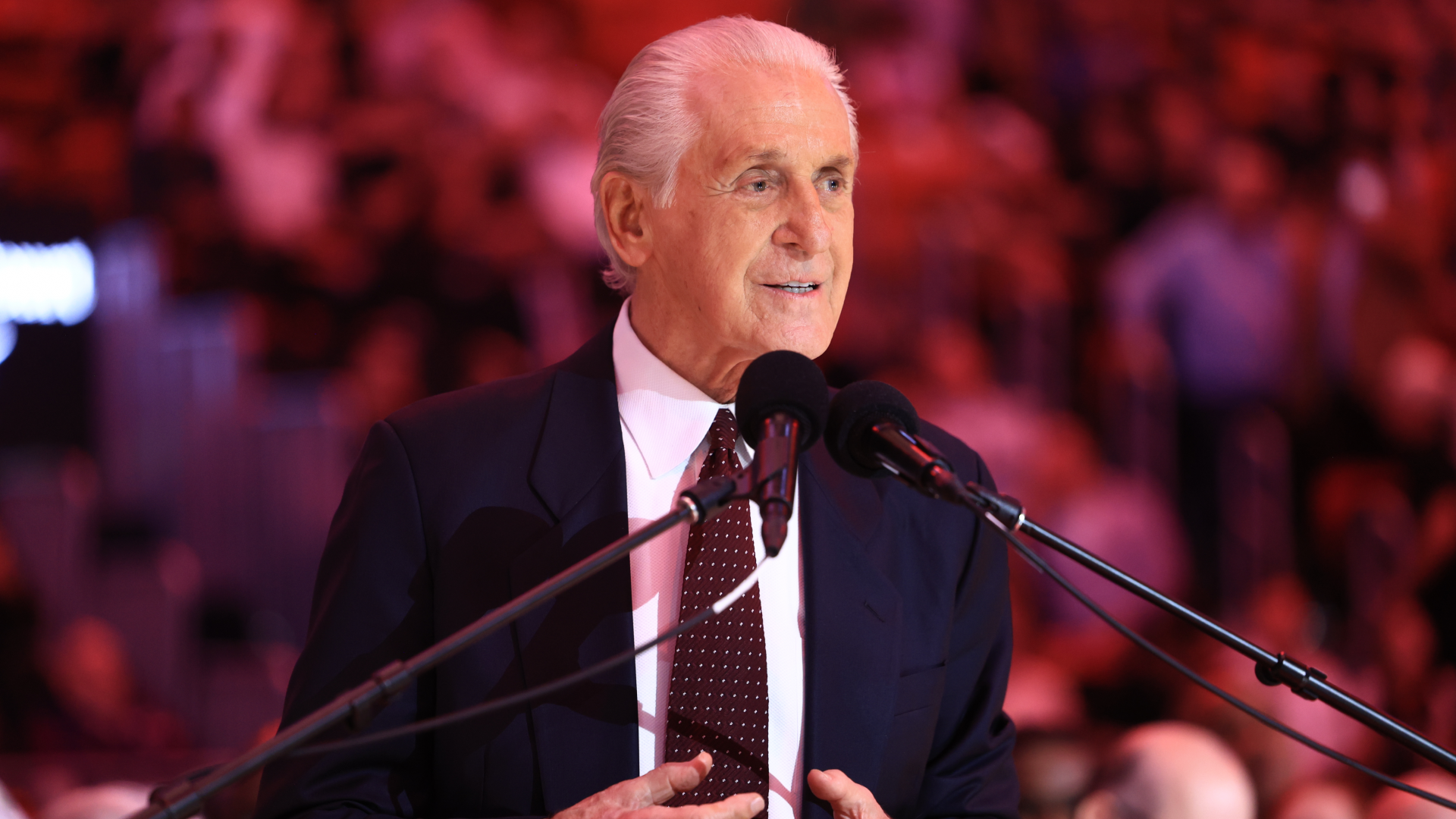
In a career that has been filled with memorable moments, Pat Riley made history once again on Sunday by becoming the first Los Angeles Lakers coach to receive a statue. 

Riley, who has served as the Miami Heat’s president since 1995, was back in Los Angeles this weekend as the Lakers made him the eighth member of the franchise to receive a statue outside Crypto.com Arena. Riley won six NBA titles with the Lakers that included one as a player, one as an assistant coach and four as head coach during franchise’s iconic “Showtime” era during the 1980s. 

The statue depicts Riley with his patented slicked back hair and dressed in one of his tailored Armani suits. The statue also includes the following quote Riley that has long attributed to his father, the same quote he referenced during his famous pregame speech that helped spearhead the Lakers’ comeback over the Boston Celtics during the 1985 NBA Finals: 

“There will come a time when you are challenged. And when that time comes, you must plant your feet. You must stand firm. You must make a point. About who you are, what you do, and where you come from. And when that time comes, you do it.” 

Several prominent figures in Lakers history spoke at the statue unveiling, including Showtime stars Magic Johnson and Kareem Abdul-Jabbar. Shaquille O’Neal, a fellow former Lakers great who won a title with Riley with the Heat in 2006, also spoke in a video that was played. Dwyane Wade, who led the Heat to that championship victory over the Dallas Mavericks, also spoke at the ceremony. Heat owner Micky Arison was also in attendance. 

O’Neal, during his speech, recalled a practice where he confronted Riley, who stood his ground. 

“I remember thinking, ‘Oh, this man is different.'” O’Neal recalled. “You don’t build dynasties if you’re afraid of personalities, and Pat was never afraid.”

O’Neal also confirmed that Riley — a master motivator — did indeed dunk his head in a bucket of freezing water and held his breath for more than four minutes in an effort to galvanize his team. 

“Finally, he came up, gasping for air, and said, ‘We cannot win unless we treat it as if it’s our last breath,'” O’Neal recalled. “That’s how he coached. Everything urgent, everything intense, everything championship level. And that mentality, that’s why this statue belongs here.” 

Johnson, who became arguably the greatest point guard in NBA history under Riley’s watch, called on the other “Showtime” members in the audience to stand while giving his speech. 

Jeanie Buss, the governor and minority owner of the Lakers, also spoke while reference what her farther, the late Dr. Jerry Buss, said of Riley during his 2010 induction into the Naismith Memorial Basketball Hall of Fame.

“Dr. Buss was right of course. Pat really was a guardian angel for this franchise, its employees, and most important, its fans across the world,” she said

A tenacious, blue collar player who played for the legendary Adolph Rupp at Kentucky, Riley was a member of the 1971 Lakers team that won a then-NBA record 69 regular season games and continues to hold the NBA record with 33 consecutive games. He then dabbled in broadcasting before winning a title in 1980 as Paul Westhead’s assistant. 

Riley was promoted to head coach during the 1982 season and quickly guided the Lakers to another NBA title. The Lakers then lost consecutive NBA Finals that included a gut-wrenching loss the Celtics in 1984 in a classic series that went the distance. 

In what was arguably his greatest coaching moment, Riley led the Lakers to a six-game series win over the Celtics in the 1985 NBA Finals after Los Angeles lost by 34 points in Game 1 in a game that was immediately dubbed “The Memorial Day Massacre.” Riley’s passionate leadership appeared to have a significant impact on Abdul-Jabbar, who at age 38 was named the MVP of the series after leading the Lakers to their first championship series win over the Celtics. 

Two years later, the Lakers defeated the Celtics in the NBA Finals on the strength of Johnson, who was named the MVP of the regular season and the Finals after Riley directed him at the start of the season to become the focal point of the offense from a scoring standpoint, something that point guards of that era seldom did. 

“I said, ‘Did you ask Kareem?'” Johnson jokingly recalled saying to Riley during his speech. “He pushed me to a whole other level. … Pat was way ahead of his time in coaching.” 

During the team’s victory celebration, Riley famously guaranteed the Lakers would successfully defend their title. It wasn’t easy, by the Lakers did defeat the Pistons in a classic seven-game series to become the NBA’s first repeat champion in 19 years. 

Riley later enjoyed successful coaching stops with the New York Knicks and Miami Heat. In 1994, he led the Knicks to their first NBA Finals appearance in 21 years. In Miami, he coached the Heat to their first title before overseeing the franchise’s last two championship wins as team president. 

“Pat could build different identities in different cities,” Wade said during his speech. “Showtime to grit, it’s the same standard, it’s the same leadership. Just a little different style.” 

As he concluded his speech, Riley fittingly alluded to the Lakers’ arch rival, whom they would face yet again later in the day. 

“The time has come to kick some ass,” Riley told the crowd. “The time has come to kick some Boston ass.” 


Source link

Who has the most Olympic medals of all time? These countries and athletes are the most decorated ever

0


Around 2,900 athletes from around the world competed in 116 events at the 2026 Milano Cortina Winter Olympic Games, but the prized gold, silver and bronze medals went home with only a small portion of the competitors. 

Once again, Norway dominated the Winter Olympics medal count, finishing the 2026 Games with 41 medals, including a record 18 gold. It was followed in the standings this year by the United States, which won 33 medals. Twelve of those U.S. medals were gold: a new national best for the Winter Games. 

The U.S. came out on top at the most recent Summer Games in Paris in 2024, taking home 126 medals, including 40 gold. It was followed by China, Britain and France. 

But which countries have taken home the most medals overall, and which athletes have won most often in Olympic history? 

Which countries have the most Olympic medals?

While the International Olympic Committee does not compile rankings, the Olympic Foundation for Culture and Heritage does keep a medal tally. It puts the U.S. at the top, with 3,103 total medals. The count has not yet been updated to include medal totals from 2026.

The Olympic Foundation for Culture and Heritage, which is described by the Olympics as the “leading international exponent in promoting and disseminating Olympism in the fields of culture, heritage and values-based education,” counts one medal per event, regardless of how many athletes may compete in a winning team. The organization does not count medals won in the arts competitions or medals won during demonstration events. 

The U.S. is followed in the overall medal count by the Soviet Union, which was disbanded in 1991, with its former republics now competing as independent countries. The Soviet Union earned 1,204 medals. Germany comes in third with 1,091 medals.

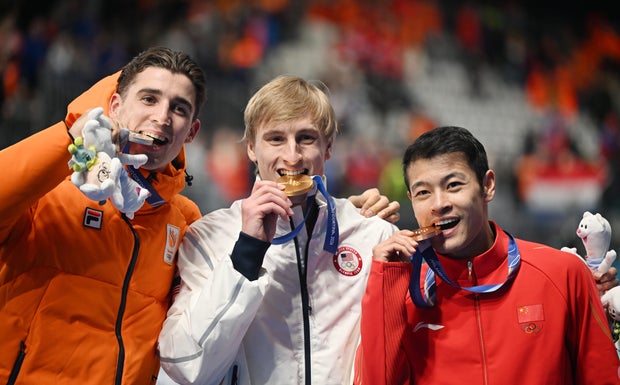
ITALY-MILAN-OLYMPIC WINTER GAMES-SPEED SKATING-MEN'S 1000M

Gold medalist Jordan Stolz of the United States, center; silver medalist Jenning de Boo of the Netherlands, left; and bronze medalist Ning Zhongyan of China at the award ceremony of the speedskating men’s 1000m match at the Winter Olympic Games in Milan, Italy, Feb. 11, 2026.

Wu Wei/Xinhua via Getty Images


Germany’s exact medal count is a point of contention because Germany has not always competed in each Olympics as a unified country, which can lead to confusing medal counts. At one point, the Federal Republic of Germany team represented West Germany while the German Democratic Republic team represented East Germany.

While the U.S. leads in the overall medal count, it does not hold the top spot when it comes to Winter Olympics medals. Norway dominates there, with 404 medals earned during the Winter Games.

The U.S., with 330, and Germany, with 286, are next in the Winter Olympics rankings. 

Which countries have the most Olympic gold medals?

Heading into the Milano Cortina Games, the U.S. had the most gold medals overall: a total of 1,220, according to the Olympic Foundation. In second place, the Soviet Union racked up 473 gold medals. Germany was third, with 355 gold medals. 

Great Britain, France, Italy, China, Sweden and Norway have all won more than 200 gold medals apiece, prior to 2026, according to the Olympic Foundation.

The Winter Olympics specific rankings had Norway on top, with 148 gold medals, followed by the U.S. and Germany, with 114 and 113 gold medals, respectively.

At the 2026 Games, Norway set a new record for the most gold medals at a single Winter Olympics, topping the 16 it won four years earlier. 

Which athletes have the most Olympic medals overall?

American swimmer Michael Phelps is handily the Olympic athlete with the most medals. Phelps, who first appeared in the 2000 Sydney Olympic Games, has 23 gold medals, three silver and two bronze, won across five games.

Former Soviet gymnast Larisa Latynina is the most successful female Olympian, with 18 Olympic medals: nine gold, five silver and four bronze.

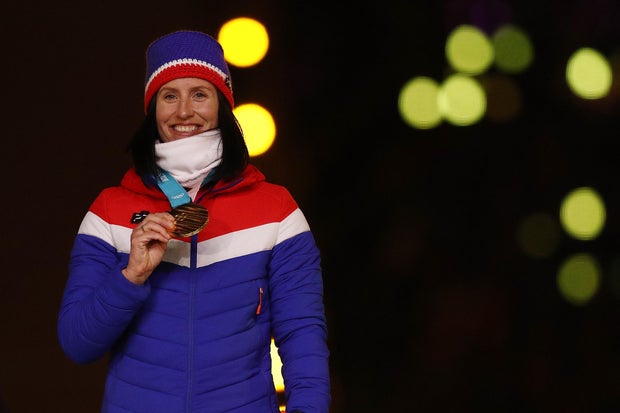
Norwegian skier Marit Bjørgen became the most decorated winter Olympian in 2018, with 15 medals, including eight gold.

Gold medalist Marit Bjorgen of Norway

Gold medal-winning skier Marit Bjorgen of Norway at the PyeongChang 2018 Winter Olympic Games on Feb. 25, 2018 in South Korea.

Maddie Meyer / Getty Images


Ole Einar Bjørndalen, also a Norwegian skier, holds the most medals for a male winter Olympian, with 14.

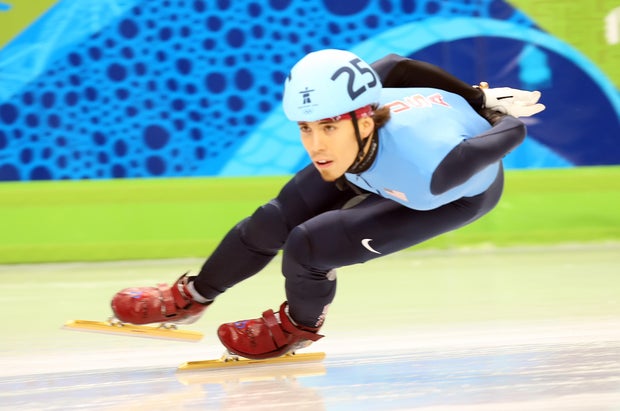
Speed skater Apolo Anton Ohno, who has earned eight medals across three Winter Olympics, holds the top spot for U.S. winter Olympians.

Apolo Anton Ohno-- SPEEDSKATING

Apolo Anton Ohno of Team USA skates in the men’s 5000-meter relay short track race on Feb. 17, 2010, during the Winter Olympics in Vancouver, British Columbia.

George Bridges/MCT/Tribune News Service via Getty Images


Which athletes have the most Olympic gold medals?

Phelps is not only the most decorated Olympian; he’s also the athlete with the most Olympic golds, earning 23 gold medals across five games. And Latynina, in addition to being the winningest female Olympian overall, also holds the record for most golds by a female athlete at the Olympics. She competed in three games, starting in 1956 in Melbourne.

Norwegian skier Johannes Hoesflot Klaebo holds the record for the most Winter Olympic gold medals after winning the 11th gold of his career at the Milano Cortina Games. He’s won 13 medals overall.

Skiers Bjørgen and Bjørndalen, with eight gold medals apiece, are tied with Bjørn Dæhlie, another Norwegian skier, for second place in the gold medal count.


Source link

Cuba’s health care system pushed to the brink by US fuel blockade

0


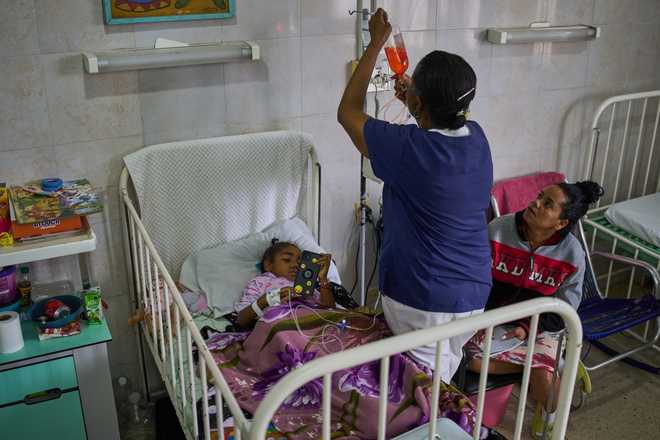
Cuba’s debilitated health care system has been pushed to the brink of collapse by the U.S. blockading the country’s oil supply, a Cuban official said Friday.The country’s medical system was already perpetually crisis-stricken along with the island’s economy, with lack of supplies, staff and medicine long being the norm. But the turmoil has reached a new extreme in recent weeks. Ambulances are struggling to find fuel to respond to emergencies. Persistent outages have plagued deteriorated hospitals. Flights bringing vital supplies have been suspended as Cuba’s government says it’s now unable to refuel airplanes in its airports.Video above: Mexico at an oil crossroads with Cuba amid US pressureExperts and some leaders of other countries have warned that the island could be on the verge of a humanitarian crisis.In an interview with The Associated Press, Cuba’s Health Minister José Ángel Portal Miranda said that U.S. sanctions are no longer just crippling the island’s economy, they’re threatening “basic human safety.”“You cannot damage a state’s economy without affecting its inhabitants,” Portal said. “This situation could put lives at risk.”According to Portal, 5 million people in Cuba living with chronic illnesses will see their medications or treatments affected. This includes 16,000 cancer patients requiring radiotherapy and another 12,400 undergoing chemotherapy.Cardiovascular care, orthopedics, oncology and treatment for critically ill patients who require electrical backup are among the most impacted areas, he said. Kidney disease treatments and emergency ambulance services have also been added to the list of impacted services.The energy crisis Cuba has been grappling with for years entered new extremes last month when U.S. President Donald Trump signed an executive order that would impose a tariff on any country that sells or provides oil to Cuba. It came just weeks after Trump deposed Venezuelan President Nicolás Maduro and announced no more Venezuelan oil would go to Cuba.Cuba, which produces only 40% of its own fuel and largely depends on oil to power the island, has long relied on allies like Venezuela, Mexico and Russia to fill its energy deficit. But those shipments have now dried up.Trump has openly said that his larger hope is to push regime change in Cuba by intensifying economic pressure on the island, which has already struggled to cope with decades of U.S. sanctions.Cuban people — who the U.S. government has said it seeks to defend — are the ones feeling the harsh ripple effects of the U.S. fuel blockade as hardship mounts every day. Buses have slashed routes, gas has been put under strict rationing and is only being sold in foreign currency, and endemic blackouts have reached a new extreme. “There’s been a drastic change since January,” said Aniliet Rodríguez, a 25-year-old pregnant woman who was admitted that month to a maternal care center for an extreme case of anemia. “There’s no bread, no milk for nutrition … . There are no medicines.”Cuba’s health care system follows a universal and free model, providing local clinics on nearly every block and state subsidized medicine. But it’s also entered a state of crisis in recent years, especially since the COVID-19 pandemic. Thousands of doctors being paid state wages that can hardly afford them a carton of eggs have emigrated from the country and hospitals have rapidly deteriorated.Medicine shortages have forced many to buy them on the black market instead.Such problems are expected to worsen in the coming weeks even though Cuba’s government has struggled to adjust to the new reality, Portal said. Solar panels have been installed in clinics while authorities prioritize care to children and the elderly.But he also said they have placed restrictions on some more energy-reliant technologies like CT scans and laboratory tests, noting doctors will have to rely on more basic methods to treat patients, effectively cutting many off from high levels of care.”We are facing an energy siege with direct implications for the lives of Cubans, for the lives of Cuban families,” Portal said.

Cuba’s debilitated health care system has been pushed to the brink of collapse by the U.S. blockading the country’s oil supply, a Cuban official said Friday.

The country’s medical system was already perpetually crisis-stricken along with the island’s economy, with lack of supplies, staff and medicine long being the norm. But the turmoil has reached a new extreme in recent weeks. Ambulances are struggling to find fuel to respond to emergencies. Persistent outages have plagued deteriorated hospitals. Flights bringing vital supplies have been suspended as Cuba’s government says it’s now unable to refuel airplanes in its airports.

Video above: Mexico at an oil crossroads with Cuba amid US pressure

Experts and some leaders of other countries have warned that the island could be on the verge of a humanitarian crisis.

In an interview with The Associated Press, Cuba’s Health Minister José Ángel Portal Miranda said that U.S. sanctions are no longer just crippling the island’s economy, they’re threatening “basic human safety.”

“You cannot damage a state’s economy without affecting its inhabitants,” Portal said. “This situation could put lives at risk.”

According to Portal, 5 million people in Cuba living with chronic illnesses will see their medications or treatments affected. This includes 16,000 cancer patients requiring radiotherapy and another 12,400 undergoing chemotherapy.

Cardiovascular care, orthopedics, oncology and treatment for critically ill patients who require electrical backup are among the most impacted areas, he said. Kidney disease treatments and emergency ambulance services have also been added to the list of impacted services.

The energy crisis Cuba has been grappling with for years entered new extremes last month when U.S. President Donald Trump signed an executive order that would impose a tariff on any country that sells or provides oil to Cuba. It came just weeks after Trump deposed Venezuelan President Nicolás Maduro and announced no more Venezuelan oil would go to Cuba.

Carolina Silva Matos, a cancer patient, rests in a hospital bed at the National Institute of Oncology and Radiology in Havana, Cuba, Friday, Feb. 20, 2026.

Ramon Espinosa

Carolina Silva Matos, a cancer patient, rests in a hospital bed at the National Institute of Oncology and Radiology in Havana, Cuba, Friday, Feb. 20, 2026.

Cuba, which produces only 40% of its own fuel and largely depends on oil to power the island, has long relied on allies like Venezuela, Mexico and Russia to fill its energy deficit. But those shipments have now dried up.

Trump has openly said that his larger hope is to push regime change in Cuba by intensifying economic pressure on the island, which has already struggled to cope with decades of U.S. sanctions.

Cuban people — who the U.S. government has said it seeks to defend — are the ones feeling the harsh ripple effects of the U.S. fuel blockade as hardship mounts every day. Buses have slashed routes, gas has been put under strict rationing and is only being sold in foreign currency, and endemic blackouts have reached a new extreme.

“There’s been a drastic change since January,” said Aniliet Rodríguez, a 25-year-old pregnant woman who was admitted that month to a maternal care center for an extreme case of anemia. “There’s no bread, no milk for nutrition … . There are no medicines.”

Cuba’s health care system follows a universal and free model, providing local clinics on nearly every block and state subsidized medicine. But it’s also entered a state of crisis in recent years, especially since the COVID-19 pandemic. Thousands of doctors being paid state wages that can hardly afford them a carton of eggs have emigrated from the country and hospitals have rapidly deteriorated.

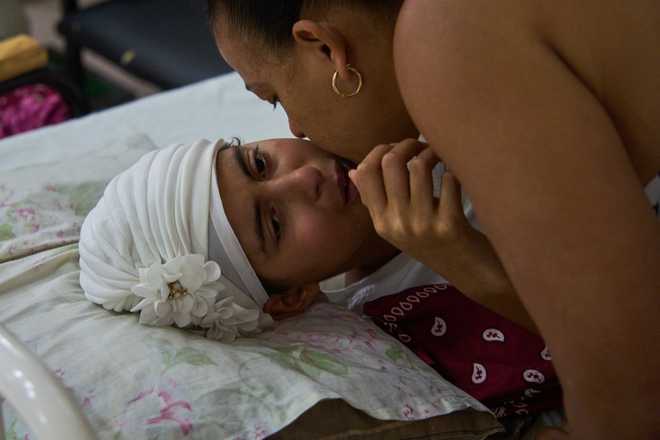
Niala Gonzalez, a cancer patient is kissed by her mother at the National Institute of Oncology and Radiology in Havana, Cuba, Friday, Feb. 20, 2026.

Ramon Espinosa

Niala Gonzalez, a cancer patient is kissed by her mother at the National Institute of Oncology and Radiology in Havana, Cuba, Friday, Feb. 20, 2026.

Medicine shortages have forced many to buy them on the black market instead.

Such problems are expected to worsen in the coming weeks even though Cuba’s government has struggled to adjust to the new reality, Portal said. Solar panels have been installed in clinics while authorities prioritize care to children and the elderly.

But he also said they have placed restrictions on some more energy-reliant technologies like CT scans and laboratory tests, noting doctors will have to rely on more basic methods to treat patients, effectively cutting many off from high levels of care.

“We are facing an energy siege with direct implications for the lives of Cubans, for the lives of Cuban families,” Portal said.


Source link

Investor Ed Garden Builds Stake in Fortune Brands, Seeking New CEO

0


Garden believes the company behind Moen faucets and Master Lock could grow much larger over the next decade.


Source link

USA-Canada gold medal game: Top photos from an Olympic instant classic

0


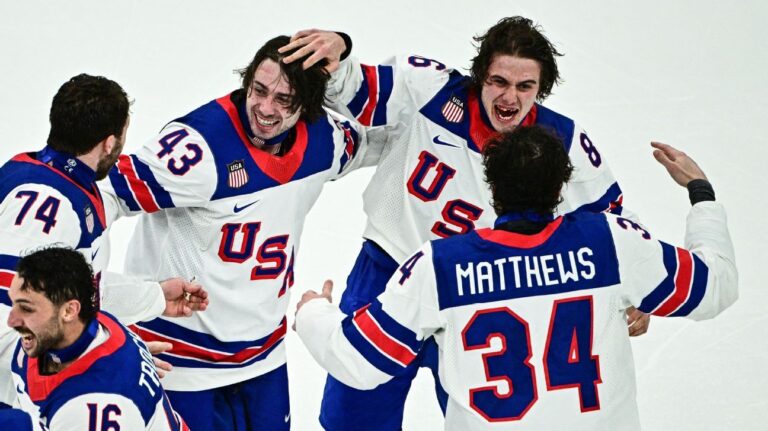
For the first time since the Miracle on Ice in 1980, Team USA is golden again.

The United States defeated Canada 2-1 in overtime in the 2026 Olympic men’s hockey final, reclaiming the top spot on the podium in a game that felt destined for instant-classic status. Both teams entered undefeated through preliminary and knockout play, setting up a rematch of last year’s 4 Nations Face-Off title game — which Canada won in overtime.

This time, the Americans flipped the script.

From the golden goal to an emotional tribute, the top photos from the game captured every ounce of action.

Hughes’ golden moment

Tied 1-1 after regulation, the Americans needed less than two minutes in 3-on-3 overtime to win the game.

Jack Hughes — noticeably missing teeth after taking a high stick in the third period — took a feed from Zach Werenski and snapped the puck past Jordan Binnington for the winner.


Boldy strikes first

Earlier in the game, Minnesota Wild forward Matt Boldy gave Team USA the early edge with a dazzling puck-juggling goal to make it 1-0.


Makar answers for Canada

Canada didn’t blink.

Cale Makar‘s second-period goal pulled the defending champions level. The shot of Makar displays the heavyweight feel of the matchup as the momentum seemed to shift.


The turning point: MacKinnon’s miss and Hellebuyck’s paddle

The gold medal game may ultimately be remembered for Hughes’ overtime winner, but a memorable sequence came midway through the third period.

Nathan MacKinnon — the NHL’s leading goal scorer, carrying a six-goal cushion atop the league leaderboard — found himself staring at a mostly open net with Connor Hellebuyck sliding out of position. MacKinnon fired an attempt from point-blank range for a goal that would have given Canada a 2-1 lead. Instead, the puck sailed wide.

Later, Hellebuyck delivered what became the save of the tournament.

Midway through the third period, with the game hanging in the balance, Hellebuyck flashed his paddle to deny Devon Toews on what appeared to be a sure goal.

It preserved the tie and gave the Americans a chance to chase history.


Amid the celebration came a poignant moment.

Forward Matthew Tkachuk and defenseman Zach Werenski welcomed the children of their late NHL teammate, Johnny Gaudreau, into Team USA’s postgame photo. The image added emotional weight to an already unforgettable night and displayed how this team’s bond extended beyond the ice.


A celebration 46 years in the making

As the final horn sounded, another image became etched into Olympic history.

Forty-six years to the day after Lake Placid, Team USA once again secured the top spot on the Olympic podium.


Source link

Mexican army kills leader of powerful Jalisco New Generation Cartel during operation to capture him

0


MEXICO CITY — The Mexican army killed the leader of the Jalisco New Generation Cartel, Nemesio Rubén Oseguera Cervantes, “El Mencho, ” on Sunday, decapitating what had become Mexico’s most powerful cartel and giving the government its biggest prize yet to show the Trump administration its efforts.

Oseguera Cervantes was wounded in an operation to capture him Sunday in Tapalpa, Jalisco about a two-hour drive southwest of Guadalajara and he died while being flown to Mexico City, the Defense Department said in a statement. The state is the base of the cartel known for trafficking huge quantities of fentanyl and other drugs to the United States.

During the operation, troops came under fire and killed four people at the location. Three more people, including Oseguera Cervantes, were wounded and later died, the statement said. Two others were arrested and armored vehicles, rocket launchers and other arms were seized. Three members of the armed forces were wounded and receiving medical treatment.

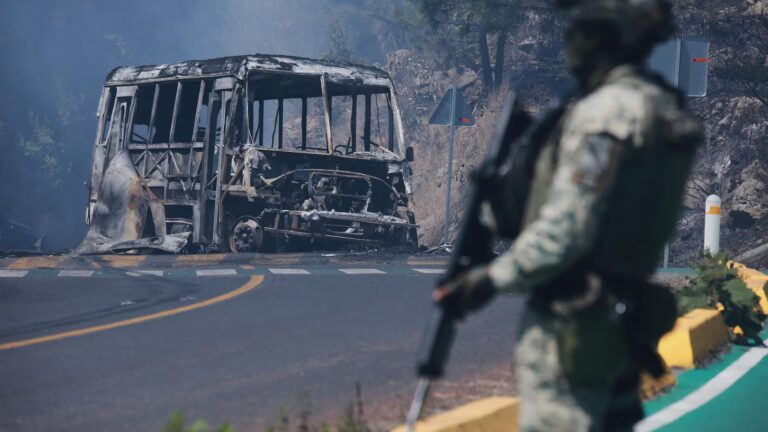
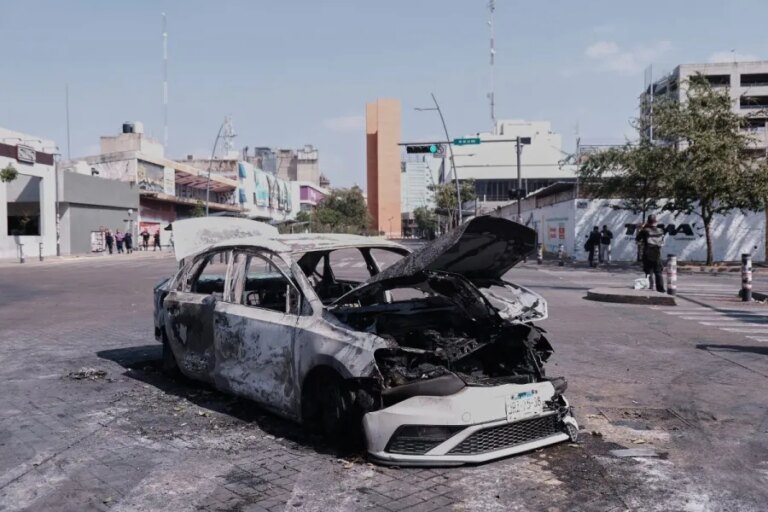
The killing of the powerful drug lord set off several hours of roadblocks with burning vehicles in Jalisco and other states. Such tactics are commonly used by the cartels to block military operations. Jalisco canceled school in the state for Monday.

Videos circulating on social media showed plumes of smoke billowing over the tourist city of Puerto Vallarta in Jalisco, and people sprinting through the airport of the state’s capital in panic. On Sunday afternoon, Air Canada announced it was suspending flights to Puerto Vallarta “due to an ongoing security situation” and advised customers not to go to their airport.

In Guadalajara, the state capital, burning vehicles blocked roads. Mexico’s second-largest city is scheduled to host matches during this summer’s soccer World Cup.

The U.S. State Department warned U.S. citizens in Jalisco, Tamaulipas, Michoacan, Guerrero and Nuevo Leon states to remain in safe places due to the ongoing security operations. Canada’s embassy in Mexico warned its citizens in Puerto Vallarta to shelter in place and generally to keep a low profile in Jalisco.

Jalisco Gov. Pablo Lemus told residents to stay at home and suspended public transportation.

The U.S. State Department had offered a reward of up to $15 million for information leading to the arrest of El Mencho. The Jalisco New Generation Cartel, known as CJNG, is one of the most powerful and fastest growing criminal organizations in Mexico and was born in 2009.

In February, the Trump administration designated the cartel as a foreign terrorist organization.

Mexican President Claudia Sheinbaum, like her predecessor, has criticized the “kingpin” strategy of previous administrations that took out cartel leaders only to trigger explosions of violence as cartels fractured. While she has remained popular in Mexico, security is a persistent concern and since U.S. President Donald Trump took office a year ago, she has been under tremendous pressure to show results against drug trafficking.

The Jalisco cartel has been one of the most aggressive cartels in its attacks on the military — including on helicopters — and is a pioneer in launching explosives from drones and installing mines. In 2020, it carried out a spectacular assassination attempt with grenades and high-powered rifles in the heart of Mexico City against the then head of the capital’s police force and now federal security secretary.

The DEA considers the cartel to be as powerful as the Sinaloa cartel, one of Mexico’s most infamous criminal groups, with a presence in all 50 U.S. states. It is one of the main suppliers of cocaine to the U.S. market and, like the Sinaloa cartel, earns billions from the production of fentanyl and methamphetamines. Sinaloa, however, has been weakened by infighting after the loss of its leaders Ismael “El Mayo” Zambada and Joaquín “El Chapo” Guzmán, both in U.S. custody.

Oseguera Cervantes, 59, was originally from Aguililla in the neighboring state of Michoacan. He had been significantly involved in drug trafficking activities since the 1990s. When he was younger, he migrated to the U.S. where he was convicted of conspiracy to distribute heroin in the U.S. District Court for the Northern District of California in 1994 and served nearly three years in prison.

Following his release from custody, Oseguera Cervantes returned to Mexico and reengaged in drug trafficking activity with drug lord Ignacio Coronel Villarreal, alias “Nacho Coronel.” After Villarreal’s death, Oseguera Cervantes and Erik Valencia Salazar, alias “El 85”, created the Jalisco New Generation Cartel around 2007.

Initially, they worked for the Sinaloa Cartel, but eventually split and for years the two cartels have battled for territory across Mexico.

Since 2017, Oseguera Cervantes has been indicted several times in the United States District Court for the District of Columbia.

The most recent superseding indictment, filed on April 5, 2022, charges Oseguera Cervantes with conspiracy and distribution of controlled substances (methamphetamine, cocaine, and fentanyl) for the purpose of illegal importation into the United States and use of firearms during and in connection with drug trafficking offenses. Oseguera Cervantes is also charged under the Drug Kingpin Enforcement Act for directing a continuing criminal enterprise.

Last year, people searching for missing relatives founds piles of shoes and other clothing, as well as bone fragments at what authorities later said was a Jalisco cartel recruitment and training site.

__

AP writer María Verza contributed to this report.


Source link