LONDON — Britain’s beleaguered government has spent much of its time in power concerned about the surging far-right. Instead it just received a sucker punch from the progressive left.
The Green Party delivered a stunning blow to Prime Minister Keir Starmer early Friday with a victory in a hotly contested special election in the northern city of Manchester.
The vote in the constituency of Gorton and Denton was seen as a three-way tussle between the Greens, the rising far-right party Reform UK led by Trump ally Nigel Farage, and Starmer’s ruling center-left Labour Party, which has long dominated politics in the area.
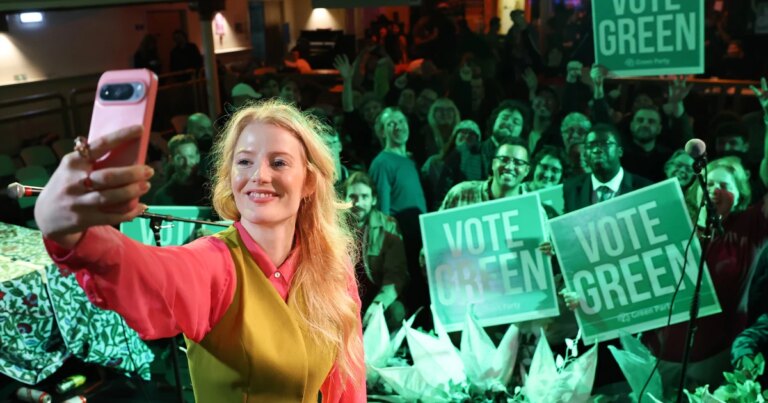
In the event it was a comfortable victory for Green candidate Hannah Spencer, 34.
Spencer was a plumber before she entered politics, a hint of the appeal insurgents from both sides of the political spectrum now have in a country where wages are stagnant, public services are ailing, and years of government scandal have eroded trust in institutions.
Starmer’s position has been under intense scrutiny for months, but recent revelations linked to the Epstein scandal left him badly weakened.
Enter the “eco-populist” Greens, who want to radically overhaul Britain’s energy system, tax multimillionaires’ wealth, dismantle its nuclear weapons program and reverse its policy on the Israeli-Palestinian conflict.
“Bear with me, because this is a lot,” the victorious Spencer told the crowd in her northern Mancunian drawl as she processed the gravity of the result. For people “who feel left behind and isolated,” she said, “I see you and I will fight for you.”
Hannah Spencer and Green Party leader Zack Polanski celebrate in Manchester, England. Paul Ellis / AFP via Getty Images
She explained that she never wanted to be a politician and apologized to anyone who had booked her plumbing services.
“I am no different to every single person here in this constituency,” she said. “Working hard used to get you something. It got you a house, a nice life, holidays, it got you somewhere. But now, working hard, what does that get you?
This had been billed as a three-way race but in the event it wasn’t that close. Spencer got 14,980 votes, with Reform’s Matthew Goodwin on 10,578 and Labour’s Angeliki Stogia on 9,364.
The result piles more pressure on Starmer, the least popular prime minister since records began, according to some polls. Even longtime supporters are dismayed at what they say is his inability to communicate a coherent message to a stagnant nation.
Labour Deputy Leader Lucy Powell conceded that “on the day the Greens have managed to win that argument that they were best placed to” defeat Reform. But she insisted that “there is no leadership contest” within Labour after weeks of speculation Starmer’s own ministers may try to topple him.
Labour “seemed almost paralyzed in terms of actually presenting a way forward on the important issues,” said Scott Lucas, a politics professor at University College Dublin.
The election also complicates the wider narrative in the United Kingdom and indeed Europe, where nationalist populists backed by the Trump administration have been surging.
The Greens have harnessed widespread anger at rising prices and the cost-of-living, but rather than blame immigrants they have directed their ire against the super-rich.
“The message of giving people a better future economically can resonate; it can cut through the white noise that define so much of our politics,” Lucas said.
Britain’s Prime Minister Keir Starmer. Scott Heppell / AFP via Getty Images
The local demographic is largely split between working-class neighborhoods, college students and Muslim residents. Many of the latter two groups feel disillusioned with the direction of the government under Starmer, particularly what they see as an inadequate response to Israel’s assault on Gaza.
In defeat, Goodwin typified his party’s anti-immigration and anti-Islam platform, saying in a statement that “We are losing our country” and “a dangerous Muslim sectarianism has emerged.”
Spencer condemned this approach after she won.
“I won’t accept this victory tonight without calling out politicians and divisive figures who constantly scapegoat and blame our communities for all the problems in society,” she said. “My Muslim friends and neighbors are just like me: human.”
Reform UK candidate Matt Goodwin, center, listens as Green Party candidate Hannah Spencer gives her acceptance speech on Thursday.Paul Ellis / AFP via Getty Images
Reform still remains a national force ahead of the next national election scheduled for 2029 and have led every major opinion poll for 10 months.
However their current average polling of 28% would not give them enough power to rule alone, and would likely have to enter into a coalition government.
The clear victory for the Greens cements the left-wing threat to Britain’s traditional ruling parties, too.
Green leader Zack Polanski is considered by many pundits as one political figure who may have the potential to rival Farage’s popular appeal.
“People everywhere will now know that voting Green is the way to defeat Reform,” he said in a victory statement.
SANTA FE, N.M. (KRQE) – Santa Fe City Council is moving forward to add gunshot detection technology in two neighborhoods. Wednesday night, city councilors approved a $345,000 contract to test the program for a year. ShotSpotter uses microphones to record the sound of possible gunshots in neighborhoods, analyzing them in real-time to alert police of a location. […]
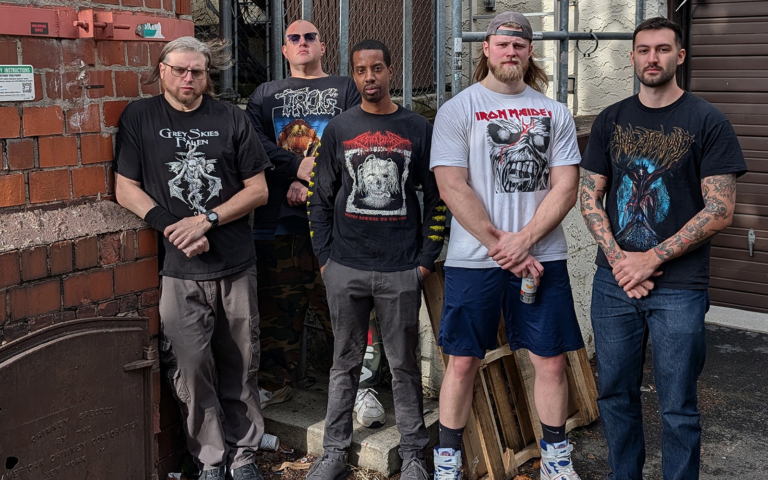
Profound Lore Records has unveiled On The Promise Of The Moon, the second full-length from Reeking Aura, a collective formed by current and former members of Grey Skies Fallen, Buckshot Facelift, Thætas, Afterbirth, Trog, Artificial Brain, and others.
Although its members are seasoned veterans of the New York City/New Jersey underground, Reeking Aura is far from a side project. Their sound blends immersive atmospheres, technical precision, and infectious melodies atop a foundation of East Coast brutal death metal.
The lineup for On The Promise Of The Moon features returning members guitarists Terrell Grannum (Thætas) and Rick Habeeb (Grey Skies Fallen, Buckshot Facelift), along with vocalist William Smith (Afterbirth, Buckshot Facelift, ex-Artificial Brain). New additions drummer Hudson Barth (Trog) and bassist TJ Coon (Trog, Sentient Horror) contribute to the writing process, giving the record fresh energy while maintaining the band’s signature intensity.
Tracked at OK Recording Studios in Kinderhook, New York, the album was mixed and mastered by Dan Swanö (Bloodbath, Edge Of Sanity, Grey Skies Fallen) and features cover art by Moldovan painter Ion Carchelan. Guest appearances include vocalists Eston Browne (Vulnificus) and Jon Berg (The Path), with string arrangements by Ben Karas (Slaughtersun), adding layers of dark, melodic atmosphere.
On the lead single “What Only Worms Witness”, Smith explains: “Lyrically, ‘What Only Worms Witness’ is a contrasting depiction of both the ugliness of physical death and the melancholy optimism of enduring legacy.
“Like many songs on the album, it reflects on grudges, the passing of time and paying homage to the deceased. Writing for this song was spearheaded by bassist TJ Coon, showcasing Reeking Aura‘s dedication to brutal New York death metal combined with dark melodies and atmosphere.”
Want More Metal? Subscribe To Our Daily Newsletter
Enter your information below to get a daily update with all of our headlines and receive The Orchard Metal newsletter.
The first night of on-field work has drawn to a close. The defensive line, edge rushers and linebackers set the tone for the rest of the week in Indianapolis. CBS Sports grades the top prospects along the defensive line and edge rusher, in addition to singling out some other standouts. There is a separate breakdown of the linebackers.
It should also be noted that Ohio State’sArvell Reese is listed among the edge rushers rather than the linebackers with whom he competed because Reese spoke to the media Wednesday and laid out his desire to rush the passer in the NFL.
Grade: N/A — Woods did not do any of the on-field drills and did not compete in testing. His measurables were a bit disappointing, if anything. He measured just over 6-foot-2 and 298 pounds with 31¼-inch arms and a 76⅜-inch wingspan.
Grade: B+ — Banks was physically impressive as anticipated, but his day ended shortly into the on-field drills because his cleats bothered him. Banks ran the 40-yard dash in 5.04 seconds after measuring an 85¾-inch wingspan — the longest among combine defensive tackles since 1999.
Grade: B — McDonald is a stout, run-defending interior defender. He did not run the 40-yard dash or participate in other explosive testing but did partake in the on-field portion. McDonald looked stiff at times, which is to be expected, but put forth an admirable effort otherwise.
Grade: B+ — Hunter has great size for an interior defender, and his explosiveness and power were evident in on-field drills. His 40-yard dash was a pedestrian 5.18 seconds. He really excelled in the “Pass Rush” and “Run & Club” drills.
Grade: N/A — Miller checked the box with his measurements, including a wingspan topping 80 inches, but did not do anything else in Indianapolis on Thursday.
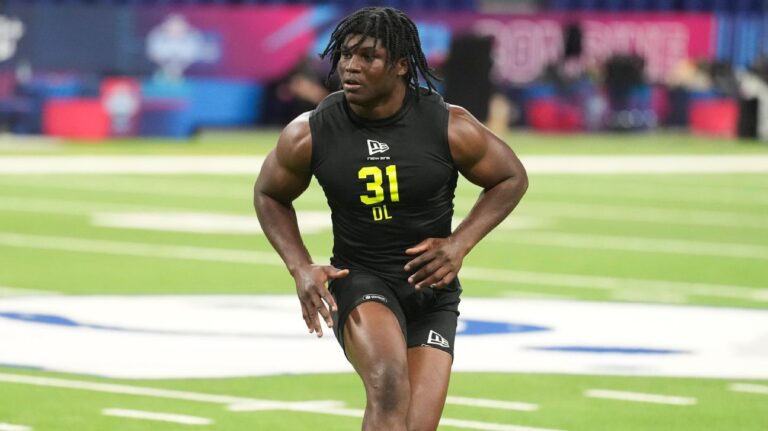
Aside from dropping his eyes in the “Four Bag Agility” drill, Durant was a standout in almost every on-field drill, in addition to running the fastest 40-yard dash among defensive linemen (4.75 seconds).
Halton is a bit lighter and certainly not as long as some of his peers, but he made up for that with explosiveness. Halton had plus performances in the “Four Bag Agility” drill and the “Run & Club” drill. He ran the 40-yard dash in an official 4.82 seconds with a 1.70-second 10-yard split.
With former head coach Mike Elko on hand, Regis, as well as teammate Tyler Onyedim, had a nice evening representing the Aggies. He was a standout in the “Pass Rush,” “Run the Hoop” and “Four Bag Agility” drills. He is a little more stout and a little on the lighter side but ran the 40-yard dash in 4.88 seconds.
Barrett has the frame of a player who sticks around in the NFL for quite some time. He is more powerful than explosive but looked really smooth in drills throughout the evening.
Marshall was a plus performer in the “Pass Rush,” “Four Bag Agility” and “Run & Club” drills. He was a smooth performer this season, and carried that over to his work at the NFL combine.
2026 NFL combine results: Measurements, 40 times and biggest takeaways as testing begins
Kyle Stackpole
Measurements/testing numbers for top EDGE prospects
Measurement / Drill
Rueben Bain (Miami)
Arvell Reese (Ohio State)
David Bailey (Texas Tech)
Cashius Howell (Texas A&M)
Height
6-2 ¼
6-4 ⅛
6-3 ½
6-2 ½
Weight
263
241
251
253
Hand
9⅛
9½
10¼
9¼
Arm
30⅞
32½
33⅝
30¼
Wingspan
77⅜
79½
79⅝
74¼
40-yard dash
—
4.46
4.50
4.59
10-yard split
—
—
1.62
1.58
Vertical
—
—
35
32.5
Broad
—
—
10-9
9-7
Measurement / Drill
Akheem Mesidor (Miami)
Keldric Faulk (Auburn)
R Mason Thomas (Oklahoma)
T.J. Parker (Clemson)
Height
6-3
6-5 ⅞
6-2 ¼
6-3 ½
Weight
259
276
241
263
Hand
10
9¾
8⅞
9½
Arm
32⅛
34⅜
31⅝
33⅛
Wingspan
78⅝
82¼
78⅛
79
40-yard dash
—
—
4.67
4.68
10-yard split
—
—
1.63
1.61
Vertical
—
35
—
34
Broad
—
9-9
—
10-0
Grading top EDGE prospects
Grade: N/A — Bain was underwhelming in terms of the measurements but did not do any athletic testing or on-field drills. He may have lost some ground with some of the other edge rushers excelling.
Grade: A- — Reese was a little lighter for an edge rusher but showed off his speed and explosiveness in athletic testing. He tied his teammate, linebacker Sonny Styles, for the fastest 40-yard dash of the evening (4.46 seconds). He was also fluid and detailed through on-field drills, drawing praise from Browns linebacker coach and run game coordinator Jason Tarver.
Grade: B — Faulk has a long, filled-out frame. He did not run the 40-yard dash but did participate in the vertical jump (35 inches) and broad jump (117 inches), as well as the on-field drills. Faulk is a little tighter in the lower body.
Grade: A- — Bailey is not a 1-of-1 edge rusher in the same way Myles Garrett or the Bosas were before him, but he has positioned himself well to be the first at his position taken in April. Bailey is a bit undersized but tested well in the explosive drills and paced the field with an official 4.50-second 40-yard dash.
Grade: B — Thomas is a shorter, thinner edge rusher who relies on his quickness. He has good length and ran the 40-yard dash in 4.67 seconds.
Grade: B- — One of the concerns surrounding Howell coming into this week was his lack of ideal length, so his historically short arms were not exactly surprising. He is incredibly twitchy and explosive. He was another who stood out in the “Run the Hoop” drill. His 4.59-second 40-yard dash was among the best in his group.
Grade: N/A — After measuring 6-foot-3 and 259 pounds, Mesidor elected to call it a week and watch the rest of the drills from the sideline.
Ohio State linebacker Sonny Styles was the best performer, but no one helped himself as much as Lawrence. In addition to running the 40-yard dash in 4.52 seconds, Lawrence had a 1.59-second 10-yard split, as well as a 40-inch vertical jump and 130-inch broad jump.
Tucker’s presence has more to do with the on-field work. His athletic testing was below average for his size. He was smooth and flexible through the “Run & Club” drill.
Hutchins was one I had propped up going into the Senior Bowl. Although it was a bit later than anticipated, the Boston College product has started to build some positive momentum. Hutchins is a twitched-up, lighter edge rusher who stood out in the Wave and Run the Hoop drills.
Despite progress toward a potential nuclear deal between the U.S. and Iran, both countries and the region are also preparing for failure — and potential war. Charlie D’Agata has details.
Pakistan’s defense minister early Friday said that his country had run out of “patience” and now considers itself in an “open war” with neighboring Afghanistan after both sides launched strikes following what Islamabad described as an Afghan cross-border attack.In a post on X, Defense Minister Khawaja Mohammad Asif said Pakistan had hoped for peace in Afghanistan after the withdrawal of NATO forces and expected the Taliban to focus on the welfare of the Afghan people and regional stability. Instead, he alleged, the Taliban had turned Afghanistan “into a colony of India,” gathered militants from around the world and begun “exporting terrorism.”Video above: Shiite Muslims take part in a rally to condemn Israeli strikes on Iran “Our patience has now run out. Now it is open war between us,” he said. There has been no reaction from Afghan government officials to Asif’s comments.Pakistan has frequently accused neighboring India of backing the outlawed Baloch Liberation Army and the Pakistani Taliban, allegations New Delhi denies.His remarks came hours after Pakistan carried out airstrikes in Afghanistan’s capital, Kabul, as well as in Kandahar in the south and Paktia province in the southeast, according to Pakistani officials and Afghanistan government spokesperson Zabihullah Mujahid. Pakistan says the strikes were in retaliation for Afghan cross-border attacks.The escalation comes months after Qatar and Turkey mediated a ceasefire between the two sides.Both governments have issued sharply differing casualty claims and said they inflicted heavy losses on the other. The claims could not be independently verified.Afghanistan’s Defense Ministry said overnight that 55 Pakistani soldiers had been killed, including some whose bodies were taken into Afghanistan, and that “several others were captured alive.” It said eight Afghan soldiers were killed and 11 wounded. The ministry said it destroyed 19 Pakistani army posts and two bases and that the fighting ended around midnight, about four hours after it began Thursday.Pakistan’s Information Minister Attaullah Tarar said two Pakistani soldiers were killed and three wounded.Mosharraf Ali Zaidi, a spokesperson for Pakistan’s Prime Minister Shehbaz Sharif, denied that any Pakistani soldiers had been captured. In a post on X, he said at least 133 Afghan fighters were killed and more than 200 wounded. He also said 27 Afghan posts were destroyed and nine fighters captured. He did not specify where the casualties occurred but said additional losses were estimated in strikes on military targets in Kabul, Paktia and Kandahar.In Islamabad, two senior security officials said Afghan forces at some border posts had raised white flags, a gesture typically interpreted as a request to halt firing. The officials said Pakistani forces were continuing what they described as a strong retaliatory response to “unprovoked aggression” by the Afghan Taliban and had destroyed several key Taliban posts along the border.The officials spoke on condition of anonymity because they were not authorized to speak publicly.Asif also accused the Taliban government of denying Afghans basic human rights, including rights for women that he said are guaranteed under Islam, without providing details or evidence.He said Pakistan had tried to maintain stability both directly and through friendly countries. “Today, when attempts were made to target Pakistan with aggression, by the grace of God, our armed forces are giving a decisive response,” he said.Authorities in Pakistan said dozens of Afghan refugees who were waiting to return home from the northwestern Torkham border have been taken back to safer places following the eruption of clashes.Pakistan launched a sweeping crackdown in Oct. 2023 to expel migrants without documents, urging those in the country to leave of their own accord to avoid arrest and forcible deportation and forcibly expelling others. Iran also began a crackdown on migrants at around the same time.Since then, millions have streamed across the border into Afghanistan, including people who were born in Pakistan decades ago and had built lives and created businesses there.Last year alone, 2.9 million people returned to Afghanistan, the U.N. refugee agency has said, with nearly 80,000 having returned so far this year.Afghan reported from Kabul, Afghanistan. Associated Press writers Riaz Khan and Rasool Dawar in Peshawar, Pakistan, Eduardo Castillo in Beijing and Elena Becatoros in Athens, Greece, also contributed to this story.
ISLAMABAD, Islamabad Capital Territory —
Pakistan’s defense minister early Friday said that his country had run out of “patience” and now considers itself in an “open war” with neighboring Afghanistan after both sides launched strikes following what Islamabad described as an Afghan cross-border attack.
In a post on X, Defense Minister Khawaja Mohammad Asif said Pakistan had hoped for peace in Afghanistan after the withdrawal of NATO forces and expected the Taliban to focus on the welfare of the Afghan people and regional stability. Instead, he alleged, the Taliban had turned Afghanistan “into a colony of India,” gathered militants from around the world and begun “exporting terrorism.”
Video above: Shiite Muslims take part in a rally to condemn Israeli strikes on Iran
“Our patience has now run out. Now it is open war between us,” he said. There has been no reaction from Afghan government officials to Asif’s comments.
Pakistan has frequently accused neighboring India of backing the outlawed Baloch Liberation Army and the Pakistani Taliban, allegations New Delhi denies.
His remarks came hours after Pakistan carried out airstrikes in Afghanistan’s capital, Kabul, as well as in Kandahar in the south and Paktia province in the southeast, according to Pakistani officials and Afghanistan government spokesperson Zabihullah Mujahid. Pakistan says the strikes were in retaliation for Afghan cross-border attacks.
Both governments have issued sharply differing casualty claims and said they inflicted heavy losses on the other. The claims could not be independently verified.
Afghanistan’s Defense Ministry said overnight that 55 Pakistani soldiers had been killed, including some whose bodies were taken into Afghanistan, and that “several others were captured alive.” It said eight Afghan soldiers were killed and 11 wounded. The ministry said it destroyed 19 Pakistani army posts and two bases and that the fighting ended around midnight, about four hours after it began Thursday.
Pakistan’s Information Minister Attaullah Tarar said two Pakistani soldiers were killed and three wounded.
Mosharraf Ali Zaidi, a spokesperson for Pakistan’s Prime Minister Shehbaz Sharif, denied that any Pakistani soldiers had been captured. In a post on X, he said at least 133 Afghan fighters were killed and more than 200 wounded. He also said 27 Afghan posts were destroyed and nine fighters captured. He did not specify where the casualties occurred but said additional losses were estimated in strikes on military targets in Kabul, Paktia and Kandahar.
In Islamabad, two senior security officials said Afghan forces at some border posts had raised white flags, a gesture typically interpreted as a request to halt firing. The officials said Pakistani forces were continuing what they described as a strong retaliatory response to “unprovoked aggression” by the Afghan Taliban and had destroyed several key Taliban posts along the border.
The officials spoke on condition of anonymity because they were not authorized to speak publicly.
Asif also accused the Taliban government of denying Afghans basic human rights, including rights for women that he said are guaranteed under Islam, without providing details or evidence.
He said Pakistan had tried to maintain stability both directly and through friendly countries. “Today, when attempts were made to target Pakistan with aggression, by the grace of God, our armed forces are giving a decisive response,” he said.
Authorities in Pakistan said dozens of Afghan refugees who were waiting to return home from the northwestern Torkham border have been taken back to safer places following the eruption of clashes.
Pakistan launched a sweeping crackdown in Oct. 2023 to expel migrants without documents, urging those in the country to leave of their own accord to avoid arrest and forcible deportation and forcibly expelling others. Iran also began a crackdown on migrants at around the same time.
Since then, millions have streamed across the border into Afghanistan, including people who were born in Pakistan decades ago and had built lives and created businesses there.
Last year alone, 2.9 million people returned to Afghanistan, the U.N. refugee agency has said, with nearly 80,000 having returned so far this year.
Afghan reported from Kabul, Afghanistan. Associated Press writers Riaz Khan and Rasool Dawar in Peshawar, Pakistan, Eduardo Castillo in Beijing and Elena Becatoros in Athens, Greece, also contributed to this story.
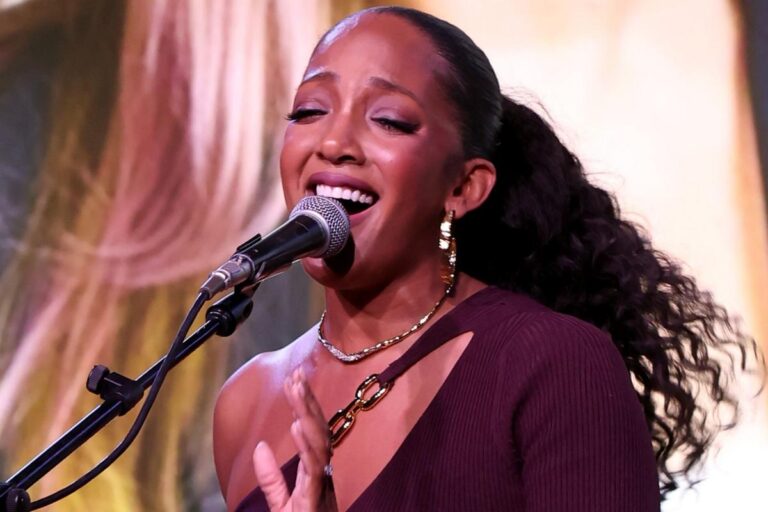
She might not look like or sound like what you think of when you think of outlaw country. But Mickey Guyton is an outlaw.
Not only that, but she’s the biggest, baddest outlaw artist the genre has seen in decades. Hear me out.
February 2020: Mickey Guyton Debuts “What Are You Gonna Tell Her” at CRS
Back in February 2020, Mickey Guyton walked into a crowd of music industry insiders during Nashville’s Country Radio Seminar (CRS), ready to kill her career.
On that stage, she debuted a freshly-written song called “What Are You Gonna Tell Her.” For an industry showcase that artists often use to preview songs they’re hoping will head to country radio, it was a telling choice.
“What Are You Gonna Tell Her” is, to put it mildly, not country radio’s kind of song. It’s not uptempo, it’s not feel-good, and it doesn’t include a single mention of trucks or beer or boots.
It’s about growing up female and Black, raised to believe you can do anything, and then confronted by a world and an industry that will never offer you the same chances it will afford your white male counterparts.
“I was very much walking in there thinking, ‘Alright, this is the death of my career right here,'” Guyton tells Taste of Country.
At that point, she’d been doing Nashville the Nashville way for almost a decade. She’d even broken country radio’s Top 40 with her debut single “Better Than You Left Me.” But after years of being passed over, she was ready to give up, and already making plans to quit music and move to California with her husband.
“I had nothing left anyway,” she says. “There was nothing left for me to kill…I was preparing for that. I was not preparing for the reaction it received.”
What Happened After Mickey Guyton Debuted “What Are You Gonna Tell Her”?
That reaction was a rapt audience, a standing ovation, and a whole new direction for Guyton’s career: This time, focused on songs like “Black Like Me,” “All American” and “Love My Hair,” that overtly embraced her experience as a Black artist living in America.
She still wasn’t getting radio play, but she was getting a hosting spot at the ACM Awards and gigs to sing the national anthem at the Super Bowl and perform at the Democratic National Convention.
Mickey Guyton Sings at the Super Bowl 2022
Gregory Shamus, Getty Images
Mickey Guyton didn’t become an outlaw when she debuted “What Are You Gonna Tell Her” at CRS. She’d actually been one since the very start of her career. But it was the first time the public took notice.
What is Outlaw Country?
Back in the late ’60s and early ’70s, an entirely different group of artists — Waylon Jennings, Willie Nelson, Kris Kristofferson —were breaking away from the country industry’s rigid constraints, rejecting the then-industry-standard “Nashville Sound” for something grittier, realer, rawer.
They grew their hair long, traded the preferred clean-cut look for rock-inspired leather and denim, and recorded in different studios — often in Texas instead of Tennessee — to make music their way rather than bowing to a record label.
The sound associated with the movement was less varnished and had more in common with rock ‘n’ roll, but most of outlaw country’s artists and heirs agree that what the music itself sounded like had little to do with the definition.
What made an outlaw an outlaw was the desire to break free from Nashville’s systems and limitations and exert creative freedom.
What is Outlaw Country Music Today?
Many of today’s outlaws, like Margo Price and Sturgill Simpson, still fly the flag for challenging the genre on a systemic level.
But in other cases, that original definition has gotten lost. Plenty of artists today draw musical inspiration from the outlaw movement and label themselves outlaws because their sound echoes the ’70s and they project a broadly rebellious artistic identity.
But many of them don’t necessarily challenge the same systems that outlaw once did. Eric Church, Hardy and Zach Bryan are some considered “outlaw” by fans due to persona or musical style, but they don’t match the original crew’s level of system-bucking.
“When you look back at Johnny Cash and Waylon Jennings and Kris Kristofferson and all those people…they were actually outlaws in the sense that they were willing to challenge the systems they saw were not working for people, particularly underserved communities,” says Holly G, who is an industry advocate and the founder of the Black Opry.
“It is completely ironic that…a large majority of the white men who are [positioning] themselves as outlaw are also super pro-government and supporting an administration that is taking rights away from people,” she continues.
In 2021, Holly founded the Black Opry as a collective seeking to amplify Black country artists onstage and foster connections between them. She was inspired to do so by her experience as a Black country fan feeling unsafe when she attended shows.
The group’s fan club is called the Black Opry Outlaw Fan Club, and at their very first meetup, they called themselves The Outlaw House.
“We felt like we were forced to be outlaws because we were outcasts,” Holly explains.
Black country fans are inherently outsiders, and so too are artists like Guyton, who challenge the genre’s systems simply by existing in a Black, female body as they sang country music.
Mickey Guyton Was An Outlaw Since The Beginning Of Her Career
Holly had known about Guyton since her early days, and remembers it was “exciting” to see her as the sole Black artist included in CMT’s Next Women of Country class of 2014. (This class also included Maddie & Tae and Kelsea Ballerini.) Later on, journalist Marissa Moss hired Holly to research Guyton for a book she was writing, and as part of that research, Holly read every single tweet Guyton had ever published.
Rick Diamond, Getty Images
Rick Diamond, Getty Images
Holly describes feeling like she was going through Guyton’s career with her in real time, performing at all the touchstone venues artists play as they try to climb the ranks in Nashville.
“It’s a case study in: You can do everything right, you can have all the right pieces fall into place, but if you’re not the person that Nashville wants, they’re not going to give you what they’re giving the boys,” she sums up.
Rick Diamond, Getty Images
Rick Diamond, Getty Images
Guyton says that in the beginning, she put faith in the advice that the white male executives were giving her. As years passed and her career stalled, it became increasingly apparent that they didn’t understand how her path differed from the white artists’, and they seemed unwilling to learn.
“I just thought that they knew better, and it turned out they knew nothing,” Guyton says. “And it caused me to suffer greatly. At a certain point, I was like…’You can try to fit a square in a circle all you want, but that square ain’t ever gonna fit in that circle.'”
There is one key difference between Guyton’s story and that of the original outlaws. Their move into outlaw was a venture. Hers was survival.
How Is Mickey Guyton’s Outlaw Career Different From the Outlaws of the ’70s?
Jennings was a top earner at RCA when he decided to stop doing Nashville the Nashville way. His success allowed him to parlay his existing label deal into an agreement where he could record music on his terms. He’d already had numerous radio hits.
“And he was also a white male,” Guyton deadpans.
The first batch of outlaws created a subgenre that’s now spanned decades, and was given the chance to become extremely commercially successful. In 1976, the compilation album Wanted! The Outlawsbecame the first country album ever to go platinum.
But Guyton wrote “What Are You Gonna Tell Her” and “Black Like Me” out of pure frustration and catharsis. Even after her bombshell debut at CRS, and all the doors that opened for her in the aftermath, there was still a ceiling for what she could achieve in commercial country. And it was pretty dang low.
Guyton thinks there “would have never, ever, ever been a world” where that standing ovation at CRS translated into radio success for “What Are You Gonna Tell Her.”
“They don’t like complicated feelings and emotions like that, especially coming from a Black woman,” she says. “They receive that from a Zach Bryan or a Jelly Roll, but there’s something about a Black woman that some people just can’t really stomach. It’s a fact.”
I asked Guyton if she thinks her decision to sing overtly about race made the path to success easier for Black male artists like Breland and Shaboozey. She replied that while that’s a “great sentiment,” country music has always had a more welcoming ear for Black men than their female counterparts.
Erika Goldring, Getty Images
Erika Goldring, Getty Images
That sounds bleak and unfair, because it is bleak and unfair. Guyton, and so many other Black women, were and continue to be stonewalled by the industry. From the moment in 1969 when Linda Martell became the first Black woman to play the Grand Ole Opry, to Rissi Palmer‘s career to Beyoncé‘s chilly reception after Cowboy Carter, the story of Black female country music is one of artists entering a musical space where they are largely unwanted, and having to fight for every scrap of success they earn.
Of course Guyton grieved the career she would have had, had she not been a Black woman. She doesn’t downplay the injustices her career has handed her, but she doesn’t downplay the joy she’s found in music, either. Being an outlaw — and embracing it — has afforded her considerable freedom.
How Did Being An Outlaw Save Mickey Guyton’s Career?
Songs like “Black Like Me” and “What Are You Gonna Tell Her” might never find a major foothold in the industry, but they electrified her fan base. And without those songs, Guyton wouldn’t be doing music at all today.
For a few years leading up to 2020, she felt directionless, releasing music that didn’t seem to resonate either with her or with fans. In many important ways, Guyton rebirthed her musical identity when she stopped caring about trying to fit the paradigm, both in her lyrics and in the way her music sounds.
Emma McIntyre, Getty Images
Emma McIntyre, Getty Images
“I can do whatever the hell I want,” Guyton says. “Isn’t that the point of being an artist?”
“And that is absolutely a form of rebellion, because you don’t own me,” she continues. “I don’t belong to you. I belong to myself. And I will do what I want. I think every artist should do that regardless of gender, regardless of race, color, creed, everything. You should be able to do, as an artist, what you want to do.”
25 Modern Female Trailblazers Who Changed Country Music
Following in the footsteps of game-changing legends like Dolly Parton, Reba McEntire and Loretta Lynn, these 25 modern-day country acts continue to push boundaries and shape the country music landscape. Whether they’re experimenting with musical style and sound, fighting for equality in the genre or broadening the path for the women coming to country music after them, these trailblazers are downright inspiring.
Matt Miller is an NFL draft analyst for ESPN, providing in-depth scouting on the nation’s top pro prospects. A Missouri native, Matt joined ESPN in 2021 and also contributes to SportsCenter, NFL Live and ESPN Radio. Prior to joining ESPN, Matt spent 11 years as a senior draft analyst at Bleacher Report.
Jordan Reid is an NFL draft analyst for ESPN, providing in-depth scouting on the nation’s top pro prospects. Jordan joined ESPN in 2021 and also contributes to SportsCenter and ESPN Radio. He played quarterback at North Carolina Central University and then went on to coach there from 2014-18.
Field Yates is a fantasy football expert and NFL draft analyst for ESPN. You can find him on Fantasy Football Now on Sunday mornings and regularly on NFL Live throughout the week, as well as the Fantasy Focus and First Draft podcasts. A graduate of Wesleyan University (CT) and native of Weston, Mass., Yates has previous experience interning with the New England Patriots on both their coaching and scouting staffs.
Multiple Authors
Feb 26, 2026, 11:46 PM ET
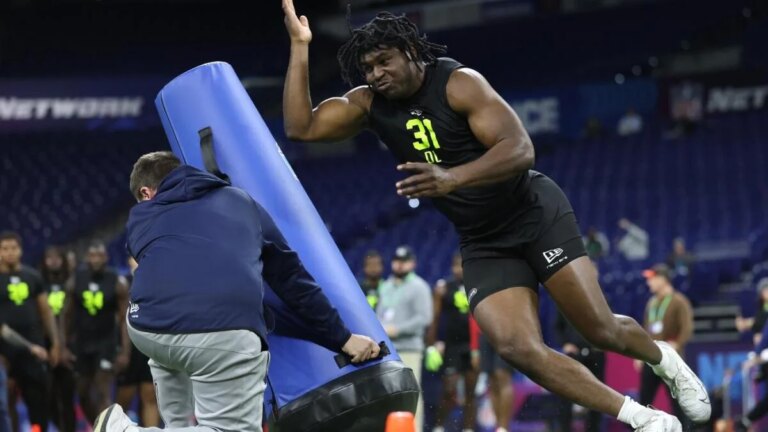
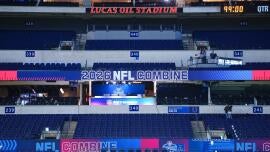
INDIANAPOLIS — Individual drills for prospects in the 2026 NFL draft started Thursday, with defensive linemen and linebackers taking the field. Defensive backs and tight ends will be next Friday, followed by quarterback, running back and wide receiver prospects Saturday. Offensive linemen will finish the combine with on-field workouts Sunday.
Who ran well in the 40-yard dash? Who dominated the rest of the on-field work? Draft experts Matt Miller, Jordan Reid and Field Yates are recapping all four days of the combine workouts, evaluating the top performances from every position, picking prospects who are rising (or potentially falling) and addressing notable under-the-radar showings.
Let’s get into the breakdown of all the action at Lucas Oil Stadium.
What are the biggest takeaways from Thursday’s workouts?
Reid: This linebacker class is awesome. From testing to on-field drills, the players who were expected to be standouts certainly delivered. Sonny Styles (Ohio State) will be the talk of the position group, but the depth shined as well. Jake Golday (Cincinnati), Anthony Hill Jr. (Texas) and Kyle Louis (Pitt) are three others who helped their draft stock. Golday and Hill are viewed as top-50 prospects, while Louis is considered a Round 3 player. The competition level at the position was on full display, as it seemed they were jostling with each other to catapult up the draft board.
Miller: Arm length was the topic of the day, as Bain (30 7/8 inches) and Texas A&M’s Cashius Howell (30 1/4) measured under 31 inches. According to ESPN Research, those lengths would be the shortest for any defensive lineman drafted in the first round since ESPN started tracking combine data in 2003.
Will NFL general managers bet that they’re outliers? I’ve talked to a few teams that had slightly different measurements, ranging up to 32 inches for Bain, but the point stands that no edge rusher with sub-31-inch arms has had 10-plus sacks in a season since 1999. So which team will bet against those numbers? The likely result is that each falls from their current rankings based on film — Bain is my No. 10 prospect and Howell my No. 23 — but it’s unlikely that either falls out of Round 1.
Yates: We’ve reached a different era of the combine, as player participation has been a hot topic in Indy this week. Though there are players whose participation could positively impact their draft stock (i.e., Caleb Banks), more players are cognizant of the minimal upside of working out.
At first, I figured sources around the NFL would find this trend disappointing, but the most popular sentiment that I’ve gathered is one of understanding. The players must make a decision that is best for their own outlook, and in some cases, their college film is more than enough to rubber stamp where they belong in the draft.
Banks didn’t need to finish the on-field workouts to rank as one of Thursday’s winners. The 6-foot-6, 327-pound defensive tackle wowed with a 32-inch vertical jump and a 5.05-second 40. Banks missed most of last season because of a foot injury, but his upside is through the roof. He could have moved into the first round with his times Thursday. — Miller
With an eye-popping 4.76 40-yard dash, it didn’t take the 6-foot-1, 290-pound Durant long to be among one of the biggest standouts of the defensive line group. He followed that with a 33 ½-inch vertical leap and a 9-foot-4 broad jump. Known for his first-step explosion, Durant showed his quickness and burst throughout the workout. Viewed as an early Day 3 prospect, he has positioned himself to be a potential top-100 pick. — Reid
Halton was one of the more impressive performers from the first group of prospects, as he posted a 36½-inch vertical jump, the third highest of any defensive tackle over the past 20 years. He also ran a 4.83 40. The 6-foot-3, 293-pound Halton had a combined 8.5 sacks over the past two seasons, with 26 pressures in 2025. When taking notes on Halton for my scouting report, I mentioned that he reminded me of a wrestler on the football field, with an ability to play with leverage and get underneath interior offensive linemen. I believe he has a chance to go inside the top 100 picks. — Yates
The word juice always comes to mind when watching Lawrence’s film, the sort of burst that showed up during his combine workout. Lawrence ran a 4.52 40, second to only Bailey among defensive linemen, and looked buttery smooth during on-field workout drills. Lawrence screams off the edge as a rusher, creating 60 pressures over the past two seasons. He had two seasons with at least seven sacks in his college career. The 6-foot-4, 253-pound Lawrence could be the first player taken from this year’s Shrine Bowl and might be in play for Round 2. — Yates
After a standout Senior Bowl week, the 6-foot, 200-pound Louis continued his strong predraft process with impressive numbers in the vertical (39½ inches) and broad (10-foot-9) jumps and a 4.57 40. The hybrid linebacker/safety prospect is a top 100 selection on my board, and teams I’ve spoken with mention his immediate impact as a weakside linebacker. He’d be ideal for a team like the Tampa Bay Buccaneers. — Miller
Proctor continues to build momentum in the pre-draft process. After a standout week at the Shrine Bowl, his stock continued to rise Thursday, as he ran a 4.8 40 and leaped 33 inches in the vertical. Proctor is undersized at 6-foot-2, 291 pounds but has the potential to be an option in the middle rounds for teams searching for an explosive 3-technique. Scouts frequently point to his two-sack performance last season against LSU when discussing him. — Reid
Bailey’s participation was noteworthy, and he delivered. The 6-foot-4, 251-pounder ran the fastest 40 of any defensive lineman, posting a blazing 4.5 to go along with a 35-inch vertical jump and 10-foot-9 broad jump. Bailey came into the combine having a strong chance of being picked as high as No. 2, with a floor that probably wasn’t much below No. 5. Bailey’s testing numbers, combined with the violence and power he showed during bag drills, reminded people why he’s ranked so high. — Yates
Though Faulk did not run the 40, he did the jumps and participated in on-field workouts. Faulk showed body control and balance during on-field work, especially when doing the “run the hoop” drill. That aligns with Faulk’s tape, though he remains a player whom I’ve had a tough time evaluating. Faulk has check-the-box measurables at 6-foot-6, 276 pounds and was excellent in 2024 with seven sacks, but his tape this past season was less exhilarating. Faulk has versatility, is a ready-made run defender and one of the youngest prospects in the class — along with A-plus character — which will help him land in the first round. But he must be much more disruptive and consistent in the NFL. — Yates
McDonald entered the day with a late first-round grade on my board and the potential to be the first nose tackle drafted. Despite not running the 40-yard dash, he opted in on the workouts. His performance was uneven, as the 6-foot-2, 326-pound McDonald struggled with his footing during multiple drills, but he showed the upper-body power that made him one of the best run stuffers in college last season. The late first round is still in play, but Ohio State’s pro day carries significance for his final grade. — Miller
Opting to run only the 40-yard dash and participate in on-field drills, Reese still was a big part of the Day 1 discussion. Running a blistering 4.47 40 dash time, the explosive burst and speed of the 6-foot-4, 241-pound Reese didn’t disappoint. A mini-competition between him and teammate Sonny Styles ensued as both ran identical unofficial times (Styles’ official time was slightly better). The bend of Reese also was on full display, as his quick movement skills and swift change-of-direction were effortless during drills. Reese helped himself as he continues to be one of the strongest contenders to be selected by the New York Jets at No. 2. — Reid
Styles’ performance was the talk exiting Day 1. The towering middle linebacker prospect (6-foot-5, 244 pounds) jumped an impressive 43½ inches in the vertical, the best leap for a player at that position dating to 2003, per ESPN Research. He also jumped 11-foot-2 in the broad jump and ran a 4.46 40. Styles was expected to have outlandish testing numbers, yet he surpassed everyone’s expectations. Labeled as a top-10 pick entering the combine, I’m not so sure he makes it out of the top 5. His combination of size, instincts and range makes him one of the best middle linebacker prospects in recent memory, as he could be the first top-5 pick at the position since Devin White in 2019. — Reid
play
0:21
Buckeyes’ Sonny Styles reaches 43-5 on vertical at the combine
Ohio State LB Sonny Styles jumps an impressive 43-5 on the vertical at the NFL combine.
Young was among several defensive linemen who ran the 40-yard dash, but he showed out when performing positional drills. Young’s “wave” drill was clean, showing quick feet and good body control at 6-foot-6 and 262 pounds. His quickness in drills matched his tape, and his status as a late Round 1 player on my board is unchanged after one of the better positional drill showings in his group. — Miller
More notes, thoughts and things we heard and saw on Day 1
Miller
Cashius Howell had a day that’ll no doubt send scouts back to his tape. We already noted the Texas A&M edge rusher’s subpar arm length, but he then ran an elite 4.6-second 40, which included a 1.59-second 10-yard split. Those numbers are in the 88th and 87th percentile, respectively, for edge rushers since 1999. Short arms can be overcome with speed, and Howell proved he has that. Despite leaving positional drills after a leg injury, the 6-foot-3, 253-pounder likely secured a late first-round selection.
Reid
The revival of T.J. Parker‘s draft stock continues. After a disappointing final season at Clemson, he has continued to build on his impressive Senior Bowl week with a good performance at the combine. Parker ran a 4.68 40 and had a 34-inch vertical at 6-foot-4, 263 pounds. Parker’s ascension has resulted in him being back in the picture to be picked at the end of Round 1.
Yates
Texas Tech defensive tackle Lee Hunter‘s results in the vertical and broad jumps were discussed by scouts Thursday, as he managed just a 21½-inch vertical and an 8-foot-4 broad jump. Though Hunter’s game is not predicated upon explosion, those numbers are far from ideal. The 6-foot-4, 318-pound Hunter had flashes of absolute dominance — none more so than against Oregon in the playoffs — but also other games that weren’t at that level. My best forecast is him landing somewhere in the second round.