Home Blog Page 374

Asian shares are mostly lower as investors focus on the Iran war

0


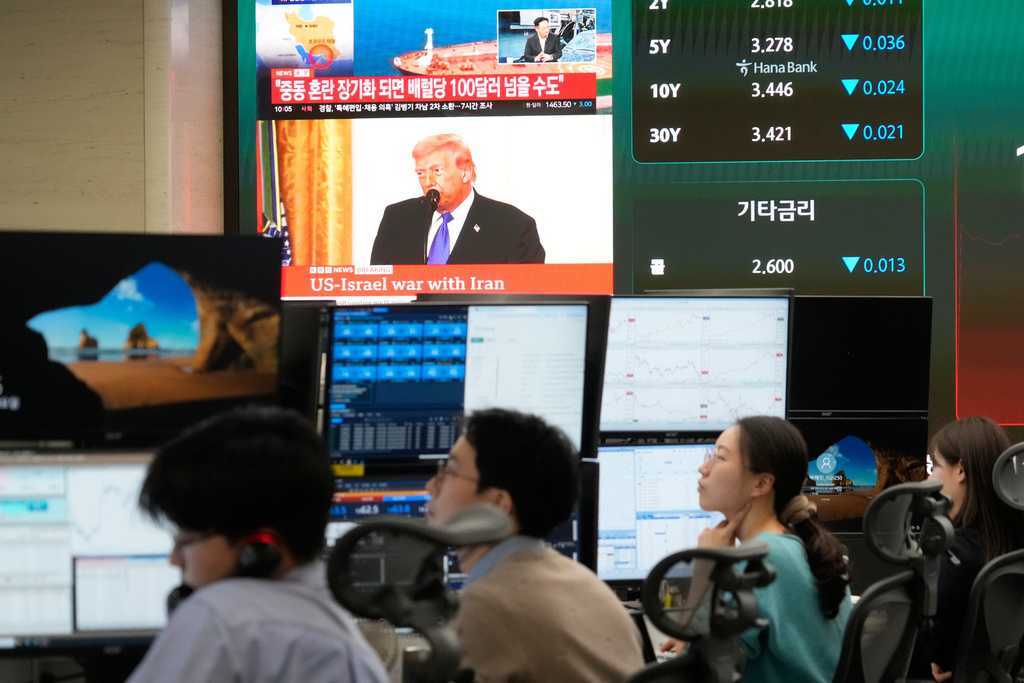
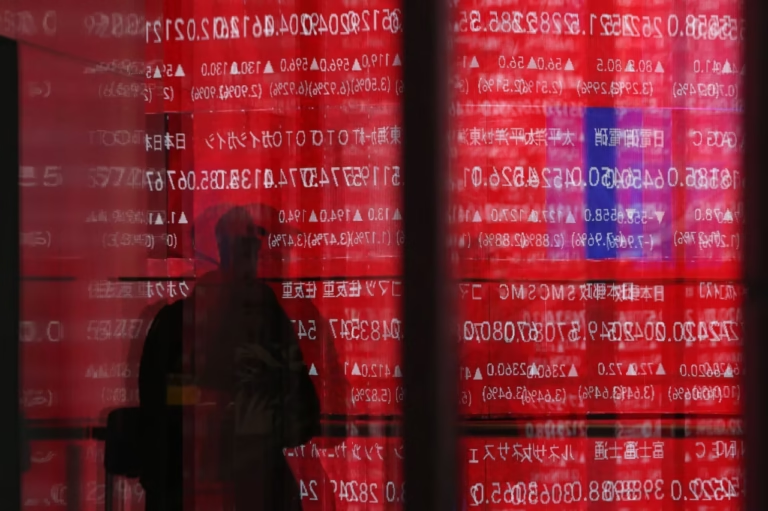
Asian shares mostly declined and oil prices surged higher Tuesday as investors eyed risks to the region’s energy supply because of the Iran war.Shares in South Korea sank 4.8% as markets reopened after a holiday on Monday, to 5,946.06.Video above: Oil prices leap on worries about Iran war, while US stocks erase sharp lossesBenchmark U.S. crude rose 77 cents to $72.00 a barrel. Brent crude, the international standard, added $1.10 to $78.84 a barrel. They jumped Monday then fell back although still at higher levels than before due to worries that the war could clog the global flow of crude.Japan’s benchmark Nikkei 225 sank 2.1% to 56,853.48. Like other resource-poor countries in the region, Japan could be especially hit by the lack of access to the Strait of Hormuz since much of its oil and natural gas is shipped through there.However, analysts say Japan has a sizable stockpile lasting more than 200 days and so the threat is not immediate.Japanese energy stocks plunged, with Eneos Corp. down nearly 6% and Idemitsu Kosan down nearly 4%. Defense-related issues, which have risen recently on expectations of more military spending by Prime Minister Sanae Takaichi, sank back as traders sold to lock in gains from the day before. Mitsubishi Heavy plunged 5%, and IHI lost 4%.In the rest of the region, Australia’s S&P/ASX 200 lost 1.2% to 9,089.50, while Hong Kong’s Hang Seng shed 0.1% to 26,038.29 and the Shanghai Composite index lost 0.3% to 4,170.63.Stocks of airlines, including American Airlines, United and Delta, were some of Monday’s biggest losers on Wall Street. Higher oil prices threaten their already big fuel bills, the fighting in the Middle East also has closed airports and left travelers stranded.The losses cascaded in Asia, with ANA stock down 2.4%, while Japan Airlines fell 5.2%, Korean Air declined 8.9% and Qantas Airways lost 2.9%.Video below: Expert discusses impact of ongoing conflict with Iran on oil pricesThe market reactions to the war have been relatively muted. Past military conflicts in the Middle East have not caused long-term drops for U.S. markets. For this war to knock down U.S. stocks in a significant and sustained way, the price of oil would perhaps need to jump above $100 per barrel, according to strategists at Morgan Stanley led by Michael Wilson.“Since 2000, there have been 22 one-day oil price spikes of more than 10 percent,” said Stephen Innes, managing partner at SPI Asset Management. “In other words, energy shocks do not automatically derail equities unless they are severe and sustained. The market is well aware of that playbook.”On Monday, the S&P 500 fell as much as 1.2% but finished with a gain of less than 0.1%, at 6,881.62. The Dow Jones Industrial Average dipped 0.1% to 48,904.78, and the Nasdaq composite rose 0.4% to 22,748.86. Both also recovered from steep early losses.Gold climbed 1.2% as investors looked for safer things to own and as U.S. officials tried to persuade the world that this war will not last forever.Helping the U.S. stock market to bounce back from its early losses were oil companies, which benefited from the rising price of crude. Exxon Mobil climbed 1.1%, and Marathon Petroleum rose 5.9%.Companies that make equipment for the military also strengthened. Northrop Grumman climbed 5.9%, and RTX rallied 4.7%. Palantir Technologies, whose software helps global defense agencies and other customers, jumped 5.8%. Big Tech stocks also rose. Nvidia rose 2.9% and was the strongest single force pushing the S&P 500 higher.In the bond market, the yield on the 10-year Treasury rose to 4.04% from 3.97% late Friday. A report showing growth for U.S. manufacturing was better last month than economists expected also helped to lift yields.In currency trading, the U.S. dollar slipped to 157.32 Japanese yen from 157.47 yen. The euro cost $1.1693, inching up from $1.1690. AP Business Writer Stan Choe contributed.

Asian shares mostly declined and oil prices surged higher Tuesday as investors eyed risks to the region’s energy supply because of the Iran war.

Shares in South Korea sank 4.8% as markets reopened after a holiday on Monday, to 5,946.06.

Video above: Oil prices leap on worries about Iran war, while US stocks erase sharp losses

Benchmark U.S. crude rose 77 cents to $72.00 a barrel. Brent crude, the international standard, added $1.10 to $78.84 a barrel. They jumped Monday then fell back although still at higher levels than before due to worries that the war could clog the global flow of crude.

Japan’s benchmark Nikkei 225 sank 2.1% to 56,853.48. Like other resource-poor countries in the region, Japan could be especially hit by the lack of access to the Strait of Hormuz since much of its oil and natural gas is shipped through there.

However, analysts say Japan has a sizable stockpile lasting more than 200 days and so the threat is not immediate.

Japanese energy stocks plunged, with Eneos Corp. down nearly 6% and Idemitsu Kosan down nearly 4%. Defense-related issues, which have risen recently on expectations of more military spending by Prime Minister Sanae Takaichi, sank back as traders sold to lock in gains from the day before. Mitsubishi Heavy plunged 5%, and IHI lost 4%.

In the rest of the region, Australia’s S&P/ASX 200 lost 1.2% to 9,089.50, while Hong Kong’s Hang Seng shed 0.1% to 26,038.29 and the Shanghai Composite index lost 0.3% to 4,170.63.

Stocks of airlines, including American Airlines, United and Delta, were some of Monday’s biggest losers on Wall Street. Higher oil prices threaten their already big fuel bills, the fighting in the Middle East also has closed airports and left travelers stranded.

The losses cascaded in Asia, with ANA stock down 2.4%, while Japan Airlines fell 5.2%, Korean Air declined 8.9% and Qantas Airways lost 2.9%.

Video below: Expert discusses impact of ongoing conflict with Iran on oil prices

The market reactions to the war have been relatively muted. Past military conflicts in the Middle East have not caused long-term drops for U.S. markets. For this war to knock down U.S. stocks in a significant and sustained way, the price of oil would perhaps need to jump above $100 per barrel, according to strategists at Morgan Stanley led by Michael Wilson.

“Since 2000, there have been 22 one-day oil price spikes of more than 10 percent,” said Stephen Innes, managing partner at SPI Asset Management. “In other words, energy shocks do not automatically derail equities unless they are severe and sustained. The market is well aware of that playbook.”

On Monday, the S&P 500 fell as much as 1.2% but finished with a gain of less than 0.1%, at 6,881.62. The Dow Jones Industrial Average dipped 0.1% to 48,904.78, and the Nasdaq composite rose 0.4% to 22,748.86. Both also recovered from steep early losses.

Gold climbed 1.2% as investors looked for safer things to own and as U.S. officials tried to persuade the world that this war will not last forever.

Helping the U.S. stock market to bounce back from its early losses were oil companies, which benefited from the rising price of crude. Exxon Mobil climbed 1.1%, and Marathon Petroleum rose 5.9%.

Companies that make equipment for the military also strengthened. Northrop Grumman climbed 5.9%, and RTX rallied 4.7%. Palantir Technologies, whose software helps global defense agencies and other customers, jumped 5.8%. Big Tech stocks also rose. Nvidia rose 2.9% and was the strongest single force pushing the S&P 500 higher.

In the bond market, the yield on the 10-year Treasury rose to 4.04% from 3.97% late Friday. A report showing growth for U.S. manufacturing was better last month than economists expected also helped to lift yields.

In currency trading, the U.S. dollar slipped to 157.32 Japanese yen from 157.47 yen. The euro cost $1.1693, inching up from $1.1690.

AP Business Writer Stan Choe contributed.


Source link

Ozzfest Will Return In 2027

0


Sharon Osbourne has officially confirmed that plans are underway to revive Ozzfest in 2027 – marking the first new edition of the influential metal festival since 2018.

Speaking on February 6 at MIDEM 2026 at the Palais des Festivals in Cannes, France, Sharon revealed that the festival will return in 2027: “Yes, absolutely. Yeah, we’re gonna do it,” she said. “Well, the last one we did was 2018. It was just a month before Ozzy got sick, and that was at the Forum in L.A. And there was no plans to stop it.

“We were still gonna do it, but Ozzy couldn’t. And Ozzy and I would talk about it, and he’d say, ‘Do you think Ozzfest would work without me?’ And I’m, like, ‘Yeah, it’s a brand. It will work without you.’ And he said, ‘We should do it.'”

Earlier this year, Sharon told Billboard she has been in discussions with Live Nation about bringing the festival back. While Ozzfest originally launched 30 years ago as the first national hard rock and metal touring festival of its kind in the U.S., Sharon now envisions a refreshed format.

“I’d like to mix up the genres,” she said, suggesting the 2027 edition could broaden beyond strict heavy metal while still honoring the festival’s roots.

Sharon has been candid about why Ozzfest originally stopped. During episodes of The Osbournes podcast, she cited escalating performance fees and management demands as a major obstacle: “Yeah, it was a very weird beast because all the bands were our mates, but the managers were greedy and for some reason they thought that we were making billions on it and we weren’t.

“We made a profit. But it was not like — we couldn’t retire on it. And managers and agents wanted more and more and more, and it just wasn’t cost effective anymore. We stopped, because it just wasn’t cost effective.”

Want More Metal? Subscribe To Our Daily Newsletter

Enter your information below to get a daily update with all of our headlines and receive The Orchard Metal newsletter.


Source link

Asian Government Bonds Fall as Middle East Conflict Stokes Inflation Fears

0


Asian government bonds sold off Tuesday amid fears that the Middle East conflict will drive inflation and faster interest-rate increases.


Source link

Kelsey Plum sees WNBA’s offer as a ‘win,’ but CBA talks continue

0


NEW YORK — Kelsey Plum said that while the players’ union should continue to negotiate a new collective bargaining agreement, she believes the offer the WNBPA has received from the WNBA so far reflects a “significant win” and that “a strike would be the worst thing for both sides.”

“I want to play, and players want to play,” Plum, the WNBPA first vice president, said at Unrivaled shootaround prior to Monday night’s semifinal games in Brooklyn. “And so obviously we’re going to continue to negotiate and do everything we possibly can to get this done in a timely fashion. But obviously a strike would be the worst thing for both sides, because we are in a revenue [sharing system], so no revenue, no revenue to share.”

The two sides have been far apart on revenue sharing as they work toward a new CBA — a process that started nearly 17 months ago when the WNBPA opted out of the previous agreement. The WNBPA is asking for a system in which players receive on average 26% of gross revenue (before deducting expenses), while the league has been offering a system in which the players receive 70% of net revenue (after deducting expenses).

The players’ union has bristled at the league’s offer as it amounts to less than 15% of gross revenue, while the league has called the WNBPA’s proposals “unrealistic” and claimed they would amount to hundreds of millions of dollars in losses.

Plum said that getting the league to agree to a revenue sharing system for the first time — where players’ salaries will grow as both league and team revenue grows — is something “we fought really hard for,” and that the WNBPA can continue to negotiate the expense credits the league would get.

“You can continue to negotiate without striking,” Plum said. “… I’ve always been someone that’s focused on the gain, not the gap. And to be honest, I think if you look at where we’ve come from, shoot, since I came into the league until now, and now that we’re in a revenue share, it’s a tremendous win.

“Obviously, we’re going to continue to negotiate. I can’t emphasize that enough. Like we’re not just settling. I want to be very clear about that. But I’m super proud to be a part of this opportunity to change women’s sports.”

WNBPA vice president Breanna Stewart, who co-founded the 3-on-3 Unrivaled league, said she agrees with Plum.

“I think that while we still are fighting for a lot of different things, we have to realize that the rev share is a win, especially just even coming from the 2020 CBA and the ones before that,” Stewart said. “Now, as the league makes money, we make money. And so when [Plum] talks about ‘I don’t think a strike is good for anyone,’ because as the league loses money, or if we have a delay, we also lose money.”

The WNBPA player body authorized the seven-player executive committee, which includes Plum and Stewart, to authorize a strike “when necessary” in December. That possibility has lingered with both sides still not seeing eye to eye and the WNBA regular season scheduled to start May 8. Last week, the league gave the WNBPA a target date of March 10 to have a term sheet completed or else the season schedule could be impacted.

A source told ESPN that during a player call Tuesday, more than half of player leadership reaffirmed their desire to keep a strike on the table as a potential course of action, but Stewart and Plum’s public comments indicate at the very least that there is not a consensus.

Following a six-week stalemate to start the year, when the league did not respond to a WNBPA offer, both sides have exchanged a flurry of proposals over the past month. After the WNBPA submitted a counterproposal on Friday, the league responded with one of its own on Sunday.

The league’s new offer proposes accelerating maximum contract eligibility for star players on rookie-scale contracts, sources familiar with the negotiations told ESPN. All-WNBA first- and second-team players who are still on rookie deals would become eligible to sign a maximum contract in their fourth year, after which they would not be eligible for the core designation. A player on a rookie deal who earns MVP could also be eligible for a supermax deal and to not be cored.

For example, that would mean the past three No. 1 overall picks — Aliyah Boston, Caitlin Clark and Paige Bueckers — would become max-contract eligible in 2026, 2027 and 2028, respectively. The union has been asking to eliminate the core designation and to reduce the length of rookie-scale contracts from four years to three.

The league’s revenue share proposal remains the same as previous ones, though the cap in Year 1 was bumped from $5.65 million to $5.75 million, up from $1.5 million in 2025. Based on conservative league projections, the salary cap will grow to roughly $8.5 million by Year 6 of the deal, sources told ESPN.

The league’s proposal features maximum salaries, including revenue sharing payouts, amounting to nearly $1.3 million in 2026 and projecting to approach $2 million in 2031. The supermax in 2025 came in at $249,000. The average player salary, including revenue sharing, would be projected to reach $540,000 in 2026 and $780,000 by 2031, up from $120,000 in 2025, while the projected minimum salary would jump from $66,000 in 2025 to over $230,000 in 2026.


Source link

3/2: CBS Evening News – CBS News

0


3/2: CBS Evening News – CBS News


Watch CBS News


Trump says U.S. will “easily prevail” as Iran fights back; House panel releases video of Clintons’ Epstein testimony.


Source link

Evacuation lifted at RV park after grass fire in southeast New Mexico

0


NEW MEXICO (KRQE) – A grass fire in southeast New Mexico closed U.S. Highway 380 and forced an RV park to evacuate earlier this afternoon. The fire happened east of Capitan. Lincoln County Fire and Emergency Services said that Hailey Hill RV Park was evacuated. Crews were able to clear the fire before five p.m., and […]


Source link

METALLICA Add Six More Sphere Shows As Life Burns Faster Residency Explodes In Demand

0


Metallica‘s Sphere takeover just got even bigger.

After feverish demand for their newly announced Life Burns Faster residency at Sphere in Las Vegas, the metal titans have added six additional shows to the 2026 run. Those dates haven’t been announce yet, so stay tuned.

Fan club presales for the new dates begin Wednesday, March 4 at 1 p.m. ET / 10 a.m. PT, with Legacy and Fifth Member codes valid for access. Single-night tickets, 2-Night No Repeat Weekend passes, enhanced experiences and travel packages will all be up for grabs before the general on-sale.

Originally unveiled on February 25 following months of rumors, the residency will now stretch beyond its initial eight-show run scheduled for October 1 & 3, 15 & 17, 22 & 24, and 29 & 31, 2026. True to the band’s now-signature format launched during the 2023 kickoff of their M72 world tour, each Thursday and Saturday pairing will feature completely different setlists – no songs repeated across the weekend.

Drummer Lars Ulrich has been vocal about the band’s fascination with the venue since witnessing U2 open Sphere back in 2023: “About 12 seconds into the opening night of Sphere with U2 back in ’23, I thought, ‘We have to do this. It’s completely uncharted territory!'” Ulrich said.

“This residency gives us another chance to reinvent how we interact with our fans in a live setting. We are beyond excited to share this with the world in six months’ time, and way fuckin’ psyched to go next level!”

Ulrich had previously teased the possibility during an appearance on The Howard Stern Show, admitting he “would fucking love to do it,” though nothing had been confirmed at the time.

Bassist Robert Trujillo echoed that excitement in earlier interviews, describing the visual possibilities as “endless,” particularly for epics like “Orion.” Guitarist Kirk Hammett similarly praised the venue’s cutting-edge tech, calling it a prime example of how modern production is transforming live entertainment.

Want More Metal? Subscribe To Our Daily Newsletter

Enter your information below to get a daily update with all of our headlines and receive The Orchard Metal newsletter.


Source link

SoftBank Group’s PayPay Targets $13.4 Billion Valuation in U.S. IPO

0


SoftBank Group’s payments app operator, PayPay’s U.S. initial public offering could bolster the Japanese technology investor’s coffers as it pours billions into artificial intelligence.


Source link

WATCH: Trae Young gets ejected from Wizards game he wasn’t even playing in

0


untitled-design-2026-03-02t191939-420.png
Getty Images

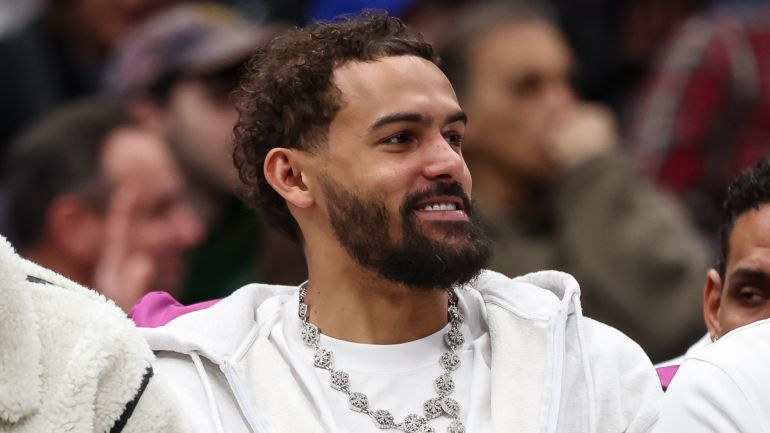
What did you expect Trae Young’s first recorded statistic to be as a member of the Washington Wizards? Probably a point, right? Maybe an assist since he was brought in to help set up his younger teammates. If you were going with a sleeper, you’d probably pick a stray rebound or steal. Alas, it was none of the above. Before his first point, assist or even game as a member of the Wizards, Trae Young has picked up his first ejection in the nation’s capital. 

The unusual sequence of events came in the third quarter of Washington’s home loss to Houston on Monday. Rockets forward Tari Eason, walking up the court, shoved Wizards guard Jamir Watkins to the ground, but no foul was called. A foul eventually came when the action shifted to the other side of the court, and the two teams needed to be separated. Technical fouls were called on four players: Eason, Watkins, Sharife Cooper … and Young.

So, how did Young manage to get ejected from a game he wasn’t even playing? He walked onto the floor during the altercation to argue with an official. NBA rules are very clear about players coming off of the bench during scuffles. It is not allowed, and we have multiple controversial playoff suspensions over the years to show how seriously the NBA takes it when a player does so.

Young seemed to take the ejection in stride, sharing a laugh about what happened on Twitter while assuring Wizards fans not to expect many more of them in his future.

Despite the rarity of this sort of ejection, it still isn’t the most notable tossing of Young’s career. Last season, he picked up a technical foul in the Play-In Tournament for throwing the ball at an official, and then quickly got a second for kicking the ball and was ejected late in the fourth quarter of a decided loss to the Orlando Magic. After that game, referee James Williams explained that Young was ejected for making “a mockery of the game.”

If nothing else, this ejection was a whole lot more defensible than that one was. Young didn’t get tossed for losing his temper on the court, but for defending his teammate from off of it. With his Wizards debut coming on Thursday, he probably earned some valuable credit in Washington’s locker room for getting a kicked out of a game he wasn’t even playing in.


Source link

China’s economic ambitions hit limits to growth as its national congress meets

0


BEIJING — China’s progress in building a modern economy, evident in its kung-fu fighting robots and self-parking cars, is hitting limits as a downturn in its housing industry drags on, small businesses suffer and young people struggle to find jobs.

The gap between Chinese leader Xi Jinping’s high-tech, artificial intelligence-driven ambitions and the hard realities of slowing growth is the backdrop for the annual meeting of the country’s largely ceremonial national legislature, the National People’s Congress, which begins Thursday.

During the meetings, which draw about 3,000 deputies to Beijing, top leaders will outline China’s annual target for growth and the congress will endorse a five-year blueprint of policy priorities until 2030.

“What we’ll see is the trade-off between whether it’s going to be industry and tech, or looking after domestic demand,” said Alexander Davey, an analyst at the Mercator Institute for China Studies. “These are the two priorities that are juggling for Xi Jinping right now.”

In a city in southern China’s Guangdong, families were cutting back on big purchases during last month’s Lunar New Year holidays. Even for auspicious houseplants like orchids, used as a symbol of abundance and prosperity, prices were slashed by as much as 40% from last year.

The penny pinching has small business owners complaining about hard times.

China reported it reached “around 5%” economic growth in 2025, but economists question some official data.

The relatively robust pace of growth was supported by strong manufacturing as exports surged, despite U.S. President Donald Trump’s tariff hikes and other disruptions to trade.

“Hitting the 2025 growth target is hardly reassuring as the Chinese economy is losing growth momentum, with rising imbalances and enormous structural problems being papered over by a surge in export-driven growth,” Eswar Prasad, a professor of economics and trade policy at Cornell University, told The Associated Press in emailed comments.

A downturn in China’s housing market began several years ago and piecemeal efforts to revive the industry have made only fitful progress. Dozens of property developers defaulted on their debts as authorities cracked down on excessive borrowing. With overall home prices down 20% or more from 2021, a recovery remains elusive.

The meltdown in one of the country’s biggest industries eliminated hundreds of thousands of jobs and with 12.7 million graduates entering the job market this year, more than 16% of young Chinese are unemployed. Some just are giving up and opting out of the rat race, or “lying flat.”

Families whose main assets are their homes have grown cautious about spending, weakening consumer demand and confounding longstanding efforts to shift the economy to greater reliance on domestic investment.

The congress may bring some fresh moves to beef up social welfare and other support, measures economists say are overdue and necessary for sustained, steady growth.

Reliance on exports is what help keeps China’s economy buzzing, at least for now. China recorded a $1.2 trillion trade surplus in 2025, as exports kept its factories humming. Despite the China-U.S. trade war, it has been shipping more to regions including Europe and Latin America. But it’s facing pushback from its trading partners.

Under leader Xi, China has prioritized developing advanced technologies such as AI, robotics, computer chips, electric vehicles and renewable energy. Massive state support has companies churning out more EVs, TVs, solar panels and other products than China and its trading partners need.

“To achieve those goals, the government is going to have to continue to provide subsidies and preferential support for high-tech and strategic industries,” said Leah Fahy, a China economist at Capital Economics. “(That) will, in turn, continue to fuel overcapacity.”

In a recent report, the International Monetary Fund urged China to cut massive state subsidies and other support for industries that many Western countries say give its companies an unfair advantage over foreign rivals. At the same time, social welfare and other areas of the economy lag behind.

The focus on what the ruling Communist Party has dubbed “high quality development” is bound to continue under the five-year plan for 2026-2030 that lawmakers are due to endorse at the congress.

Over the past few decades, China’s transformation into a manufacturing superpower was underpinned by booming construction of homes, office buildings, roads, ports and railways. But tech supply chains are narrower, providing fewer jobs. So the trickle down effect is much weaker, said Lynn Song, chief economist for Greater China at ING Bank.

“If anything, the more successful the so-called future industries become, the more they will draw resources away from the traditional sectors that still provide the bulk of employment and livelihoods for most people,” said Henry Gao, a professor of law at Singapore Management University.

The annual congress is an impressive show. Thousands of delegates fill the Great Hall of the People in central Beijing. A military band performs and delegates from various ethnic groups attend in traditional clothing.

For all the pomp, the meeting is largely a set piece. The congress lasts only one week and its near-unanimous votes on the final day formalize decisions made ahead of time by party leaders. It’s a show of unity reaffirming the polices and direction they have set.

Increasingly that leadership has centered on one person, Xi, who has consolidated power since taking the helm in 2012. Now 72, he is one of modern China’s most powerful leaders. Some analysts think Xi will emulate Mao Zedong, the revolutionary leader who founded communist China, and rule for life.

Annual reports presented at the congress are replete with references to the party’s crucial role, “with Comrade Xi Jinping at its core.”

After ascending to power, Xi doubled down on longstanding anti-corruption campaigns, forcing many officials to step down to face investigation and prosecution, including top military brass.

Days before the congress opened, the national legislature removed nine military officers from its ranks, widening a years long military purge. Last month, Gen. Zhang Youxia, the highest ranking military member just below Xi, was ousted over suspected disciplinary violations.

Xi’s actions are may weaken China’s military readiness in coming years, but he is also ensuring that the force will be more politically reliable in the longer run, a report by Center for Strategic and International Studies think tank suggested.

The anti-corruption drives have eradicated potential political rivals, and his iron grasp on power makes it much less likely other officials will challenge his vision to build China into a self-sufficient tech leader and 21st-century global power.

____

Chan reported from Hong Kong. AP Business Writer Elaine Kurtenbach contributed from Bangkok.


Source link