TOKYO — Japan is preparing to deploy its first batch of domestically developed long-range missile s, with their launchers arriving at an army camp Monday as the country accelerates its offensive capability in response to rising challenges in the region.
The upgraded Type-12 land-to-ship missiles will be deployed at Camp Kengun in Japan’s southwestern prefecture of Kumamoto by the end of March, completing the process of deployment, Chief Cabinet Secretary Minoru Kihara said.
Army vehicles carrying their launchers and other equipment arrived early in the morning in a highly secretive mission criticized by local residents who protested outside the camp.
Opponents have complained about the lack of transparency and said the deployment would instead escalate tension and make the missiles the target of attacks.
The Defense Ministry last year moved up the schedule of the missiles’ deployment by one year as Japan accelerates a military buildup in the southwestern region as China escalates tension around Taiwan, the self-governing island Beijing claims as its own.
The upgraded Type-12 missile, developed and produced by Mitsubishi Heavy Industries, has a range of about 1,000 kilometers (620 miles) and can reach mainland China, a significant extension from the 200-kilometer (125-mile) range of the original.
It will be deployed next at Camp Fuji in Shizuoka, west of Tokyo, later this year.
Japan considers China a growing security threat and has pushed a military buildup on southwestern islands near the East China Sea. It has deployed PAC-3 interceptors and midrange surface-to-air missiles on many of the islands, including Okinawa, Ishigaki and Miyako.
Defense Minister Shinjiro Koizumi last month said Japan will deploy the midrange SAMs on Japan’s westernmost island of Yonaguni, just east of Taiwan, by March 2031.
Tensions have escalated further since Prime Minister Sanae Takaichi’s comment soon after taking office that any Chinese military action against Taiwan could be grounds for a Japanese military response.
Takaichi has pledged to revise security and defense policy by the end of the year and seeks to further bolster Japan’s military with unmanned combative weapons and long-range missiles.
Her government is also set to scrap restrictions on lethal arms exports in the coming weeks to promote the development of Japan’s defense industry and cooperation with friendly nations, based on a proposal recently submitted by her party and its governing coalition partner.
Enter KRQE’s Basketball Challenge for your chance to win a $500 gift card. This contest is sponsored by EZEE Fiber, Freddy’s, Mark Diamond’s Jewelers, Melloy Nissan, New Mexico Lottery, Singleton Schreiber Injury Attorneys. If the contest doesn’t load, please click here. Important Dates
The Los Angeles Rams reached an agreement with newly acquired cornerback Trent McDuffie on a record four-year, $124 million contract extension that makes him the highest-paid cornerback in NFL history, according to ESPN. The deal includes $100 million guaranteed and sets McDuffie up to earn an average of $31 million per year.
The expectation when the Rams agreed to a trade with the Kansas City Chiefs on March 4 was that they would come to terms on a new contract for McDuffie. It took a matter of days for them to lock up their prized defensive back for the long term. McDuffie will join the Rams officially when the new league year begins on March 11 in return for four draft picks.
McDuffie was set to enter the final season of his contract when the Chiefs picked up his fifth-year option. General manager Brett Veach put the two-time All-Pro on the trade block, though, instead of paying up to keep him beyond 2026. McDuffie would have made $13.6 million on his old contract but will instead make more than double that figure in his debut season in Los Angeles.
It was a cost-cutting measure for the Chiefs, who entered the offseason more than $57 million over the salary cap and still needed to shed space in advance of the new league year. On the other side of the deal, the Rams secured an immediate elite contributor to a roster they hope is capable of winning a Super Bowl as soon as next year. They filled a spot in their greatest position group of need in the process.
McDuffie was always going to get paid; it was just a matter of whether it would be with the Chiefs or another team. In the end, the Rams agreed to pay him the biggest annual salary the NFL has ever seen at his position — nearly $1 million more than what Sauce Gardner earns with the Indianapolis Colts.
McDuffie’s play over the first four years of his career justified the payday. He slotted in as a first-year contributor in Kansas City in 2022 and played an integral role in the Chiefs’ back-to-back Super Bowl runs that year and the next. McDuffie racked up three interceptions and 34 passes defended across his four years in the AFC West, and he tacked on eight forced fumbles, including five in the 2023 season alone.
Matthew McConaughey trademarks himself to fight AI misuse
03:09
Will Smith sued over allegations he retaliated against violinist who reported sexual harassment
02:41
Beyoncé becomes a billionaire, Forbes reports
00:43
Nicki Minaj calls Vance an ‘assassin’ during talk with Charlie Kirk’s wife
01:24
‘Call of Duty’ creator Vince Zampella killed after Ferrari crash in California
00:38
Rapper Tory Lanez speaks out from prison amid planned appeal
04:47
Los Angeles police say pop star Rihanna was at home when a woman allegedly drove to her residence and fired an AR-15-style rifle. No injuries were reported. The woman believed to be the shooter was taken into custody.March 9, 2026
Now Playing
Woman arrested after allegedly firing shots at Rihanna’s L.A. home, police say
00:47
UP NEXT
Britney Spears released after arrest in Southern California
02:31
Nick Reiner pleads not guilty to murder charges in deaths of parents
02:56
Nick Reiner set to plea on murder charges in deaths of his parents
05:20
Eric Dane, ‘Grey’s Anatomy’ and ‘Euphoria’ star, dies at 53
00:35
Shia LaBeouf arrested in New Orleans after brawl during Mardi Gras
Japan’s benchmark Nikkei 225 index plunged more than 7% early Monday and other Asian markets also tumbled after oil prices soared to about $114 a barrel due to disruptions from the war in the Middle East, casting a shadow over economies heavily dependent on imported crude and gas from the region.The Nikkei was down just over 7% at 51,740.46 and South Korea’s Kospi sank 7.6% to 5,161.26.Video above: Gas prices spiking amid war in IranHong Kong’s Hang Seng lost 2.5% and the Shanghai Composite index was down 1.1%.Taiwan’s benchmark dived 5% and other regional markets also swooned.The futures for the S&P 500, Nasdaq composite index and the Dow Jones Industrial Average dropped more than 2%.The price for a barrel of Brent crude, was trading at $114.78 a barrel and U.S. benchmark crude jumped to nearly $114.00 a barrel. Both were more than 20% above their closing prices Friday.Crude prices have spiked to their highest levels in 14 years. They last rose above $100 shortly after Russia invaded Ukraine in 2022. Supply concerns have driven crude and gasoline higher as the war ensnares major oil-producing countries and hinders exports from the Persian Gulf.“The market woke up to the sound every macro trader dreads. The oil alarm bell. And this time it was not a polite chime. It was a fire siren,” Stephen Innes of SPI Asset Management said in a commentary.Surging oil and gas prices, if they persist, could cascade through the global economy, further complicating matters for countries still adjusting to higher tariffs on exports to the United States under President Donald Trump.Senior officials of Southeast Asian countries were meeting this week in Manila, the Philippines, where they are expected to discuss ways to counter the shock from higher energy costs.Oil prices have surged more than 60% as the war, now in its second week, ensnared countries and places that are critical to the production and movement of oil and gas from the Persian Gulf.If oil prices stay above $100 per barrel, some analysts and investors say it could cause serious damage to the global economy.On Friday, the S&P 500 dropped 1.3% after a report showed U.S. employers cut more jobs last month than they created and after oil prices shot above $90 per barrel. The combination of a weak economy and high inflation is a worst-case scenario for investors because the Federal Reserve has no good tool to fix both problems at the same time.The Dow plunged as many as 945 points before finishing with a loss of 453, or 0.9%, and the Nasdaq composite sank 1.6%.Early Monday, the U.S. dollar, which retains its status as a safe haven for investors bracing against uncertainty, gained against other major currencies. It was trading at 158.87 Japanese yen, up 0.9% from Friday’s close. The euro fell to $1.1513, down from $1.1618.
Japan’s benchmark Nikkei 225 index plunged more than 7% early Monday and other Asian markets also tumbled after oil prices soared to about $114 a barrel due to disruptions from the war in the Middle East, casting a shadow over economies heavily dependent on imported crude and gas from the region.
The Nikkei was down just over 7% at 51,740.46 and South Korea’s Kospi sank 7.6% to 5,161.26.
Video above: Gas prices spiking amid war in Iran
Hong Kong’s Hang Seng lost 2.5% and the Shanghai Composite index was down 1.1%.
Taiwan’s benchmark dived 5% and other regional markets also swooned.
The futures for the S&P 500, Nasdaq composite index and the Dow Jones Industrial Average dropped more than 2%.
The price for a barrel of Brent crude, was trading at $114.78 a barrel and U.S. benchmark crude jumped to nearly $114.00 a barrel. Both were more than 20% above their closing prices Friday.
Crude prices have spiked to their highest levels in 14 years. They last rose above $100 shortly after Russia invaded Ukraine in 2022. Supply concerns have driven crude and gasoline higher as the war ensnares major oil-producing countries and hinders exports from the Persian Gulf.
“The market woke up to the sound every macro trader dreads. The oil alarm bell. And this time it was not a polite chime. It was a fire siren,” Stephen Innes of SPI Asset Management said in a commentary.
Surging oil and gas prices, if they persist, could cascade through the global economy, further complicating matters for countries still adjusting to higher tariffs on exports to the United States under President Donald Trump.
Senior officials of Southeast Asian countries were meeting this week in Manila, the Philippines, where they are expected to discuss ways to counter the shock from higher energy costs.
Oil prices have surged more than 60% as the war, now in its second week, ensnared countries and places that are critical to the production and movement of oil and gas from the Persian Gulf.
If oil prices stay above $100 per barrel, some analysts and investors say it could cause serious damage to the global economy.
On Friday, the S&P 500 dropped 1.3% after a report showed U.S. employers cut more jobs last month than they created and after oil prices shot above $90 per barrel. The combination of a weak economy and high inflation is a worst-case scenario for investors because the Federal Reserve has no good tool to fix both problems at the same time.
The Dow plunged as many as 945 points before finishing with a loss of 453, or 0.9%, and the Nasdaq composite sank 1.6%.
Early Monday, the U.S. dollar, which retains its status as a safe haven for investors bracing against uncertainty, gained against other major currencies. It was trading at 158.87 Japanese yen, up 0.9% from Friday’s close. The euro fell to $1.1513, down from $1.1618.
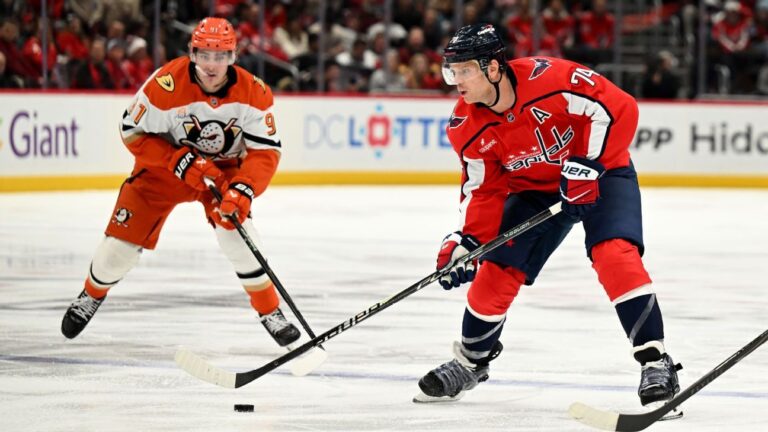
The 2026 NHL trade deadline had an unusual cadence. There was a week of interesting deals and genuine surprises; a deadline day where nothing of consequence happened; and then absolutely chaos as a flurry of trades was completed before the timer ticked down to zero.
Overall, NHL teams made 20 trades involving 33 players on Friday. Some teams and players did quite well for themselves. Others did not.
Here are some winners and losers of a peculiar NHL trade deadline, from ESPN reporters Ryan C. Clark, Kristen Shilton and Greg Wyshynski.
WINNERS
The Avalanche might be the best team in the NHL, and they are the odds-on favorites to win the Stanley Cup. Part of the reason is their addition of Brock Nelson at last season’s trade deadline. He is a proven second-line center behind Nathan MacKinnon, the kind of player they’d sought since Nazem Kadri left in 2022 after winning the Stanley Cup.
Adding Nicolas Roy on Thursday gave the Avs another proven two-way option down the middle, and someone who can provide secondary offense. Then they got Kadri back in a trade Friday, giving them the most dangerous center group in the NHL.
Obviously, MacKinnon will remain at first-line center, and Kadri and Nelson will split up second- and third-line duties. That then leaves Roy as Colorado’s fourth-line center. The Avs are now in a stronger position to win the fourth Stanley Cup in franchise history. If they do, March 6 could be the day that changed everything.
And if not, they can run it back again in 2026-27 because all four will still be under contract. — Clark
The Foligno family
Imagine growing up playing mini sticks with your brother, both of you dreaming that one day you’ll be suiting up for real in the NHL. Well, Marcus and Nick Foligno both achieved that goal — and now, they’re going to chase a Stanley Cup championship together in Minnesota.
The Wild brought in Chicago’s captain for “future considerations” — basically, the Blackhawks did right by their veteran leader by sending him to skate alongside family for a team with legitimate Cup contention aspirations.
Unsurprisingly, the Foligno wives were ecstatic to learn they’d be reunited for the rest of this season, and Nick couldn’t help but mention their departed mother looking down and smiling at her boys getting such a unique opportunity. Yes, the trade deadline is about making hockey deals, but there is also room for some wholesome, heartwarming content when the sport is more than just a game. — Shilton
Player empowerment
One of the defining trends of the deadline was having trades leak to the media before the focal point of said trade had agreed to waive his trade protection. It happened no less than five times, in deals involving Colton Parayko, Tyler Myers, Brayden Schenn, Jason Dickinson and MacKenzie Weegar. In most cases, the player involved eventually waived his no-trade or no-movement clause to facilitate the move. In two cases, the player did not.
Reports said that Myers was presented with a trade by the Vancouver Canucks to move to the Detroit Red Wings. He declined and eventually ended up being traded to the Dallas Stars, which was one of his preferred destinations. Meanwhile, media reports not only had the St. Louis Blues coming to Parayko with a trade to the Buffalo Sabres, they had the return on that trade reported out, too. Parayko refused to leave St. Louis for Buffalo, and the trade was dead.
Blues general manager Doug Armstrong said on Friday that the Blues checked phone records, texts and emails of staff members to find who leaked the trade. Perhaps it was the person who did the exact same thing in 2023, when the Blues were trying to compel defenseman Torey Krug to waive his trade protection.
Trade protection is a negotiated right in a player’s contract, usually at the cost of money or term. Clearly, something might have shifted at this deadline where public pressure is perceived to force a player’s hand. Good on Myers and Parayko for exercising their rights. — Wyshynski
Not that the Ducks necessarily needed to react to what the Edmonton Oilers and Vegas Golden Knights did ahead of the deadline. But the Ducks are in the three-team race for the top spot in the Pacific Division, so they did two things:
They made one of the most stunning moves of the deadline to get John Carlson from the Capitals.
They also traded Ryan Strome away, in a decision that will have a greater impact this summer.
Anaheim has added veterans with extensive playoff experience in order to establish a culture that its young players will eventually call their own. Carlson is a Stanley Cup winner who fits within that part of the Ducks’ plan. He also gives them a right-handed puck mover who is also one more weapon in the offensive zone; he will come in handy come playoff time.
But what makes trading Strome just as important is that he had one more year left on his contract worth $5 million annually. Shedding that salary will help in the offseason, when the Ducks must sign new contracts for their restricted free agent class that includes Leo Carlsson, Cutter Gauthier, Pavel Mintyukov and Olen Zellweger. — Clark
Stick taps to GM Doug Armstrong for (a) actually making trades and (b) negotiating some serious returns.
Armstrong reeled in two first-round draft choices, two third-round selections, an NHL-ready player in Jonathan Drouin, one with potential to return to an NHL lineup in defenseman Justin Holl and goalie prospect Marcus Gidlof — all for veterans Brayden Schenn and Justin Faulk.
It fits perfectly with the Blues accepting that a rebuild/retool/re-whateveryouwantocallit is happening, and it’s the right time to cash in on creating a hopeful future. Armstrong also didn’t make any rash decisions on Robert Thomas or Jordan Kyrou just for the sake of it.
Now there is time to determine where St. Louis is going and how — or if — those players fit into the new direction before the offseason hits. Armstrong turned this lemon season for the Blues into a refreshing lemonade. — Shilton
Has another general manager had a better 2026 than Craig Conroy of the Flames?
It started with the Rasmus Andersson trade with Vegas, getting a first-round pick, conditional second-rounder and defenseman Zach Whitecloud in a package for a pending unrestricted free agent. He then traded the remaining five years of MacKenzie Weegar‘s contract to the Utah Mammoth in a deal that included three second-round picks and college prospect Jonathan Castagna.
On deadline day, he made two change-of-scenery trades, acquiring forward Brennan Othmann from the Rangers and center Ryan Strome from the Ducks. Then, as the timer ticked down on the deadline, Calgary sent Nazem Kadri to Colorado for a conditional first, conditional second and an intriguing prospect in forward Max Curran for a 35-year-old center signed through 2028-29.
Conroy’s commitment to rebuilding is admirable in a league where teams are frightened by the teardown. Although it all comes down to drafting and development, Conroy has done a fantastic job of setting his team up for potential success. — Wyshynski
LOSERS
Goalie trade hype
The trade deadline is not the ideal time to acquire a goaltender. General managers have said in the past that it doesn’t give netminders enough time to get acclimated to new teammates and new systems before the playoffs arrive.
Perhaps that’s one reason not a single NHL goaltender was traded this week. Which is a shame. There were some contenders that could have used reinforcement in the crease, such as the Carolina Hurricanes, Montreal Canadiens and Vegas Golden Knights. There were several tantalizing names assumed to be available: Sergei Bobrovsky of the Panthers, Jordan Binnington of the Blues, Stuart Skinner of the Penguins, Anthony Stolarz of the Maple Leafs and Jesper Wallstadt of the Wild, according to ESPN’s Kevin Weekes.
But in the end, the only goalie news was one choosing to stay rather than move: Alex Nedeljkovic, signing a two-year contract extension with the Sharks. — Wyshynski
Just when Buffalo is actually winning on the ice — it’s also losing. The Sabres haven’t made the playoff in 14 years, and unless they perform a massive slide in the next month, that drought will finally end by April. New GM Jarmo Kekalainen attempted to make his team better by trying to acquire Colton Parayko from the Blues. But despite Buffalo’s uptick, despite it change of direction, despite its excellent young core … Parayko gave a hard pass on becoming a Sabre, invoking his no-trade clause.
Parayko’s presence would likely have been that missing piece to put Buffalo over the top as a true contender. Instead, Kekalainen settled for adding Logan Stanley and Luke Schenn from Winnipeg. Fine players, sure, but they are depth contributors, not difference-makers. And their playoff résumés aren’t exactly sparkling (Schenn, for instance, was a team-worst minus-8 for the Jets last postseason).
Sam Carrick and Tanner Pearson can fill in around the edges for Buffalo, of course. It’s just a shame for the Sabres that when they try to go big, and finally do the right things, there are still obstacles standing in their way. — Shilton
The Capitals enter Friday’s game slate four points out of the final Eastern Conference wild-card spot. They’ve played two more games than the Boston Bruins, who control that final playoff berth. It left the Capitals’ front office facing a dilemma about what it deemed was the best course of action for the remainder of the season.
This week, they traded forward Nic Dowd — which suggested they could be open for business in both directions. But in trading John Carlson, who might be the greatest defenseman in franchise history, it was a reality check on the present and the future.
Carlson’s departure means that captain Alex Ovechkin and winger Tom Wilson are the only players still on the roster from that 2018 Stanley Cup team. Ovechkin spoke with reporters Friday and said “it’s obviously a sad day. Probably the toughest day of my career, talking about personal-wise.”
The Capitals knew there would come a day when they would move on from Carlson and Ovechkin. Both players are in the final year of their respective contracts. But now that Carlson is gone, what does that mean for Ovechkin’s future? As he said, “I don’t know. I’m still here, so we’ll see what’s going to happen. It’s a hard one.” — Clark
Last summer, Connor McDavid gave the Oilers this season and two additional ones to build a winner around him before he can leave as an unrestricted free agent. GM Stan Bowman addressed the team’s goaltending by acquiring Tristan Jarry of the Penguins … who hasn’t necessarily been a solution for the Oilers’ biggest problem.
The trade deadline afforded Bowman another chance at dramatically improving the roster. Instead, he made two middling trades with his former team, the Chicago Blackhawks: acquiring defensive defenseman Connor Murphy and depth centers Jason Dickinson and Colton Dach. The Dickinson trade saw Edmonton give up a conditional first-rounder in 2027 to get rid of Andrew Mangiapane’s contract, i.e. make one of Bowman’s mistakes go away.
There’s a finite amount of time the Oilers have left with McDavid, and a finite amount of resources they have through which to build him a Stanley Cup winner. This deadline was a waste of both of them. — Wyshynski
Whoever finishes fifth and sixth in the Pacific Division
Having six teams separated by eight points in the Pacific Division is going to make for amazing theater. It’s also going to make those teams that miss the playoffs feel a certain type of way. Especially when each team made at least one move ahead of the deadline — though each faces its unique set of circumstances:
The Golden Knights are trying to win a second Cup but must try to find consistency amid the injuries they continue to battle.
The Ducks believe they now have everything in place to make the playoffs for the first time in seven years.
The Oilers are trying to return to a third consecutive Stanley Cup Final — and actually win this time.
The Sharks are ahead of schedule, with the idea that a playoff berth could change their current trajectory.
The Kraken missed out on Artemi Panarin but added help as they seek to make the playoffs for the second time in franchise history.
The Kings are trying to win a playoff series for the first time since 2014, and are trying to do it in captain Anze Kopitar‘s final season.
Again … someone is going to be left feeling a certain kind of way in the Pacific in mid-April. — Clark
The Bruins bodied their way back into the playoff picture this season, but GM Don Sweeney didn’t share his team’s tenacity at the deadline.
Boston seemed poised to add depth and give itself a real chance to not just reach the postseason but excel in it. The Bruins have earned, as they say, the right to reinforcements. What’s more, Sweeney had the draft capital (including multiple first-round choices), and yet he completed only minor transactions.
First, he acquired forwards Alexis Gendron and Massimo Rizzo from Philadelphia in exchange for forward Brett Harrison and defenseman Jackson Edward. Zero NHL games on their résumés. Then he got Lukas Reichel from Vancouver, who has played most of his season in the AHL.
It just feels like a missed opportunity for Boston to not add a single skater to help the team right now. Jeremy Swayman is back in form in the crease. The offense is rolling. There is so much potential for the Bruins and, well, it doesn’t seem like they’re taking advantage. — Shilton
The U.S. military said it killed six men Sunday in a strike on an alleged drug-smuggling vessel in the eastern Pacific Ocean as part of the Trump administration’s campaign against alleged traffickers.
Sunday’s attack brought the death toll to at least 157 people since the Trump administration began targeting those it calls “narcoterrorists” in small vessels in early September.
As with most of the military’s statements on the more than 40 known strikes in the Eastern Pacific Ocean and Caribbean Sea, U.S. Southern Command said it targeted alleged drug traffickers along known smuggling routes. The military did not provide evidence that the vessel was ferrying drugs. It posted a video on X that showed a small boat being blown up as it floated on the water.
President Trump has said the U.S. is in “armed conflict” with cartels in Latin America and has justified the attacks as a necessary escalation to stem the flow of drugs into the United States. But his administration has offered little evidence to support its claims of killing “narcoterrorists.”
In a meeting with Latin American leaders on Saturday, Trump encouraged them to join the U.S. in taking military action against drug-trafficking cartels and transnational gangs, which he said pose an “unacceptable threat” to the region’s national security.
With Saturday’s gathering, Trump aimed to demonstrate that he remains committed to focusing U.S. foreign policy on the Western Hemisphere, even while waging a war on Iran that has had repercussions across the Middle East.
Critics have questioned the overall legality of the boat strikes as well as their effectiveness, in part because the fentanyl behind many fatal overdoses is typically trafficked to the U.S. over land from Mexico, where it is produced with chemicals imported from China and India.
The boat strikes also drew intense criticism following the revelation that the military killed survivors of the very first boat attack with a follow-up strike. The Trump administration and many Republican lawmakers said it was legal and necessary, while Democratic lawmakers and legal experts said the killings were murder, if not a war crime.
ALBUQUERQUE, N.M. (KRQE) – It was a valiant effort from UNM down the homestretch of Sunday’s Mountain West Tournament Quarterfinal game against Boise State, but a strong late effort would fall short at #4 UNM loses to #5 Boise State 62-61. Boise State led by nine at the half, and while UNM struggled to shoot in […]
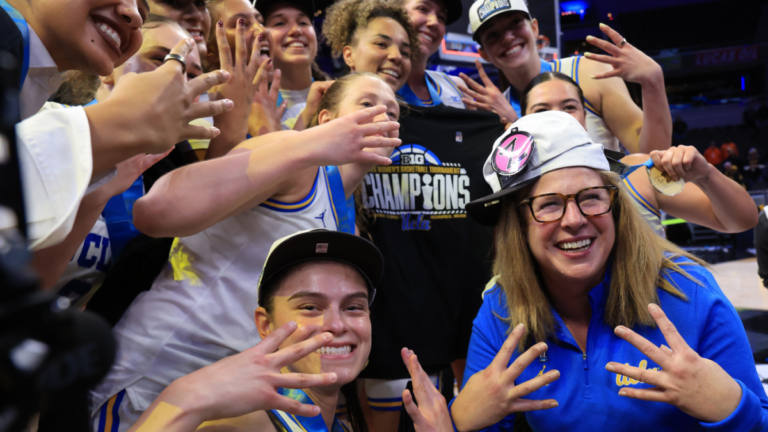
INDIANAPOLIS — You could hear Lauren Betts and Kiki Rice coming long before they danced through the doors of the press conference room at Gainbridge Fieldhouse on Sunday afternoon, an hour after dismantling Iowa, 96-45, to win the Big Ten Women’s Basketball Tournament.
The joyous stars — Betts, the Big Ten Player of the Year, and Rice, the Big Ten Tournament Most Outstanding Player — were blasting Drake’s 2015 hit “Back to Back” from Rice’s portable speaker. Betts was on photo duty with her retro digital camera. Even off the court, they’re the perfect 1-2 punch.
Their song choice was an unsubtle nod to their second Big Ten Tournament title in a row. This one was drama-free. Their 51-point margin of victory was the largest in the history of the storied conference’s tournament title game, and the biggest win ever by a Division-I team against a top-10 opponent.
Statement wins don’t get any stronger, and the Bruins once again made their case that they’re the best team in the country and deserve the No. 1 overall seed in the NCAA Tournament. The former will be decided on the court a month from now in Phoenix, but the latter will be decided over the next week by the selection committee.
UCLA coach Cori Close is only concerned about what she and her team can control.
“I don’t really care,” Close said when asked if her team had done enough to earn the top overall seed. “When you focus on things out of your control, it will adversely affect the things under your control. I think, if I put any energy towards that, I’m taking energy away from what it will actually take to get there. I think our focus needs to be on the how. How do we play our best basketball in March?”
Close may not care, but plenty of people outside the program do. Ahead of Selection Sunday, here’s a look at how the committee makes its decision and UCLA’s case to be No. 1 overall ahead of UConn.
Tale of the tape: UConn vs. UCLA
The undefeated and reigning champion Huskies have been ranked No. 1 in the AP Poll all season long. They are also No. 1 in the women’s basketball NET rankings and were No. 1 in the selection committee’s top-16 reveal last week. Assuming UConn beats Villanova on Monday to win the Big East Tournament, all signs point to them being the top overall seed in the NCAA Tournament.
But do the Huskies deserve that honor? Let’s take a look at each team’s resume.
UConn
33-0
15-0
6-0
12-0
8-0
5-0
8-0
12-0
UCLA
31-1
14-0
8-1
9-0
18-1
2-0
5-0
6-0
UConn may be undefeated, but UCLA has 10 more Quad 1 wins — their 18 Quad 1 wins are the most in the country — and six fewer Quad 4 wins. UCLA’s lone defeat came to then-No. 4 Texas in December.
Additionally, UCLA played the toughest overall schedule in the country this season, while UConn played the 58th-toughest schedule. The Huskies, to their credit, had the hardest non-conference schedule, and can do nothing about the Big East being down, but there’s no debate that UCLA played better competition over the course of the season.
The teams had five common opponents: Iowa, Michigan, Ohio State, Tennessee and USC. Here’s a look at the margins of victory for each program in those respective matchups. UConn does have the edge in this department.
Iowa
+36
+23, +51
Michigan
+3
+3
Ohio State
+32
+7, +10
Tennessee
+30
+22
USC
+28
+34, +23
Now, let’s examine some key metrics in Quad 1 games. UConn has a slight edge here, but there’s very little to differentiate the two teams statistically against the country’s best opponents. Furthermore, the stats have not yet been updated to reflect UCLA’s 51-point win over Iowa, which will give the Bruins a big statistical boost.
UConn
115.1
84.2
+31.0
56.4%
30.4%
15.2%
UCLA
116.4
90.9
+25.6
55.6%
40.6%
17.5%
Finally, UCLA is first in the country in Wins Above Bubble with a rating of 16.25, while UConn is fifth with a rating of 10.71. (Not including Sunday’s games.)
Here’s what CBS Sports Bracketologist Connor Groel, who has UConn projected as the No. 1 overall seed, had to say: “Long story short, UCLA has a better resume but based on the top-16 reveals and how dominant UConn is, I do not see an undefeated defending champion not being No. 1 overall.”
Women’s Bracketology: Latest NCAA Tournament projections as Arizona State grabs final spot
Connor Groel
How does the selection committee make its decision?
Ahead of the 2020-21 season, the NCAA announced a new system called the NCAA Evaluation Tool — NET — as the primary modern ranking system used to assess team quality for NCAA tournament selection and seeding.
NET evaluates a team’s opponents, game location, efficiency and results, and is based on two major components: adjusted net efficiency and team value index. Here is how those two components are calculated.
Adjusted net efficiency
Measures overall performance using:
Offensive efficiency (points per possession)
Defensive efficiency (opponent points per possession)
Strength of opponents
Game location (home/away/neutral)
Team value index
Results-oriented metric that rewards teams for beating better opponents, and factors in:
Opponent quality
Game location
Win/loss outcome
While NET is the primary ranking system, it does not solely determine the seeds. As of this season, the selection committee also uses Wins Above Bubble, another results-based metric that measures the quality of a team’s resume, including:
A team’s wins compared with what a typical bubble team would be expected to have against the same schedule.
It does not account for scoring margin or efficiency.
“For example, if an average bubble team was expected to win 19 games against Team A’s schedule, but Team A won 20, it would have a +1.0 WAB rating.”
Furthermore, the NCAA states that the committee also considers the following criteria when determining seeds:
Bad losses
Common opponents
Competitiveness in losses
Early vs. late-season performance
Head-to-head results
Observable components (eye test)
Overall record
Regional rankings
Significant wins
Strength of schedule
‘I’ve never thought about that’
UCLA’s players are in lockstep with their coach on the seeding discussion.
Gabriela Jaquez was blunt after the team’s win over Ohio State in the Big Ten Tournament semifinals on Saturday. “I’ve never thought about that,” she said. Gianna Kneepkens wasn’t much more expressive. “I don’t think we’ve talked about that one time. We don’t really care,” she said.
On down the line, the message was the same.
“We don’t talk about rankings or anything like that. It’s not something you can really control, so there’s no point in worrying about that,” Charlisse Leger-Walker added Saturday. “We’re very focused on what’s right ahead of us, whether that’s a 1-0 practice or a 1-0 game. When Selection Sunday happens and the rankings come out, we’ll deal with that when it comes.”
Ultimately, the No. 1 overall seed doesn’t matter all that much aside from bragging rights. UCLA is going to be a top-two overall seed, and will play the first two rounds at home before almost certainly heading to the Sacramento regional, just a few hours up the road from their campus.
An easier path certainly helps, but true title contenders don’t worry about their seed or path.
“We’re a great team. We’ve done all we needed to do,” Rice said Sunday. “The committee will make that decision, but we’re not focused on that.”
KATHMANDU, Nepal — A Nepali political party led by an ex-rapper is set for a landslide victory in the country’s first parliamentary election since Gen Z protests ousted the old leadership that has ruled the Himalayan nation for decades.
The Rastriya Swatantra, or National Independent Party, formed only four years ago, had already won 103 of 165 directly elected seats and led in 21 other constituencies in the results published Sunday morning by Nepal’s Election Commission.
Other political parties and independent candidates had won 27 seats in total so far. Officials were still counting the votes Sunday and final results were expected later in the week.
The party’s prime ministerial candidate is rapper-turned-politician Balendra Shah, who won the 2022 Kathmandu mayoral race. He emerged as a leading figure in the 2025 uprising that ousted former Prime Minister Khadga Prasad Oli.
In Nepal, voters directly elect 165 members to the House of Representatives, the lower chamber of Parliament. The remaining 110 seats in the 275-member body are allocated through a proportional representation system, under which political parties are assigned seats based on their share of the vote. On Sunday, RSP also led with about 51% of the 110 seats.
The relatively new RSP has unseated the two long-dominant parties: the Nepali Congress and the Communist Party of Nepal (Unified Marxist–Leninist), who have taken turns ruling the country.
Local papers called the sweeping win a historic moment. “RSP set for a landslide victory,” said the popular The Himalayan Times. “People’s ballot revolt; shift in political paradigm,” said Annapurna Post.
RSP supporters have been celebrating the win in several constituencies, offering the winners flower garlands, bouquets, scarfs and smearing them with red vermilion powder.
The party officials, however, have asked their candidates and supporters to refrain from victory rallies or any other public celebrations out of respect for the dozens of lives lost during last year’s youth-led protests.
In Nepal, voters get two ballot papers, one to choose a candidate of their choice who is usually a political party nominee and the other to choose a party they prefer.
RSP clearly has more than half the directly elected seats and the results of the second ballot also show the party has more than 50% of the votes in its favor. They require the support of half the total number of members in the lower chamber of Parliament to form a government.
Last year’s protests against corruption and poor governance were triggered by a social media ban before snowballing into a popular revolt against the government. Dozens were killed and hundreds wounded when protesters attacked government buildings and police opened fire on them.