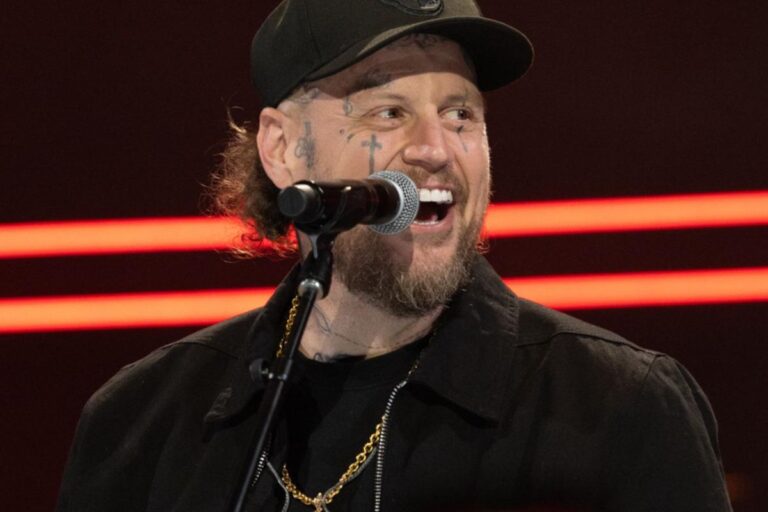
After being invited to join the Opry during an appearance on Joe Rogan’s podcast last December, Jelly made things official with an induction ceremony that included appearances from fellow country stars who’ve been pivotal to his musical journey.
Who Inducted Jelly Roll Into the Grand Ole Opry?
Lainey Wilson, who was Jelly’s partner for his hit duet “Save Me,” presented him with his official induction trophy.
“There are some people in this business that are great singers, some people who are great songwriters and storytellers, and every once in a while, someone comes along who is something even bigger than that,” Wilson said as she introduced the Opry’s newest inductee.”And that’s exactly who Jelly Roll is.”
Jelly’s story of redemption and faith has propelled his career, and she touched on that during her speech.
“He turned pain into purpose, mistakes into music, and somehow managed to make millions of people feel like they are a little less alone,” Wilson continued.
What Did Jelly Roll Say As He Became a Member of the Grand Ole Opry?
Jelly is known for inspiring speeches that highlight his experience with redemption and faith. His words during his Opry induction were no different.
“To take a convicted felon from Music City who found country music because I’m from Nashville, and you take that kid who’s been in the local juvenile and local county jail, and you bring him here and you give him Grammys, awards and platinum plaques, and then you make him a member of the most prestigious group of the Grand Ole Opry…” he reflected.
“Every word of that sounds like I’m telling you a lot about myself, but that is a story that only God could be the author of,” he emphasized. “Some stories only God can write. This is truly a God story.”
“I talk a lot more about him now because I’m getting a lot closer to him and I recognize that,” Jelly added. “…I don’t deserve the grace God gave me, but I think that’s the best part, right? And yet he gives it all the time.”
Who Else Was Part of Jelly Roll’s Grand Ole Opry Induction?
Comedian Leanne Morgan and country singer Ernest both participated in the ceremony.
So did Craig Morgan, a singer with a special connection to Jelly. Morgan brought Jelly onstage at the Opry early in the latter artist’s career, and the two performed Morgan’s “Almost Home,” a song that was important to Jelly after he got out of jail.
Two other figures from Jelly’s criminal past were there to cheer him on during his induction: Sheriff Daron Hall and Davidson County Juvenile Correctional professional Yolanda Hockett were both on hand and praised Jelly’s path to redemption.
But perhaps the most special guest in the house was Jelly’s mother, Donna DeFord, who watched the induction ceremony from the front row.
It was Donna’s first time seeing her country star son play the Opry. She uses a wheelchair, making it difficult for her to attend many of the singer’s biggest career moments.
There was also a country legend who loomed large during Jelly’s Grand Ole Opry induction. That was Johnny Cash. Jelly wore a cross that belonged to Cash around his neck for the ceremony. It was lent to him by the late legend’s son, John Carter Cash.
Keep reading to see photos of Jelly wearing that cross, and other special moments from his induction into the Grand Ole Opry.
See Photos of Jelly Roll Joining the Grand Ole Opry
Jelly Roll put another notch in his country music legacy on Tuesday night (March 10) when he officially joined the Grand Ole Opry. Keep scrolling to see all the best photos from the ceremony, including shots of Jelly receiving his official induction trophy from Lainey Wilson.
The PGA Tour’s best have made their way to Ponte Vedra Beach, Florida, for the 2026 Players Championship, the most significant event ahead of major championship competition. The Tour’s flagship event always seems to deliver drama thanks to the unique test of TPC Sawgrass, and The Players has produced a tremendous list of recent winners, including the top two players in the world currently.
Rory McIlroy enters as the reigning champion after winning in a playoff over J.J. Spaun, adding a second Players title to his résumé; however, his status for the week is up in the air due to lingering back spasms that have McIlroy listed as a game-time decision entering Thursday’s first round. Scottie Scheffler also has a pair of Players Championships, winning back-to-back at Sawgrass in 2023-24. Those two are trying to join Jack Nicklaus as the only three-time winners at The Players, but they’ll face stiff competition from a group of contenders that seems to be growing by the week.
This season has seen some resurgent veterans and emerging young stars rise to the top of the game, and the result is a field deep with talented players that seem capable of winning at the Tour’s biggest events. Check out CBS Sports’ full slate of Players Championship picks and expert predictions before the tournament gets underway, along with a curated list of nine golfers most likely to win at TPC Sawgrass.
Collin Morikawa is second on the Players Championship odds sheet this week after winning at Pebble Beach and keeping his strong play going with top 10 finishes at the next two signature events. Chris Gotterup has cooled off a bit since his red-hot start, but he’s still the only two-time winner on the PGA Tour this season.
Akshay Bhatia, like Morikawa, was a frequent loiterer near the top of the leaderboard in big events this year and finally cashed in with a win last week at the Arnold Palmer Invitational. Other names to watch throughout the week include Xander Schauffele, Tommy Fleetwood, Min Woo Lee and Ludvig Åberg, who have each flashed at times from the end of 2025 into early 2026.
With so many players seemingly rounding into top form — amid questions lingering about Scheffler coming off a rough start at Bay Hill and McIlroy withdrawing last week with back spasms — the 2026 Players is setting up to be a fascinating tournament.
Here’s how you can watch all of the action this week at TPC Sawgrass as the PGA Tour’s best battle it out for the biggest purse in golf.
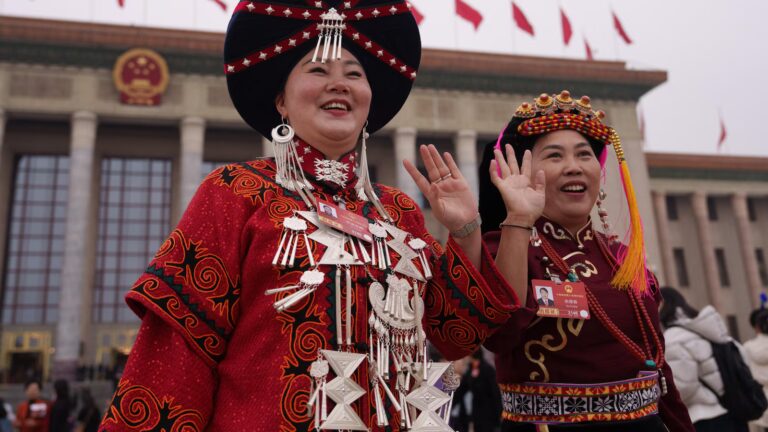
BEIJING — BEIJING (AP) — China adopted a sweeping law Thursday to promote what it calls “ethnic unity,” a measure that critics say would further erode the rights of some minority groups as authorities cement a push toward assimilation.
The law, approved by the country’s ceremonial legislature, is designed to foster “a stronger sense of community among all ethnic groups in the Chinese nation,” said Lou Qinjian, a delegate to the National People’s Congress who introduced the proposal to the whole body.
The proposed law lays out the need to promote ethnic unity by all government bodies and private enterprises, including local governments and state-affiliated groups like the All-China Women’s Federation.
“The people of each ethnic group, all organizations and groups of the country, armed forces, every Party and social organization, every company, must forge a common consciousness of the Chinese nation according to law and the constitution, and take the responsibility of building this consciousness,” it reads.
Academics and observers say the new provision represents a setback for the identity of ethnic minorities because it mandates the use of Mandarin Chinese in compulsory education, among other things.
The majority of China’s population is Han Chinese and the official language is Mandarin. The country has 55 ethnic groups, making up 8.9% of the 1.4 billion population.
The constitution states that “each ethnicity has the right to use and develop their own language” and “have the right to self-rule,” while the Law on Regional Ethnic Autonomy promises limited autonomy to those groups, including allowing them to create flexible measures to develop their economy.
Experts say the new law is likely to take priority in practice.
“It puts a death nail in the party’s original promise of meaningful autonomy,” said James Leibold, a professor at Australia’s LaTrobe University who has studied China’s changing policies toward its ethnic minorities. Leibold called the measure a capstone of Chinese President Xi Jinping’s “major rethink” of ethnic policies.
According to Article 15 in the new law, Mandarin Chinese is mandated to be taught to all children before kindergarten and throughout the rest of compulsory education up to the end of high school.
Mandarin is already the primary language of instruction in Inner Mongolia, Tibet and Xinjiang — Chinese regions with large ethnic minority populations — but the new law essentially states that minority languages cannot be the primary language of instruction nationwide.
Until recent years, ethnic minorities had some autonomy in what language could be used for teaching in schools.
In the past, students in Inner Mongolia, a Chinese autonomous region bordering Mongolia, could study large parts of the entire curriculum in Mongolian.
That changed in 2020, when new students found out their Mongolian language textbooks could no longer be used and they could only use Chinese textbooks. The policy change led to massive protests and an immediate crackdown, as well as later re-education campaigns, according to an essay co-written by Leibold and a former Mongolian journalist.
Students in the region can currently only study Mongolian as a foreign language class inside schools, one hour a day.
Scholars also note the mention of pushing for “mutually embedded community environments” in the law, which they say may result in the breakup of minority-heavy neighborhoods.
“The intention is to encourage Han and other minorities to migrate into each other’s communities,” said Minglang Zhou, a professor at the University of Maryland who studied China’s bilingual policies.
Many countries, including the U.S., pursue similar assimilation policies. China has said its approach is to bring development to ethnic minorities areas.
“Xinjiang is a place where many ethnic minorities live,” said Hanengbi Ayisa, deputy of the National People’s Congress from Xinjiang, ahead of the vote. “We attach great importance to the sense of community and national unity of the Chinese nation, and the unity of all ethnic groups is very well maintained.”
But Maya Wang, deputy Asia director at Human Rights Watch, said the law is not about ensuring equality.
“The question was never so much about ensuring their participation in the economy in an equitable manner, more inclusive manner,” because the policies are being forced on Tibetans, Wang said. “And a truly inclusive model does not preclude the ability of children to speak two languages.”
The law also creates a legal base for the Chinese government to prosecute people or organizations outside China if their actions harm the progress of “ethnic unity.”
The legal penalties for people abroad echo the clause in the National Security Law which China imposed on Hong Kong in 2020, which states that authorities can prosecute people based outside China over actions that Beijing perceives as secession or subversion. Hong Kong’s government has issued bounties for 34 overseas activists on suspicion of violating the security law.
Rayhan Asat, a legal scholar at Harvard University, said “the law serves as a strategic tool and gives the pretext to government to commit all sorts of human rights violations.”
Asat said her younger brother, Ekpar Asat, is serving a 15-year prison sentence in Xinjiang on charges of inciting ethnic discrimination and ethnic hatred. Asat said her family never got any formal notice from the government about his arrest or a trial.
Asat’s brother was an entrepreneur who built a social media platform for Uyghurs. She said he was taken shortly after he visited the U.S. as part of the State Department’s International Visitor Leadership Program in 2016.
Ethnic Uyghurs, a Muslim minority group, have been the target of a long-term campaign of detention, and later incarceration by China. While the short-term interment camps were said to be closed in 2019, thousands ended up in prison, where experts have said they were targeted for their identity and not for actual crimes.
Asat said she hopes that U.S. President Donald Trump will raise his case in his upcoming summit with Xi.
She said she worries about how the new generation will define being Uyghur.
“I think preserving any sort of Uyghur identity would be impossible,” she said.
The Albuquerque Museum has asked for the public’s help in locating a sculpture that was stolen from the public artwork installation La Jornada. The bronze statue was located near 19th Street and Mountain Road, and the museum is currently coordinating an investigation with the Albuquerque Police Department to locate the missing sculpture.The museum asked anyone who has information about the piece or has witnessed any suspicious activity to contact 311 or reach out to APD directly.They said that community awareness and support are essential in helping protect and preserve Albuquerque’s public art.
ALBUQUERQUE, N.M. —
The Albuquerque Museum has asked for the public’s help in locating a sculpture that was stolen from the public artwork installation La Jornada.
The bronze statue was located near 19th Street and Mountain Road, and the museum is currently coordinating an investigation with the Albuquerque Police Department to locate the missing sculpture.
The museum asked anyone who has information about the piece or has witnessed any suspicious activity to contact 311 or reach out to APD directly.
They said that community awareness and support are essential in helping protect and preserve Albuquerque’s public art.
While Kiss bassist/vocalist Gene Simmons has been known to have an opinion on just about everything from questioning rap’s place in the Rock & Roll Hall Of Fame, to proclaiming proclaiming rock & roll is dead, the 76-year-old would prefer politics stay out of art – at least when it comes to celebrities.
Speaking to TMZ (as captured by The PRP), the 76-year-old Kiss icon expressed frustration with performers publicly voicing their opinions: “Everybody in the world should listen to what actors and comedians say, because they’re so qualified.
“Basically shut the fuck up. Do your art and shut up. Nobody’s interested in your opinions, that includes me. Who I vote for, who I like. Who the fuck do you think you are?”
Which also goes the other way – who the hell is Gene Simmons to tell other artists to keep their politics to themselves? Not to mention art is an inherently political platform, but anyway. Simmons added a critique of celebrity activism: “People in America work hard for their living and they don’t wanna be lectured to by people who live in mansions and drive Rolls-Royces.”
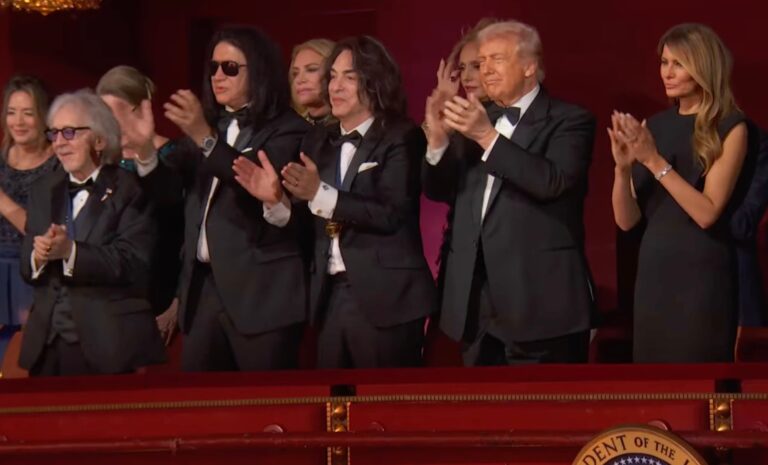
Sorry, me again. Apparently people do want to be “lectured to by people who live in mansions and drive Rolls-Royces” because they voted for Donald Trump. Doubly so for Gene Simmons, who was presented with the Kennedy Center Honors – not really staying outta politics, eh Gene? Anyway.
“It’s time for everybody in the entertainment industry to shut their piehole and just do you art. Nobody cares what you think. I don’t. What will Mark Ruffalo – however the fuck he pronounces his name, Ruffalo, buffalo – what does Mark think about politics? I don’t care.”
None of this is surprising. Gene Simmons is a business guy, and clearly he’d rather not rock any boats with any opinions. Just cash the checks and trot out the “rock is dead” shit every now and again.
Want More Metal? Subscribe To Our Daily Newsletter
Enter your information below to get a daily update with all of our headlines and receive The Orchard Metal newsletter.
• Recruiting coordinator for ESPN RecruitingNation. • Director, Under Armour All-America Game. • Has been evaluating prospects at ESPN since 2006.
Multiple Authors
Every season, a wave of new faces reshapes the ACC. Just ask Miami. The addition of Malachi Toney via the high school ranks and timely portal additions such as Carson Beck helped springboard the Hurricanes to the College Football Playoff title game in 2025.
Whether it’s impact freshmen who arrive with lofty recruiting pedigrees, or experienced transfers who come with immediate expectations, the balance of power in modern college football can shift quickly.
It is a perfect time to project newcomers who could have the biggest impact.
To get a clearer picture of who might make the biggest impact in 2026, ESPN selected newcomers who could contribute right away, then surveyed coaches, general managers and personnel staffers across the conference on what stands out the most about their new addition.
Why: Bill O’Brien wants to reset Boston College’s identity after a 2-10 season in 2025, and that starts with reestablishing a physical, reliable run game after the Eagles had one of the worst overall rushing attacks of any Power 4 program. They lost premier runner Turbo Richard to Indiana in the portal, along with his nine touchdowns and 749 rushing yards, and the returning backfield production is minimal. Reserve transfer Nolan Ray never cracked more than 75 carries in a season at Maryland, while Bo MacCormack III hardly saw the field last year. It’s a thin, unproven room, which opens the door for Dickens to stabilize the position and take pressure off a rebuilding passing game.
What to expect: Dickens rushed for 1,339 yards and 16 touchdowns in 2025 at Liberty and logged over 530 snaps last fall, so he has already handled feature-back volume. He’ll see a significant jump in competition from Conference USA to the ACC, but his profile as a strong, durable runner with power, speed and endurance is exactly what Boston College needs. Dickens still has work to do in pass protection and as a receiver, yet his ability to carry the load gives O’Brien a legitimate RB1 and allows the Eagles to lean on a more ball-control approach while the rest of the roster catches up.
What they’re saying: “Evan has been extremely productive throughout his career, but what really separates him is how smart he is. He’s a true three-down back, strong between the tackles, reliable as a pass catcher, and someone you trust in protection.” — Kenyatta Watson, GM
Top newcomer: RB Adam Mohammed (Washington transfer)
Why: Between quarterback Jaron-Keawe Sagapolutele, tight end Mason Mini and an experienced receivers group, the core of Cal’s passing game is in place. But the Golden Bears need to rebuild their backfield after posting the second-worst ACC rushing offense in yards (1,062) and yards per carry (2.8) ahead of only rival Stanford. Kendrick Raphael is off to SMU after tallying 943 yards and 13 touchdowns on 232 carries in 2025, and LJ Johnson Jr. graduated. Behind Raphael, the rest of the backs combined for limited touches and never emerged as reliable options across a full season. The Bears needed a proven, north-south runner who could step right into that feature role and keep the offense balanced, and it doesn’t hurt that Mohammed graded quite well in the pass game.
What to expect: Mohammed should be the feature back in 2026. Washington’s run game produced nearly 1,900 rushing yards from three backs last season, with Mohammed chipping in 523 yards, five touchdowns and no fumbles. He’s ready for a bigger workload. Mohammed is a slippery, explosive power back who runs with great leg drive and finish, and he fits the profile of a 20-carry player Cal can rely on in ACC play. His presence gives Cal the chance to maintain a physical run element and avoid becoming one-dimensional around Sagapolutele.
What they’re saying: “It starts with Adam’s mindset. He’s invested in his body and mental approach and understands the process it takes to succeed at this level. He’s a very well‑rounded back who can do it all — the tape speaks for itself. A powerful runner with a great feel for space who can rip off chunks, and he makes everyone around him better by the example he sets every day.” — Marshall Cherrington, director of player personnel
Why: Clemson has searched for a consistent ground game for two seasons. Converted wideout Adam Randall is off to the NFL, and while promising sophomore Gideon Davidson flashed in a limited role in 2025, Clemson lacks a proven lead back or big-play threat. The Tigers haven’t had a true game-breaking all-purpose back since Travis Etienne Jr. The quarterback run game hasn’t bailed them out either. Cade Klubnik averaged just 1.1 yards per carry (including sacks) last fall, and likely 2026 starter Christopher Vizzina has minimal experience. New coordinator Chad Morris needs someone who can turn ordinary runs and short passes into explosives. That’s Johnson.
What to expect: Morris is going to feed Johnson in every way he can. He’s one of the fastest, most dynamic backs in college football — an all-purpose weapon in the mold of C.J. Spiller. Johnson averaged 7.1 yards per carry and 10.6 yards per reception last fall at SMU, and his ability to create chunk plays both on the ground and through the air fills a glaring need in Clemson’s offense. Expect him to line up all over the formation, get featured on screens, swings and perimeter touches, and quickly become a security blanket for a young quarterback. This was a significant portal loss for SMU and a potential two-year feature back for Clemson.
What they’re saying: “He’s as advertised. He’s what we thought he would be. He’s a kid that holistically, if he really buys in, it’s just going to accentuate all the gifts that he’s got. I’ve been very encouraged with him. He’s explosive. He’s fast. He has great ball skills. He’s a guy that we can use in a lot of ways. But he’s really bought in.” — Dabo Swinney, head coach
Top newcomer: QB Walker Eget (San Jose State transfer)
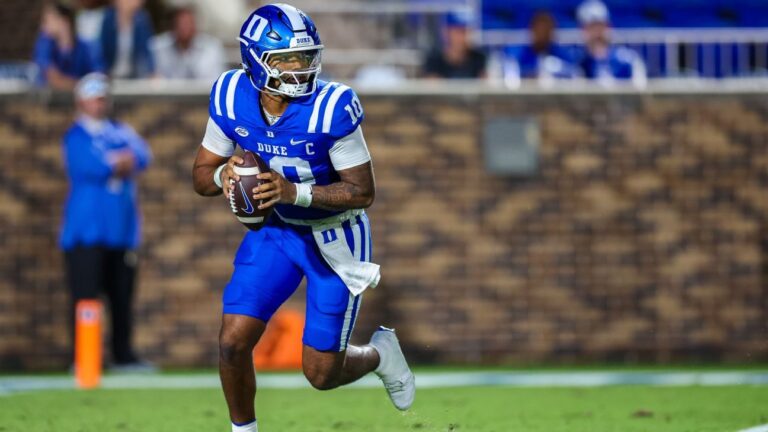
Why: This is about survival at the most important position on the field. The Blue Devils led all ACC offenses in average yards per game (285.4) and touchdowns (34). But with ACC championship-winning quarterback Darian Mensah entering the transfer portal on the final day, Duke suddenly had a massive void under center. The Blue Devils still return a productive backfield and enough experience at receiver and tight end to support another run, but their quarterback room was left with only two true freshmen, Dan Mahan and Lawrence Gardner, and no proven college snaps. Manny Diaz has elevated the program too far to roll the dice on a completely green group. Eget brings live FBS reps and a veteran presence that Duke absolutely needed.
What to expect: Eget threw for 3,051 yards, 17 touchdowns and nine interceptions in 2025, and he has over 5,000 career passing yards and 30 touchdowns. Most importantly, he has seen real game speed. He’s not the same-caliber athlete or designed runner that Riley Leonard or Mensah were, but he won’t be a wide-eyed rookie either. Eget gives Duke stability and a competent distributor to pair with returning running back Nate Sheppard while young receivers grow up. For a defending ACC champ staring at a post-Mensah transition, that steady hand could be the difference between staying in the title picture and slipping back to the pack.
What they’re saying: “Walker has great leadership qualities and is of the highest character. We are excited for what he brings to the program and to our quarterback room. On the field, his deep-ball accuracy is a weapon as he has great arm strength. He has the ability to process quickly, get the ball out efficiently and excels at sack avoidance.” — Binuk Kodituwakku, GM
Why: Few defensive lines in the country were hit harder than Florida State’s. The Seminoles lost nine defensive linemen to graduation, the portal or the NFL. Mandrell Desir, Daniel Lyons and Deante McCray return up front with above-average production and experience, so there’s a lot to replace within a unit that graded among the upper third of FBS defenses against the run in 2025. FSU does bring back some rotational interior players who have played snaps but offers almost no proven edge rush production. Kennedy arrives as a ready-made pass rusher from a loaded Texas A&M front.
What to expect: Kennedy played mostly as a designated pass rusher in 2025, tallying 11 quarterback hurries, three sacks and seven defensive stops on a deep Aggies line. A former four-star in the 2023 class, he brings explosiveness and an elite first step off the edge. He still needs to add bulk and strength against the run, but in Tony White’s 3-3-5 scheme, Kennedy can attack from multiple alignments — standing up, wide-9, over tight ends — and focus on what he does best: getting after quarterbacks. His ability to force negative plays off the edge is essential to returning FSU’s defense to a conference-title level.
What they’re saying: “When Rylan went in the portal, we watched his tape and we admired his ability and how he played. He’s a good athlete, had some production disrupting the quarterback and in our research and vetting process, we determined that he was the right kind of guy.” — John Garrett, GM of player personnel
Why: Georgia Tech is turning the page from the Haynes King era and one of the most prolific stretches in school history. King was a rugged dual threat who led all ACC rushers in touchdowns (15) and was fifth in rushing yards (953). Now, the Yellows Jackets’ quarterback room has virtually no experience and a new offensive coordinator, George Godsey, coming from the NFL. The Yellow Jackets return a strong backfield headlined by running back Jamal Haynes and some explosive receivers, but Graham Knowles, Grady Adamson and Ben Guthrie have almost no live reps, and Cole Bergeron just signed in the 2026 class. Without a functional quarterback, the impact of Georgia Tech’s promising supporting cast will be capped. Mendoza gives Tech at least one option who has taken snaps in the fire.
What to expect: Expect some early growing pains, but also real upside. Mendoza flashed in relief of his brother, Fernando, at Indiana in 2025, completing 18 of 24 passes for 286 yards and five touchdowns while adding 180 rushing yards and a score in six games. He’ll be the best runner in Tech’s quarterbacks room, and it’s reasonable to think the Yellow Jackets still want the quarterback to be a serious threat on the ground even in a new system. If Mendoza wins the job, Tech needs him to mirror what Julian Sayin did at Ohio State last fall: Limit mistakes, use his legs as a weapon and steadily grow into the role with reps. In a wide-open competition, his combination of experience and mobility makes him critical to keeping the offense on schedule.
What they’re saying: “‘Berto is the ultimate football junkie. … He’s been a part of a championship program, he’s seen what it takes. He’s taken a lot from his older brother, but I think he’s just wired that way, too.
“On the field, we saw his play last year and what he was able to do when he was called upon. The way he throws, what he’s good at throwing. His ability to evade a rush and make plays with his feet. It all really fits where I want to take our offense and the team.” — Brent Key, head coach
Why: This is one of the most fascinating portal swings in the country. Jeff Brohm has hit three straight times on experienced transfer quarterbacks — Jack Plummer, Tyler Shough and Miller Moss — and that veteran presence has stabilized Louisville’s rise. The Cardinals still return plenty of talent from a solid backfield that ranked third in the ACC in yards per carry (5.1) and several proven pass catchers, but their passing game was middle-of-the-road in 2025, and there’s no clear experienced successor for Moss. Kienholz is the opposite profile. He’s a high-upside, athletic player with virtually no college sample size. The Cardinals are trying to remain in the ACC and playoff conversation, so getting the quarterback decision right is everything. Kienholz could determine whether this is a reload or a reset year.
What to expect: A shrug emoji might be the best answer right now. When Ohio State took Kienholz out of South Dakota, the Buckeyes saw a terrific all-around athlete who could help at multiple spots. He got buried in a deep quarterbacks room with Kyle McCord, Will Howard, Devin Brown and then Julian Sayin, and he has just 36 career pass attempts. The physical tools are there, but it’s not an immediate fit with Brohm’s detailed, timing-based system, and there’s real work to do. Keep an eye on West Georgia transfer Davin Wydner as a dark horse contender after playing well for the Bulldogs. Louisville has taken calculated quarterback bets before, but this one carries more variance than the last three hits.
What they’re saying: “When I say he’s a good athlete and can run, it shows up. When we’re doing conditioning drills, he’s in the front. That’s with everybody.
“He wants to run the ball as well. You got to make sure you get your quarterback through the season healthy, and then he can play the entire season. But that is going to be a strength of his: his ability to run escape, maybe a few more design runs as well, where we’re making sure we’re utilizing his legs. I think his ability to extend the play is going to be there. I think he has a good arm.” — Jeff Brohm, head coach
Top newcomer: QB Darian Mensah (Duke transfer)
Why: Miami is trying to go three-for-three on portal quarterbacks after hitting on Cam Ward (2024) and Carson Beck (2025). Mensah is the perfect balance of both. He’s physically and mentally ready.The Hurricanes return real firepower at receiver and running back, plus a more seasoned offensive line. The depth chart at quarterback was extremely thin once Beck moved on, with only inexperienced options and no proven starter. When Mensah, fresh off leading Duke to an ACC title, entered the portal at the buzzer to go to Miami, the Canes’ ceiling changed overnight. Without him, the Canes would be in a similar position to Georgia Tech with a talented roster yet no trustworthy trigger man.
What to expect: Big things. Mensah is a gamer, an athlete and a proven winner. In 2025, he threw for 3,973 yards, 34 touchdowns and just six interceptions. With Miami’s personnel around him and the staff’s recent track record developing talent, Mensah should flourish. The fact that his favorite target at Duke, Cooper Barkate, also transferred to Miami only boosts the comfort level. If the offensive line holds up, Mensah has all the tools and supporting cast to keep the Hurricanes squarely in the national title conversation.
What they’re saying: “The window is now. Mensah has the right demeanor for Miami. He’s a winner and he’s been there before. He makes everyone around him better. He’s done it with all different talent levels, and this will be the most talent to date.” — Dennis Smith, Executive director of football
Top newcomer: OLB/Edge Harvey Dyson (Tulane transfer)
Why: NC State is quietly replacing a lot of front-seven production from a defense that already needed to improve after allowing the second-most yards (5,355) in the ACC last year. Between Sabastian Harsh, Brandon Cleveland and Travali Price, the Wolfpack lose eight combined sacks off their front, as well as productive linebacker Caden Fordham and the versatile Cian Slone. A few rotational defensive linemen and linebackers return, but none have put together a season anywhere close to Dyson’s 2025 output. NC State needed a defender who could fill multiple roles: Pressure off the edge, hold up in space and plug some of the run fits vacated at linebacker. Dyson checks all those boxes and arrives with ready-made disruption stats after his pass-rushing markers all took a massive step forward in his one season at Tulane.
What to expect: Dyson should be one of the more productive defensive newcomers in the ACC. At Tulane last season he posted eight sacks, 14 hurries, 11.5 tackles for loss and 36 tackles. He’s a high-motor, scheme-versatile player who can rush as a true edge or stand up and play off the ball. Dyson consistently takes good angles, hits his run fits and lives on the opponent’s side of the line of scrimmage. Given NC State’s losses both on the edge and at linebacker, Dyson effectively fills two roles in one player. The next step is raising his overall tackle numbers to match his disruptive impact.
What they’re saying: “The development of Cian Slone and Sabastian Harsh last season was proof of concept that our defensive staff could take portal players with specific traits and put them in a position to maximize their potential. … Harvey fits into that same mold. When you turn on the film, his twitchiness and ability to disrupt jump off the tape, last year’s results prove he can be a difference-maker. … He has a strong desire to compete and continue proving himself at a higher level.” — Andy Vaughn, GM
Why: The Tar Heels’ 13 passing touchdowns in 2025 were the fewest among all ACC offenses, and only Virginia Tech finished with fewer passing yards. UNC returns some experience and speed at receiver on the outside with Jordan Shipp (60 receptions, 671 yards and six touchdowns) but lacks depth and playmakers out of the slot. Sadler is a small but deceptively strong quick-twitch athlete, which allows him to not only avoid tackles but break them. He’s dangerous and dynamic with the ball in hands and will find the end zone. Michigan’s Mr. Football accounted for 32 total touchdowns while catching 65 passes for 1,583 yards as a senior. He sees the field extremely well and has the suddenness to create explosive plays Year 1 in the ACC. He’s also smart and coachable and will acclimate quickly to the college game.
What to expect: Sadler should begin his career as a return weapon and work his way into packages as a screen and reverse threat. He’ll become an asset for whoever wins the Tar Heels’ quarterback job because of his great yards-after-catch potential as an underneath target. If Western Carolina transfer Taron Dickens wins the job, Sadler will complement him well under new offensive coordinator Bobby Petrino, who has a history of maximizing athletic quarterbacks who can spread the field and stress defenses. The jump from the FCS to the ACC is steep, but if UNC leans into his strengths, Dickens could be a smaller version of Arkansas quarterback Taylen Green, whom Petrino coached last season, and Sadler could be that guy who exploits space in the prolific offensive scheme.
Why: Sophomore quarterback Mason Heintschel is talented enough to lead the Panthers back to championship levels and adding the right pieces around him is paramount. Their tight end room is quite bare after losing Justin Holmes and Jake Overman to graduation and Malachi Thomas to LSU. Those three combined for 51 catches in 2025. Max Hunt provides some depth, but Kent has the most game experience and is a quality option for Pitt’s 11-personnel package. He checks all the physical boxes required by the Panthers’ offense. Kent is a strong in-line blocker in run-heavy sets and a reliable, big checkdown option in the passing game. After Heintschel’s encouraging play as a freshman, finding the right fit at tight end is integral to expanding the offense.
What to expect: Kent to emerge as Heintschel’s dependable safety valve and high efficiency option on play-action. This connection should cut down on the QB’s turnovers in Year 2 as well. He is a physical blocker as well, and the run game will benefit from that strength. Originally a Kennesaw State signing back in 2022, he transferred to Oklahoma and appeared in all 13 games in 2025. Kent played in 20 games (15 starts) over the previous two seasons at Kennesaw State and caught 32 passes while showing reliable hands, earning second team All-Conference USA honors in 2024. With 34 games of experience and a lack of depth otherwise at tight end, Kent is primed for his best season statistically and should have more room to flourish as a pass-catching option in 2026 with Pitt.
What they’re saying: “Carson’s a Pitt tight end. He’s big, he’s tough, and he’s physical at the point of attack. He’s the type of guy who enjoys blocking as much as catching the football, and that’s exactly what you want. But he’s also got really good athleticism for a guy his size. He can stretch the seam, make plays in the passing game and give us a real weapon offensively. What I love most is his mindset and who he is. He shows up every day ready to work, and he plays the game the way it’s supposed to be played.” — Pat Narduzzi, Head coach
Top newcomer: DE Ira Singleton (South Florida transfer)
Why: SMU has quietly built one of the game’s more disruptive defensive fronts over the past two seasons. The Mustangs finished third in the ACC in sacks and led the conference in interceptions (18), a byproduct of their front seven ratcheting up the pressure. Now, however, that group is getting gutted. The Mustangs lose five of their top six defensive linemen, including their top two pressure players, Cameron Robertson and Isaiah Smith. A handful of depth pieces return, but there’s no obvious heir as a double-digit-TFL, front-line edge presence. Singleton, a long, athletic pass rusher who flew under the radar at USF, is a classic SMU “developmental hit” candidate.
What to expect: SMU has consistently exceeded defensive expectations by developing undervalued linemen, and Singleton fits that mold. At 6-foot-5 and 240 pounds with length and agility, he already looks the part. Last season, he posted 17 tackles and 2.5 sacks in a rotational role for the Bulls. The next step is translating traits into consistent production with starter-level snaps. If the Mustangs’ track record holds, Singleton could grow into their next primary edge disruptor and help keep this defense from regressing despite heavy turnover.
What they’re saying: “Ira Singleton is one of the more intriguing defensive prospects we evaluated. What stands out immediately is his length and explosive first step off the edge. He has natural bend and doesn’t strain turning the corner, which allows him to consistently pressure tackles. At South Florida last season, he showed many intriguing traits, the ability to extend, control and fight through perimeter blocks while remaining disruptive. Against the run, he uses leverage and flexibility to shoot gaps and get underneath blockers. He’s athletic, plays with active hands and can create disruption with an explosive bull rush and twist ability.” — J.R. Sandlin, GM
Why: Stanford needs upgrades across the board. The Cardinal’s passing offense graded among the worst across FBS in 2025, so new head coach and former quarterback Tavita Pritchard has plenty of retooling to do, and the program will always face limitations in the transfer portal because of its academic profile. That makes high school hits even more important, and Robinson is one of the most talented prospects to pick Stanford in recent years. The Cardinal bring back some possession receivers and tight ends, and added Yale transfer Nico Brown in the slot, but they’ve lacked a true outside alpha since the days of J.J. Arcega-Whiteside and Simi Fehoko. They still needed a big, vertical outside target for whomever wins the quarterback job. Robinson is that player. He can fit nicely on the outside and contribute in all three phases of the passing game.
What to expect: Robinson is a big, fast, physical talent in the mold of former Virginia/Notre Dame standout Malachi Fields. He gives Stanford a legitimate deep threat on the outside and is also dangerous with the ball in his hands for his size. He showed maturity and playmaking at the Under Armour All-America Game and shouldn’t face a steep learning curve in a pro-style system that leans on contested catches and precise routes. The key will be getting him the ball. One of Charlie Mirer, Dylan Rizk, Davis Warren or freshman Michael Mitchell Jr. must emerge to provide stability under center. If one does, Robinson has the tools to be the focal point of Stanford’s passing game from Day 1.
What they’re saying: “Zion is a dynamic player and a dynamic young man. He possesses some really unique physical traits, including toughness. We’re really excited to watch him compete.” — Andrew Luck, GM
Why: Syracuse’s back end is in good shape, returning multiple starters and depth in the secondary, but the front seven took a big hit. The Orange lost five of their top six performers along the defensive front, including David Reese and Kevin Jobity Jr., who combined for eight sacks. A few rotational linemen and linebackers return but have yet to show they can consistently win one-on-one as pass rushers. Syracuse finished third-to-last in the ACC in sacks and tied Boston College for the highest average yards allowed per play (6.5) within the conference. The Orange needed a true one-on-one pass-rush winner to spark the front and turn pressures into actual negative plays. Johnson brings that résumé from the FCS level.
What to expect: He might not be the tallest, but he’s built like a truck and super flexible and twitchy. Expect a noticeable uptick in negative plays. It’s unfair to mention Dwight Freeney in the same breath, but there will be a resemblance for Cuse fans. Johnson was dominant off the edge for UT Martin the past two seasons, earning OVC Defensive Player of the Year honors in 2025 with a school-record 13.5 sacks and 20 tackles for loss. Over two years, he totaled 77 tackles, 24 TFLs and 17 sacks. His ability to win quickly and consistently as a pass rusher should immediately stress ACC tackles, though he will see a major jump in competition. If he adjusts to the speed and strength of Power 4 offensive lines, Johnson can be the missing piece that allows Syracuse’s strong secondary to play more aggressively behind a reinvigorated pass rush.
Why: Virginia had the third-most rushing yards and touchdowns in the ACC last season, but it loses a major chunk of its production with J’Mari Taylor‘s departure (1,064 rushing yards, 14 touchdowns) and returns limited proven performers behind running back Xavier Brown. Brown has flashed but hasn’t yet handled a full season as a true workhorse, and the rest of the backfield is young and untested. The Cavaliers needed more than just a traditional back. They needed a true all-purpose threat who could replace touches in both the run and pass game. Middlebrook, who will have two years of eligibility alongside Tennessee transfer Peyton Lewis, is exactly that type of Swiss Army knife.
What to expect: Offensive coordinator Des Kitchings now has a movable matchup problem in the backfield. Middlebrook rushed for 752 yards in 2025 and also caught 40 passes, scoring seven combined touchdowns. He’s at his best in space and should see snaps as a running back, slot back and utility weapon on jet sweeps and bubble screens. Expect Virginia to hunt mismatches on linebackers and some safeties in the open field. In an offense trying to replace Taylor’s versatility, Middlebrook can keep the playbook open and give the Cavs a modern space player to build around.
What they’re saying: “We’ve already seen flashes of Jekail’s versatility and high football IQ. … He’s a quick learner that can contribute on all three downs while also providing value on special teams. His ability to catch the ball out of the backfield was very attractive to us in the evaluation process, and we believe he can make a difference in that phase. He has also showed an ability to create explosive plays.” — Justin Speros, Assistant GM
play
0:35
Grunkemeyer finds Rappleyea to extend Penn State’s lead
Ethan Grunkemeyer finds a wide-open Andrew Rappleyea, who brings in a touchdown for Penn State.
Why: Every rebuild starts with stabilizing the quarterback position. James Franklin knows precisely what Virginia Tech is getting because he recruited and coached Grunkemeyer at Penn State. The former Under Armour All-American was thrown into the fire when Drew Allar was injured in 2025 and essentially got a 10-game audition for this portal cycle. The Hokies have upgraded their receiver and tight end rooms via the portal but have cycled through uneven quarterback play for three straight seasons. They also added quality depth with UNC transfer Bryce Baker and SC Next 300 prospect Troy Huhn, but Grunkemeyer is the one with Big Ten reps and tape against top competition. He ended the year on a high note (and limited turnovers) with his two highest-graded passing performances against Nebraska and Rutgers in the final two weeks of the season.
What to expect: Stability. Grunkemeyer completed 69% of his passes last season and threw eight touchdowns, an impressive showing for a player who had barely seen the field before. Virginia Tech hit the portal hard and added multiple offensive pieces, including former Nittany Lion tight end Luke Reynolds, so the talent around him will be better than what recent Hokies quarterbacks have had. After three years of woefully inconsistent quarterback play in Blacksburg, Grunkemeyer projects as a clear upgrade. He’s efficient, accurate and familiar with the demands of Power 4 football. He might not be a superstar, but he gives this rebuild a real foundation.
Top newcomer: RB Sawyer Seidl (North Dakota Transfer)
Why: Replacing Demond Claiborne‘s production is a massive task. Claiborne totaled 558 carries for 2,599 rushing yards and 26 rushing touchdowns, plus 55 receptions for 424 yards and two scores. Wake returns some snaps and yards from complementary backs, but no one on the roster has come close to matching Claiborne’s volume or versatility as a runner and receiver. Seidl’s skill set gives the Demon Deacons a chance to replace a lot of that two-way impact. He’s built more like a slot receiver than a traditional power back, so usage will matter, but his versatility is exactly what Wake’s multiple offense demands.
What to expect: Seidl has size limitations at 5-foot-10, 175 pounds, but he’s at his best on inside and outside zone runs where he can press, cut back and exploit creases. He rushed for 897 yards and 13 touchdowns last season and added 19 catches and four more scores as a receiver. Wake Forest will move him around in the backfield, in the slot and on motion to stress matchups and manufacture space touches. He might not replicate Claiborne’s raw volume, but as a utility weapon in a creative scheme, Seidl can keep Wake’s offense dangerous, diverse and multiple without becoming one dimensional.
IE 11 is not supported. For an optimal experience visit our site on another browser.
Now Playing
Trump to tap strategic oil reserve to bring down gas prices
04:20
UP NEXT
Two killed in tornado outbreak
01:58
TSA officers quit amid partial government shutdown
01:29
The Cost of Denial: Oklahoma homeowners sue State Farm over storm claims
03:37
U.S. likely responsible for strike on Iranian school
00:56
When will gas prices come down?
00:52
High school basketball team supports teammate’s mom battling cancer
01:26
Former NFL player accused of consulting ChatGPT after murder
01:27
Six killed in Switzerland bus fire
00:48
New video of ‘ISIS-inspired’ suspect buying material to make homemade bomb
01:29
U.S. launches ‘most intense’ day of airstrikes yet against Iran
03:06
Drivers hit hard by surging gas prices
01:41
NBC News investigates patient deaths following cosmetic surgery
03:52
American Nathan Martin wins Los Angeles Marathon by fraction of a second
01:25
New video appears to show U.S. tomahawk missile hitting near school in Iran
01:40
Trump says war with Iran is ‘very complete’ and could end soon
02:50
‘ISIS-inspired’ teens throw explosives at NYC crowd
01:51
Gas prices skyrocket and oil prices volatile as war with Iran continues
02:04
Teacher killed in prank gone wrong
01:19
Major delays at airports nationwide
01:25
Nightly News
With Iran attacking tankers in the Strait of Hormuz, President Trump and several other countries are tapping emergency reserves to bring down oil prices. NBC News’ Garrett Haake reports.March 11, 2026
Now Playing
Trump to tap strategic oil reserve to bring down gas prices
04:20
UP NEXT
Two killed in tornado outbreak
01:58
TSA officers quit amid partial government shutdown
01:29
The Cost of Denial: Oklahoma homeowners sue State Farm over storm claims
03:37
U.S. likely responsible for strike on Iranian school
ALBUQUERQUE, N.M. (KRQE) – Police are investigating a shooting near an Albuquerque park. Police said the man was shot in the shoulder near Rio Grande Park downtown. He was hospitalized with non-life-threatening injuries. KRQE News 13 spoke with a witness who was out walking his dog. He said someone on a moped passed him when a […]