Two gay Iranian men seeking asylum in the United States over fear they could be executed in Iran are facing an uncertain future, with U.S. officials offering no clarity about whether they could be deported amid the ongoing U.S.-Israeli war with Iran if their asylum cases are unsuccessful.
Ali and Adel, who are using assumed names to protect their identities, entered the U.S. from Mexico in 2025, just before President Trump took office for his second term. They were facing charges at home over their sexuality, Rebekah Wolf, director of the Immigration Justice campaign at the American Immigration Council, told CBS News.
In Iran, “they were charged with a crime that is punishable by execution, by hanging, in fact,” Wolf said. “In many cases, it is not so stark or obvious what an asylum seeker is facing. I think this is by far the clearest case of why our asylum system exists. They are facing execution by a regime that we believe should not be in power. That, we’ve demonstrated through our own actions … in United States foreign policy.”
Armed police men from a special unit with their faces covered with a black hood stand on the corner of Revolution Square as daily life continues on March 28, 2026, in Tehran, Iran.
Kaveh Kazemi/Getty
The couple initially fled from Iran to Turkey and “stayed there for a number of years” before traveling through South and then Central America to reach the U.S., Wolf told CBS News.
“Turkey is not particularly friendly to the LGBT community either, but also … they don’t have laws that allow you to seek permanent asylum there,” Wolf said. “The question of whether or not there were other places that they could have stayed, there’s sort of two answers to that. One is that many of those countries themselves are not friendly to LGBTQ communities.”
The other reason, she said, was that at least some of the countries they traversed “have policies about certain nationalities and they, you know, saw significantly higher barriers to being able to resettle in one of those countries” as Iranian nationals, she said.
Since arriving in the U.S. and being detained on the southern border in January 2025, Wolf said Ali and Adel have been held in poor detention conditions and faced mistreatment by guards.
“They are experiencing a sense of impunity by guards and ICE officials who don’t have any kind of repercussions for small things like calling them names, outing them to other individuals in detention, things of that nature that we did not see in previous administrations,” Wolf said.
Adel said he was hurt in an attack in Mexico before he and Ali crossed the border into the U.S., and Wolf said his injuries, which haven’t been properly treated, left him wheelchair-bound.
The two men were unable to retain lawyers for their initial immigration hearings, because counsel in such cases is not assigned for free, Wolf said. Both had asylum applications rejected for reasons Wolf and the American Immigration Council said could have been prevented if they’d had legal representation. They are both appealing the earlier decisions in their cases.
“They can’t be removed while a case is ongoing, but we have not received any assurances that, if those stays are lifted for whatever reason, that they would not be removed,” Wolf told CBS News.
Deportations to an Iranian warzone?
Ali and Adel have almost been deported to Iran three times already, Wolf told CBS News, all before the U.S. and Israel launched the war on Iran.
“They have been moved to a detention facility in what’s called a staging — so being prepared, being told they’re going to be sent back to Iran — and then getting all the way up to the date of a deportation,” Wolf said. “The mental stress of constantly being in fear of being removed to a place that wants to execute them, combined with the conditions of detention, are really, really difficult for them.”
She said she believes there has been a pause in deportations from the U.S. to Iran since the war began, though she said the American Immigration Council had not been told anything officially.
“In order to deport people to any country, including Iran, you have to have agreement from the receiving country. You have to have a negotiation with that country,” she said.
CBS News asked the White House several times whether there has been a pause in deportations to Iran amid the war and was told the administration does not comment on specific cases. The White House referred CBS News to the Department of Homeland Security.
DHS did not answer questions about the poor conditions that Wolf said Ali and Adel have been held in, nor about whether there has been a pause in deportations to Iran. The agency told CBS News on Wednesday that the two men were detained by border patrol agents on Jan. 5, 2025.
“All of their claims were heard by a judge and found not to be valid,” DHS said, adding that Ali and Adel had received final orders of removal about one year ago.
“They received full due process. They are currently in ICE detention where they will remain pending their removal,” the agency told CBS News.
Meanwhile, Wolf told CBS News the two men’s continued presence in the U.S. during the war could make the situation they face if they’re deported to Iran worse.
“We know that in times of conflict, in countries like Iran, anyone who is seen as at all connected to the ‘enemy’ is seen with suspicion, and that, often, in and of itself, is a basis for punishment or execution,” she said.
A year after the so-called “Liberation Day,” when President Donald Trump raised tariffs across the board, trade has become volatile, and the impact can be seen at the state level. Fitch Ratings examined trade data from the U.S. Census Bureau and found that products with tariff exemptions were less affected by trade shifts, while products that faced higher tariffs saw imports fall. Fitch Ratings is owned by our parent company, Hearst.Tariffs are taxes imposed by a government on goods and services imported from other countries. On April 2, 2025, Trump announced sweeping tariffs on most U.S. imports reaching as high as 125% on goods coming from China and a baseline tariff of 10% on all goods entering the U.S. On Feb. 20, 2026, the U.S. Supreme Court invalidated the use of the International Emergency Economic Powers Act to impose broad tariffs. Days later, Trump signed an executive order setting a temporary 10% import duty for a period of 150 days. Olu Sonola, the author of the report and Head of U.S. Economics at Fitch Ratings, said trade has become ‘very volatile’ since reciprocal tariffs were put in place. Products that were given higher tariffs, making it more expensive to bring those goods into the country, saw imports go down. Autos and parts imports fell 14% year over year in 2025 after President Trump imposed a 25% tariff on automobiles and parts from foreign countries. Products that were able to “survive the tariff scare,” according to Sonola, were the ones that were exempted from tariffs. This includes pharmaceuticals, chemicals and semiconductors, which all saw positive growth in 2025.Machinery, excluding electrical, saw the biggest growth in 2025 as it rose 25% from a year earlier to $654 billion, up from $521.2 billion in 2024. “The products that did well didn’t have tariffs on them. They were specifically exempted from tariffs, and they also benefited from the AI boom. So we saw that play a role in the ones that did really, really well,” said Sonola. This has widened the gap with other states that are not investing heavily in data centers. Texas and New Mexico, which have become emerging data center hubs, saw imports grow by 4% and 34%, respectively, likely driven by machinery imports or AI-related investments.Where does each state import or export to? Tariffs have also affected imports of certain products by making goods from some trading partners more expensive, the study shows. An example is toys, games and sports equipment, which saw a 14% year-over-year drop in imports, as many of these products used to come from China.As a result, trade has shifted to countries facing lower tariffs. Cell phones, which Sonola said used to come from China, are now being made in India, a country with lower tariffs.Despite the additional customs duties, China remains among the top countries from which the United States imported its goods in 2025, accounting for 9% or $308 million worth of imports. The European Union is the top source of imported goods, accounting for 18%, or $633 million, followed by Mexico at 15%, Canada at 11% and Vietnam at 9%. Sonola said consumers have started to feel the effects of tariffs, but much has yet to be passed on by companies that have taken some of the brunt.”If you have to put a number to it, maybe about 50% of has already been passed through . We still think there’s a bit more to come in 2026,” said Sonola.Inflation has remained stable at 2.5%, which is nowhere near the 9% inflation in June 2022, and exports have stayed resilient, according to Sonola.
NEW YORK —
A year after the so-called “Liberation Day,” when President Donald Trump raised tariffs across the board, trade has become volatile, and the impact can be seen at the state level.
Fitch Ratings examined trade data from the U.S. Census Bureau and found that products with tariff exemptions were less affected by trade shifts, while products that faced higher tariffs saw imports fall.
Fitch Ratings is owned by our parent company, Hearst.
Tariffs are taxes imposed by a government on goods and services imported from other countries. On April 2, 2025, Trump announced sweeping tariffs on most U.S. imports reaching as high as 125% on goods coming from China and a baseline tariff of 10% on all goods entering the U.S.
On Feb. 20, 2026, the U.S. Supreme Court invalidated the use of the International Emergency Economic Powers Act to impose broad tariffs. Days later, Trump signed an executive order setting a temporary 10% import duty for a period of 150 days.
Olu Sonola, the author of the report and Head of U.S. Economics at Fitch Ratings, said trade has become ‘very volatile’ since reciprocal tariffs were put in place.
Products that were given higher tariffs, making it more expensive to bring those goods into the country, saw imports go down. Autos and parts imports fell 14% year over year in 2025 after President Trump imposed a 25% tariff on automobiles and parts from foreign countries.
Products that were able to “survive the tariff scare,” according to Sonola, were the ones that were exempted from tariffs. This includes pharmaceuticals, chemicals and semiconductors, which all saw positive growth in 2025.
Machinery, excluding electrical, saw the biggest growth in 2025 as it rose 25% from a year earlier to $654 billion, up from $521.2 billion in 2024.
“The products that did well didn’t have tariffs on them. They were specifically exempted from tariffs, and they also benefited from the AI boom. So we saw that play a role in the ones that did really, really well,” said Sonola.
This has widened the gap with other states that are not investing heavily in data centers. Texas and New Mexico, which have become emerging data center hubs, saw imports grow by 4% and 34%, respectively, likely driven by machinery imports or AI-related investments.
Where does each state import or export to?
Tariffs have also affected imports of certain products by making goods from some trading partners more expensive, the study shows. An example is toys, games and sports equipment, which saw a 14% year-over-year drop in imports, as many of these products used to come from China.
As a result, trade has shifted to countries facing lower tariffs. Cell phones, which Sonola said used to come from China, are now being made in India, a country with lower tariffs.
Despite the additional customs duties, China remains among the top countries from which the United States imported its goods in 2025, accounting for 9% or $308 million worth of imports.
The European Union is the top source of imported goods, accounting for 18%, or $633 million, followed by Mexico at 15%, Canada at 11% and Vietnam at 9%.
Sonola said consumers have started to feel the effects of tariffs, but much has yet to be passed on by companies that have taken some of the brunt.
“If you have to put a number to it, maybe about 50% of [tariffs] has already been passed through [to the consumer]. We still think there’s a bit more to come in 2026,” said Sonola.
Inflation has remained stable at 2.5%, which is nowhere near the 9% inflation in June 2022, and exports have stayed resilient, according to Sonola.
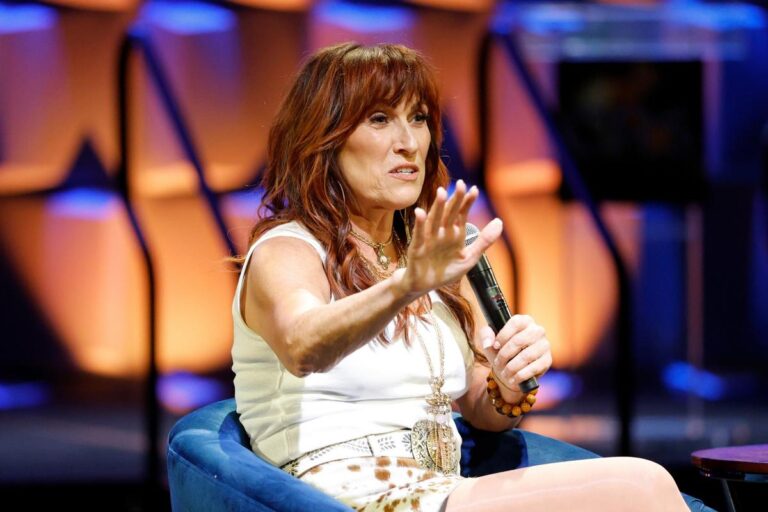
Jo Dee Messina is in the comeback season of her career, releasing new music and touring nonstop on the weekends, while raising her kids during the week.
When she dropped by the Taste of Country Nights studio, we could all tell instantly that she was a different person, inside and out, than she was when she dropped by a few years ago. She dropped nearly 90 pounds and was spiritually and emotionally more alive.
Part of her weight loss journey has been her working out and eating clean. That requires massive will power when touring on the road and having any food you want or need at your fingertips.
Basically, everything you can get at a Planet Fitness snack bar. Messina tells me she asks for a case of water, and a lot of protein stuff.
“So, there’s protein bars, protein water, protein shakes, Quest chips, coffee, a big glass of wine and Liquid IV, we try to stay hydrated.”
Messina says that in order to get and stay shredded she needs constant protein or else she will work out and not gain any muscle mass.
These items are similar but at the same time a far cry different than what Messina had on her tour rider back in the day.
She says she used to have lots of baked and broiled chicken and some occasional sodas backstage awaiting her arrival for her concerts.
Messina’s two kids have travelled with her on the road since they were babies and they also get to put a few things on her tour rider, but she couldn’t recall at the moment what those things were outside of some sodas.
What Life Was Like for a Country Fan in the 1990s
What was life really like for a country fan of the ’90s? These pictures show a simpler time that relied on network television, wholesome endorsements and trusted news reporting from a legend.
Was there anything better than opening your lunch box and seeing Shark Bites packed in next to some Hi-C Ecto Cooler? A simple pleasure kids of today can’t experience.
What other snacks came and went from our lives in the 1990s and beyond? Follow us as we look back at some ’90s snacks that have since disappeared.
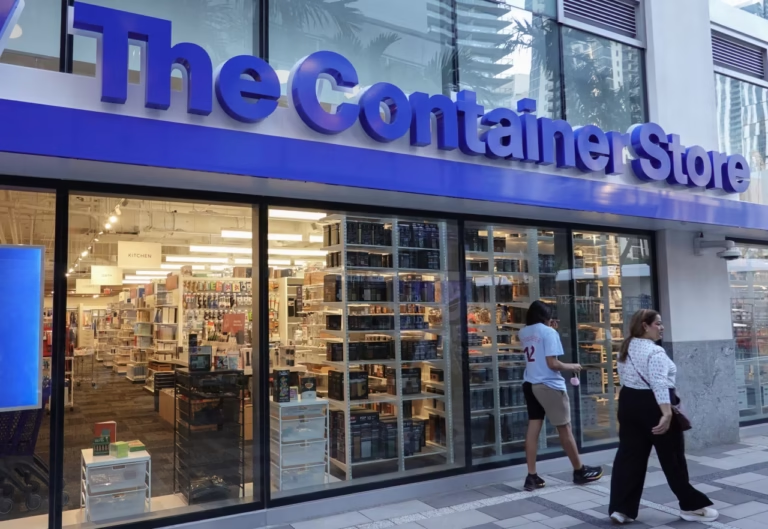
Bed Bath & Beyond has agreed to acquire storage and organization retailer The Container Store and its brands Elfa and Closet Works in a push to fill gaps in the company’s retail and home services strategy.
BLOOMINGTON, Indiana — For projected first-round picks, pro days aren’t about discovery. They’re about confirmation. And in that sense, Fernando Mendoza — Heisman winner, national champion and presumptive No. 1 overall pick on April 23 — was exactly who we thought he was.
If anything, his workout at the John Mellencamp Pavilion was more reassuring than revealing. That’s precisely what Raiders head coach Klint Kubiak — in attendance alongside offensive coordinator Andrew Janocko — came to see.
For starters, Mendoza looked bigger as he made his way to the east end zone to begin warming up. He weighed 236 pounds at the NFL Scouting Combine and played closer to 225, but he looked put together and began fizzing passes to wide receiver Charlie Becker (who I imagine we’ll be talking a lot about during the 2026 season).
And when I say “fizzing passes,” I mean Mendoza was slinging it. It’s the kind of arm talent you don’t fully appreciate on tape — but standing 20 feet away, it’s glaring. The velocity, the ease, the quick release — it’s all real. In fact, his arm talent and trigger are closer to Cam Ward than, say, C.J. Stroud or Jayden Daniels. Throughout the session, his ball placement was consistent — on time, on target, right on the receiver’s face.
Mendoza didn’t showcase the same anticipatory throws Carson Beck flashed at Miami’s pro day, but that’s baked into Mendoza’s tape. He’s made those throws. He’ll continue to make them, even as the windows tighten on Sundays.
I talked about this with my co-host on “With the First Pick,” former Titans general manager Ran Carthon.
How Mendoza stacks up against past top QB prospects
So just how good is Mendoza?
If he were in last year’s draft, there would have been a real discussion about QB1. (And if Simpson were also in last year’s class, he would have battled Jaxson Dart for “the QB drafted after Ward and/or Mendoza at some point later in the first round, or even in Round 2.”) Half the people I’ve talked to would still have Ward as QB1, while the other half are Team Mendoza. The point: they’re two really good quarterbacks who excel in different ways, but who also would have been among the first players taken in this hypothetical draft.
If we take it a step further and compare Mendoza to the 2024 class, which saw six QBs taken in the first 12 picks, I would have had him as QB4 behind some combination of Caleb Williams, Jayden Daniels and Drake Maye. I might even make the case that Mendoza would be QB3 after Williams and Daniels, because Maye was inconsistent for much of his final year at UNC. With the benefit of hindsight, sure, Maye is a top-three pick, maybe the No. 1 overall pick, but knowing what we knew on draft night in 2024, it’s fair to say Mendoza outplayed Maye in their final college seasons.
It helps that Mendoza has played a lot of ball (Simpson has just 15 career college starts, and I wrote about the perils of first-round QBs with such limited game reps). That experience showed up immediately upon stepping foot on campus in Bloomington.
“I knew he was a dude,” cornerback D’Angelo Ponds told “With the First Pick” at the combine. “[Not just] him … throwing it, a lot of quarterbacks are going to throw that ball … but for him to have the football IQ [he does] and not take the bait … I kind of knew he was going to be a great quarterback.
“He’s a competitor,” Ponds continued. “I’ve never seen him get flustered … we picked him off on the first play of fall camp … and he came right back and was throwing right back at me.”
From the jump, Ponds paints Mendoza as the kind of quarterback defenders hate facing — disciplined, patient and impossible to rattle. That “dude” moment wasn’t a highlight throw; it was restraint, the ability to not take the bait. That speaks to Mendoza’s command and processing speed.
Pair that with what Ponds saw after adversity — no visible frustration, just an immediate response — and you get a clear picture of his leadership. Steady, unshaken and relentlessly competitive, Mendoza set the tone at Indiana by how he handled both success and failure, and that will serve him well in Las Vegas.
Below is a look at other Indiana pro day standouts we had a chance to talk with during the pre-draft process and who have a great chance to hear their names called on draft weekend:
Elijah Sarratt, WR
Draft range: Day 2
Draft comp: Elic Ayomanor
A productive riser who transitioned from FCS to the Big Ten, Elijah Sarratt proved he belongs on the big stage by helping Indiana to a 2026 national championship. Known by the moniker “Waffle House” because he is “always open,” Sarratt attributes his technical growth to studying elite NFL connections. “I ended up sending [Fernando Mendoza] some clips one day of Aaron Rodgers and Davante Adams … we started working on those,” Sarratt told me and Carthon at the combine while discussing his back-shoulder chemistry with his QB.
What to expect at the next level: Sarratt is a physical “big slot” or possession receiver who wins with strength at the line of scrimmage and soft hands. He is exceptionally tough across the middle and possesses great contact balance to absorb hits and create yards after the catch. While he lacks elite burner speed and can be stiff at the top of his breaks, he is an asset in the red zone and a surprisingly tenacious blocker.
CB D’Angelo Ponds
Draft range: Day 2
Draft comp: Devon Witherspoon
D’Angelo Ponds arrived at Indiana with a chip on his shoulder, having been overlooked due to his size. “Nobody expected me to be here,” Ponds said regarding his journey to the combine. Despite being 5-foot-9, he plays with a “dog” mentality that earned him Freshman All-America honors. He is comfortable playing both outside and in the nickel, telling teams, “Wherever your team needs me is where I’m going to play … and I can succeed at both.”
What to expect at the next level: Ponds is a high-IQ cornerback with exceptional recovery speed and a refusal to be intimidated by larger receivers. He is a willing tackler who consistently defeats blocks and limits YAC. He understands route concepts, which consistently puts him in position to make plays on the ball. He may be undersized, but he doesn’t know it — or play like it.
C Pat Coogan
Draft range: Day 2/3
Draft comp: Joe Thuney
Pat Coogan is one of one. There’s a clear through-line when Indiana’s skill players and QB talk about center Pat Coogan: trust. Not just in the obvious, physical sense, but in the way everything runs cleaner because he’s in the middle of it. For Mendoza — who emphasized that “accuracy is the number one thing you need” — that’s much easier to execute from a clean pocket.
Coogan provides what teammates consistently describe as a steady presence and communicator up front. You can feel that confidence trickle down into how Indiana operated offensively — timing, rhythm and execution all start with the player who handles the ball to begin every play.
Skill-position players point to his consistency and physicality. The run-game identity — downhill, efficient and controlled — doesn’t happen without a center who can generate movement and stay attached. There’s also an appreciation for the little things: Coogan getting out in space, locating second-level defenders and finishing blocks that don’t show up in the box score but spring explosives. And perhaps most importantly, there’s the leadership.
“Man, I love Pat Coogan,” Black told me at the Senior Bowl in January. “He’s a warrior — he’s relentless. … And his pregame speeches and halftime speeches — those were things we looked forward to in those big-time games. It’s one of those things where you feel it. You feel it in your chest. You just feel it in your whole body, like it’s time to go.”
Teammate after teammate echoed some version of that same story when talking about Coogan, who may not be the best athlete in this class, but whose ability to bring a team together and lead in tough moments transcends athletic ability.
What to expect at the next level: Coogan is a historic producer who became the first offensive lineman in 82 years to win Rose Bowl MVP honors. He’s a powerful, technically sound center with scheme versatility and high-level play strength. In pass protection, he plays with a strong anchor, low pad level and heavy hands, consistently neutralizing interior rushers. He shows the ability to re-anchor against bull-rushing defensive tackles.
In the run game, he’s a tone-setter. Coogan generates consistent movement at the snap, sustains blocks and thrives on combo blocks. What separates him is his mobility, as he’s comfortable pulling from center, locating targets in space and finishing at the second level. He’ll fit both zone and gap schemes at the next level.
RB Kaelon Black
Draft range: Day 3
Draft comp: Hassan Haskins
A veteran presence in the backfield, Kaelon Black transitioned from a “do-it-all” threat at JMU to a 1,000-yard rusher for the Hoosiers. Black models his game after Josh Jacobs, emphasizing a balance of power and agility. “Josh can run through people, but also whenever he needs to, he can make a move … those are aspects I have,” Black told me at the Senior Bowl. He is a tone-setter who actively seeks contact rather than heading for the sidelines, viewing every carry as an opportunity to “send a message” to the defense.
What to expect at the next level: Black is a patient, one-cut-and-go runner who explodes through holes. He runs with low pads and looks to punish defenders at the second level. He is a reliable pass catcher who didn’t drop a pass in 2025, though he could be more elusive in the open field. His age (24) and high mileage may impact his ceiling, but good luck finding someone tougher, which makes him an immediate special teams contributor.
TE/H-back/FB Riley Nowakowski
Draft range: Mid-to-late Day 3
Draft comp: Brayden Willis
Riley Nowakowski is the quintessential glue guy, a five-time Academic All-Big Ten selection who balanced a rigorous industrial engineering degree with a championship run. A versatile former walk-on, Nowakowski takes pride in executing the unselfish tasks. Regarding his role, he told us at the combine that NFL teams see him as “a plug-and-play kind of guy” who can transition between fullback, tight end and H-back. His commitment is absolute; he was finishing school assignments just hours before arriving at the combine.
What to expect at the next level: Nowakowski is a versatile, high-IQ player who serves as an “inline security blanket.” He runs disciplined routes, possesses reliable hands and displays flashes of straight-line speed on inside screens. He is an asset in move-blocking schemes and isn’t afraid to “muck somebody” on a down block to spring a runner. He needs to continue refining his size-to-power ratio for consistent inline blocking at the next level.
KAMPALA, Uganda — A man killed four children in a machete attack inside a nursery school in the Ugandan capital of Kampala on Thursday, police said.
The man gained access to the Gaba Early Childhood Development Program in Kampala by disguising himself as a parent, the Daily Monitor newspaper reported. He first entered the school offices, where he briefly engaged the administrator in charge, then stepped outside, locked the gate and began attacking the children, the report said.
The attacker “brutally stabbed and killed four juveniles,” police said in a statement.
Video footage aired by local broadcaster NTV showed some parents weeping. Police fired in the air to disperse an angry crowd that gathered near the school, apparently trying to lynch the suspect.
The suspect later was taken into custody, police spokesman Kituuma Rusoke told The Associated Press. A motive for the attack is unknown, he said. Such attacks on children are rare in Kampala, a city of roughly 3 million people.
ALBUQUERQUE, N.M. (KRQE) – The Albuquerque Police Department is investigating a fatal shooting that happened overnight near Fox Memorial Park. Police say a caller reported gunshots and a ShotSpotter system recorded several shots fired at the park. When officers arrived at the park they found a man who had been shot and killed at the scene. […]
Here’s a story you don’t hear everyday — a caper that involved 27,000 pounds of chocolate was planned and executed flawlessly, leaving everyone scratching their heads.
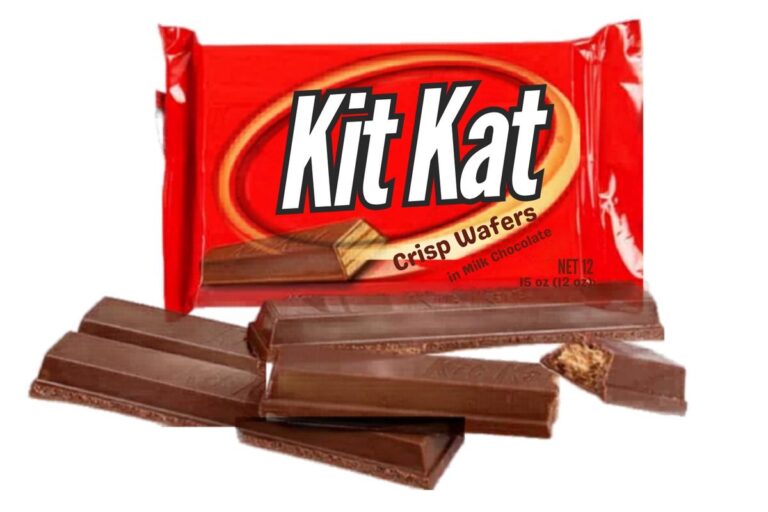
Originally reported on Forbes, one of the most unusual cargo thefts in recent history took place as over 27,000 pounds of KitKat bars in route from Italy to Poland by truck were hijacked earlier this week.
What KitKat Bars Got Stolen From 18 Wheeler?
These weren’t just any KitKat bars. They were specially shaped like Formula 1 cars as part of a promotion.
Nobody knows why these KitKat bars were targeted specifically, but we are told to be on the lookout for resale of the stolen chocolate bars at an uncredited outlet.
As of Tuesday (March 31), the chocolate and the truck still remain missing.
How Many KitKat Bars Were Stolen?
27,000 plus pounds of KitKat bars equals roughly 413,793 packages of the chocolate wafers.
But, the Wall Street Journal sees a silver lining for Nestle: “Promotional gold.”
Nestle has responded with well-received humor: “We’ve always encouraged people to have a break with KitKat but it seems thieves have taken the message too literally and made a break with more than 12 metric tons of our chocolate.”
Multiple outlets like the Wall Street Journal are praising Nestle for taking swift comedic action online, making what was just a story about stolen candy into a public relations schooling of how to handle a crisis in the best way possible.
Other Entities Took the Liberty of Weighing in on the Chocolate Heist
Domino’s Pizza said “We would like to share our thoughts and condolences with Kit Kat following their sad news. On a completely unrelated note, we’re pleased to announce we’ll now be selling a new Kit Kat pizza.”
Charlotte FC, a Major League Soccer team in North Carolina, made a similar joke: “On an unrelated note, we are happy to share we will be offering roughly 413,000 KitKats at this Saturday’s match against Philadelphia at Bank of America stadium.”
Country Stars With Their Own Bars + Restaurants
Of all of the side hustles country artists could partake in, opening a bar or restaurant is the most fitting — and very common. After all, many of these stars got their start on a barstool, tip jar nearby, playing their music for anyone who would listen.
These places feel like home for many of these singers. Over the years, several artists have gotten into the bar or restaurant game, and for a select few, brands have turned into franchises with several locations and/or concepts — we’re looking at you, Jimmy Buffett!
Let’s take a look at the country star food and entertainment venues that have opened over the years.
The best country songs about Heaven try to describe what life after death looks like. Often these songs are written from the perspective of someone in Heaven.
Sometimes, a country singer finds him or herself singing to someone in Heaven, imagining who’s there and what privileges they enjoy.
These are the best country songs about Heaven. They’re not ranked. Instead, they’re organized by perspective.
Tim Bontemps is a senior NBA writer for ESPN.com who covers the league and what’s impacting it on and off the court, including trade deadline intel, expansion and his MVP Straw Polls. You can find Tim alongside Brian Windhorst and Tim MacMahon on The Hoop Collective podcast.
Multiple Authors
Apr 2, 2026, 07:00 AM ET
The NBA’s regular season has more than a week remaining, but many team executives’ focus has already shifted to May 10. That’s the day the league will conduct its annual lottery to determine the draft order for what has a chance to be a special 2026 class.
We asked more than a dozen NBA scouts and executives for their thoughts on the potential draft order, the elite players and the glut of point guards who could define the early part of Round 1.
Who do you expect to go No. 1?
With Dybantsa, Peterson and Boozer all done with their freshman seasons, a tight race for the No. 1 pick will play out behind closed doors.
And while teams continue to stress that next month’s lottery will play a major factor, the majority of scouts and executives interviewed see Dybantsa as the favorite.
“I guess you’d rather fail with [AJ] and his upside, than not,” a Western Conference general manager told ESPN. “And I know Peterson has upside, maybe Boozer’s upside is a little bit less. … I just think that [AJ], because he’s 6-9 and he could be like 6-10, 230 [pounds] by the time he’s 25 years old, he could just be a monster. I think you’ve just got to go down swinging with him if you go down.”
“I think Peterson is the most talented guy,” an Eastern Conference executive said, “but the injury stuff is a real question. That’s a valid concern, and it’s been a weird year. But he’s a huge talent, and he was No. 1 at the start of the season for a reason.”
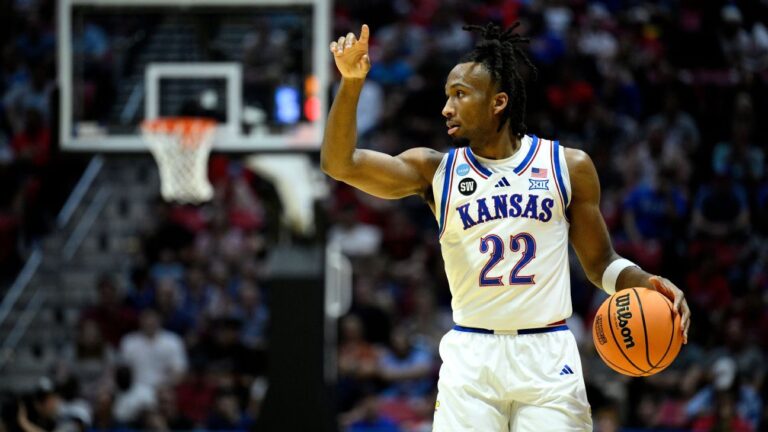
Some executives preferred Peterson, who endured an uneven season at Kansas that featured jaw-dropping moments of brilliance mixed with injury absences and stretches when he made little impact on the floor.
Others favored Boozer, who just finished one of the great statistical seasons in college basketball history — Boozer is the only player in the country to finish in the top 12 in points (22.5) and rebounds (10.2) per game — in powering Duke to within one 35-foot miracle of reaching the Final Four.
Either way, as a Western Conference executive laid out, the deep talent pool creates a chance for this year’s draft to go in many directions.
“I think this draft is, in some ways, similar to the [2024 Zaccharie] Risacher year, but on a higher level,” they said. “That year it was like, ‘Is anyone going to be really good?’ This year, it’s like, ‘Well, s—, there’s a lot of guys.’ You have high confidence that at least some of them are going to be really, really good. You’re not really sure which ones.
“You don’t want to be drafting at 1 and end up with the fifth-best player.”
Where do you stand on Peterson’s draft stock?
Even as Dybantsa has solidified his case for No. 1, nobody is willing to completely rule out Peterson. The most talented scorer in this freshman class, Peterson was plagued by leg injuries and cramping issues that limited him to 24 games.
“It’s definitely a thing,” an East scout said. “If you’re a team that’s in the mix for the No. 1 or 2 pick, you’re going to have to get a ton of information on what happened, and why.”
Getting more information on Peterson’s body, most importantly whether any of the issues will be longer-lasting concerns, was labeled by many league insiders as a critical part of the predraft process. When Peterson is right, such as when he thoroughly outplayed Dybantsa in the first half of their showdown in Lawrence, Kansas, in front of dozens of NBA executives, he looks like a special player.
“I think it forces you to start asking a bunch of questions that you normally wouldn’t have to ask for a guy like [Peterson],” a West executive said. “Just the management of his situation and his [health] exposed him to some level of further investigation, past the already intense investigation a No. 1 pick would go under.
“In the coming months, there is a non-zero chance that the root of this issue, depending on what it is, could affect his stock.”
play
0:46
How much did Darryn Peterson hurt his draft stock?
Seth Greenberg joins “Get Up” to discuss Darryn Peterson’s performance vs. St. John’s on Sunday night and how it might have affected his draft stock.
Where should Boozer slot in?
Few players have entered the draft process in a more fascinating position.
The son of an All-Star power forward, Boozer will enter the league with a long history of on-court success. He has won at every level at which he has played, including a dominant statistical campaign that helped carry Duke to the Elite Eight.
All of that screams top pick, but Boozer’s draft profile is filled with questions about his potential lack of explosiveness and quickness, and whether he’s a one-position player at power forward.
“I’m not a huge fan of a one-position 4,” an East scout said. “If that’s what he is, then you have to build your team specifically around that, given his lack of versatility.”
One East executive compared the conversation around Boozer’s draft stock to another highly touted player who won at every level but had athleticism questions coming into the league: Luka Doncic.
“He doesn’t look the part athletically, so people put limits on him,” they said of Boozer. “I don’t know why people keep putting a ceiling on him before he’s 19. There’s a lot of ways to talk about athleticism, not just how high you can jump, and he always plays the most efficient way he can to help his team win.”
Virtually everyone interviewed agreed that Boozer’s game has the highest floor of any player in the draft, however.
“I think people have gone numb to him and the production and the archetype,” another East executive said. “The versatility he brings offensively is 1-of-1 in this class.
“I understand the problems: the finishing, lack of rim protection, heavy legs. But he is an offensive catalyst to me — [think Domantas] Sabonis, [Alperen] Sengun, any of the others who have been knocked for athleticism. IQ and feel have overcome so much. I think he has answered every question he can.”
play
0:21
Cameron Boozer protects the rim with an emphatic rejection
Cameron Boozer makes a great defensive play for Duke with a block.
Is Wilson locked in at No. 4?
North Carolina’s Caleb Wilson, the No. 4 prospect in ESPN’s top 100 rankings, was a breakout star this season, taking a major developmental leap as a freshman and establishing himself as a likely top-five pick. The physical, toolsy forward has drawn comparisons to Pascal Siakam and Aaron Gordon — high-energy, versatile defenders who have the skill and playmaking ability to help drive secondary offense.
Wilson’s draft momentum slowed thanks to a run of bad injury luck: breaking his left hand Feb. 10, then his right thumb in practice in early March while working toward a postseason return.
That hasn’t stopped him from picking up many fans along the way.
“Caleb has been more productive and played harder in college than [Atlanta Hawks All-Star] Jalen Johnson, who in college was more perimeter oriented,” an East executive said. “If you thought Cam [Boozer] is Al Horford or something like that, and you thought Caleb was like Jalen, then you could go Caleb.”
Multiple scouts and executives believe Wilson’s game, because of his combination of length, potential and athleticism, screams high-level upside and could vault him into the top three of the draft between now and late June. His candidacy is viewed as more based on fit, ultimately depending on how the lottery falls and team needs.
“The intel piece on him is incredible,” another East executive said.
“I think he could easily go three,” an East scout said. “I could see him being preferred to Boozer there.”
Which guard fits best at No. 5?
A clear consensus is starting to build for Dybantsa, Peterson, Boozer and Wilson atop draft boards. After that, there’s a glut of ballhandling guards who will determine the direction of the draft.
Several executives cited how important combine measurements could be in this process, particularly for Acuff (listed at 6-3) and Flemings (6-4). That duo and Wagler (6-6) are widely considered the strongest candidates for the No. 5 spot.
Let’s start with Acuff, an explosive scoring guard with concerns about his size and defense at the next level. His final two months of the season, which included an SEC tournament title run, won over a lot of people around the NBA, but those shortcomings will make team construction and fit a pivotal factor.
“Just the shotmaking, killer instinct he’s shown, his ability to score at all three levels,” an East executive said. “His defense does worry me some, but he has had to carry a pretty large load.”
“I think there’s never been a worse time to build around bad defensive guards,” a West executive said. “We see this time and time again — the flashiest offensive impact in the draft doesn’t necessarily end up winning the most.
“It ends up being, you know, Derrick White and Jrue Holiday and Alex Caruso, go down the list. And we kind of have proof of concept of this right now on the trade market. Trae Young was traded for basically nothing. … People fall in love with guards, and I know of a bunch of teams who are falling in love with Acuff right now.”
Flemings, meanwhile, is a strong and quick two-way player who earned plaudits for wanting to play for Houston coach Kelvin Sampson, an old-school taskmaster and disciplinarian. His shot and size, however, are potential concerns.
“Kingston operates a little bit differently — a better overall package when you look at both ends of the floor,” a West executive said. “He’s really impressive … to come in as a freshman and play the role he’s played on one of the top teams in the country and on a team that notoriously isn’t easy to play for if you don’t play hard.”
“It’s so impressive that the big shots are his, on a team with experienced guards that have been there and won at that school,” an East scout said. “You see his shot form, but I’ll bet on all the other stuff and we can work with his jump shot.”
Wagler, on the other hand, is a remarkable story, having burst onto the scene during the Illini’s run to the Final Four, turning himself into a mid-lottery pick in the process. A three-star high school recruit who entered the season with no national profile, Wagler’s ability to play both on and off the ball at his size gives him added role versatility.
“When people talk about ceiling arguments, they get into the physical stuff,” an East executive said. “But the thing that unites all of the top [NBA] players is being elite mentally, and that’s the thing that gets underrated in all of this.”
“[Wagler] is going to have to get stronger,” a West executive said, “but I’ll take my chances on a 6-6 guy who can basically run the show. And he plays with such tremendous pace and feel.”