Home Blog Page 117

Predicting how each of the NBA’s proposed Draft Lottery reforms could backfire

0


Tanking is a not a new phenomenon in the NBA. It’s been happening in some fashion since the 1980s, but it was typically fairly well contained. Two or three of the league’s worst teams would do it most years, try to secure a top draft pick, and then, after getting one or two of them, would pivot back into trying to win. It was hardly ideal, but it was manageable.

The perception of tanking as some sort of league-wide crisis took hold in the 2010s, when Sam Hinkie tore the Philadelphia 76ers down to the studs in the most concerted, long-term tanking effort the NBA had ever seen. It got so bad the opposing owners reportedly lobbied the league to intervene. The NBA first attempted to pass lottery reform after Hinkie’s first season in Philadelphia, but failed thanks to the timely intervention of Sam Presti, who reportedly worked behind the scenes to combat the proposed measures. The league successfully made changes a few years later, starting with the 2019 lottery.

The idea was straightforward: If the lottery format was altered to offer less benefit to the worst teams in the league, those teams wouldn’t feel as inclined to put out an intentionally terrible product. Odds for the three worst teams in the league would be an even 14%, meaning teams would no longer have as much of a reason to fight for the absolute worst record, and that 14% figure was itself reduced from the previous high of 25%. Meanwhile, the lottery drawing itself increased from three teams to four, meaning the worst team could slip as low as No. 5. The idea, again, was to create a system in which a team had less to gain by being awful.

The NBA badly miscalculated on two fronts. The worst teams may have had less to gain by being awful … but they had more to lose by not being awful. The third-worst team may not gain lottery odds by having the worst record instead, but their floor became the No. 7 overall pick. No team wants to waste an entire season only to pick seventh. This made tanking more of a defensive strategy than an offensive strategy. Teams needed to protect against their worst-case outcomes, not just maximize their odds at the best ones.

Meanwhile, those lottery odds that the worst teams lost had to go somewhere. They went into the middle. Suddenly, a team that might have organically been the eighth- or ninth-worst team in the NBA recognized how much it had to gain by suddenly being the fifth- or sixth-worst team. Awful teams are an inevitability. There are 30 teams in the league. Someone has to be the worst of them. The NBA tried to make those teams better when the reality was that they were always going to be miserable. But in the process, the NBA invited another handful of teams to join them at the bottom.

And that leads us to today. Nine of the 10 teams that will miss the postseason could be credibly accused of tanking. That’s 30% of the league putting forth an inferior product. Maybe that does represent a crisis, but it’s a crisis of the NBA’s own making. The pre-reform lottery never inspired nearly one-third of the league to race to the bottom. There are always unintended consequences.

Yet the NBA is doubling down on lottery reform. On Friday, ESPN shared three detailed proposals that the NBA is considering. They are borderline draconian for the league’s worst teams, creating systems that all but abandon the draft’s intended purpose as a talent-balancing mechanism.

The need for such a mechanism has never been greater. The last few collective bargaining agreements have relaxed the rules regarding contract extensions, which has drastically reduced the amount of talent available in free agency. The absence of free agency has driven trade valuations entirely out of whack. We live in a world in which non-All-Stars are now regularly traded for multiple first-round picks. Bad teams do not have nearly as many affordable paths to improvement as they once did. 

Drafting is the one component of roster-building still somewhat in their control. The top 10 teams in the NBA by record this season have a combined 14 homegrown top-five picks on their rosters, with several others having been essential trade assets that got them where they are now.

Yet drafting, at least for the worst teams in the NBA, is about to get a whole lot harder, and as the 2019 reforms showed, it is probably going to get harder in ways the league doesn’t necessarily foresee or protect against. So with three fleshed-out proposals now on the table, let’s try to figure out what those unintended consequences are going to be in the hopes that the NBA also notices these defects and preemptively steers away from some of these icebergs.

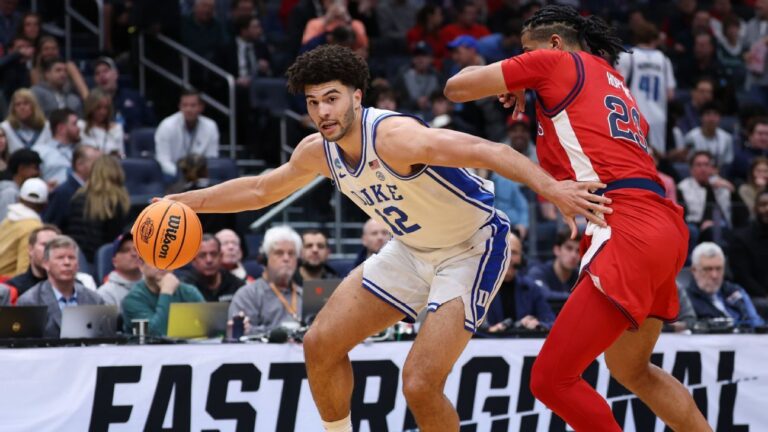
2026 NBA Mock Draft: 30 first-round projections as March Madness rolls on

Adam Finkelstein
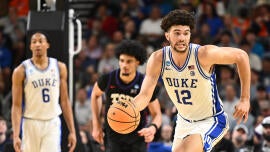
2026 NBA Mock Draft: 30 first-round projections as March Madness rolls on

Proposal 1

The NBA’s first proposal would expand the lottery from 14 participants to 18 participants. All 18 teams that either missed the postseason or participated in the Play-In Tournament would be eligible. The 10 teams that miss the postseason altogether would each receive identical 8% chances at the No. 1 pick. The remaining 20% would be spread among the eight play-in teams. The most drastic change, though, would come in the actual drawing. Instead of drawing four selections and slotting the remaining teams in order of record, this proposal would draw for all 18 picks in the lottery, meaning the worst team in the NBA could theoretically pick as low as No. 18.

Our first unintended consequence is pretty straightforward. We’re simply moving the tank line. Teams would no longer have a reason to try to have the absolute worst record. There would no longer be a distinction between, say, No. 1 and No. 5. It’s not unreasonable to assume this will make the worst teams slightly more watchable. However, we’ve suddenly given teams in the play-in mix a reason to intentionally fall out of the postseason. Don’t assume that a desire to play postseason basketball would prevent teams from tanking. The Dallas Mavericks tanked while mathematically alive for the No. 10 seed in 2023. Front offices understand that the odds of a deep playoff run from the Play-In Tournament are slim, so their best long-term course would likely be maximizing their lottery odds.

Our second unintended consequence would be extending the length of rebuilds. In an 18-team lottery, a few bad teams getting perpetually unlucky would be inevitable. Imagine a world in which the Wizards got no top-10 picks out of the past three seasons. Where would they be? Probably still hoping for a top-10 pick. The NBA would effectively be trading teams being very bad for a shorter period of time for teams being slightly less bad for a much longer period of time, and the teams they would be inflicting these lengthy rebuilds on would essentially be random. As flawed as the existing system is, it gives fans of bad teams hope. What would fans of the 2025-26 Sacramento Kings have to get excited about in this scenario?

Lastly, there’s the matter of what to do with a team like the 2023 Miami Heat. They participated in the 2023 Play-In Tournament, but made the NBA Finals. In this scenario, we’d have a reigning finalist in the lottery with its own selection. Does anyone want that? 

Proposal 2

The second concept would increase the lottery from 14 teams all the way to 22: the 10 teams to miss the postseason, the eight that make the Play-In Tournament and four that lose in the first round of the playoffs. The odds would be based on each team’s record over the prior two seasons, not just the most recent one. Additionally, losses beyond a certain threshold would no longer be beneficial. For example, if the NBA set a 20-win minimum, a 15-win team would have five wins added to its total. Precise odds and pick floors for this proposal are not yet clear.

An intended consequence of this change would seemingly be making it harder for contending teams dealing with injuries to take a so-called “gap” year like the Pacers are without Tyrese Haliburton. I think most fans would actually call this a good idea. The draft is, again, a balancing mechanism. The idea is to make bad teams better. The Pacers are not a bad team, they’re a temporarily bad team that doesn’t need to be artificially improved. But there’s a flip side here. Just as a team can go from very good one year to very bad the next, a team can also go from very bad one year to very good the next. 

Imagine a young team spending a few years accumulating talent before making its leap into the playoffs, like the Pistons last season. They put up a fight in the first round, but remember, they won only 14 games in the 2023-24 season. Even if you bump that total up to 20, their two-year average from 2024 and 2025 would be just 32 wins. This system would position a team like that to potentially get one more stroke of lottery luck right as it’s already ascending, once again allocating talent not to a team that needs it, but who already has enough of it to make the playoffs.

Speaking of which, first-round favorites may not lose series frequently, but it does happen. Five No. 1 seeds have lost in the first round since the playoff field expanded to 16 teams, and seven No. 2 seeds have also lost. It’s one thing to have play-in teams win the lottery. It’s another for, say, the Celtics to do so because Jaylen Brown sprained his ankle in Game 3 of a seven-game series. That drastically alters the balance of power throughout the league for years to come. 

This doesn’t just have to apply to top seeds. Sometimes a conference is loaded and injuries mean that the standings don’t reflect team quality. It’s plausible that the Nuggets and Lakers face off in the first round this season. I don’t think anyone believes either of those teams should be in the lottery, but one of them would have to be in this system.

And then of course, there’s just the reality that if you tell teams they need to tank for two years to maximize their lottery odds, they’re probably just going to tank for two years, or more, and reap the benefit over multiple lotteries. Isn’t that part of the problem the NBA is setting out to solve? The incentive for losing still exists, it’s just spread over a longer time period.

Proposal 3

The third concept is by far the most complicated. It essentially calls for two separate lotteries. The first one would draw for only the top five picks. The same 18 teams from the first proposal would be involved, and the five worst teams would have even odds, with odds descending for everyone else thereafter. After the top five picks are drawn, a second drawing would be held for the remaining 13 teams. Any bottom-five team that did not land a top-five selection could pick no later than 10th.

Once again, we’re just moving the tank point. Now, the line is No. 5. The difference between No. 1 and No. 4 would be nonexistent, but the difference between No. 5 and No. 6 would be enormous. Similarly to the 2019 reforms, that isn’t just a matter of offense, but one of defense. The fifth-worst team has a floor of No. 10. The sixth-worst team would have, at least based on the present reporting, a floor of No. 18. There has never been such a big disparity between two defined, consecutive slots as the one this format would create. It’s hard to imagine there wouldn’t be tanking in the middle.

Of the three proposals, this is the one that has been met with the most head-scratching from fans. They’re confused, and that confusion makes it harder for fans to follow the draft process. The NBA draws a pretty significant amount of interest and online engagement through the rumor mill and roster-building speculation. As we’ve seen with the aprons, fans don’t like not being able to understand the rules. I’m not sure a bottom-line impact can be measured here, but it’s worth noting.

The universal side effects and unfixable problems

There’s an easy response to a lot of the “teams would still tank, just differently” fear embedded in some of these proposals. The Athletic’s Joe Vardon reported on Friday that under any of these systems, the commissioner could also have the power to move a team’s first-round pick to the end of the lottery, the end of the first round or even strip a team of its pick entirely if he still believed it was tanking. 

The trouble here is that there is no objective definition of tanking. You know it when you see it. So the NBA would either have to invent strict, measurable criteria for tanking, or it would have to ask its fans to trust it to enforce subjective rules consistently. I just don’t think either is possible. There is no consistent way to determine whether a loss was intentional, and there is no way to convince fans that the existence of a system that carries the theoretical potential for impropriety will never actually lead to impropriety. The moment a draft-reliant small-market team is stripped of a pick, a chunk of that fanbase loses faith in the system. The moment a big-market team avoids a punishment for actions fans believe warrant one, fans of more teams start to lose faith in the system.

We have, to this point, discussed only the removal of incentives for losing. We have not, however, discussed the addition of incentives for winning. Why does this matter? I would argue the single most pervasive form of tanking that exists in the NBA is shutting players down late in a season due to injuries they might otherwise have been able to play through. This is what ultimately degrades the product. Teams have good players. They just don’t use them. Ideally, an anti-tanking measure should revolve around keeping players like this on the floor.

None of these proposed solutions actually do that because losing games is not the only or perhaps even the primary purpose for sitting these players out. The real reason this happens is that teams in the lottery no longer have anything to gain by winning games, therefore they have nothing to gain by risking the health of their best players in games that fundamentally have no stakes. Putting a star on the court in these meaningless games risks an injury that could carry over into next season’s meaningful ones. In order to keep these players on the floor, there has to be an incentive to win, not just the removal of incentives to lose. Right away, my suspicion is that one of the unintended consequences of any change that does not address this issue will ultimately lead to a system in which that issue persists, and ultimately leads to another crack at reform a few years down the line. As extreme as these measures are, they’re still ultimately half-measures in that they address losing but not winning.

Another topic we haven’t addressed: trades. For starters, a number of existing trades will now have been negotiated based on rules that neither team knew were coming. Take Portland’s Damian Lillard trade. The majority of the value gained in sending a franchise icon to Milwaukee came through Bucks draft picks. The entire premise was based on Milwaukee declining, potentially without Giannis Antetokounmpo, and the Blazers reaping the rewards. Well, those picks are about to be worth less than Portland likely assumed during the negotiation. Meanwhile, teams have stocked up on unprotected first-round picks and swaps from teams that weren’t necessarily slated for the high lottery are probably doing backflips right now.

What these changes are broadly going to do is squeeze the trade value of most first picks towards the middle. Seemingly good picks are worse. Seemingly bad picks are better. Who this probably affects the most are teams trading away stars, as Portland did. Those teams can now no longer acquire picks deep into the future hoping to cash in on their aging star’s eventual decline. Perhaps this changes what teams seek in those sorts of trades, likely by eyeing players instead of draft picks. But the thing about draft picks is, until a team trades them, at least everyone has them. You’re out of luck if your expiring contract star demands a move somewhere specific and that team doesn’t have young players to send you. Meanwhile, mid-first-round picks being less valuable probably slows down the role player trade market, especially at the deadline, by a fair bit. Nobody’s giving up the 20th pick in a 22-team lottery for a solid backup to shore up their rotation in February.

We’re talking about hypothetical consequences for blank-slate teams following rules that haven’t even been approved yet. We haven’t yet considered how these rules are going to fit into the unique circumstances of the NBA landscape today. To put it simply, I believe these rules are going to entrench the top handful of current teams at the top of the standings far longer than they would otherwise be there. I think lottery reform could wind up being the thing that ensures dynasties for the Thunder, Spurs or both.

The Thunder only tanked for two years, but they got Chet Holmgren and Alex Caruso out of doing so, and bigger picture, they were able to accumulate a historic amount of asset-value and young talent out of impossible-to-replicate circumstances. As has been widely discussed, they are as well-positioned to win both now and later as any NBA team ever has been. If they have a peer, it’s the Spurs. They benefitted more directly from lottery luck, earning three consecutive top-four picks. Look around at the other teams in poll position moving forward. The Pistons made four straight top-five picks. The Rockets tanked for three and then got a fourth through a traded pick. The Celtics got two consecutive No. 3 picks from the same team through a trade.

As we’ve covered, free agency is a less powerful tool for team-building than it’s been in decades, and that in turn has made it seller’s market for trades. The harder you make it for a team to stack top draft picks over multiple years, the harder you make it for genuine competition to rise up and challenge the Thunder and the Spurs, because how on Earth is anyone else supposed to rack up the sheer amount of talent and flexibility that those teams have? Maybe teams like the Rockets or Pistons and Celtics could get grandfathered in from having previously benefitted from the old system and managed their assets responsibly afterward, but new, rising contenders are starting from a massive, systemic disadvantage. Victor Wembanyama got to start his career with Stephon Castle and Dylan Harper. Is AJ Dybantsa or Cameron Boozer going to be that lucky? Probably not.

NBA rule changes tend to be reactionary. The supermax was a response to Kevin Durant leaving the Thunder. The second apron was a response to teams like the Warriors and Clippers spending like drunken sailors. We’ve even seen reactionary lottery reform before. Teams were so mad when Orlando won back-to-back lotteries in 1992 and 1993 that the league had to steepen the odds, making the format even more favorable to the worst teams. Yet I fear that in reacting to years of self-inflicted tanking, the NBA is inadvertently making the teams that benefited from all of that tanking significantly stronger. Those teams got to pull the tanking ladder up from behind them. It’s the next set of teams that is going to suffer. That seems like the likeliest unintended consequence of this to me, and it will apply no matter what proposal the NBA lands on.





Source link

Catholic Church, world leaders condemn Israeli police for stopping cardinal from Jerusalem’s Church of Holy Sepulchre

0


The Catholic Church and world leaders are criticizing Israeli police after they prevented the Latin Patriarch of Jerusalem, Cardinal Pierbattista Pizzaballa, from entering the Church of the Holy Sepulchre to celebrate a Palm Sunday Mass. 

 The Latin Patriarchate of Jerusalem said in a statement that Pizzaballa and Reverend Fr. Francesco Ielpo were prevented from entering the church “as they made their way to celebrate” the Mass. 

“As a result, and for the first time in centuries, the Heads of the Church were prevented from celebrating the Palm Sunday Mass at the Church of the Holy Sepulchre,” the statement said. “This incident is a grave precedent and disregards the sensibilities of billions of people around the world, who during this week, look to Jerusalem.” 

The Israeli police told the Agence France-Presse that they had received a request from Pizzaballa and “it was clarified that it could not be approved” because of these restrictions, and noted that Jerusalem’s Old City is “a complex area that does not allow access for large emergency and rescue vehicles” in case of a “mass casualty incident.” Police did not specify what the request entailed. 

The Patriarchate’s statement said Pizzaballa and Ielpo were stopped while proceeding privately, not as part of a procession or ceremonial act, and had to turn back. The organization said preventing their entry “constitutes a manifestly unreasonable and grossly disproportionate measure” and called the Israeli police’s decision “hasty and fundamentally flawed” and “tainted by improper considerations.” 

Israel Iran War

A locked door and empty stairs leading to the Church of the Holy Sepulchre in Jerusalem’s Old City on Friday, March 27, 2026.

Mahmoud Illean / AP


Israeli police said that all holy sites in Jerusalem have been closed since the start of the war in Iran. Israeli officials have banned large gatherings, including at religious sites, and limited public gatherings to around 50 people. A traditional Palm Sunday procession had already been cancelled by the Latin Patriarchate. Ceremonies were held in other churches, with limits on how many could attend. 

Palm Sunday begins the Christian Holy Week, which ends with Easter. It symbolizes Christ’s final entry into Jerusalem, days before his crucifixion (which is marked with Good Friday) and resurrection (which is celebrated with Easter). The Church of the Holy Sepulchre marks the site of Jesus’ resurrection and is a major destination for Christians. 

Italian Prime Minister Giorgia Meloni criticized the police’s actions, calling the incident “an offence not only to the faithful but to any community that respects religious freedom.” Italian foreign minister Antonio Tajani said on social media that he had summoned Israel’s ambassador to discuss the incident, which he called “unacceptable.” 

French President Emmanuel Macron also condemned the incident and said worship “for all religions” must be guaranteed in Jerusalem. He added that the police action “adds to a worrying series of violations of the status of holy places in Jerusalem.”

The Jordanian foreign ministry said it “strongly condemned” the interaction, calling it a “flagrant violation of international law and international humanitarian law, as well as the prevailing legal and historical status quo, and an infringement on the unrestricted freedom of access to places of worship.”  

Christmas Eve Observances In Bethlehem

Latin Patriarch of Jerusalem Archbishop Pierbattista Pizzaballa leads the Christmas Mass on December 24, 2025 in Bethlehem, West Bank.

Faiz Abu Rmeleh / Getty Images


In Jerusalem’s Old City, Christian worshippers told the AFP they were mourning the traditional processions and activities. 

“It’s very said this year. Because we are always used to the procession that starts from the Mount of Olives, but this year because of the precautions of the war it’s forbidden,” 51-year-old Andre, who gave only his first name, told AFP.

“This year, because of the war, we cannot celebrate in the streets like always,” Simon Hosh, 25, told AFP. “So this year we just celebrate in the church. It’s bad.” 

Pope Leo XIV paid tribute to “the Christians of the Middle East, who suffer the consequences of a terrible conflict and in many cases cannot fully live the rites of these holy days” in Rome on Sunday. The Vatican has not specifically commented on the police incident in Jerusalem. 


Source link

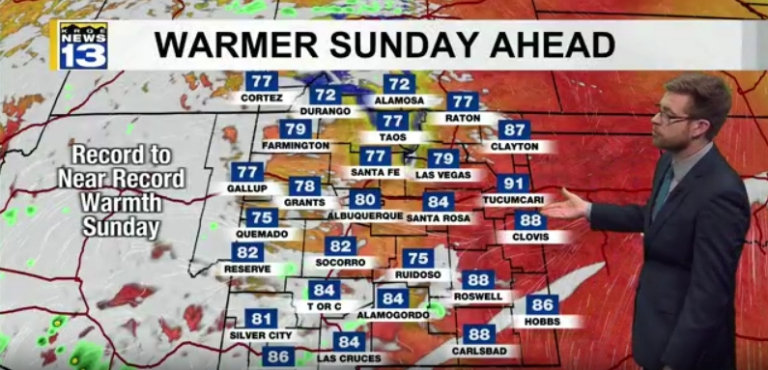
Moisture returns bringing rain, dry storm chances this week

0


Good morning! Mild temperatures have settled into the Land of Enchantment. Albuquerque’s low temperature has fallen into the mid 40s, which is a few degrees warmer than normal. The rest of the state is experiencing temperatures ranging from the 30s to the low 50s. Later today, temperatures will warm up to near record to record […]


Source link

The 10 Best Joe Diffie Songs

0


Joe Diffie‘s songs weren’t the biggest hits of the 1990s, and he wasn’t the ’90s most well-known country star — but in so many ways he defined the decade with lyrics born out of the American experience and a simple, straight-forward and often clever approach to storytelling.

Diffie, who died on March 29, 2020 at age 61 after a short battle with COVID-19, was a ’90s staple, but several songs on this list of Top 10 Joe Diffie Songs come from the early 2000s, when he was something of a different artist.

He notched five No. 1 singles on Billboard‘s Country Airplay chart and 17 Top 10 hits. Two of his albums Honky Tonk Attitude and Third Rock from the Sun were certified Platinum, and several deeper cuts (or at least less commercially successful singles) became staples in his live show.

“Home” was Diffie’s first No. 1 hit and his debut single from A Thousand Winding Roads, released in 1990. His career took off from there, with a string of six-straight Top 10 hits. “Third Rock from the Sun” and “Pickup Man” are two songs that came in the mid-’90s, off of his fourth studio album Third Rock from the Sun. A couple years later, a television show of the same name would become a hit in America.

Diffie’s popularity on radio stations had started to wane by the late ’90s and early ’00s as more pop-friendly sounds began to dominate, and that wasn’t something he was made for. Still, he continued to produce music, and fine music at that. The 2004 Top 20 single “Tougher Than Nails” is worth revisiting in full, as there Diffie showcased an ability to cover Christian music with the same honesty as he did songs about trucks, heartbreak and love.

If you don’t listen to each of the songs on this playlist, at least read a few sentences about the best Joe Diffie songs to appreciate what he contributed America’s catalog. Diffie continued to perform until his final weeks, often with friends and fellow ’90s stars in front of and behind him.

In 2012, Jason Aldean tributed Diffie heavily in a song called “1994” that referred to several of native Oklahoman’s songs. We put that song at the end of our playlist.

 Top 10 Joe Diffie Songs: 

See 50 Essential ’90s Country Songs

See 50 Essential ’90s Country Songs


Source link

How to bet Tennessee-Michigan on Sunday; will Duke end UConn’s run?

0


The 2026 men’s basketball tournament round of eight continues Sunday with two monster matchups.

First, 1-seed Michigan (-7.5, O/U 146.5) takes on 6-seed Tennessee at 2:15 p.m., and the 1-seed Duke (-5.5, O/U 133.5) and 2-seed UConn tangle at 5:05 p.m.

Here are my selections for these games and a pick for the new ESPN Men’s Tournament Challenge Eliminator game.

Note: Odds by DraftKings Sportsbook at time of publication time and subject to change.


Sunday’s bets

(2) UConn vs. (1) Duke First half over 62.5

I think there is an overcorrection here in the total that doesn’t add up. Duke has played several top-15 teams in adjusted defensive efficiency, and the totals have been way higher than this one. Against Kansas the total was 148.5. Against Florida it was 156.5. Against Michigan State it was 141.5. Against Michigan it was 150.5. Duke faced Virginia twice — once in the regular season and once in the ACC Tournament — and the totals were 143.5 and 140.5 respectively. Lastly, against St. John’s it was 140.5. We are now at least seven points lower than every single one of those totals against a UConn defense that profiles similarly to all the other opponents. That math isn’t mathing for me.

I’ll cut the game in half because it’s a game script that feels like if it ain’t going over early, it ain’t going over late. Duke has largely been better in the second halves of this tournament, but Dan Hurley is a master at controlling the game late. UConn’s offense isn’t at the level of Duke, so I don’t really like its ability to come back here and feel like it needs to score early in this game to keep Duke on its heels. We get a low number here that we can take advantage of, even with the short turnaround for both teams.

(6) Tennessee Team Total under 69.5

For Michigan to lose this game, two things must happen. It must shoot less than 45% from the field, and its opponent must shoot better than 45% from the field. That’s only happened once this entire season, and it was against Duke in a 68-63 final. If the Volunteers have a shot at winning this game, they stay under. Tennessee does not have the offense to keep up with the Wolverines and frankly, it hasn’t faced a defense this good all season. Florida is the closest comparison, and it held the Volunteers to 67 in Gainesville earlier this year.

The Volunteers’ previous opponent, Iowa State, profiles well defensively, but since the Cyclones were shooting so poorly from the field, it allowed Tennessee to dictate the tempo. Tennessee’s scoring will come from its ability to rebound. The problem for Tennessee there is that Michigan is such an elite shooting team, sixth in effective field goal percentage, second in 2-point shooting and 30th in 3-point shooting, that the opportunities for rebounds might not be there. Which brings it back to my opening statement that Michigan must shoot less than 45% from the field, which has happened only five times this season.

Tennessee’s offense just isn’t that effective. The only thing it does really well is grab offensive rebounds. Michigan will defensively overwhelm Tennessee, force it into long possessions and bad shots. Even with the Wolverines’ pace, they have no problem slowing down because they are so efficient. My biggest concern here is that a Michigan blowout will allow Tennessee late, easy buckets that could push this over. I hope for a tight, low-scoring defensive game here.

Eliminator pick: (1) Duke

I still contend the winner of Arizona and Michigan is going to win the National Championship, and in an eliminator contest, I want them saved. But Duke continues to find a way to squeeze past opponents despite not ever dominating a game in this tournament. It won’t always be pretty, but the Blue Devils are effective enough to move on here.

How to play ESPN Eliminator Challenge.


Saturday’s bets in review

(1) Arizona vs. (2) Purdue over 152.5

My instincts tell me to play into the regression here against Arizona, which is coming off a 109-point outburst over Arkansas in the Sweet 16. But two things still have me looking to a higher scoring contest here. First, even with regression from 64% shooting in their last game, the Wildcats can still get to 80 points because of their elite shotmaking. Second, the Boilermakers’ defense doesn’t impress me. It is going to be outsized and overwhelmed on the perimeter. This all leads to Arizona points.

Purdue is no slouch in the shotmaking department either, and it has the most efficient offense in the country. The Boilermakers play at a deathly slow pace (325th in adjusted tempo), and they don’t want to get in a pace war with Arizona, so their only hope is to try to hold the ball on offense and limit Arizona possessions. Being so efficient should make up for it. I still think Purdue coach Matt Painter knows that scoring at a higher rate than normal is the way to win this game, since Arizona owns the defensive edge. The way this game stays under is Arizona just simply missing shots at an abnormal rate. The Wildcats did not lose a game shooting 45% or higher from the field this season, while scoring less than 70 points just once. If the Wildcats are missing, Purdue will slow their pace down even more and Arizona’s season will likely be coming to an end.

Arizona/Illinois moneyline parlay (-119)

This play is chalkier than I ever would want to back, but I just have a hard time seeing either of these teams losing outright. Iowa seems primed for regression after back-to-back games where it shot better than 50% from the field, and the Illini beat the Hawkeyes handily in Iowa City in a game they never trailed. I think Iowa is overmatched here. As for Arizona, it has been my pick all along to win the national championship. Purdue is a highly competent team, however its defense leaves something to be desired and it is outsized in this matchup and will lose the battle on the boards to a much tougher defensive team in Arizona. It’s the Elite 8, so matchups will be tight, but I expect the better team to come out on top in both spots.


Eliminator pick: (3) Illinois

Iowa has been a great story, but the Fighting Illini are a much better team and have played like it. Iowa is coming off that massive upset over Florida, then the win over Nebraska, so the chances of it beating two top-10 adjusted efficiency margin teams in the last three games are slim in my eyes.

How to play ESPN Eliminator Challenge.


Source link

A stranded whale in Germany’s Baltic Sea weakens as hopes of its return to the Atlantic fade

0


BERLIN — A stranded humpback whale in Germany ’s Baltic Sea looks weaker, and experts fear it won’t be able to find its way back to the Atlantic despite several attempts at its rescue this week.

A 500-meter (yards) restricted area was enforced around the whale so it could get some rest and hopefully free itself, officials said Sunday in a news conference in the eastern German coastal town of Wismar, near where the giant cetacean has been stuck.

“He would be able to do so if he regains his strength, and that is why we decided to leave him alone, allowing him to actually set off and then successfully leave this area,” said Till Backhaus, the environment minister of the state of Mecklenburg-Pomerania, where Wismar is located.

“But we also have to assume that he is weakened. And he is also sick,” said Backhaus, adding that the humpback whale may have injuries because it came into contact with a fishing net.

Previous efforts to rescue the 12-15 meter (39-49 feet) whale off a sandbank at Timmendorfer Strand beach and in the Wismar Bay with t he help of an excavator and boats, creating large waves to help it swim free earlier this week, captivated Germans — with media sending news alerts of updates on its progress and streaming live video from the scene.

The whale also became a popular topic of conversation across the country, with people exchanging text messages about rescue efforts.

But by now, hopes are dimming that the whale is still strong enough to swim free and find its way back to the Atlantic through German and Danish waters.

“It is very noticeable that the animal is showing significantly less activity,” said Stefanie Groß from the Institute for Terrestrial and Aquatic Wildlife Research at the University of Veterinary Medicine Hannover. “Its respiratory rate has dropped considerably. The animal is not moving. It did not react even when we drove closer.”

It is not clear why the whale swam into the Baltic Sea. Some experts say the animal may have lost its way when it swam after a shoal of herring, or during migration, as it is most likely a male.

The marine mammal cannot survive in the Baltic Sea long-term as the salt concentration of the water isn’t high enough. It has already developed a skin disease. Another issue is that it can’t find the right kind of nutrition it needs, though whales can go without food for weeks.

If it is to survive, it will need to return to the Atlantic Ocean via the North Sea.

“When you consider how narrow the straits are and that there are still about 500 kilometers (310 miles) to go, you realize that it’s a real bottleneck you have to navigate, and naturally, the chances of success are relatively slim,” said Burkard Baschek, the director of the German Maritime Museum in Stralsund.

The whale was first spotted swimming in the Baltic on March 3, but reports of it being stranded surfaced last week.


Source link

Partial shutdown of DHS now the longest in U.S. history

0


The partial government shutdown impacting the Department of Homeland Security (DHS) is now the longest in U.S. history. The funding lapse reached 44 days on Sunday, surpassing the prior record set by last year’s 43-day shutdown that affected the entire federal government. The milestone comes as Congress kicks off a two-week recess. On Friday, the House and Senate backed different solutions to the stalemate, then left Washington without a compromise. “I have never been more disgusted by the failure of elected leadership in my life,” said Everett Kelley, national president of the American Federation of Government Employees (AFGE), a union that represents impacted workers. “No check. No relief. No apology as Congress packed their bags and left these American families to struggle alone.”President Donald Trump bypassed Congress and signed an executive order to restore pay for Transportation Security Administration (TSA) employees, which could happen as soon as Monday, according to DHS Secretary Markwayne Mullin.The goal is to ease the most visible impact of the shutdown — long airport security lines — but other impacts persist. Thousands of other federal employees are still facing paycheck delays, including members of the U.S. Coast Guard. In a hearing last week, Vice Adm. Thomas Allan told lawmakers that the shutdown is causing severe financial hardship for military families and eroding mission readiness. He said the inability to pay for parts and services risks triggering stop-work orders, potentially worsening the Coast Guard’s existing maintenance backlog.The federal agency in charge of cybersecurity has scaled back its prevention efforts, including proactive assistance to state and local governments aimed at protecting critical infrastructure, according to Nicholas Andersen, acting director of CISA. He said the agency continues to respond to imminent threats but warned that reduced capacity could leave openings for America’s adversaries. At the Federal Emergency Management Agency (FEMA), a grant program that provides additional security funding to houses of worship and nonprofits has also been disrupted amid a heightened threat environment due to the war with Iran. Victoria Barton, an associate administrator for FEMA, said almost all of the agency’s trainings have been postponed, including anti-terrorism preparedness courses. Last month, FEMA also announced that it would pause “all non-emergency recovery work,” a blow to communities rebuilding from past disasters. Democrats described the move as “unnecessary and cruel.”While the shutdown stems from a debate about immigration enforcement reforms, ICE operations have largely continued uninterrupted due to increased funding for the agency that was included in the president’s megabill last year. On Saturday, “No Kings” rallies were held across the U.S. and Europe protesting a range of Trump’s policies. The flagship event was held in Minnesota, which was at the center of the president’s immigration enforcement surge earlier this year. It’s where two U.S. citizens were shot and killed by federal immigration officers, driving calls for reform in Congress that ultimately led the country into the partial shutdown.Democrats are continuing to demand new guardrails on ICE and Border Patrol before approving additional funding for those agencies. On Friday, the Senate unanimously passed a deal that left out money for those parts of DHS while restoring funding for other parts of the department, like TSA, FEMA and the Coast Guard. House Republicans rejected that strategy and instead passed a short-term funding extension for the entire department. Senate Minority Leader Chuck Schumer described the plan as “dead on arrival.”

The partial government shutdown impacting the Department of Homeland Security (DHS) is now the longest in U.S. history. The funding lapse reached 44 days on Sunday, surpassing the prior record set by last year’s 43-day shutdown that affected the entire federal government.

The milestone comes as Congress kicks off a two-week recess. On Friday, the House and Senate backed different solutions to the stalemate, then left Washington without a compromise.

“I have never been more disgusted by the failure of elected leadership in my life,” said Everett Kelley, national president of the American Federation of Government Employees (AFGE), a union that represents impacted workers. “No check. No relief. No apology as Congress packed their bags and left these American families to struggle alone.”

President Donald Trump bypassed Congress and signed an executive order to restore pay for Transportation Security Administration (TSA) employees, which could happen as soon as Monday, according to DHS Secretary Markwayne Mullin.

The goal is to ease the most visible impact of the shutdown — long airport security lines — but other impacts persist.

Thousands of other federal employees are still facing paycheck delays, including members of the U.S. Coast Guard. In a hearing last week, Vice Adm. Thomas Allan told lawmakers that the shutdown is causing severe financial hardship for military families and eroding mission readiness. He said the inability to pay for parts and services risks triggering stop-work orders, potentially worsening the Coast Guard’s existing maintenance backlog.

The federal agency in charge of cybersecurity has scaled back its prevention efforts, including proactive assistance to state and local governments aimed at protecting critical infrastructure, according to Nicholas Andersen, acting director of CISA. He said the agency continues to respond to imminent threats but warned that reduced capacity could leave openings for America’s adversaries.

At the Federal Emergency Management Agency (FEMA), a grant program that provides additional security funding to houses of worship and nonprofits has also been disrupted amid a heightened threat environment due to the war with Iran. Victoria Barton, an associate administrator for FEMA, said almost all of the agency’s trainings have been postponed, including anti-terrorism preparedness courses.

Last month, FEMA also announced that it would pause “all non-emergency recovery work,” a blow to communities rebuilding from past disasters. Democrats described the move as “unnecessary and cruel.”

While the shutdown stems from a debate about immigration enforcement reforms, ICE operations have largely continued uninterrupted due to increased funding for the agency that was included in the president’s megabill last year.

On Saturday, “No Kings” rallies were held across the U.S. and Europe protesting a range of Trump’s policies. The flagship event was held in Minnesota, which was at the center of the president’s immigration enforcement surge earlier this year. It’s where two U.S. citizens were shot and killed by federal immigration officers, driving calls for reform in Congress that ultimately led the country into the partial shutdown.

Democrats are continuing to demand new guardrails on ICE and Border Patrol before approving additional funding for those agencies. On Friday, the Senate unanimously passed a deal that left out money for those parts of DHS while restoring funding for other parts of the department, like TSA, FEMA and the Coast Guard.

House Republicans rejected that strategy and instead passed a short-term funding extension for the entire department. Senate Minority Leader Chuck Schumer described the plan as “dead on arrival.”


Source link

Nate Smith Rethinks Political Statements, Focuses on Unity

0


Nate Smith says he has rethought his approach to talking politics since he publicly espoused his support for Pres. Donald Trump last fall, after the death of Charlie Kirk.

Read More: Nate Smith Talks Politics: “This is No Longer the Time to Be Afraid”

In one post, Smith shared a photo of himself holding up a red “Make America Great Again” hat onstage. A follow-up video framed the moment as Smith finally being able to share his true self with the public. “Being able to live fully, authentically who I am in front of everybody just felt right,” he said, calling it “the proudest moment of my entire career so far.”

But those posts have since been deleted.

Why Did Nate Smith Change His Perspective on Being Vocally Political Online?

In an interview with Billboard News, Smith said that at the time he shared those political beliefs, he wasn’t trying to be divisive or cause pain to his fans.

“It was like, ‘Okay, I’m gonna make a stand for how I feel,'” Smith remembers. “Never in my wildest dreams did I ever think that would hurt somebody.”

He didn’t speak specifically to the decision to remove those posts from his Instagram feed, but he did say it “kills me” to think that his views could ever “be divisive, because that’s not heart.”

“I’m not a person who’s divisive in any way and I love people so much,” Smith continued. “I think where I’m at now is seeing the temperature of everything and how I feel in myself and the growth that I’m having in myself.”

“I think the most important thing is that we come together, we love each other,” he added.

Nate Smith Shares a Fan Interaction That Shows the Importance of Unity

Smith says that one fan who didn’t agree with his political views reached out to him in the wake of those posts, and said some “really, really mean stuff.”

He DM’d her and said, “Tell me why this hurt you.”

Read More: Do Country Stars Owe It To Us to Explain Their Political Views?

The two wound up having a productive conversation, and by the end of it, they were friends. “By the end, she’s like, ‘You’re the best.’ I’m like, ‘You’re the best. Do you want tickets to a show?'” he recalls.

“But I think the point is when you strip away all the beliefs of things, you take all that stuff away, we’re just human beings that are passionate about things. No one’s bad here,” Smith goes on to say. “We’re just people, you know what I mean?”

Now, Smith says he’s “done” with participating in any form of political discourse that focuses more on dividing than it does on uniting. “I want us to come together and love our neighbors,” he says.

Nate Smith Explains How His Song “Pray” Was Inspired By Political Division

Smith also spoke about his song “Pray,” which he says he wrote around that same time in September 2025 that he shared his political posts.

The singer says that he and his co-writers wrote that song as a way of highlighting the power of unity and prayer over political differences.

“We need that so bad right now in the world, to unite, you know,” Smith explains. “And I think that prayer is something that a lot of us can get behind.”

“That’s the thing I wanna focus on more than anything else, is, like, hope,” he continues. “‘Cause when I started this whole thing, I wanted to bring hope to people. That song is every part of what that means to me, in every single way.”

Country Music’s Current Feuds and Beefs [UPDATED]

The difference between a true country music feud and one country singer being a punk is the response. Each of these active feuds has involved a significant back and forth between two country artists or more.

A few singers are involved in multiple feuds while others involve unexpected or unknown singers. We’ll update this list as the pairs make peace or if another fight emerges.

Gallery Credit: Billy Dukes


Source link

Use DraftKings promo code to get $200 bonus bets for Hornets-Celtics, Mariners-Guardians on Sunday

0


A busy Sunday in sports is a great reason to take advantage of the latest DraftKings promo code, which gives new users $200 in bonus bets if your first $5 bet wins. There are nine games in the NBA, 12 games in MLB and several other online sports betting options that you can use to boost your bankroll. The SportsLine Projection Model is targeting picks from Hornets vs. Celtics, Nuggets vs. Warriors and Mariners vs. Guardians among its Sunday best bets. Claim the latest DraftKings promo code, where new users get $200 in bonus bets instantly with a $5 wager

Check out our DraftKings promo code review for full details.

The SportsLine Projection Model simulates every NBA game 10,000 times and has returned well over $10,000 in betting profit for $100 players on its top-rated NBA picks over the past eight-plus seasons. The model entered Week 23 on a sizzling 44-20 roll on top-rated NBA spread picks dating back to last season. Anyone following its NBA betting advice at sportsbooks and on betting apps could have seen huge returns.

Sunday best bets at DraftKings Sportsbook

  • Hornets vs. Celtics: Over 215.5 points
  • Warriors (+12.5) vs. Nuggets
  • Guardians vs. Mariners: Over 7.5 runs

Combining the three picks into a Sunday parlay at DraftKings would result in a payout of +575 (risk $100 to win $575, odds subject to change). Claim $200 in bonus bets instantly with a $5 wager at DraftKings here:

Hornets vs. Celtics: Over 215.5 points (-110)

Charlotte might not be a title contender, but the franchise has awakened this season. The Hornets have already more than doubled their win total (39) from a season ago (19). Meanwhile, the Celtics are also playing well and look like a title contender again with Jayson Tatum back in the fold and seeing his minutes ramped up. These are two of the most efficient offenses in the NBA, with Boston ranking second in offensive rating (120.2) and Charlotte ranking fourth (119.2). The model predicts 226 points on average and that the Over hits in 64% of simulations. Back the Over at DraftKings here, and claim $200 in bonus bets instantly as a new user:

Warriors +12.5 vs. Nuggets (-115)

Both teams are trending in the right direction with the postseason around the corner and Denver has won seven of the last 10 head-to-head matchups between these two franchises. However, Golden State is 7-3 against the spread during that span and has won and covered in two of three meetings this season. Even with Stephen Curry (knee) out, the model predicts that the Warriors cover the spread in 67% of simulations. Back the Warriors at DraftKings here, and claim $200 in bonus bets instantly as a new user:

Mariners vs. Guardians: Over 7.5 runs (-112)

This is the final matchup of a four-game series between a pair of division winners from a season ago and the two teams have combined for at least 10 runs in two of their first three games. Today’s probable pitchers are Emerson Hancock and Slade Cecconi, and both sports a career ERA of 4.81 or higher. Last season, Hancock posted 4.90 ERA over 90 innings Cecconi posted a 4.30 ERA over 132 innings. With both offenses looking productive early in the season, the model predicts 8.7 runs on average and that the Over hits in 60% of simulations. Back the Over at DraftKings here, and claim $200 in bonus bets instantly as a new user:

Want more NBA, MLB picks on Sunday?

You’ve seen some of the model’s Sunday best bets. Now, get against the spread, total and money-line picks for all games, including the NBA, MLB, NHL, and more, all from the model that’s simulated every game 10,000 times. 


Source link

‘Mentally active’ sitting may reduce dementia risk, study finds

0


Sitting for hours on a regular basis can be bad for your body and brain. A new study suggests that keeping your brain engaged helps counteract some of the harms of sedentary behavior.

Engagement means activities such as knitting or solving a puzzle, instead of mindlessly scrolling or passively watching a screen.

Scientists at the Karolinska Institute in Stockholm surveyed 20,811 Swedish adults, mostly women between the ages of 35 and 64, about their weekly physical activity and how much daily time they spent in “mentally active” and “mentally passive” sedentary behavior. They first questioned the participants in 1997 and followed up 19 years later to assess dementia risk and status.

Sedentary behavior — long periods of sitting, lying down or reclining — is linked to “major risk factors for dementia,” like high blood pressure, heart disease, diabetes and obesity, said Mats Hallgren, a principal researcher at the Karolinska Institute and an author of the study.

However, brain activity is a crucial element in protecting against that damage.

The brain “works like a muscle,” he said. Not actively using it for extended periods of time can eventually negatively affect the parts linked to memory and learning.

In the questionnaire, being mentally active while sedentary included office work, sitting in a meeting, as well as knitting and sewing. Activities like using a computer to solve a puzzle were considered intellectually stimulating.

Watching TV or listening to music while sedentary counted as mentally passive.

In the study, which was published Thursday in the American Journal of Preventive Medicine, participants who engaged in more mentally passive sitting had a “significantly higher risk of developing some type of dementia in the future,” Hallgren said.

Concerns about ‘brain rot’ behavior

Using a statistical model, researchers then predicted how changes in mental activity would affect dementia risk.

More news on memory and the brain

They calculated that adding an hour of mentally active behavior while sedentary decreased dementia risk by 4%; replacing an hour of mentally passive behavior with mentally active behavior decreased the risk by 7%; and combining physical activity, like walking, with active mental behavior decreased the risk by 11%.

The study has limitations. Because the initial questionnaire was almost three decades ago, smartphones, social media and endless scrolling didn’t exist. An earlier review suggested that older adults reaped cognitive benefits from phone usage, but less is known about children and young adults. And because it’s based on self-reporting, the research can’t conclude whether mentally passive activities increase the risk of dementia, or whether people with a greater dementia risk may engage in passive activities more.

Dr. Hussein Yassine, a professor of neurology at the University of Southern California Keck School of Medicine, speculates that phone and social media usage may pose a similar risk by affecting our ability to concentrate.

“It’s going to be affecting your ability to process information and potentially build synapses in certain areas in the brain that help with concentrating,” Yassine said. “So the next time you have a serious task or you need to concentrate, you’re less capable because your brain networks have been hijacked by this passive reception.”

Adam Brickman, a professor of neuropsychology at Columbia University, said that the rise of short-form content like TikTok has exponentially increased mentally passive behavior.

“If you think about how kids, even adults, are spending their time passively looking at content that I think none of us would classify as stimulating or active behavior, it’s certainly a lot higher today than it was in 1997,” said Brickman, who was not associated with the new study.

Recent research has raised worries about cognitive deterioration, popularly called “brain rot,” including shorter attention spans that may accompany heavy consumption of short-form video.

“This sort of nonstop-without-thinking scrolling from one YouTube video to the next, those sorts of behaviors when you’re sitting for a very long time, if they’re repeated over time, are likely to be associated with depression and anxiety and stress-related conditions, compared to more active engagements and doing work-type scrolling,” he said.

Even if technology has changed, “the pathways that affect dementia fundamentally are the same in people today that they were 30 years ago,” Hallgren said.

His advice for lowering dementia risk is simple: “Sit less and move more, more often.”


Source link