New government data shows that average tax refunds are up this filing season, largely because of tax cuts passed last summer, though one analysis says rising gas prices will offset some of that relief.Republicans are taking advantage of Tax Day, the annual deadline for most Americans to file their federal income tax return, to talk up new tax cuts ahead of this fall’s midterm elections. President Donald Trump is expected to take that message on the road later this week, at a time when many Americans are concerned about the cost of living. “President Trump and congressional Republicans delivered, passing the largest tax cut in history for working and middle-class Americans,” White House press secretary Karoline Leavitt said at a press briefing on Wednesday. In fact, the 2025 tax cuts included in the One Big Beautiful Bill Act were not the biggest in U.S. history, according to our partners at Politifact. Their review found that the legislation reduces tax liability of most households, with larger percentage increases for higher-income people. IRS data from the 2026 tax filing season so far shows that the average tax refund is $3,462, or about $350 more than last year.”We can certainly attribute a significant portion of the increase in the average refund size to the tax cuts that Republicans passed last year. We typically don’t see this kind of bump from one year to the next,” said Andrew Lautz, director of tax policy at the Bipartisan Policy Center. The U.S. Treasury Department says more than 53 million filers claimed at least one of Trump’s signature new tax cuts. The law made a previous increase in the standard deduction permanent. It included an enhanced deduction for some seniors and increased the maximum child tax credit. The law also includes temporary tax breaks on tipped income and overtime pay, among other provisions. Democrats downplayed the impact of the changes on Wednesday, arguing that some of the president’s other policies have increased costs for Americans. “Even if they get a tiny bit of relief filing their taxes, every month they’re paying more,” said Rep. Pete Aguilar, D-Calif. Higher gas prices due to the war with Iran are top of mind for many Americans. Neale Mahoney, an economics professor at Stanford University, projects that the typical American family will spend over $800 more at the pump this year compared to pre-war price levels. “The amount they’re spending at the pump is going to more than cancel out the relief they’re getting from Uncle Sam,” Mahoney said. The White House has said that energy price shocks will be temporary, and costs will drop off after the war ends. On Wednesday, Treasury Secretary Scott Bessent offered a new prediction. “I’m optimistic that sometime between June 20th and September 20th that we can have $3 gas again,” said Bessent.Asked if higher tax refunds would go toward gasoline, Bessent added, “Americans have more money. They can decide how they want to spend it.”
New government data shows that average tax refunds are up this filing season, largely because of tax cuts passed last summer, though one analysis says rising gas prices will offset some of that relief.
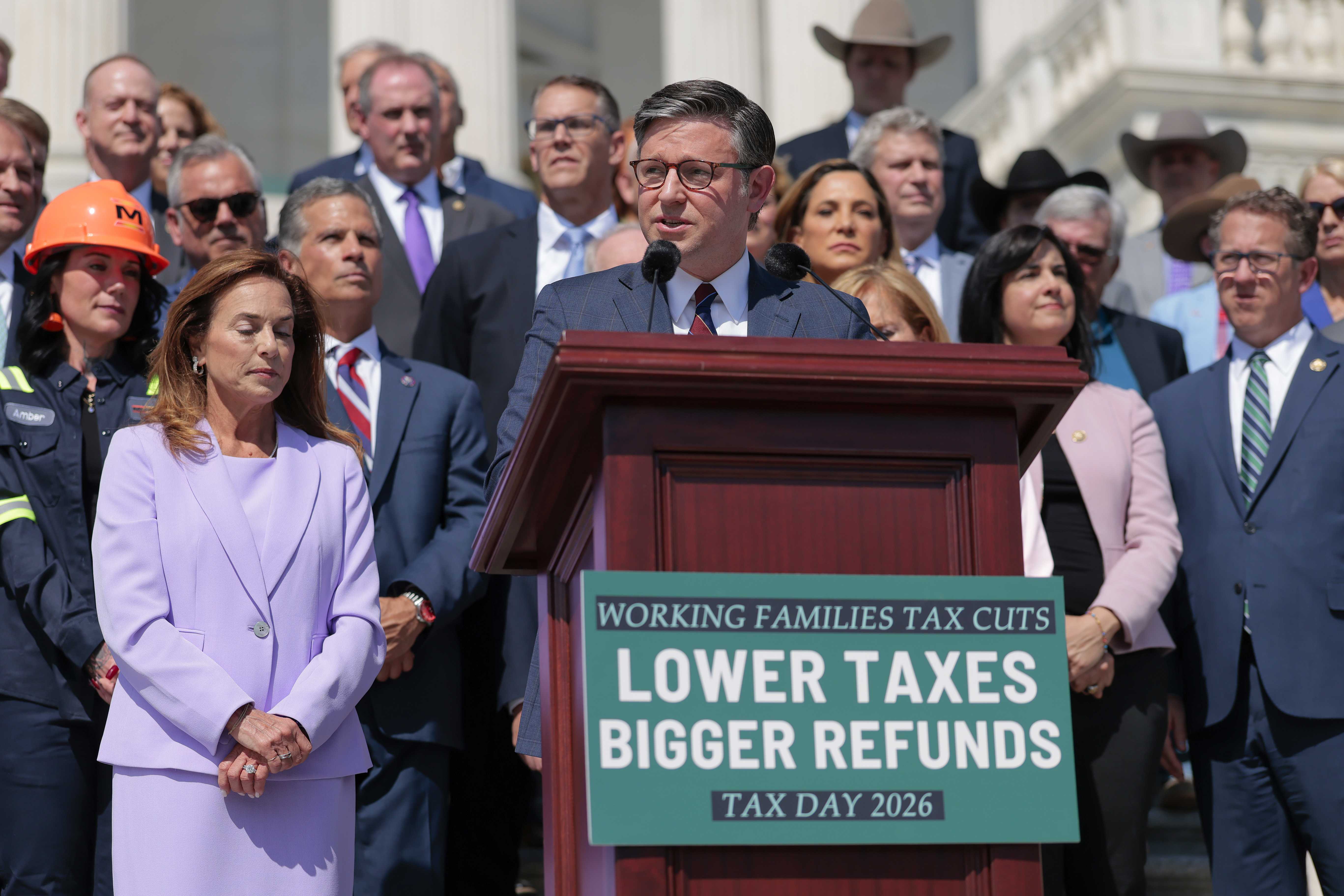
Republicans are taking advantage of Tax Day, the annual deadline for most Americans to file their federal income tax return, to talk up new tax cuts ahead of this fall’s midterm elections. President Donald Trump is expected to take that message on the road later this week, at a time when many Americans are concerned about the cost of living.
“President Trump and congressional Republicans delivered, passing the largest tax cut in history for working and middle-class Americans,” White House press secretary Karoline Leavitt said at a press briefing on Wednesday.
In fact, the 2025 tax cuts included in the One Big Beautiful Bill Act were not the biggest in U.S. history, according to our partners at Politifact. Their review found that the legislation reduces tax liability of most households, with larger percentage increases for higher-income people.
IRS data from the 2026 tax filing season so far shows that the average tax refund is $3,462, or about $350 more than last year.
“We can certainly attribute a significant portion of the increase in the average refund size to the tax cuts that Republicans passed last year. We typically don’t see this kind of bump from one year to the next,” said Andrew Lautz, director of tax policy at the Bipartisan Policy Center.
The U.S. Treasury Department says more than 53 million filers claimed at least one of Trump’s signature new tax cuts.
The law made a previous increase in the standard deduction permanent. It included an enhanced deduction for some seniors and increased the maximum child tax credit. The law also includes temporary tax breaks on tipped income and overtime pay, among other provisions.
Democrats downplayed the impact of the changes on Wednesday, arguing that some of the president’s other policies have increased costs for Americans.
“Even if they get a tiny bit of relief filing their taxes, every month they’re paying more,” said Rep. Pete Aguilar, D-Calif.
Higher gas prices due to the war with Iran are top of mind for many Americans. Neale Mahoney, an economics professor at Stanford University, projects that the typical American family will spend over $800 more at the pump this year compared to pre-war price levels.
“The amount they’re spending at the pump is going to more than cancel out the relief they’re getting from Uncle Sam,” Mahoney said.
The White House has said that energy price shocks will be temporary, and costs will drop off after the war ends. On Wednesday, Treasury Secretary Scott Bessent offered a new prediction.
“I’m optimistic that sometime between June 20th and September 20th that we can have $3 gas again,” said Bessent.
Asked if higher tax refunds would go toward gasoline, Bessent added, “Americans have more money. They can decide how they want to spend it.”

