Wildfire recovery efforts begin before a fire is fully contained, according to the U.S. Forest Service.Jeremy Kruger, disaster recovery coordinator for the U.S. Forest Service, said officials start planning for post-fire recovery while suppression efforts are still underway or when the fire is about 60% to 70% contained.That work begins with a Burned Area Emergency Response, or BAER, team. The team includes specialists in areas such as hydrology, soil science, archaeology and engineering who assess damage and identify immediate risks after a wildfire.Kruger said the team focuses heavily on soil burn severity, which helps determine erosion risk, flood potential and threats to roads, trails, habitat and other natural resources.The team then recommends emergency actions that can be taken within the first year after a fire to reduce risks to the public, infrastructure, endangered species and cultural sites.Those short-term efforts can include installing warning signs, closing unsafe areas, repairing fences, replacing trail signs, monitoring roads and doing erosion control or seeding work.Longer-term recovery can take years and may involve rebuilding roads, bridges and other damaged facilities.Kruger said recovery timelines vary depending on the fire and weather conditions, but many burned watersheds begin showing significant recovery within two to three years.He also said the Forest Service has more than 1,000 people in its Burned Area Response Program to help support post-fire recovery efforts.”A lot of people want some post-fire experience, and they find it very gratifying because you can get there sort of in a time of crisis for the forest, and you can help see what’s wrong,” Kruger said. “And then you can really kind of help chart a path forward.”Even with that work, Kruger said post-fire dangers can remain, especially flooding, and people should continue following guidance from local emergency officials.
Wildfire recovery efforts begin before a fire is fully contained, according to the U.S. Forest Service.
Jeremy Kruger, disaster recovery coordinator for the U.S. Forest Service, said officials start planning for post-fire recovery while suppression efforts are still underway or when the fire is about 60% to 70% contained.
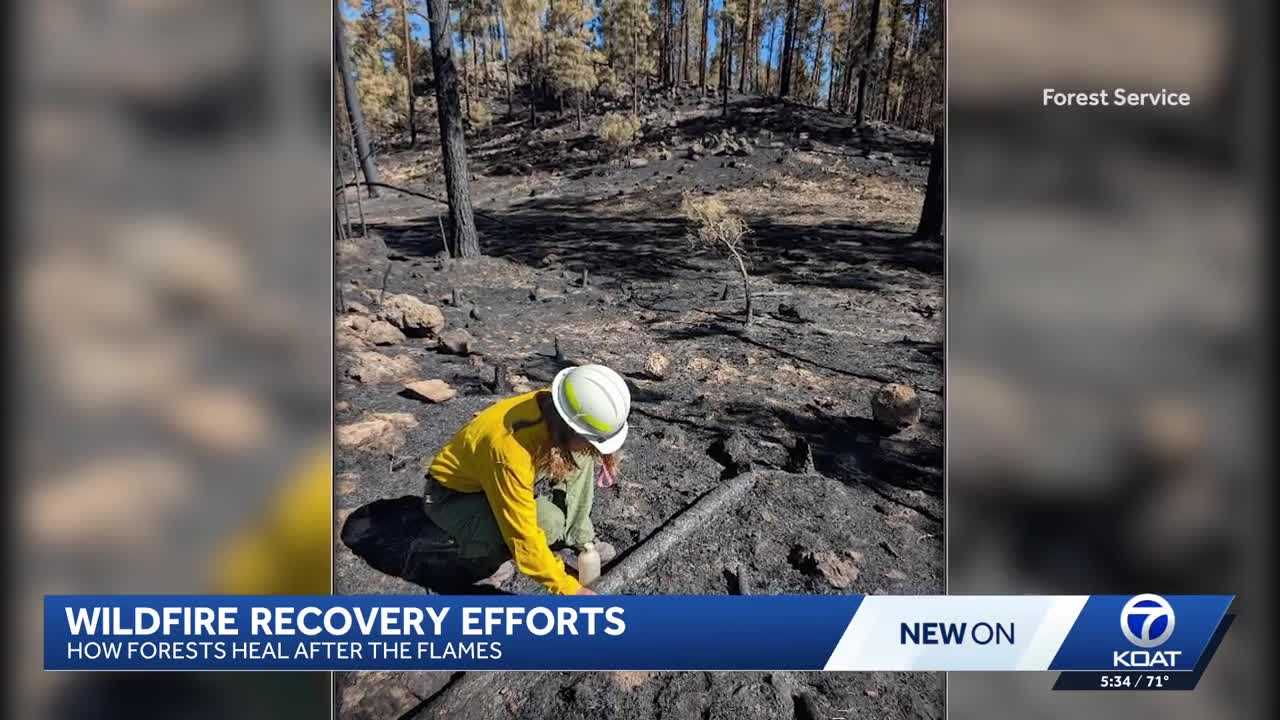
That work begins with a Burned Area Emergency Response, or BAER, team. The team includes specialists in areas such as hydrology, soil science, archaeology and engineering who assess damage and identify immediate risks after a wildfire.
Kruger said the team focuses heavily on soil burn severity, which helps determine erosion risk, flood potential and threats to roads, trails, habitat and other natural resources.
The team then recommends emergency actions that can be taken within the first year after a fire to reduce risks to the public, infrastructure, endangered species and cultural sites.
Those short-term efforts can include installing warning signs, closing unsafe areas, repairing fences, replacing trail signs, monitoring roads and doing erosion control or seeding work.
Longer-term recovery can take years and may involve rebuilding roads, bridges and other damaged facilities.
Kruger said recovery timelines vary depending on the fire and weather conditions, but many burned watersheds begin showing significant recovery within two to three years.
He also said the Forest Service has more than 1,000 people in its Burned Area Response Program to help support post-fire recovery efforts.
“A lot of people want some post-fire experience, and they find it very gratifying because you can get there sort of in a time of crisis for the forest, and you can help see what’s wrong,” Kruger said. “And then you can really kind of help chart a path forward.”
Even with that work, Kruger said post-fire dangers can remain, especially flooding, and people should continue following guidance from local emergency officials.

