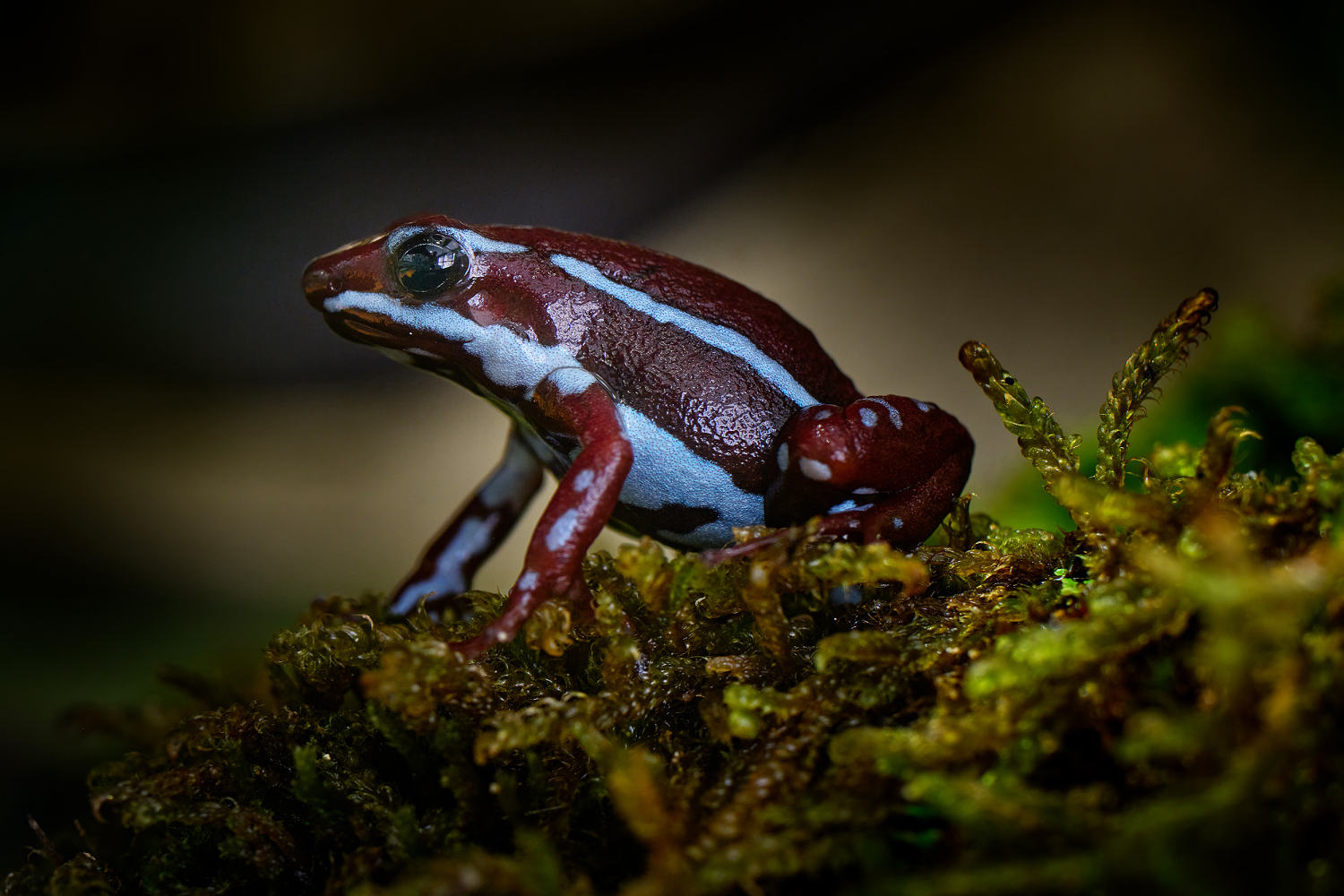
The modern poison has become less a medieval cliché than a geopolitical signature flourish. Precise, deniable, and in Russia’s case, grimly familiar.
Accusations of Russian poisoning surfaced again this week after Western governments said laboratory analysis found the rare frog-derived toxin epibatidine, a compound associated with Ecuadorian poison dart frogs, in samples from the body of Russian opposition leader Alexei Navalny.
The allegation feeds into a long and deeply contested narrative around high-profile poison cases in Vladimir Putin’s Russia, from radioactive tea to nerve agents. Moscow has consistently denied involvement in the episodes, which have shaped its global reputation.
A joint statement by the U.K., France, Germany, Sweden and the Netherlands on Saturday said forensic tests concluded that epibatidine, a powerful neurotoxin, was present in Navalny’s system after his death in a Siberian penal colony in 2024.
Russia’s prison service reported in February 2024 that Navalny, 47, died after having felt unwell following a walk around the high-security facility in a remote town above the Arctic Circle where he was serving a combined 30½-year jail sentence.
British officials said only the Russian government had the capability and opportunity to deploy the toxin against Navalny, and have reported the case to the Organization for the Prohibition of Chemical Weapons. French Foreign Minister Jean-Noël Barrot said that the episode shows Vladimir Putin is willing to use chemical agents against his own citizens to maintain power.
Russian Foreign Ministry spokeswoman Maria Zakharova said Saturday that Russia would comment “where there are test results, where there are formulas of the substances.”
While Russia dismisses the allegations, the case has focused attention on the extraordinary lethality of the substance involved, an exotic toxin whose potency and synthetic accessibility make it a weapon that experts say can be produced and deployed only by a state with advanced chemical capabilities.
Epipedobates anthonyi, known as Anthony’s poison arrow frog, typically measures 22mm long. Its skin carries sufficient epibatidine to kill a human several times over, with lethal doses measured in minuscule amounts as little as 1.4 micrograms.
The drug “is not naturally found in Russia,” the British foreign ministry said in a joint statement Saturday, but its absence in nature is irrelevant when a state with advanced chemical capabilities can reproduce and deploy it.
“The structure is known and it’s possible to synthesize it chemically, so you wouldn’t have to go to Ecuador looking for brightly colored frogs, wash them down and get the toxin off their skin,” Alastair Hay, Professor of Environmental Toxicology at the University of Leeds, told NBC News.
“You could make it in the lab,” he said.

