Vice President JD Vance arrived in Islamabad on Saturday for negotiations aimed at ending the war with Iran. American and Iranian delegations were slated to discuss a long-term peace plan for the first time since the conflict started more than a month ago. Early conversations were indirect and mediated by Pakistani Prime Minister Shehbaz Sharif. It was not immediately clear if both sides would meet directly, as there were still significant disagreements over the terms of the current two-week ceasefire. Iran’s parliament speaker, Mohammad Bagher Qalibaf, said Friday that the release of blocked Iranian assets “must be fulfilled before negotiations begin,” but did not elaborate further. There were some reports that the U.S. had agreed to release Iran’s frozen assets held in Qatar and other foreign banks, but the White House said Saturday morning that those reports were false. Iran has also demanded a ceasefire in Lebanon, where Israel is still targeting Iran-backed Hezbollah militants. President Donald Trump has argued that Lebanon was not included in the initial ceasefire agreement. Separate negotiations between Israel and Lebanon are expected next week in Washington, according to The Associated Press.The dispute over Lebanon’s inclusion in the ceasefire prompted Iran to once again restrict traffic in the Strait of Hormuz, where roughly one-fifth of the world’s oil passes through in peacetime.Trump has urged Iran to immediately reopen the strait without charging any tolls. “Nobody knows if they’re doing that, but if they’re doing that, we’re not going to let that happen,” Trump told reporters Friday. Trump said that the United States would open up the strait with or without Iran’s help. “The Iranians don’t seem to realize they have no cards, other than a short term extortion of the World by using International Waterways. The only reason they are alive today is to negotiate,” Trump wrote on social media on Friday. Asked what a good deal would look like, Trump reiterated that Iran cannot obtain a nuclear weapon. The future of Tehran’s nuclear program is expected to be one of the thorniest issues in Saturday’s negotiations as Iran, at least publicly, has continued to insist on its right to enrich uranium. Vance is leading the American negotiating team, which also includes special envoy Steve Witkoff and Trump’s son-in-law, Jared Kushner. It’s a big moment for Vance, who is widely considered to be a top Republican contender in the next presidential race. If he does decide to run, voters may look to these talks as a test of his foreign policy chops. Vance, who served in the Iraq War and in the U.S. Senate for two years, has little experience with diplomacy at this level. He is also a well-documented skeptic of U.S. military intervention overseas, making him an intriguing choice to lead the negotiations.
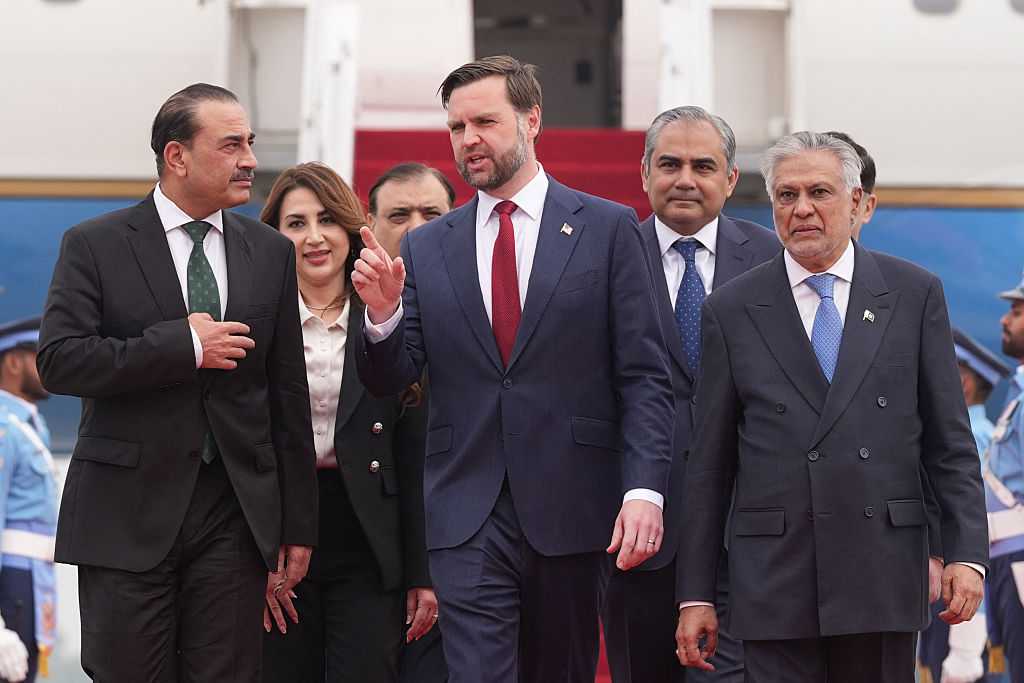
Vice President JD Vance arrived in Islamabad on Saturday for negotiations aimed at ending the war with Iran.
American and Iranian delegations were slated to discuss a long-term peace plan for the first time since the conflict started more than a month ago.
Early conversations were indirect and mediated by Pakistani Prime Minister Shehbaz Sharif. It was not immediately clear if both sides would meet directly, as there were still significant disagreements over the terms of the current two-week ceasefire.
Iran’s parliament speaker, Mohammad Bagher Qalibaf, said Friday that the release of blocked Iranian assets “must be fulfilled before negotiations begin,” but did not elaborate further. There were some reports that the U.S. had agreed to release Iran’s frozen assets held in Qatar and other foreign banks, but the White House said Saturday morning that those reports were false.
Iran has also demanded a ceasefire in Lebanon, where Israel is still targeting Iran-backed Hezbollah militants.
President Donald Trump has argued that Lebanon was not included in the initial ceasefire agreement. Separate negotiations between Israel and Lebanon are expected next week in Washington, according to The Associated Press.
The dispute over Lebanon’s inclusion in the ceasefire prompted Iran to once again restrict traffic in the Strait of Hormuz, where roughly one-fifth of the world’s oil passes through in peacetime.
Trump has urged Iran to immediately reopen the strait without charging any tolls.
“Nobody knows if they’re doing that, but if they’re doing that, we’re not going to let that happen,” Trump told reporters Friday.
Trump said that the United States would open up the strait with or without Iran’s help.
“The Iranians don’t seem to realize they have no cards, other than a short term extortion of the World by using International Waterways. The only reason they are alive today is to negotiate,” Trump wrote on social media on Friday.
Asked what a good deal would look like, Trump reiterated that Iran cannot obtain a nuclear weapon. The future of Tehran’s nuclear program is expected to be one of the thorniest issues in Saturday’s negotiations as Iran, at least publicly, has continued to insist on its right to enrich uranium.
Vance is leading the American negotiating team, which also includes special envoy Steve Witkoff and Trump’s son-in-law, Jared Kushner.
It’s a big moment for Vance, who is widely considered to be a top Republican contender in the next presidential race. If he does decide to run, voters may look to these talks as a test of his foreign policy chops.
Vance, who served in the Iraq War and in the U.S. Senate for two years, has little experience with diplomacy at this level. He is also a well-documented skeptic of U.S. military intervention overseas, making him an intriguing choice to lead the negotiations.

