One of the strongest super typhoons on the planet this year was striking the US Pacific Islands on Monday morning, the second massive storm to hit the territories since April.The center of Super Typhoon Bavi, the equivalent of a Category 5 hurricane, was passing over Rota, an island of 2,000 people in the Northern Mariana Islands. The storm had maximum sustained winds over 180 mph, with winds expected to exceed 150 mph on Rota, according to the National Weather Service.The powerful winds are capable of causing catastrophic damage to structures while downing trees and power lines and producing prolonged power outages.Torrential tropical rainfall was expected to produce significant flash flooding, with repeated bands of heavy rain continuing even after the eyewall passes.Life-threatening coastal flooding was also expected as powerful onshore winds drive storm surges onto coastlines, while enormous waves and dangerous surf make marine conditions extremely hazardous.Rota lies around 50 miles north of Guam, which is the site of some of the most important US military installations in the Pacific, including Andersen Air Force Base, that are seen as vital in any US conflict in the region.The Air Force rotates bombers, including B-1s, B-2s, and B-52s, through Andersen to project power across the Pacific. US Naval Base Guam is also the homeport of five US Navy attack submarines.More than 7,000 active-duty military personnel are based on Guam, which has a total population of more than 150,000 people.The U.S. military on Guam posted on social media early Monday that it was in its top level of storm readiness and was expecting damaging winds.Guam was facing the potential for hurricane-force winds and heavy rainfall, the weather service said.Meanwhile, 75 miles to the north of Rota, residents of the islands of Saipan and Tinian were hunkering down for impacts from the second super typhoon to hit the area this year.Like Guam, Saipan and Tinian could experience Category 1 winds of more than 74 mph, the weather service said.Parts of Saipan and the smaller neighboring island of Tinian are still without electricity as they recover from a direct hit from Super Typhoon Sinlaku in April as a Category 4 storm with sustained winds around 150 mph and gusts up to 185 mph.Sinlaku brought more than 20 inches of rain to parts of the Northern Mariana Islands, causing widespread flooding, prolonged power outages, and extensive damage to homes and infrastructure on Saipan and Tinian.Sinlaku’s slow movement (in contrast to Bavi) worsened impacts by keeping destructive winds and torrential rain over the islands for hours, rather than moving through quickly.Bavi is expected to leave the Marianas by Monday afternoon, heading generally west at 10 mph to 13 mph.Tinian is the island from which the B-29 bombers that dropped the atomic bombs on Japan in World War II departed. North Field on Tinian, which was once the busiest airport in the world, was shut down after the war but is undergoing renovation to become an alternate base to Guam as Washington tries to disperse its assets around the region.
One of the strongest super typhoons on the planet this year was striking the US Pacific Islands on Monday morning, the second massive storm to hit the territories since April.
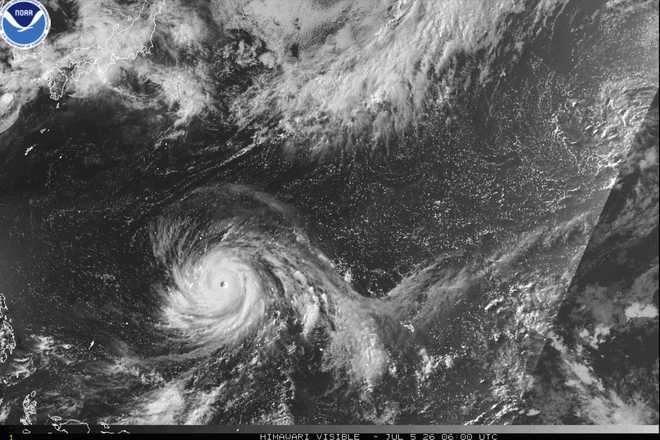
The center of Super Typhoon Bavi, the equivalent of a Category 5 hurricane, was passing over Rota, an island of 2,000 people in the Northern Mariana Islands. The storm had maximum sustained winds over 180 mph, with winds expected to exceed 150 mph on Rota, according to the National Weather Service.
The powerful winds are capable of causing catastrophic damage to structures while downing trees and power lines and producing prolonged power outages.
Torrential tropical rainfall was expected to produce significant flash flooding, with repeated bands of heavy rain continuing even after the eyewall passes.
Life-threatening coastal flooding was also expected as powerful onshore winds drive storm surges onto coastlines, while enormous waves and dangerous surf make marine conditions extremely hazardous.
Rota lies around 50 miles north of Guam, which is the site of some of the most important US military installations in the Pacific, including Andersen Air Force Base, that are seen as vital in any US conflict in the region.
The Air Force rotates bombers, including B-1s, B-2s, and B-52s, through Andersen to project power across the Pacific. US Naval Base Guam is also the homeport of five US Navy attack submarines.
More than 7,000 active-duty military personnel are based on Guam, which has a total population of more than 150,000 people.
The U.S. military on Guam posted on social media early Monday that it was in its top level of storm readiness and was expecting damaging winds.
Guam was facing the potential for hurricane-force winds and heavy rainfall, the weather service said.
Meanwhile, 75 miles to the north of Rota, residents of the islands of Saipan and Tinian were hunkering down for impacts from the second super typhoon to hit the area this year.
Like Guam, Saipan and Tinian could experience Category 1 winds of more than 74 mph, the weather service said.
Parts of Saipan and the smaller neighboring island of Tinian are still without electricity as they recover from a direct hit from Super Typhoon Sinlaku in April as a Category 4 storm with sustained winds around 150 mph and gusts up to 185 mph.
Sinlaku brought more than 20 inches of rain to parts of the Northern Mariana Islands, causing widespread flooding, prolonged power outages, and extensive damage to homes and infrastructure on Saipan and Tinian.
Sinlaku’s slow movement (in contrast to Bavi) worsened impacts by keeping destructive winds and torrential rain over the islands for hours, rather than moving through quickly.
Bavi is expected to leave the Marianas by Monday afternoon, heading generally west at 10 mph to 13 mph.
Tinian is the island from which the B-29 bombers that dropped the atomic bombs on Japan in World War II departed. North Field on Tinian, which was once the busiest airport in the world, was shut down after the war but is undergoing renovation to become an alternate base to Guam as Washington tries to disperse its assets around the region.

