Astronomers identify new type of ‘black hole star’ in universe while hunting space mystery
A black hole star or quasi-star had been just a theory — until now
A space mystery, sparked by telescope readings, has led astronomers to identify an all-new type of star — black hole stars.
Related video above: The dark energy pushing our universe apart may not be what it seems
Last week, researchers published a study in the journal Nature in which they may have solved a yearslong space riddle involving unassuming red dots in far-off space. The discovery could change what we know black holes to be capable of and how we think about our universe.
Let’s go back a bit: NASA’s James Webb Space Telescope, or JWST, launched in 2021 and sent back its first images in July 2022. Webb is the most powerful space telescope ever launched and will be relied on for astronomical discoveries for at least the next decade. Its very first image was the deepest infrared image of the universe ever taken. The image is of the galaxy cluster SMACS 0723 and contains thousands of galaxies and space objects, including something that has puzzled scientists for years.
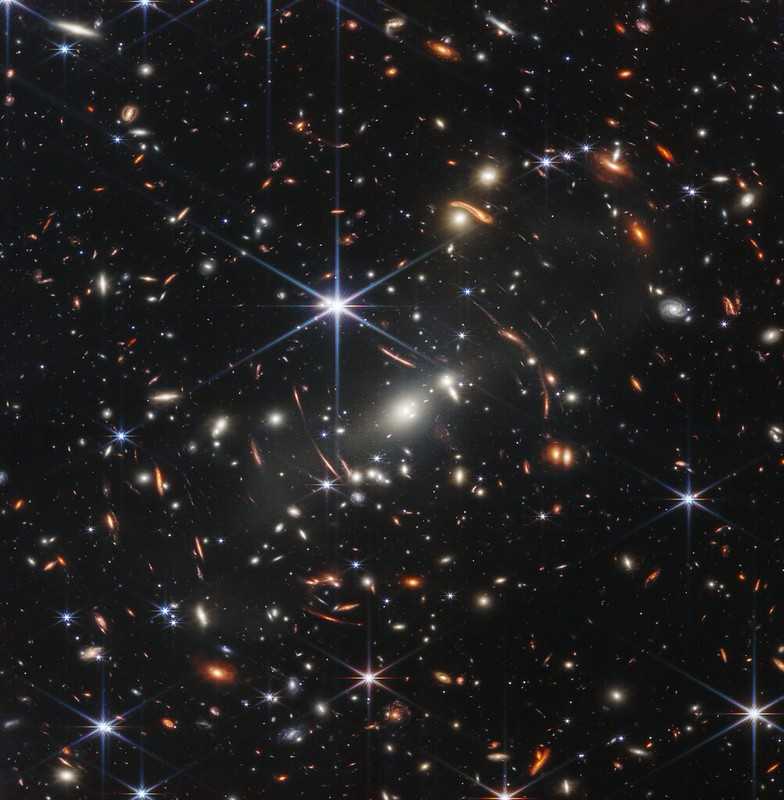
Thousands of galaxies flood this near-infrared image of galaxy cluster SMACS 0723.
If you poke around a high-def version of the above image, you’ll see plenty of details. You may even be able to see something that may seem innocuous, but actually stunned astronomers.
From Webb’s very first images, we were able to see these little red dots, now known as LRDs.
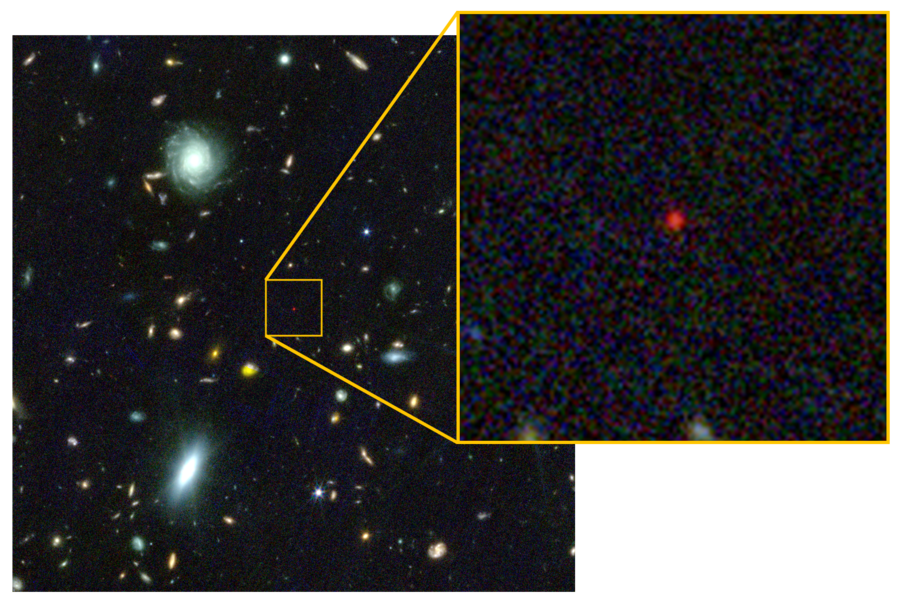
These little red dots are extremely common in images from the Webb telescope.
The light output and presentation of the dots didn’t match any known type of star, black hole, or gas cloud, leaving astronomers scratching their heads. LRDs appear small but are actually incredibly dense. The dots are at least approximately 12 billion light-years away from Earth, and they keep popping up. At the most recent count, astronomers have found over 300 of them in just a few years.
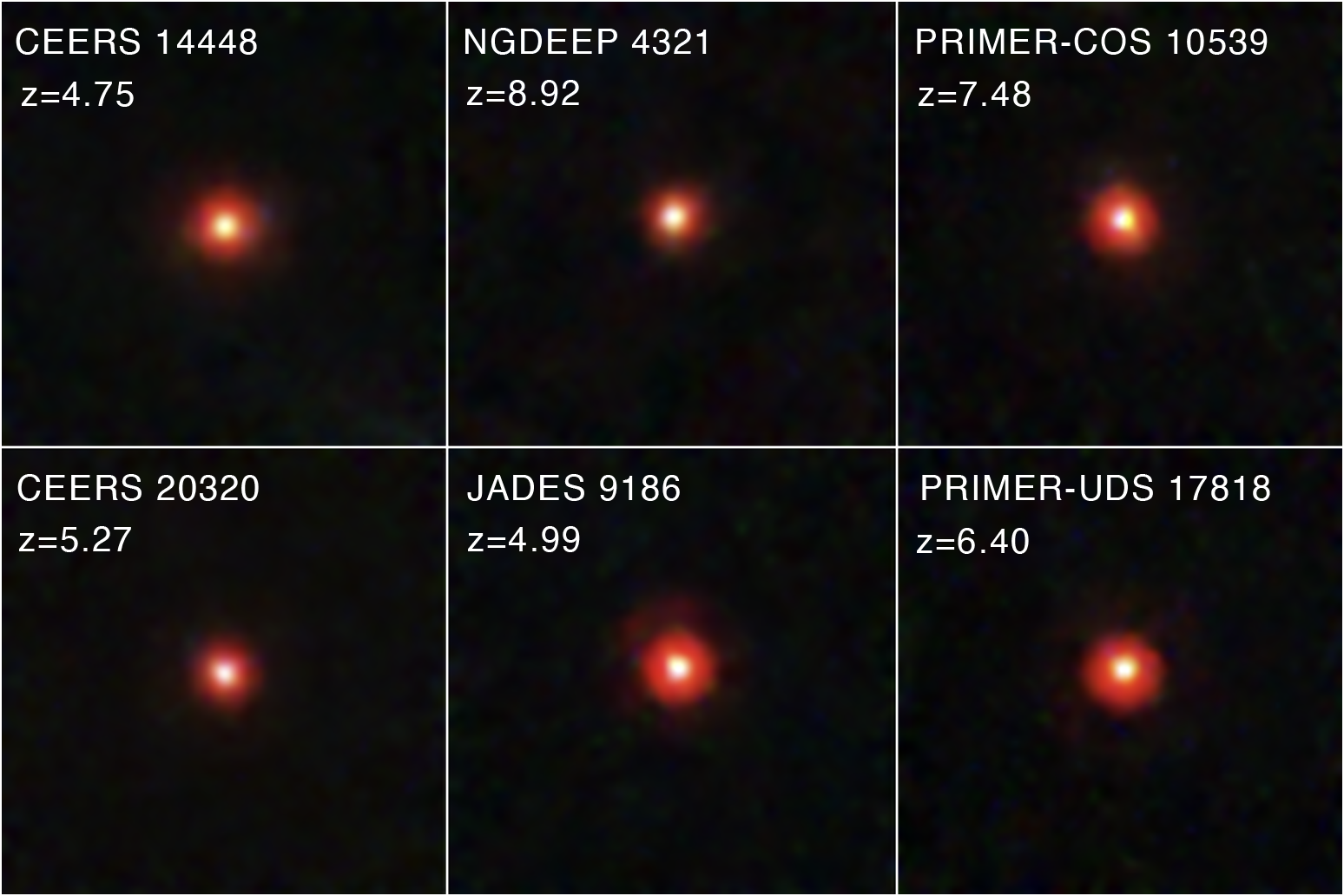
Little red dots captured and studied from several astronomical surveys of Webb telescope images of the universe.
Rohan Naidu, the lead researcher on the study, explained the mystery of LRDs.
“These little red dots seem to be everywhere in the early universe but essentially disappear by the present day,” Naidu said in a press release. “What exactly these objects are has been one of the most debated topics of the JWST era.”
The period of the early universe shortly after the Big Bang is known as “cosmic dawn.” Naidu and his team weren’t originally attempting to discover a new type of stellar object. They were actually looking to identify objects from cosmic dawn in a survey they called “Mirage or Miracle,” trying to figure out which bright spots in the sky were as old as they seemed and which were mirages. While surveying, they honed in on one of the brightest red dots in Webb’s view. This red dot was in the constellation Cetus, the Whale, and they began referring to it as MoM-BH*-1.
“You have something that looks a bit like a star but is 100 billion times brighter,” Naidu says. “That means you can’t be powering this by nuclear fusion, which is the energy source that sits at the heart of all the stars we have.”
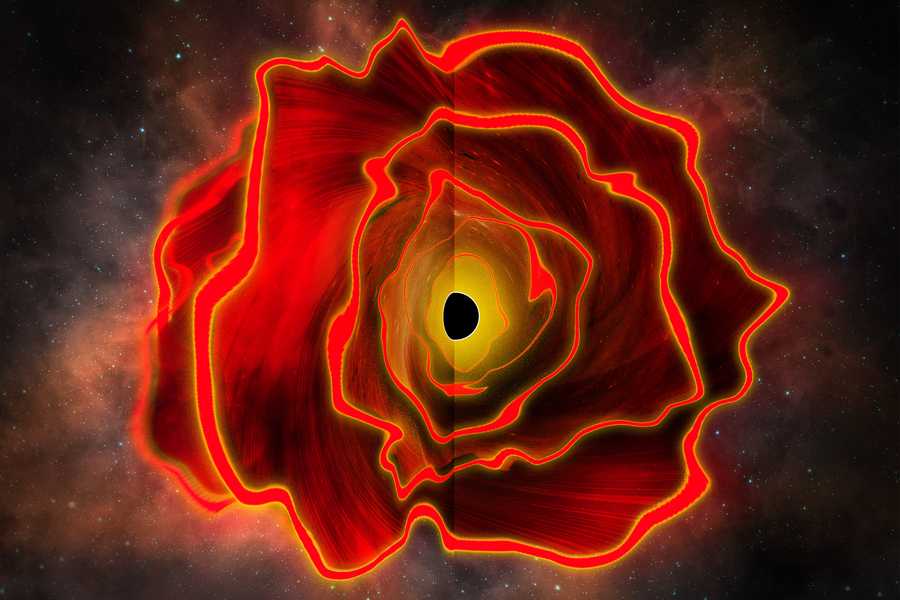
A conceptual image of a black hole star.
After extensive measurements, they realized that it couldn’t be a traditional star, and it didn’t present as a black hole usually would either. The object could be a hypothetical “black hole star” or “quasi-star,” which had been theorized for some time, but they had to be sure.
The key detail that the research team identified was that the little red dot was not so little after all — the light around the supermassive black hole was larger than a traditional star and was actually as large as our entire solar system.
Though we can’t “see” black holes, what we can see are the accretion disks of black holes, which are wide swaths of space gas clouds that give off their main source of light. Comparatively, the accretion cloud of this black hole star is massive.
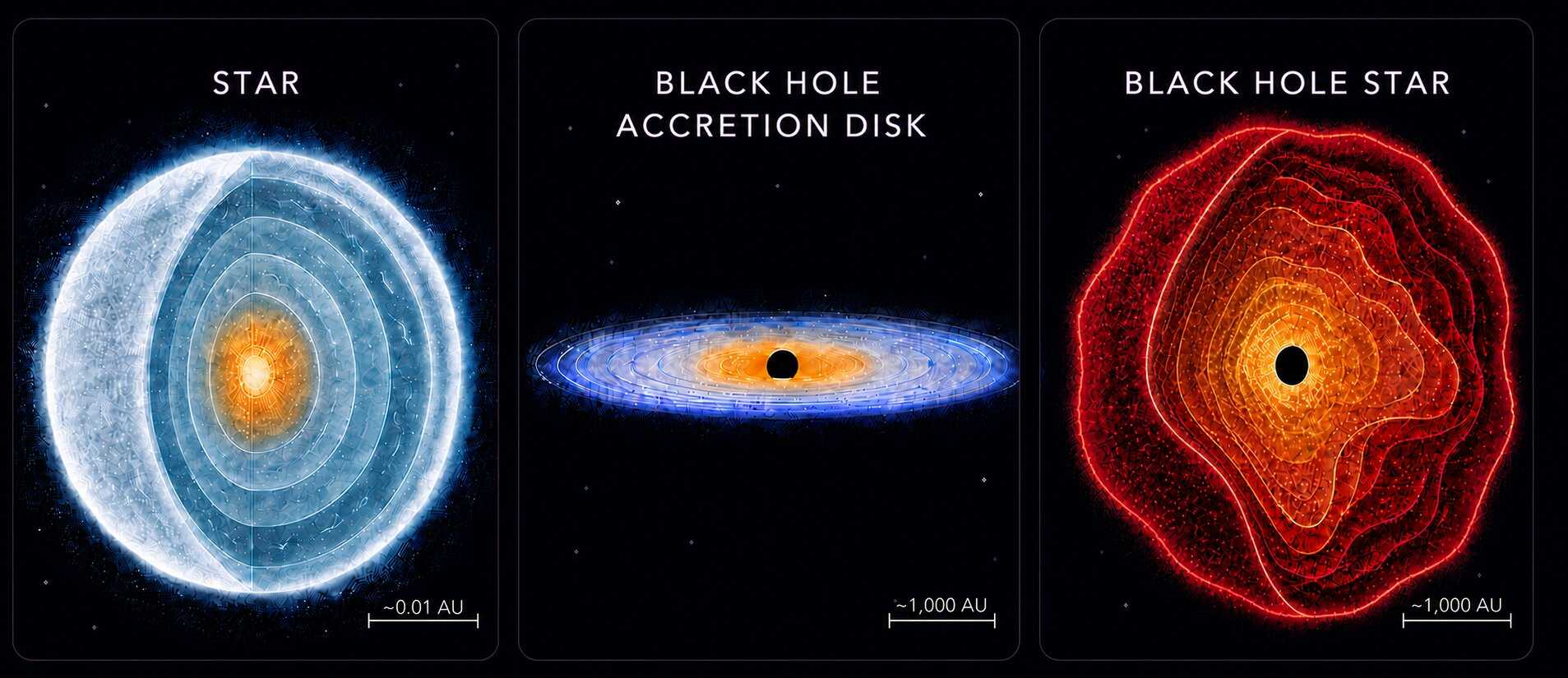
A star, a black hole, and a black hole star, for comparison.
“Radiation from the black hole seems to dominate almost all observed light, leaving limited room for contribution from its host galaxy,” the researchers wrote, also noting that the light we can see around the black hole is due to gas, not space dust.
Not only does this discovery possibly solve the little red dot mystery, but it could also be the first confirmation that black hole stars have existed this whole time.
“Every little red dot is consistent with being a black hole star, embedded in a generic early galaxy,” Naidu says. “But what is special about MoM-BH*-1 is that the black hole star is essentially completely outshining its surrounding host galaxy, such that we’re seeing pure black hole star light.”

