Using some of the fastest fighter jets in the world, a Space Coast aerospace company is attempting a first-of-its-kind approach to launching satellites and science experiments. It’s one of the more unconventional concepts in commercial spaceflight, and WESH 2 News got an exclusive behind-the-scenes look at how the company expects to do it. “We are a little different,” Starfighters Space CEO Tim Franta said. “To get to about 40,000 feet at 1,200 miles per hour, we just need 300 gallons of fuel, compared to a whole rocket.” Instead of launching a rocket from the ground, Starfighters Space plans to carry a small rocket beneath an F-104 fighter jet before releasing it at high altitude. The company says that approach could reduce costs and provide more flexibility than a traditional launch. “These are the last flying ones in the world,” Franta said. The company’s hangar is located at Kennedy Space Center and it uses the same runway once used by the space shuttle. However, Franta said they’re not trying to compete with companies launching massive rockets. “Elon and Blue Origin, they’re trucking companies — very big, massive rockets and satellites. Think of us not even as Uber, but Uber Eats,” Franta said. “We’re delivering something very small to a specific spot, and we’re trying to do it inexpensively.” The company is targeting smaller payloads that don’t require the lift capacity of traditional orbital rockets, focusing instead on niche missions that larger launch providers may not be able to accommodate as efficiently. Franta joined the company this year, but Brevard County has always been home. He said space exploration is in his blood. “I was born about eight miles that way,” Franta said. “My mother was a switchboard operator, did a lot of calls for the space center. My uncle was launch director for the Atlas.” Starfighters Space went public in December 2025. Franta is working to attract the right investors to help the company achieve its goal of launching payloads and scientific research missions into orbit using aircraft. “If it was just the rocket, that would be the easy part, but you have to get the funding and you have to make the business case,” Franta said. “Ironically, I was chief of staff for the Florida Space Authority, and I actually built this hangar more than 20 years ago, so it’s very full circle.” The company is also expanding. Recently, it brought on former NASA deputy administrator Frederick Gregory to oversee safety and mission practices and procedures. Its next major milestone is a drop test, where the company will release an unfueled payload to validate the aircraft release system before eventually progressing to powered launches. The long-term goal is to place payloads into low-Earth orbit. “We are very slow and methodical,” Franta said. “We call it ‘Steps to space.'”
Using some of the fastest fighter jets in the world, a Space Coast aerospace company is attempting a first-of-its-kind approach to launching satellites and science experiments.
It’s one of the more unconventional concepts in commercial spaceflight, and WESH 2 News got an exclusive behind-the-scenes look at how the company expects to do it.
“We are a little different,” Starfighters Space CEO Tim Franta said. “To get to about 40,000 feet at 1,200 miles per hour, we just need 300 gallons of fuel, compared to a whole rocket.”
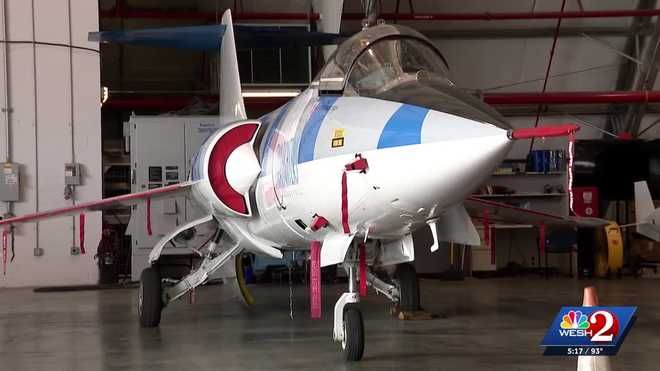
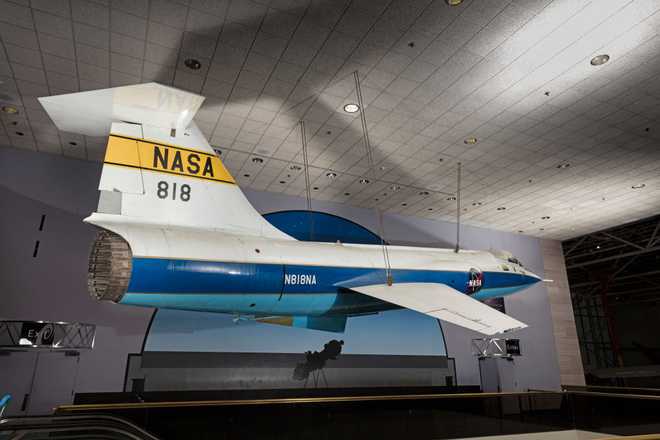
Instead of launching a rocket from the ground, Starfighters Space plans to carry a small rocket beneath an F-104 fighter jet before releasing it at high altitude. The company says that approach could reduce costs and provide more flexibility than a traditional launch.
“These are the last flying ones in the world,” Franta said.
The company’s hangar is located at Kennedy Space Center and it uses the same runway once used by the space shuttle. However, Franta said they’re not trying to compete with companies launching massive rockets.
“Elon and Blue Origin, they’re trucking companies — very big, massive rockets and satellites. Think of us not even as Uber, but Uber Eats,” Franta said. “We’re delivering something very small to a specific spot, and we’re trying to do it inexpensively.”
The company is targeting smaller payloads that don’t require the lift capacity of traditional orbital rockets, focusing instead on niche missions that larger launch providers may not be able to accommodate as efficiently.
Franta joined the company this year, but Brevard County has always been home. He said space exploration is in his blood.
“I was born about eight miles that way,” Franta said. “My mother was a switchboard operator, did a lot of calls for the space center. My uncle was launch director for the Atlas.”
Starfighters Space went public in December 2025. Franta is working to attract the right investors to help the company achieve its goal of launching payloads and scientific research missions into orbit using aircraft.
“If it was just the rocket, that would be the easy part, but you have to get the funding and you have to make the business case,” Franta said. “Ironically, I was chief of staff for the Florida Space Authority, and I actually built this hangar more than 20 years ago, so it’s very full circle.”
The company is also expanding. Recently, it brought on former NASA deputy administrator Frederick Gregory to oversee safety and mission practices and procedures.
Its next major milestone is a drop test, where the company will release an unfueled payload to validate the aircraft release system before eventually progressing to powered launches. The long-term goal is to place payloads into low-Earth orbit.
“We are very slow and methodical,” Franta said. “We call it ‘Steps to space.'”

