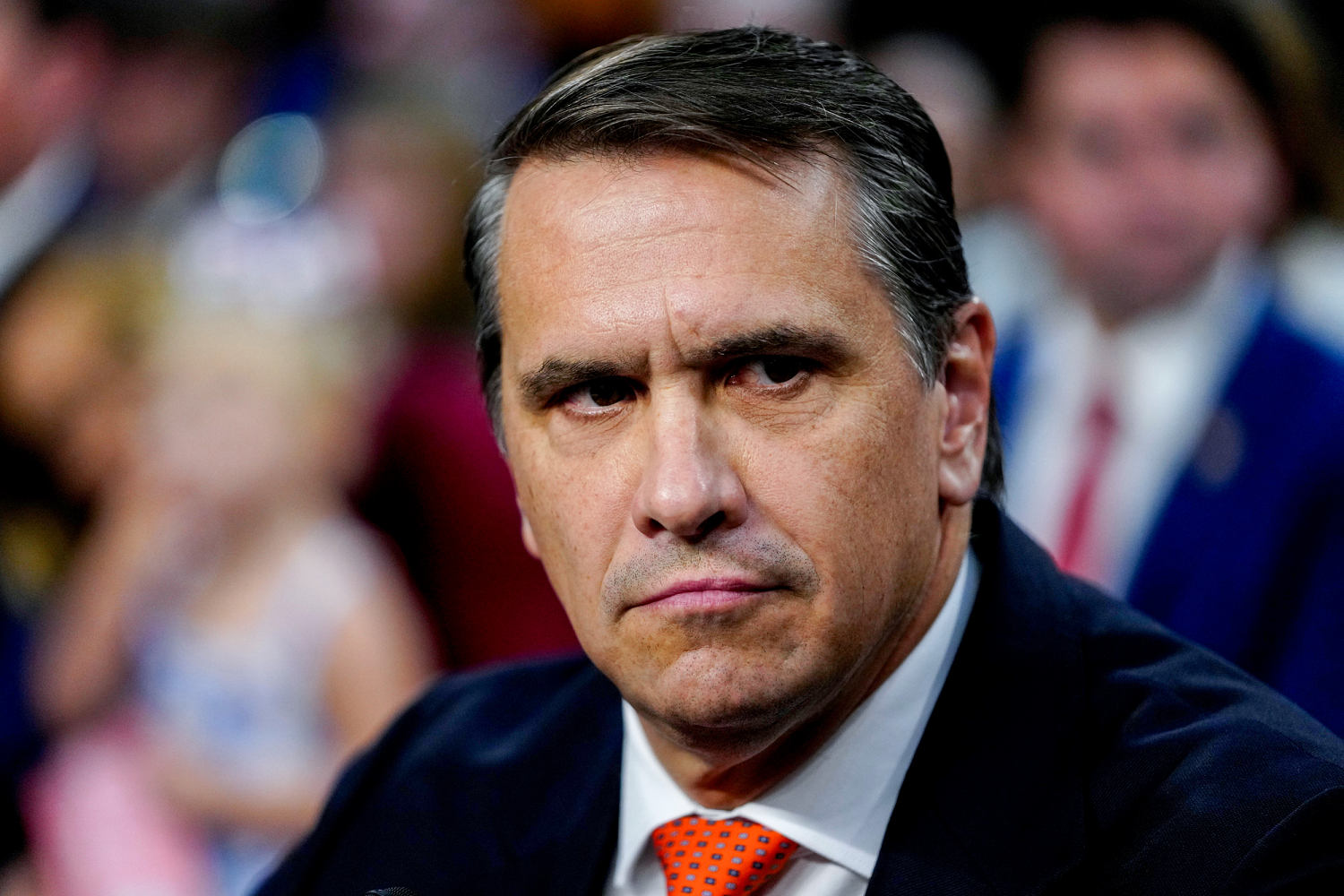
After weeks of uncertainty, Todd Blanche was confirmed as U.S. attorney general early Saturday in a mostly party-line vote.
Blanche, President Donald Trump’s former personal attorney, was confirmed by a vote of 50-49, with only two Republican senators, Susan Collins of Maine and Lisa Murkowski of Alaska, voting against him.
The vote was held after 4 a.m. on Saturday, as a late-night session ran over into the early hours ahead of a planned Senate recess.
His confirmation had been in jeopardy, largely over concerns about his handling of the so-called anti-weaponization fund, which was established in connection with a purported settlement between private citizen Trump and the federal government he now controls. That fund could have been used to give money to Trump allies who claimed they were victims of government overreach, including people who were charged in connection with the Jan. 6, 2021, Capitol attack. Blanche had also signed off on another part of the deal that gave Trump, his family members and his businesses immunity from tax audits.
Two Republican senators opposed Blanche’s nomination, Lisa Murkowski of Alaska and Susan Collins of Maine, along with all Democrats. Earlier Republican holdouts, Sens. Bill Cassidy of Louisiana, John Cornyn of Texas and Thom Tillis of North Carolina, ultimately said they would back Blanche after receiving various assurances from the nominee, including an order rescinding the $1.8 billion anti-weaponization fund. (A legal loophole could still revive the fund, however).
Lawmakers from both parties had also expressed discomfort that Blanche’s personal history with the president could affect his ability to run an independent Justice Department.
“The problem with confirming Todd Blanche is that he has never been able to shed his role as criminal defense lawyer for Donald Trump. He just can’t do it,” Sen. Adam Schiff, D-Calif., said ahead of the Senate Judiciary Committee’s vote advancing Blanche’s nomination. “He will never do what’s best for the American people. He will only do what’s best for Donald Trump, and you cannot leave someone like that as the nation’s No. 1 law enforcement official.”
Blanche took over as acting attorney general in April after Trump forced out his predecessor, former Attorney General Pam Bondi. Trump had become frustrated with Bondi over the lack of action from the DOJ against his political foes.
Blanche told NBC News in April, after he took over the Justice Department in an acting capacity, that Americans should be “happy” with Trump’s involvement in the Justice Department’s operations.
Weeks after Bondi’s dismissal, the Justice Department indicted former FBI Director James Comey, who is accused of threatening the president’s life by posting a photo of seashells in the shape of “8647” to Instagram.
Critics have questioned whether Blanche will stand up to Trump’s future desires to target his political enemies.
“The biggest concern is whether he is now going to be emboldened to go even more gung-ho on Trump’s campaign of using the Justice Department for retribution,” former federal prosecutor Laurie Levenson told NBC News in an interview prior to his confirmation. “There are no guardrails.”
Trump’s attorneys general in his first term also departed under pressure to act on the president’s behalf. Jeff Sessions was forced out after the 2018 midterms in part due Trump’s frustration with his recusal from the investigation into Russian interference in the 2016 election, an investigation that led to the Mueller report. Former Attorney General William Barr left after Trump tried to enlist the Justice Department in his efforts to overturn his 2020 election loss, a campaign that culminated in the Jan. 6 attack on the U.S. Capitol.

