Before Route 66 road trips, but after the era of horse-drawn buggies, Americans crossed the U.S. by train.During the 1870s, English immigrant Fred Harvey noticed train passengers were missing out on something: good-quality meals during the journey.To meet that need, Harvey, through a partnership with the Atchison, Topeka and Santa Fe Railway, created the Harvey House chain.Harvey set up numerous restaurants along the rail stops, where both passengers and the train could get refueled. Harvey divided restaurant eating areas into a formal dining room for travelers and a lunch counter for railroad workers. Passengers could place orders from the train, and staff telegraphed the requests over to the restaurant.Once seated, diners had 30 minutes until the train departed. Waitresses known as the “Harvey Girls” helped make this quick turnaround time possible. “They were so well trained, and they had such a system in place that everyone got back on the train, and nobody ever felt rushed while they were dining,” said Frances Zeller, manager for the Belen Harvey House Museum and Whistlestop Cafe.At one point, there were 80 Harvey Houses nationwide, with 13 in New Mexico.The Fred Harvey Company often recruited young women from the Midwest and trained them for 30 to 60 days in Vaughn, New Mexico, before sending them to work across the country. “(Harvey Girls) weren’t supposed to date, they weren’t supposed to be married, and they had to live here with a house mother. And it was all rather wholesome and clean cut,” Zeller said.Belen served diners until 1939, when it closed.”With the war, the depression, and the trains were converting from coal to diesel, and so there was less of a need for the train to make these frequent stops again,” Zeller said. “By the late 30s and 40s, railroad travel was starting to decline.”The decrease was largely due to the rise of automobiles and the completion of Route 66. While the Belen location was not along the Mother Road, some Fred Harvey locations held out.”When you traveled along Route 66, you would see signs that would say a ‘Fred Harvey Hotel’ or a ‘Fred Harvey restaurant,'” Zeller said.In Albuquerque, this included the Alvarado Hotel, which stood on the current site of the Alvarado Transportation Center.”It was a real tourist destination. They had the Indian room for shopping, and they had beautiful rooms and a beautiful restaurant,” Zeller said. ATSF demolished the Alvarado in 1970 after falling into disrepair. In the 2000s, the transportation center was built with some inspiration taken from the original hotel. Train travelers still board at the same site. “People were using the Fred Harvey name or system as a standard to go by. Today, I think it’s completely lost. It’s gone. If you ride the train today, you eat on a paper plate something from the microwave,” Zeller said. After closing, the Belen Harvey House was used by troops during World War II, and then it housed railroad workers. Later, in the 1980s, the city of Belen turned it into a civic center, with a small museum.But at the Belen Harvey House Museum and Whistlestop Cafe, visitors can still get a little taste of rail travel history.Originally called the Belen Eating House, the museum offers tours of the dining areas and staff housing, filled with artifacts from the house itself and from Harvey locations across the country.By 2013, the building had become a full-size museum with a specialized railroad and Southwest history library. Yet funding was tight. “Prior to (the cafe), we were so poor that we just scrimped and saved, and we donated our own money and whatever to make things happen,” Zeller said. “I knew in my head what color to paint and what it was going to be like. And I said, ‘Oh, five, 10 people a day.’ And it just exploded.”Zeller mentioned that some diners come back every week, some as far as Santa Fe. “People were wanting grandmother food. They were wanting meatloaf and mashed potatoes, and they were wanting that good coffee,” Zeller said. “By chance, an accident. We discovered there is a need. And our whole business plan is our waitresses, our volunteers, they give all their tips back to the museum.”With the extra income, Zeller explained the museum can afford to purchase supplies for exhibits, antiques, and Fred Harvey memorabilia for display.”The restaurant, it’s really created a whole different environment, so people are able to experience the same thing they did a hundred years ago in this building. They’re able to smell the delicious food and look at the desserts,” Zeller said. “Just enjoy the building, not just as a museum, but as a kind of living history.”For some southwestern history served with a side of pie and coffee, check out the Belen Harvey House and Museum at 104 N. 1st Street in Belen, New Mexico.
Before Route 66 road trips, but after the era of horse-drawn buggies, Americans crossed the U.S. by train.
During the 1870s, English immigrant Fred Harvey noticed train passengers were missing out on something: good-quality meals during the journey.
To meet that need, Harvey, through a partnership with the Atchison, Topeka and Santa Fe Railway, created the Harvey House chain.
Harvey set up numerous restaurants along the rail stops, where both passengers and the train could get refueled. Harvey divided restaurant eating areas into a formal dining room for travelers and a lunch counter for railroad workers. Passengers could place orders from the train, and staff telegraphed the requests over to the restaurant.
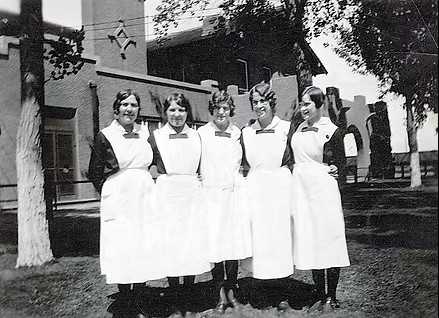
Once seated, diners had 30 minutes until the train departed. Waitresses known as the “Harvey Girls” helped make this quick turnaround time possible.
“They were so well trained, and they had such a system in place that everyone got back on the train, and nobody ever felt rushed while they were dining,” said Frances Zeller, manager for the Belen Harvey House Museum and Whistlestop Cafe.
At one point, there were 80 Harvey Houses nationwide, with 13 in New Mexico.
The Fred Harvey Company often recruited young women from the Midwest and trained them for 30 to 60 days in Vaughn, New Mexico, before sending them to work across the country.
“(Harvey Girls) weren’t supposed to date, they weren’t supposed to be married, and they had to live here with a house mother. And it was all rather wholesome and clean cut,” Zeller said.
Belen served diners until 1939, when it closed.
“With the war, the depression, and the trains were converting from coal to diesel, and so there was less of a need for the train to make these frequent stops again,” Zeller said. “By the late 30s and 40s, railroad travel was starting to decline.”
The decrease was largely due to the rise of automobiles and the completion of Route 66. While the Belen location was not along the Mother Road, some Fred Harvey locations held out.
“When you traveled along Route 66, you would see signs that would say a ‘Fred Harvey Hotel’ or a ‘Fred Harvey restaurant,'” Zeller said.
In Albuquerque, this included the Alvarado Hotel, which stood on the current site of the Alvarado Transportation Center.
“It was a real tourist destination. They had the Indian room for shopping, and they had beautiful rooms and a beautiful restaurant,” Zeller said.
ATSF demolished the Alvarado in 1970 after falling into disrepair. In the 2000s, the transportation center was built with some inspiration taken from the original hotel. Train travelers still board at the same site.
“People were using the Fred Harvey name or system as a standard to go by. Today, I think it’s completely lost. It’s gone. If you ride the train today, you eat on a paper plate something from the microwave,” Zeller said.
After closing, the Belen Harvey House was used by troops during World War II, and then it housed railroad workers. Later, in the 1980s, the city of Belen turned it into a civic center, with a small museum.
But at the Belen Harvey House Museum and Whistlestop Cafe, visitors can still get a little taste of rail travel history.
Originally called the Belen Eating House, the museum offers tours of the dining areas and staff housing, filled with artifacts from the house itself and from Harvey locations across the country.
By 2013, the building had become a full-size museum with a specialized railroad and Southwest history library. Yet funding was tight.
“Prior to (the cafe), we were so poor that we just scrimped and saved, and we donated our own money and whatever to make things happen,” Zeller said. “I knew in my head what color to paint [the cafe] and what it was going to be like. And I said, ‘Oh, five, 10 people a day.’ And it just exploded.”
Zeller mentioned that some diners come back every week, some as far as Santa Fe.
“People were wanting grandmother food. They were wanting meatloaf and mashed potatoes, and they were wanting that good coffee,” Zeller said. “By chance, an accident. We discovered there is a need. And our whole business plan is our waitresses, our volunteers, they give all their tips back to the museum.”
With the extra income, Zeller explained the museum can afford to purchase supplies for exhibits, antiques, and Fred Harvey memorabilia for display.
“The restaurant, it’s really created a whole different environment, so people are able to experience the same thing they did a hundred years ago in this building. They’re able to smell the delicious food and look at the desserts,” Zeller said. “Just enjoy the building, not just as a museum, but as a kind of living history.”
For some southwestern history served with a side of pie and coffee, check out the Belen Harvey House and Museum at 104 N. 1st Street in Belen, New Mexico.

