The cruise ship at the center of the hantavirus outbreak has arrived at the Spanish island of Tenerife, where its 147 passengers are expected to disembark in a carefully managed repatriation operation involving multiple nations.Video above: Doctor aboard ship with hantavirus outbreak speaks to CNNSmall boats with flashing sirens approached the MV Hondius at sunrise, after it anchored at the Port of Granadilla in the Canary Islands.Silhouettes appeared at the vessel’s curtained windows as a tugboat approached below, while a masked individual stood at the open door. People in hazmat suits and officials in “World Health Organization” uniforms, meanwhile, waited by the dockside.Medical teams boarded the ship to run tests on passengers and crew, Spain’s health minister Mónica García said shortly before 8 a.m. The passengers will then be evacuated to their home countries.Since the vessel departed Argentina last month, the deaths of three people have been linked to hantavirus — a rare disease typically caused by exposure to infected rodents’ urine or feces — while others have been evacuated from the ship for medical treatment.The ship will anchor at “the safest” distance from the dock, local officials said, and passengers will be brought ashore by nationality in small boats with a maximum capacity of 10 people, according to the tour operator Oceanwide Expeditions.Several nations, including the U.S., Germany, France, Belgium, Ireland and the Netherlands, are sending aircraft to evacuate their nationals who were on the ship. “The sequence of disembarkation will be coordinated with arriving repatriation flights,” Oceanwide said, adding that passengers’ luggage would remain on the ship and be returned to them later.A U.S. Centers for Disease Control and Prevention official said that the 17 American passengers — none of whom have symptoms — will be transported to the University of Nebraska Medical Center, which is home to the National Quarantine Unit, a federally funded facility.After briefly being assessed at the unit, the passengers will then be able to undergo home-based monitoring over the next 42 days, the official said, with monitoring expected to be at least daily.Fourteen Spanish passengers are expected to disembark the vessel first and will wear FFP2 masks — along with those involved in bus transfers and logistics, García said on Saturday.They will be taken to a military hospital, where they will stay in individual rooms with no visitors allowed, and will receive a PCR test upon arrival and another seven days later, Spain’s health ministry said.The two Dutch passengers on board will be the second group to leave the vessel, García said on Sunday morning.The boat’s arrival has caused tensions in the Canary Islands, an autonomous community of Spain, with the territory’s leader Fernando Clavijo saying earlier in the week that he was opposed to the ship docking there.Port workers in Tenerife have also held protests, voicing their concerns about a lack of communication about the potential risks.The ship and its crew are scheduled to continue to Rotterdam in the Netherlands, where the crew will disembark and the ship will be disinfected.The hantavirus outbreak was first reported to the World Health Organization on May 2 and remains a low risk to the general public, the WHO said.CNN has contacted Ports of Tenerife and Clavijo’s office for comment.CNN’s Adam Cancryn, Brenda Goodman, Jennifer Hansler, Deidre McPhillips and Christian Edwards contributed to this report.
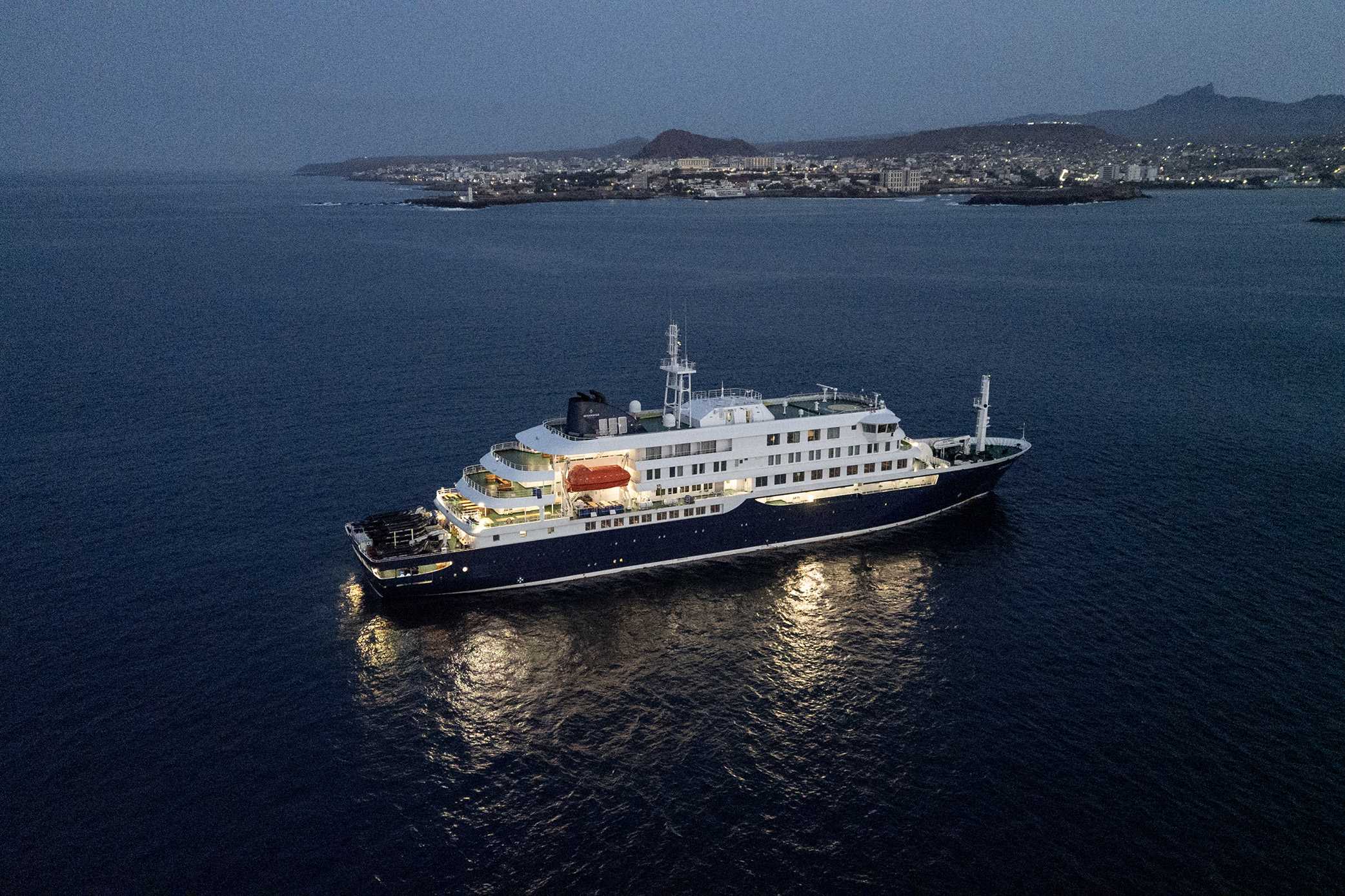
The cruise ship at the center of the hantavirus outbreak has arrived at the Spanish island of Tenerife, where its 147 passengers are expected to disembark in a carefully managed repatriation operation involving multiple nations.
Video above: Doctor aboard ship with hantavirus outbreak speaks to CNN
Small boats with flashing sirens approached the MV Hondius at sunrise, after it anchored at the Port of Granadilla in the Canary Islands.
Silhouettes appeared at the vessel’s curtained windows as a tugboat approached below, while a masked individual stood at the open door. People in hazmat suits and officials in “World Health Organization” uniforms, meanwhile, waited by the dockside.
Medical teams boarded the ship to run tests on passengers and crew, Spain’s health minister Mónica García said shortly before 8 a.m. The passengers will then be evacuated to their home countries.
Since the vessel departed Argentina last month, the deaths of three people have been linked to hantavirus — a rare disease typically caused by exposure to infected rodents’ urine or feces — while others have been evacuated from the ship for medical treatment.
The ship will anchor at “the safest” distance from the dock, local officials said, and passengers will be brought ashore by nationality in small boats with a maximum capacity of 10 people, according to the tour operator Oceanwide Expeditions.
Several nations, including the U.S., Germany, France, Belgium, Ireland and the Netherlands, are sending aircraft to evacuate their nationals who were on the ship. “The sequence of disembarkation will be coordinated with arriving repatriation flights,” Oceanwide said, adding that passengers’ luggage would remain on the ship and be returned to them later.
A U.S. Centers for Disease Control and Prevention official said that the 17 American passengers — none of whom have symptoms — will be transported to the University of Nebraska Medical Center, which is home to the National Quarantine Unit, a federally funded facility.
After briefly being assessed at the unit, the passengers will then be able to undergo home-based monitoring over the next 42 days, the official said, with monitoring expected to be at least daily.
Fourteen Spanish passengers are expected to disembark the vessel first and will wear FFP2 masks — along with those involved in bus transfers and logistics, García said on Saturday.
They will be taken to a military hospital, where they will stay in individual rooms with no visitors allowed, and will receive a PCR test upon arrival and another seven days later, Spain’s health ministry said.
The two Dutch passengers on board will be the second group to leave the vessel, García said on Sunday morning.
The boat’s arrival has caused tensions in the Canary Islands, an autonomous community of Spain, with the territory’s leader Fernando Clavijo saying earlier in the week that he was opposed to the ship docking there.
Port workers in Tenerife have also held protests, voicing their concerns about a lack of communication about the potential risks.
The ship and its crew are scheduled to continue to Rotterdam in the Netherlands, where the crew will disembark and the ship will be disinfected.
The hantavirus outbreak was first reported to the World Health Organization on May 2 and remains a low risk to the general public, the WHO said.
CNN has contacted Ports of Tenerife and Clavijo’s office for comment.
CNN’s Adam Cancryn, Brenda Goodman, Jennifer Hansler, Deidre McPhillips and Christian Edwards contributed to this report.

