The partial government shutdown impacting the Department of Homeland Security (DHS) is now the longest in U.S. history. The funding lapse reached 44 days on Sunday, surpassing the prior record set by last year’s 43-day shutdown that affected the entire federal government. The milestone comes as Congress kicks off a two-week recess. On Friday, the House and Senate backed different solutions to the stalemate, then left Washington without a compromise. “I have never been more disgusted by the failure of elected leadership in my life,” said Everett Kelley, national president of the American Federation of Government Employees (AFGE), a union that represents impacted workers. “No check. No relief. No apology as Congress packed their bags and left these American families to struggle alone.”President Donald Trump bypassed Congress and signed an executive order to restore pay for Transportation Security Administration (TSA) employees, which could happen as soon as Monday, according to DHS Secretary Markwayne Mullin.The goal is to ease the most visible impact of the shutdown — long airport security lines — but other impacts persist. Thousands of other federal employees are still facing paycheck delays, including members of the U.S. Coast Guard. In a hearing last week, Vice Adm. Thomas Allan told lawmakers that the shutdown is causing severe financial hardship for military families and eroding mission readiness. He said the inability to pay for parts and services risks triggering stop-work orders, potentially worsening the Coast Guard’s existing maintenance backlog.The federal agency in charge of cybersecurity has scaled back its prevention efforts, including proactive assistance to state and local governments aimed at protecting critical infrastructure, according to Nicholas Andersen, acting director of CISA. He said the agency continues to respond to imminent threats but warned that reduced capacity could leave openings for America’s adversaries. At the Federal Emergency Management Agency (FEMA), a grant program that provides additional security funding to houses of worship and nonprofits has also been disrupted amid a heightened threat environment due to the war with Iran. Victoria Barton, an associate administrator for FEMA, said almost all of the agency’s trainings have been postponed, including anti-terrorism preparedness courses. Last month, FEMA also announced that it would pause “all non-emergency recovery work,” a blow to communities rebuilding from past disasters. Democrats described the move as “unnecessary and cruel.”While the shutdown stems from a debate about immigration enforcement reforms, ICE operations have largely continued uninterrupted due to increased funding for the agency that was included in the president’s megabill last year. On Saturday, “No Kings” rallies were held across the U.S. and Europe protesting a range of Trump’s policies. The flagship event was held in Minnesota, which was at the center of the president’s immigration enforcement surge earlier this year. It’s where two U.S. citizens were shot and killed by federal immigration officers, driving calls for reform in Congress that ultimately led the country into the partial shutdown.Democrats are continuing to demand new guardrails on ICE and Border Patrol before approving additional funding for those agencies. On Friday, the Senate unanimously passed a deal that left out money for those parts of DHS while restoring funding for other parts of the department, like TSA, FEMA and the Coast Guard. House Republicans rejected that strategy and instead passed a short-term funding extension for the entire department. Senate Minority Leader Chuck Schumer described the plan as “dead on arrival.”
The partial government shutdown impacting the Department of Homeland Security (DHS) is now the longest in U.S. history. The funding lapse reached 44 days on Sunday, surpassing the prior record set by last year’s 43-day shutdown that affected the entire federal government.
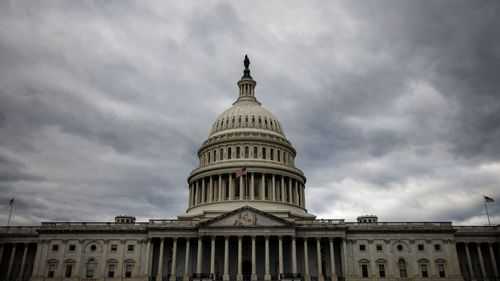
The milestone comes as Congress kicks off a two-week recess. On Friday, the House and Senate backed different solutions to the stalemate, then left Washington without a compromise.
“I have never been more disgusted by the failure of elected leadership in my life,” said Everett Kelley, national president of the American Federation of Government Employees (AFGE), a union that represents impacted workers. “No check. No relief. No apology as Congress packed their bags and left these American families to struggle alone.”
President Donald Trump bypassed Congress and signed an executive order to restore pay for Transportation Security Administration (TSA) employees, which could happen as soon as Monday, according to DHS Secretary Markwayne Mullin.
The goal is to ease the most visible impact of the shutdown — long airport security lines — but other impacts persist.
Thousands of other federal employees are still facing paycheck delays, including members of the U.S. Coast Guard. In a hearing last week, Vice Adm. Thomas Allan told lawmakers that the shutdown is causing severe financial hardship for military families and eroding mission readiness. He said the inability to pay for parts and services risks triggering stop-work orders, potentially worsening the Coast Guard’s existing maintenance backlog.
The federal agency in charge of cybersecurity has scaled back its prevention efforts, including proactive assistance to state and local governments aimed at protecting critical infrastructure, according to Nicholas Andersen, acting director of CISA. He said the agency continues to respond to imminent threats but warned that reduced capacity could leave openings for America’s adversaries.
At the Federal Emergency Management Agency (FEMA), a grant program that provides additional security funding to houses of worship and nonprofits has also been disrupted amid a heightened threat environment due to the war with Iran. Victoria Barton, an associate administrator for FEMA, said almost all of the agency’s trainings have been postponed, including anti-terrorism preparedness courses.
Last month, FEMA also announced that it would pause “all non-emergency recovery work,” a blow to communities rebuilding from past disasters. Democrats described the move as “unnecessary and cruel.”
While the shutdown stems from a debate about immigration enforcement reforms, ICE operations have largely continued uninterrupted due to increased funding for the agency that was included in the president’s megabill last year.
On Saturday, “No Kings” rallies were held across the U.S. and Europe protesting a range of Trump’s policies. The flagship event was held in Minnesota, which was at the center of the president’s immigration enforcement surge earlier this year. It’s where two U.S. citizens were shot and killed by federal immigration officers, driving calls for reform in Congress that ultimately led the country into the partial shutdown.
Democrats are continuing to demand new guardrails on ICE and Border Patrol before approving additional funding for those agencies. On Friday, the Senate unanimously passed a deal that left out money for those parts of DHS while restoring funding for other parts of the department, like TSA, FEMA and the Coast Guard.
House Republicans rejected that strategy and instead passed a short-term funding extension for the entire department. Senate Minority Leader Chuck Schumer described the plan as “dead on arrival.”

