Ali al-Samoudi gingerly walks down the steps toward his home.The 59-year-old Palestinian journalist is gaunt, with closely cropped gray hair and a matching beard. Each cautious step he takes reveals the physical toll of all he has endured that has aged him beyond his years.We’ve worked with Samoudi for years, and this is the first time we’ve seen him in person in over a year. We can barely recognize him.Samoudi was released last week from Israeli prison, where he was held for a year. He was never charged with a crime, held instead under administrative detention orders, which allow the Israeli military to imprison Palestinians without trial for up to six months at a time. The orders can be renewed indefinitely.”It was a real hell. Prison today is hell in every sense of the word,” Samoudi said in an interview at his home in Jenin. “Everything they practiced with us was punishment and revenge.”He is one of 105 Palestinian journalists who have been detained and imprisoned since October 7, 2023, the majority also held without charge, according to the Committee to Protect Journalists. The startling scale of detentions made Israel the third-worst jailer of journalists for 2025, behind only China and Myanmar, according to CPJ. Thirty-three Palestinian journalists are still imprisoned in Israel, the organization said.Samoudi is a well-known journalist who has worked as a local producer and fixer for CNN, among other international outlets. He was at Shireen Abu Akleh’s side when the Palestinian American journalist was fatally shot by Israeli troops in 2022. He was also shot in the shoulder in the same incident.Despite his four decades of reporting experience, Samoudi said he was shocked by the conditions in Israeli prisons, where he says he endured physical and psychological abuse that sometimes left him wondering whether he would make it out of prison alive. Israel’s Prison Service did not respond to CNN’s request for comment about Samoudi’s detention.Samoudi lost 60 kilos (132 pounds), or about half his body weight, during his year in prison.”They basically gave us food only to keep us alive,” Samoudi said. “Breakfast consists of one spoon of labneh, a quarter spoon of jam. For lunch: four spoons of rice in addition to two slices of cucumber or two slices of tomato or two slices of sweet pepper.”He described dinner as a “deluxe” meal: two spoonfuls of hummus, a spoonful of tahini and an egg. Saturdays, Tuesdays and Wednesdays the prison service would add a small piece of chicken or meat, he said.Dozens of other Palestinian prisoners have also emerged from Israeli prisons emaciated. Israel’s supreme court ordered improvement in prison conditions after it ruled in September that the state was failing to meet prisoners’ basic nutritional needs. But Itamar Ben Gvir, the far-right national security minister who oversees the prisons, has doubled down on his draconian approach, boasting about the poor quality of food in prison and the “bare minimum of bare minimum” being provided.Books, pens and paper were all banned, Samoudi said. The dollop of shampoo he received each week was labeled as being for dogs, he said. And every move within or between prisons brought with it physical abuse.Trips to detention hearings brought beatings. So did those to the clinic.”One time after I returned from a visit with the lawyer, they threw us on the ground, on our faces and they started hitting us,” Samoudi said. “An Israeli officer stood and stepped on my head like this and pressed my face into the ground for four minutes until I suffocated.”But it’s what he witnessed others endure that is most difficult for Samoudi to recount: like the young man in his cell who was refused medical treatment.Samoudi says one of his cellmates, Louay Turkman, a 22-year-old from Jenin who was also held under administrative detention, became gravely ill one night.”We asked them to take him to the clinic, but they refused,” Samoudi said.The next morning, the guards still would not take him to the clinic and so Samoudi and other prisoners took him on a mattress out to the yard.Turkman died there, in front of his fellow prisoners, Samoudi said.”He did nothing,” Samoudi says, his voice cracking. “Why? Are we not human?” (Israel’s Prison Service did not respond to questions about Turkman’s death.)When Samoudi was detained in April 2025, the Israeli military claimed he was suspected of financing the Palestinian militant group Islamic Jihad, a designated terrorist organization in Israel and the United States.Labeling Samoudi a “terrorist,” the Israeli military said Samoudi was “identified with the Islamic Jihad terrorist organization and suspected in the transfer of funds to the terrorist organization.””Bullshit,” Samoudi said when asked about the claim.Not only was Samoudi never charged with any crime, but he says interrogators never raised the claim of financing Islamic Jihad or any other terrorist organization.Instead, he said interrogators questioned him about his reporting and alleged he was endangering Israeli security.”My arrest is part of the Israeli war against the Palestinian press and media. To silence my voice and block my camera and break my pen, and thus prevent me from practicing my right that all laws and international norms guarantee: the freedom of the press,” Samoudi said.Asked whether he is afraid that speaking out could land him back in prison, Samoudi responds with knowing laughter.”Yes. Yes. Yes. Correct. Certainly, I fear that they will arrest me,” Samoudi said. “There are many journalists who were released and re-arrested.”But he says he won’t be deterred from returning to his work as a journalist.”My journalistic work is part of my life,” Samoudi said. “It is my mission in this life.”
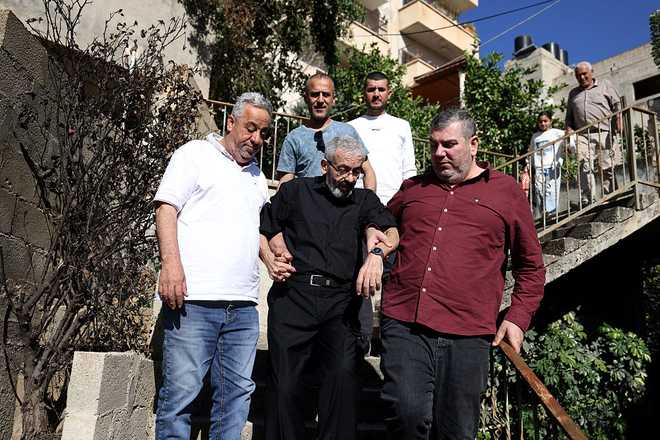
Ali al-Samoudi gingerly walks down the steps toward his home.
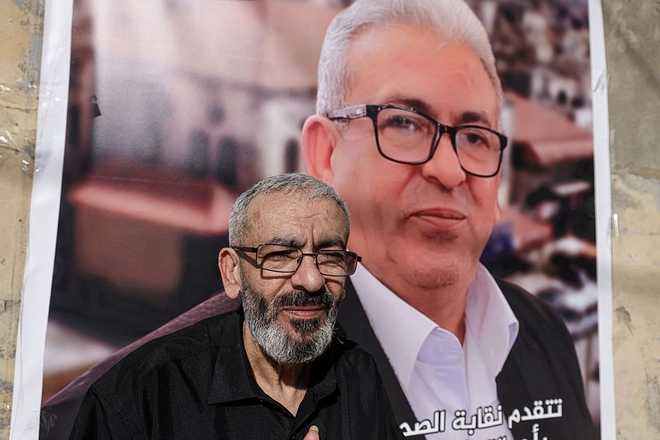
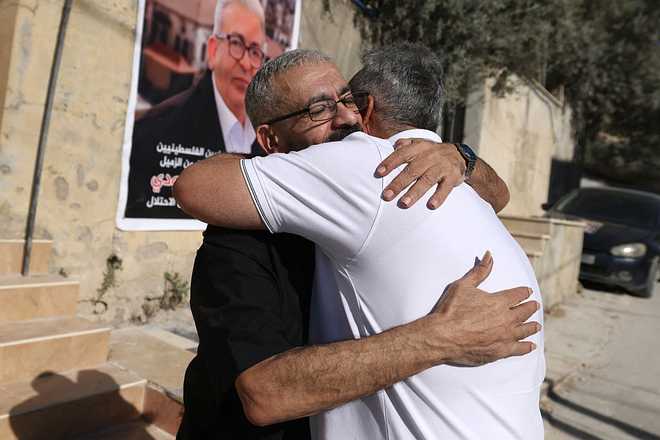
The 59-year-old Palestinian journalist is gaunt, with closely cropped gray hair and a matching beard. Each cautious step he takes reveals the physical toll of all he has endured that has aged him beyond his years.
We’ve worked with Samoudi for years, and this is the first time we’ve seen him in person in over a year. We can barely recognize him.
Samoudi was released last week from Israeli prison, where he was held for a year. He was never charged with a crime, held instead under administrative detention orders, which allow the Israeli military to imprison Palestinians without trial for up to six months at a time. The orders can be renewed indefinitely.
“It was a real hell. Prison today is hell in every sense of the word,” Samoudi said in an interview at his home in Jenin. “Everything they practiced with us was punishment and revenge.”
He is one of 105 Palestinian journalists who have been detained and imprisoned since October 7, 2023, the majority also held without charge, according to the Committee to Protect Journalists. The startling scale of detentions made Israel the third-worst jailer of journalists for 2025, behind only China and Myanmar, according to CPJ. Thirty-three Palestinian journalists are still imprisoned in Israel, the organization said.
Samoudi is a well-known journalist who has worked as a local producer and fixer for CNN, among other international outlets. He was at Shireen Abu Akleh’s side when the Palestinian American journalist was fatally shot by Israeli troops in 2022. He was also shot in the shoulder in the same incident.
Despite his four decades of reporting experience, Samoudi said he was shocked by the conditions in Israeli prisons, where he says he endured physical and psychological abuse that sometimes left him wondering whether he would make it out of prison alive. Israel’s Prison Service did not respond to CNN’s request for comment about Samoudi’s detention.
Samoudi lost 60 kilos (132 pounds), or about half his body weight, during his year in prison.
“They basically gave us food only to keep us alive,” Samoudi said. “Breakfast consists of one spoon of labneh, a quarter spoon of jam. For lunch: four spoons of rice in addition to two slices of cucumber or two slices of tomato or two slices of sweet pepper.”
He described dinner as a “deluxe” meal: two spoonfuls of hummus, a spoonful of tahini and an egg. Saturdays, Tuesdays and Wednesdays the prison service would add a small piece of chicken or meat, he said.
Dozens of other Palestinian prisoners have also emerged from Israeli prisons emaciated. Israel’s supreme court ordered improvement in prison conditions after it ruled in September that the state was failing to meet prisoners’ basic nutritional needs. But Itamar Ben Gvir, the far-right national security minister who oversees the prisons, has doubled down on his draconian approach, boasting about the poor quality of food in prison and the “bare minimum of bare minimum” being provided.
Books, pens and paper were all banned, Samoudi said. The dollop of shampoo he received each week was labeled as being for dogs, he said. And every move within or between prisons brought with it physical abuse.
Trips to detention hearings brought beatings. So did those to the clinic.
“One time after I returned from a visit with the lawyer, they threw us on the ground, on our faces and they started hitting us,” Samoudi said. “An Israeli officer stood and stepped on my head like this and pressed my face into the ground for four minutes until I suffocated.”
But it’s what he witnessed others endure that is most difficult for Samoudi to recount: like the young man in his cell who was refused medical treatment.
Samoudi says one of his cellmates, Louay Turkman, a 22-year-old from Jenin who was also held under administrative detention, became gravely ill one night.
“We asked them to take him to the clinic, but they refused,” Samoudi said.
The next morning, the guards still would not take him to the clinic and so Samoudi and other prisoners took him on a mattress out to the yard.
Turkman died there, in front of his fellow prisoners, Samoudi said.
“He did nothing,” Samoudi says, his voice cracking. “Why? Are we not human?” (Israel’s Prison Service did not respond to questions about Turkman’s death.)
When Samoudi was detained in April 2025, the Israeli military claimed he was suspected of financing the Palestinian militant group Islamic Jihad, a designated terrorist organization in Israel and the United States.
Labeling Samoudi a “terrorist,” the Israeli military said Samoudi was “identified with the Islamic Jihad terrorist organization and suspected in the transfer of funds to the terrorist organization.”
“Bullshit,” Samoudi said when asked about the claim.
Not only was Samoudi never charged with any crime, but he says interrogators never raised the claim of financing Islamic Jihad or any other terrorist organization.
Instead, he said interrogators questioned him about his reporting and alleged he was endangering Israeli security.
“My arrest is part of the Israeli war against the Palestinian press and media. To silence my voice and block my camera and break my pen, and thus prevent me from practicing my right that all laws and international norms guarantee: the freedom of the press,” Samoudi said.
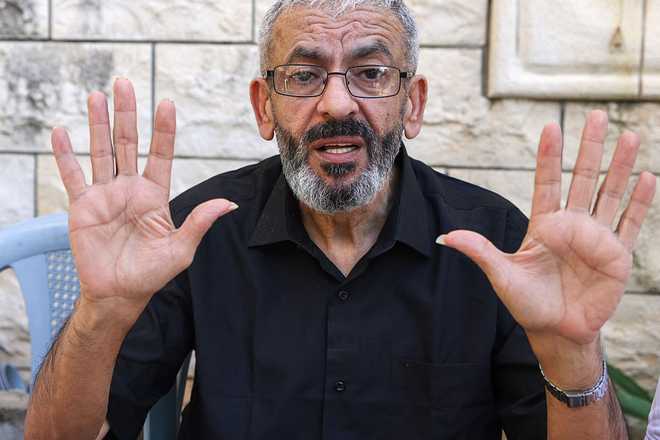
Asked whether he is afraid that speaking out could land him back in prison, Samoudi responds with knowing laughter.
“Yes. Yes. Yes. Correct. Certainly, I fear that they will arrest me,” Samoudi said. “There are many journalists who were released and re-arrested.”
But he says he won’t be deterred from returning to his work as a journalist.
“My journalistic work is part of my life,” Samoudi said. “It is my mission in this life.”

