The price of oil surged Sunday after U.S. and Israeli strikes on Iran, which killed its supreme leader.
U.S. crude oil soared 12%, while Brent, the international oil benchmark, surged 14% after trading began at 6 p.m. ET. Sunday.
Even before the weekend’s escalation, oil prices had risen 17% this year off President Donald Trump’s ramped-up rhetoric against the Iranian regime. The Trump administration has also ratcheted up sanctions on Iran in recent months.
While Iran’s oil production is estimated to be less than 5% of global output — most of which goes to China because of U.S. sanctions — it has major influence over the Strait of Hormuz, a critical passageway for more than 20% of the world’s daily oil demand.
A closure or restriction there can quickly rock the global oil market, and it would be among the worst-case scenarios for the oil market, longtime industry analyst Andy Lipow said Sunday.
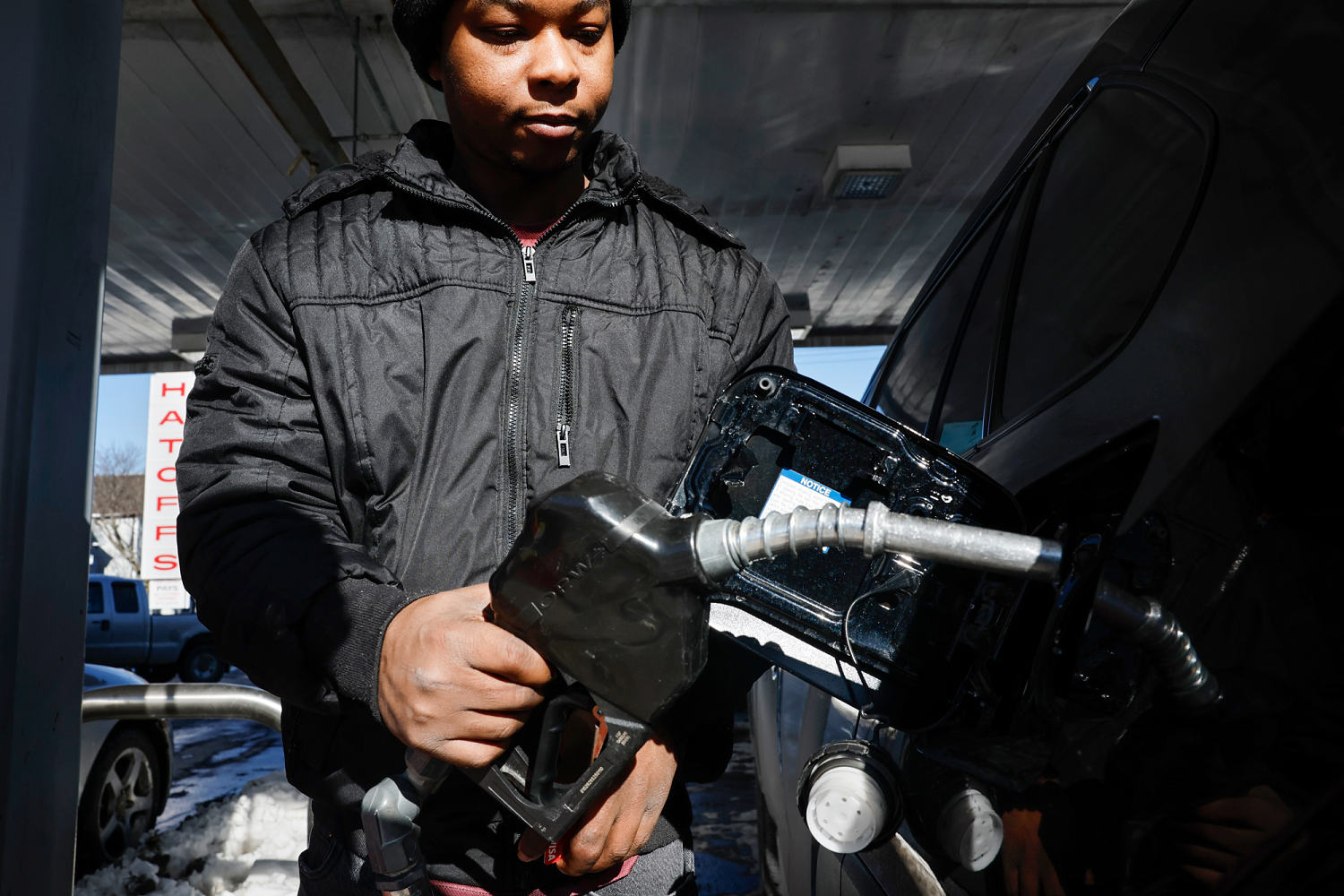
On Friday, U.S. crude oil closed at $67.02 per barrel. Sunday’s increase of more than $8 per barrel could directly lead to higher prices for consumers at gas stations as soon as this week, some analysts say.
Retail gas prices move about 2.5 cents for every $1 move in the price of crude oil, so already a 20 cent-per-gallon increase could be on the horizon.
Stock futures also plunged, with futures that indicate where the S&P 500 will trade Monday dropping 1.1% and Nasdaq 100 futures sliding 1.2%. Dow futures dropped more than 500 points.
The U.S. Dollar Index rose 0.3%, and the price of precious metals soared, with gold hitting $5,350, an indication that investors and traders are flocking to “safe haven” assets in the wake of the conflict.
“The scale [of Iran’s retaliation] has been a big, big surprise,” Jorge León, head of geopolitical analysis at Rystad Energy, told NBC News on Saturday. “This is a totally different world from what the market was anticipating.”
For prices to fall, the market will most likely need tensions to ease and most traffic in the Strait of Hormuz to resume.
On Saturday and Sunday, at least six of the leading cargo shipping companies said they were halting or diverting ships that were originally set to sail through the key waterway.
Crude oil may not be the only commodity affected.
“While much of the focus is on crude oil, Qatar is the second largest exporter of [liquified natural gas] behind the USA,” Lipow wrote in a note. “LNG tankers are also being diverted away from the region,” he added. “A disruption in LNG would result in higher natural gas prices, especially in Europe.”
Natural gas prices rose about 2% in early trading.

