Meteorite that landed in New Jersey contains otherworldly chemistry, researchers say
It’s not every day that you get historic roof damage.
At least that’s true for one New Jersey house, whose home became the landing zone of a meteorite that has led scientists to a peculiar discovery about ancient life.
Related video above: See the moment a meteor lights up the sky above an erupting volcano
In the summer of 2024, an almost 120-pound meteor entered the atmosphere near the northeastern U.S. at a speed of 32,000 mph, breaking up into several chunks, including the 2-pound rock that landed in the New Jersey homeowner’s bedroom.
“I was at home at the time, heard a loud crash and found a hole in the ceiling of the master bedroom,” the homeowner said in a statement. “I smelled a strong sulfur-like odor and saw many black fragments along with debris and black dust that covered my bed, carpet and surrounding areas.”
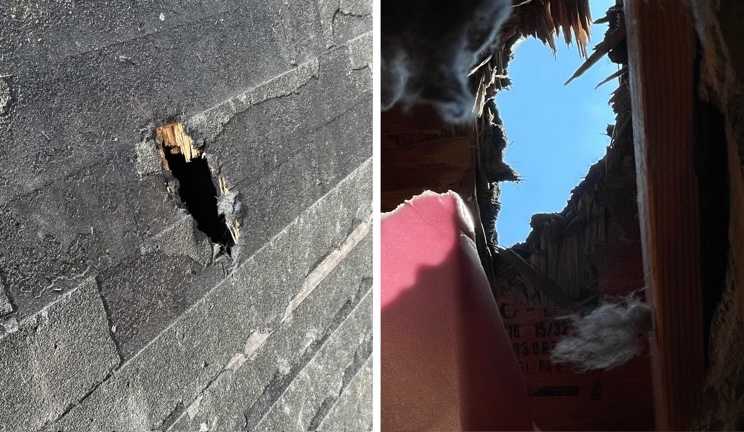
An exterior and interior look at the impact site of the meteorite.
The owner quickly collected the fragment using gloves, aluminum foil, and a glass jar, preserving the meteorite for later study.
After two years, researchers have released their findings on what the space rock — now known as the Hillsborough meteorite — is made of.
The meteorite contained salt deposits and amino acids, which suggest its origin is a wet, briny rock somewhere in the asteroid belt.
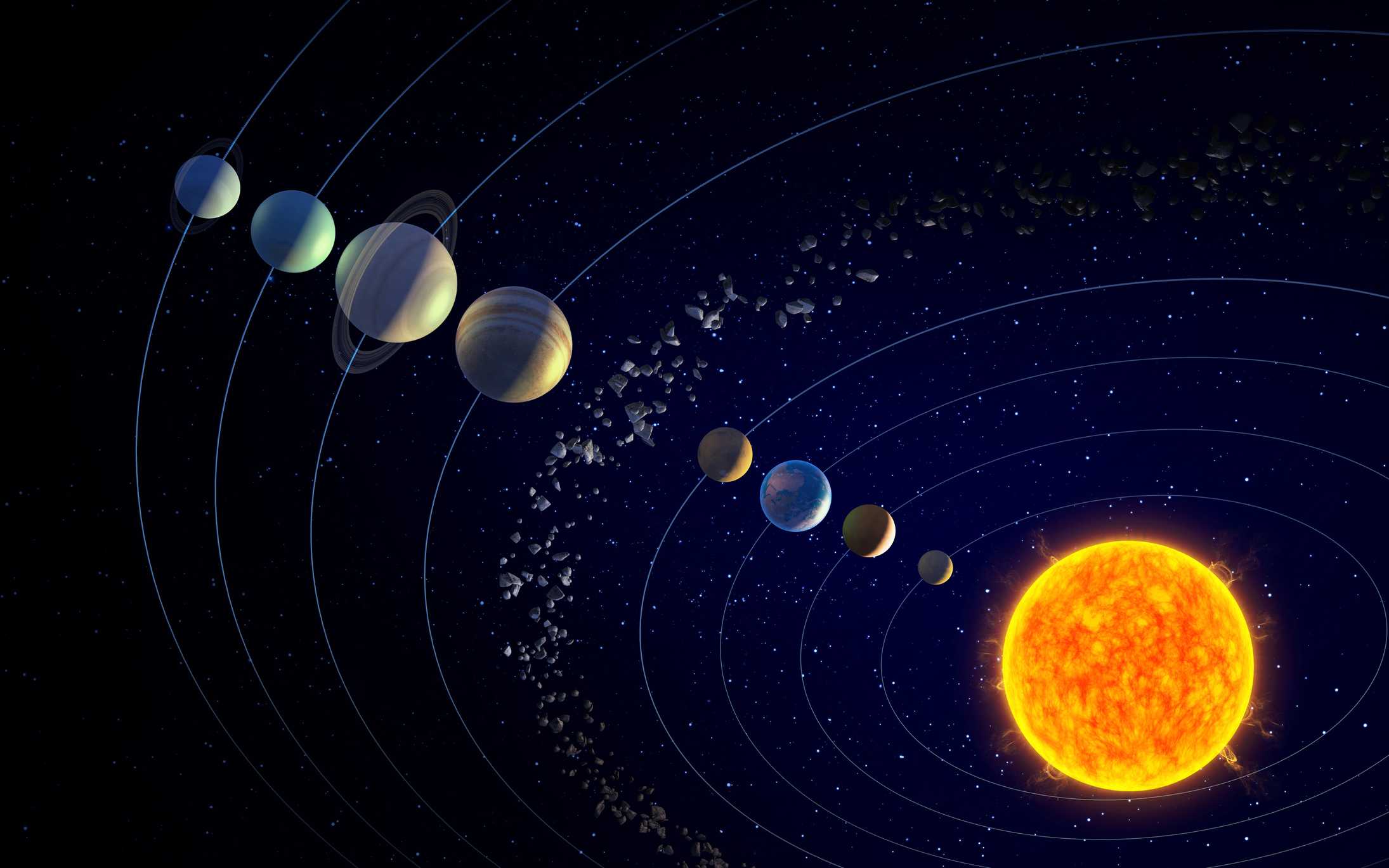
A computer illustration of the solar system. The asteroid belt can be seen running through the middle of the system.
Peter Jenniskens, the lead researcher on the paper, works with the SETI Institute and NASA’s Ames Research Center in California, where he heads the Cameras for Allsky Meteor Surveillance, or CAMS, project. Jenniskens has seen a lot of meteorites, but this one really caught his attention.
“A forensic study of the fragments revealed that they contained preserved bits from near the surface of a small primitive asteroid where it experienced concentrated salty fluids — a process not previously known from this type of proto-planet world,” he said in a press release.
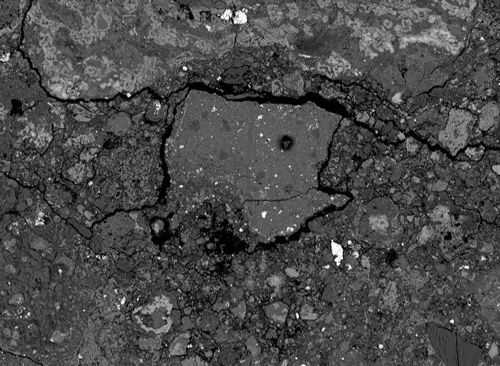
Scientists discovered that fragments of the Hillsborough meteorite are rich in salts.
Prior meteorites have also been found to come from briny space rocks — namely Ryugu and Bennu — allowing us a peek into how ancient water can be found in space. This new evidence, especially since it was so perfectly preserved, aids the theory that early life on Earth was delivered via meteorite.
“These brines can enable organic chemistry for the origin of life by allowing phosphate to remain in solution and catalyze chemical reactions between organics and precipitate minerals,” the researchers wrote.
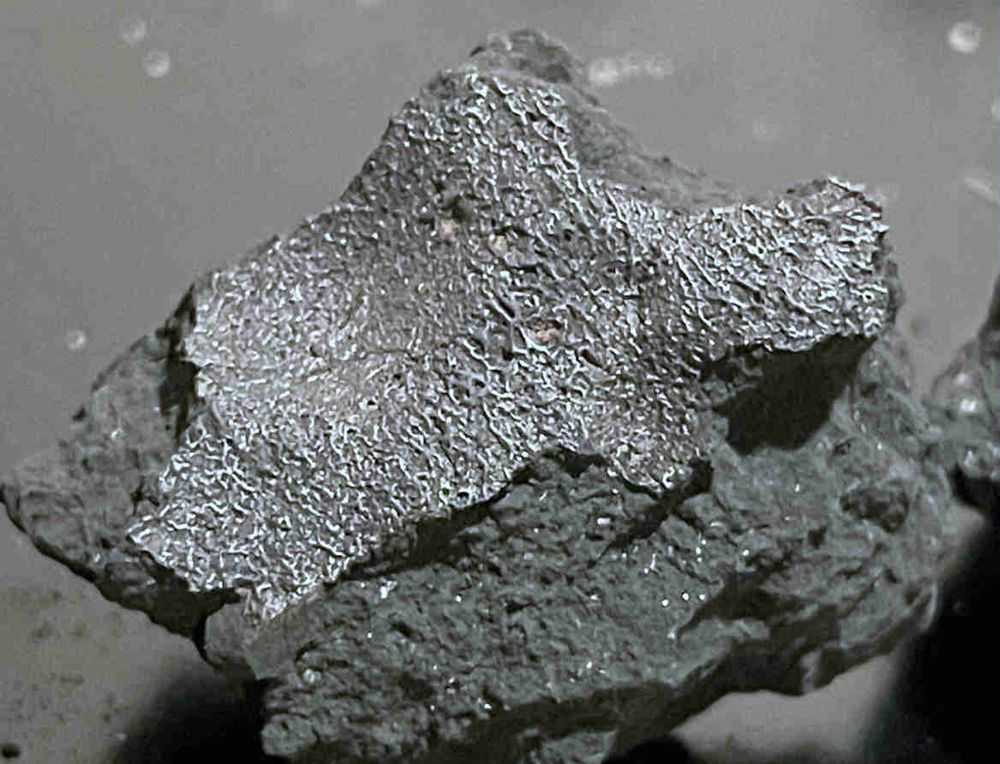
The fragile Hillsborough meteorite broke into pieces upon impact.
“The exogenous delivery of amino acids, carboxylic acids, and other soluble organic molecules … could have been an important source of the prebiotic organic inventory that led to the emergence of life on Earth,” the paper read.
Using the meteorite’s trajectory and makeup, the research team calculated that it came from a group of asteroids in the outer asteroid belt. As for where those asteroids came from, the answer is unclear, though most of them were formed over 4.6 billion years ago, leftover after the formation of our solar system.

