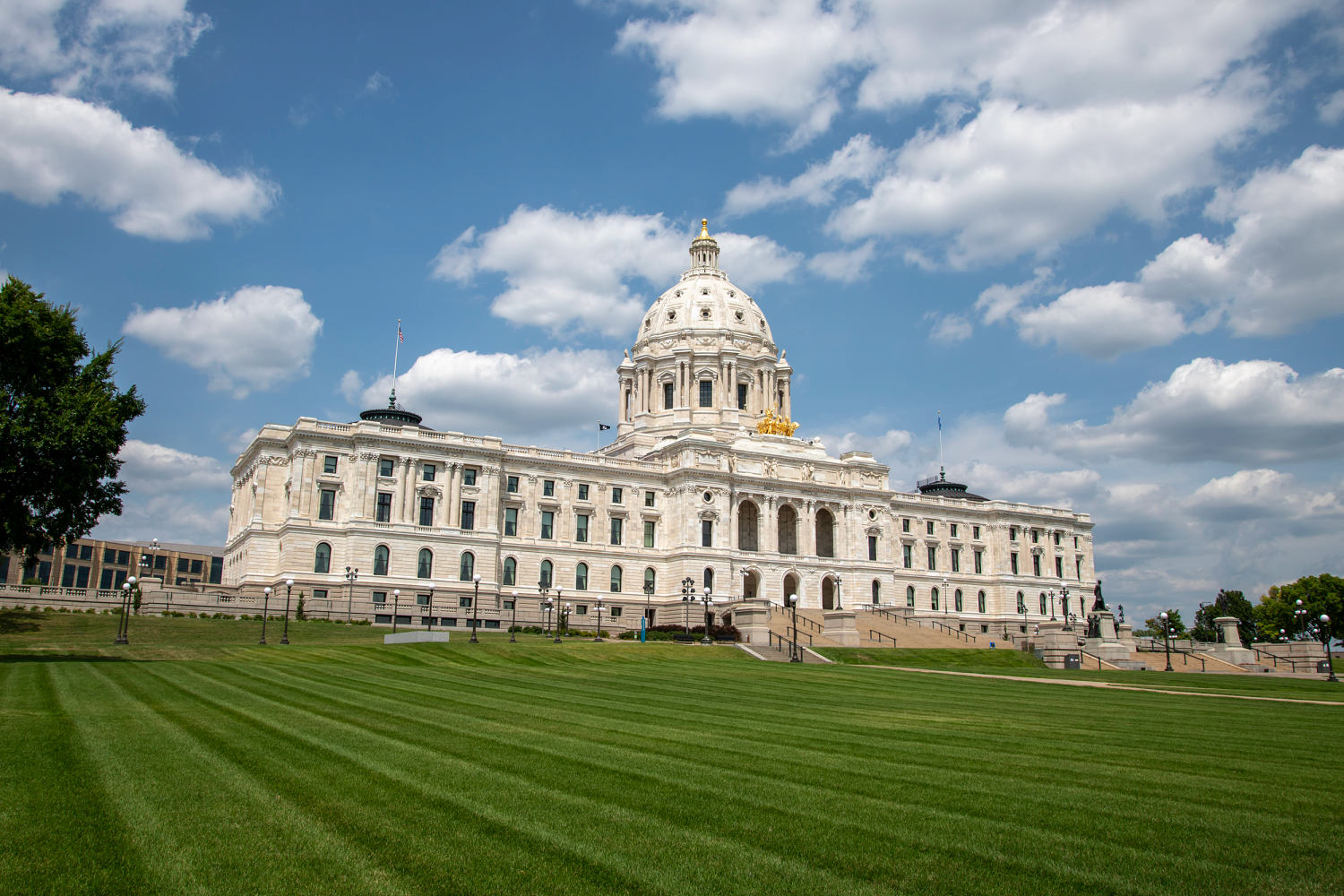
A federal judge granted a preliminary injunction pausing Minnesota’s first-of-its-kind prediction market ban Monday, days before it was slated to go into effect. The ruling comes after the Justice Department and the Commodity Futures Trading Commission, along with Kalshi and Polymarket US, filed lawsuits responding to the law, which was scheduled to go into effect Aug. 1.
In her order, U.S. District Judge Katherine Menendez ruled that the plaintiffs “have met their burden to show they are likely to succeed, at least in part,” on their claims that federal law preempts the ban, and that they face a threat of irreparable harm if it took effect.
The order forbids enforcement of the law against entities registered as designated contract markets with the CFTC.
The plaintiffs argue the ban is preempted by federal law, which gives the CFTC exclusive authority to regulate the event contracts traded on their federally registered exchanges.
Menendez wrote in a footnote of the order that “the Minnesota statute may not be preempted in all its applications. But the Court finds the state law is likely preempted in many respects. Therefore, temporarily enjoining enforcement of the statute maintains the status quo while enabling further development on this issue and others.”
The decision comes following the Commodity Futures Trading Commission’s letter Monday, which informed the court that it planned to escalate their motion to the appellate court if it didn’t receive a response by the next day.
The CFTC has made several efforts to stop Minnesota’s prediction market ban and initially asked the court for a decision by July 17. The court declined to give an answer by then, however acknowledged the need for an expeditious ruling in a July 2 hearing.
Polymarket and Kalshi argued that Minnesota’s ban would cause “irreparable harm” to their companies. Polymarket argued that the law would disrupt what they called “a nationally uniform market” and violate a First Amendment right to advertise, which they said could not be remedied through damages. Menendez said the court did not need to decide the First Amendment questions at this stage.
Minnesota’s ban had no language that punished in-state residents for using the prediction markets, but made it so that companies could not operate within the state.
Minnesota embedded the ban in a broader public safety bill, characterizing the markets as gambling, and thus, a public health and safety issue.
“Gambling has always been a public health and a public safety issue since states have been regulating it, and that has always been an uncontested fact,” Minnesota state Rep. Emily Greenman said in an interview with NBC News.
Minnesota isn’t the only state pushing back on prediction markets. Arizona filed criminal charges against Kalshi in March in efforts to ban transactions that mimic sports betting. But a federal judge blocked the prosecution, finding that federal law preempts the state’s laws on gambling.
Nevada’s state court extended a temporary ban of Kalshi in the state and Utah, where gambling is illegal, recently banned proposition betting, which applies to prediction markets.

