Oil prices rose after U.S. strikes on Iran over the weekend. Brent crude oil, the global benchmark for oil prices, hit a 52-week high, surpassing $80 per barrel on March 3. While rising tensions in the Middle East have contributed to the surge in oil prices, the increase is primarily the result of shipping disruptions and insurance issues affecting vessels in the Strait of Hormuz, a vital shipping lane.What is the Strait of Hormuz? The Strait of Hormuz is a waterway connecting the Persian Gulf and the Gulf of Oman. It is about 100 miles long and 21 miles wide at its narrowest point, and deep enough to allow the world’s largest crude oil tankers to pass. Major oil exporters such as Saudi Arabia, Iran, Iraq, Kuwait, Qatar and the United Arab Emirates rely on the strait to move oil tankers from the Persian Gulf to the Arabian Sea. In 2024, oil flow through the strait averaged 20 million barrels per day, or about 20% of global petroleum liquids consumption, according to data from the U.S. Energy Information Administration. Vessel traffic fell after the strikeWithin hours of initial U.S. and Israeli strikes on Tehran, Iran launched a counteroffensive targeting U.S. military bases in the Middle East and threatened ships passing through the Strait of Hormuz. An adviser to the commander of Iran’s Islamic Revolutionary Guard Corps warned that vessels passing through the strait would be targeted.This has affected vessel traffic in the Strait of Hormuz.Real-time traffic analysis by Marine Tracker showed vessel traffic fell about 70% at 11 a.m. Eastern time on Feb. 28, following the U.S. strikes on Iran. At least 150 tankers, including crude oil and liquefied natural gas vessels, dropped anchor in the Strait of Hormuz and surrounding waters, according to shipping data analyzed by Reuters. This mass stoppage is driven by insurance. Maritime laws and port regulations require coverage for commercial oil tankers to operate. This includes standard insurance policies, such as being able to pay for environmental damage like oil pollution or war risk coverage to protect against financial and operational risks.Marine insurers have also canceled war risk coverage for vessels operating in the Gulf, including Gard, Skuld, NorthStandard, and the London P&I Club. Shipping companies will need to obtain new coverage to insure against financial and operational risks in the conflict areas. U.S. domestic oil supplyThe United States is one of the top crude oil producers in the world. Crude oil is produced in 32 U.S. states and in U.S. coastal waters, according to a report by the U.S. Energy Information Administration (EIA). Reports from the EIA also show that U.S. imports of crude oil and petroleum products from OPEC countries, including Saudi Arabia, Algeria and Iraq, have decreased by 77% since 2006, while imports from Canada have nearly doubled.While the U.S. gets a majority of its oil from domestic supply, U.S. crude prices are still affected by global prices. On March 3, U.S. crude oil opened at $71 per barrel from $65 the previous week.
Oil prices rose after U.S. strikes on Iran over the weekend. Brent crude oil, the global benchmark for oil prices, hit a 52-week high, surpassing $80 per barrel on March 3.
While rising tensions in the Middle East have contributed to the surge in oil prices, the increase is primarily the result of shipping disruptions and insurance issues affecting vessels in the Strait of Hormuz, a vital shipping lane.
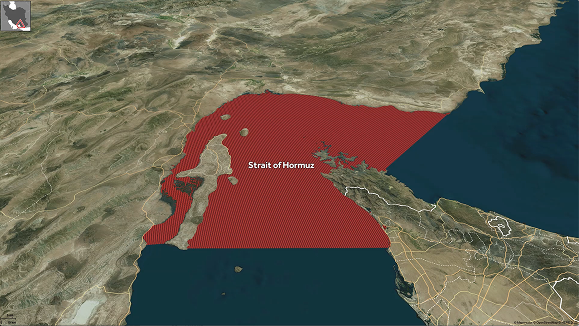
What is the Strait of Hormuz?
The Strait of Hormuz is a waterway connecting the Persian Gulf and the Gulf of Oman. It is about 100 miles long and 21 miles wide at its narrowest point, and deep enough to allow the world’s largest crude oil tankers to pass.
Major oil exporters such as Saudi Arabia, Iran, Iraq, Kuwait, Qatar and the United Arab Emirates rely on the strait to move oil tankers from the Persian Gulf to the Arabian Sea. In 2024, oil flow through the strait averaged 20 million barrels per day, or about 20% of global petroleum liquids consumption, according to data from the U.S. Energy Information Administration.
Vessel traffic fell after the strike
Within hours of initial U.S. and Israeli strikes on Tehran, Iran launched a counteroffensive targeting U.S. military bases in the Middle East and threatened ships passing through the Strait of Hormuz.
An adviser to the commander of Iran’s Islamic Revolutionary Guard Corps warned that vessels passing through the strait would be targeted.
This has affected vessel traffic in the Strait of Hormuz.
Real-time traffic analysis by Marine Tracker showed vessel traffic fell about 70% at 11 a.m. Eastern time on Feb. 28, following the U.S. strikes on Iran. At least 150 tankers, including crude oil and liquefied natural gas vessels, dropped anchor in the Strait of Hormuz and surrounding waters, according to shipping data analyzed by Reuters.
This mass stoppage is driven by insurance. Maritime laws and port regulations require coverage for commercial oil tankers to operate. This includes standard insurance policies, such as being able to pay for environmental damage like oil pollution or war risk coverage to protect against financial and operational risks.
Marine insurers have also canceled war risk coverage for vessels operating in the Gulf, including Gard, Skuld, NorthStandard, and the London P&I Club. Shipping companies will need to obtain new coverage to insure against financial and operational risks in the conflict areas.
U.S. domestic oil supply
The United States is one of the top crude oil producers in the world. Crude oil is produced in 32 U.S. states and in U.S. coastal waters, according to a report by the U.S. Energy Information Administration (EIA).
Reports from the EIA also show that U.S. imports of crude oil and petroleum products from OPEC countries, including Saudi Arabia, Algeria and Iraq, have decreased by 77% since 2006, while imports from Canada have nearly doubled.
While the U.S. gets a majority of its oil from domestic supply, U.S. crude prices are still affected by global prices. On March 3, U.S. crude oil opened at $71 per barrel from $65 the previous week.

