In Gilroy, summer is marked by familiar sounds — the wind through garlic fields and whistles on pool decks. For decades, those sounds were joined by the bustling crowds and music of the Gilroy Garlic Festival, which once drew hundreds of thousands of attendees annually, making it one of the largest food festivals in the country.”It was an essential part of our identity, our core. Every summer was anchored by this,” said Ken Christopher, third-generation garlic farmer and Executive Vice President of Christopher Ranch, a family-owned garlic farm and company. The event also represented a family legacy for Christopher. “That’s something that my grandfather built, created and grew,” he said. His grandfather co-founded the festival in 1979, while his grandmother did the marketing and advertising for it. For swim coach Jud Shutts, the festival was vital for his team, a nonprofit organization. “It became our primary fundraiser,” Shutts said. The National Investigative Unit is doing a yearlong series on how mass shootings and gun violence impact communities. Each story has a different focus. This story is specifically looking at (lesser-known) economic impacts that happen due to gun violence. WHAT HAPPENED IN 2019 On July 28, 2019, the festival’s joyous sounds were shattered. A gunman opened fire, killing three people and injuring dozens more. “We heard the noise, and I knew immediately it wasn’t firecrackers,” Shutts said. The tragedy deeply affected the community. “That’s what small towns are all about. And we’re defined by this annual event. And it was violated, and we lost … we lost kids. It’s hard to bounce back from that,” Christopher said.THE LESSER-KNOWN IMPACTThe shooting not only caused trauma but also disrupted the town’s operations. Gilroy Mayor Greg Bozzo explained the festival’s importance to local programs and organizations. “This festival led to about $500,000 to $700,000 of fundraising in just three days, every single year for 40 years,” Bozzo said. The funds supported food pantries, choir programs, and sports teams like Shutts’ swim team. But for six years, the festival remained dark due to security concerns and skyrocketing insurance costs. “It basically shut down any income from the Garlic Festival,” Shutts said. “The income was cut, like, 25% or more.” Christopher reflected on the impact of the festival’s absence. “The spirit of who we are, our identity, was gone. And there was no roadmap to the future,” he said. REBUILDING Last year, the festival finally returned, in a smaller, more controlled format at a different location. While the crowds and revenue were not the same, the reopening marked a significant moment for the community. “I was able to tell the crowd, welcome home,” Christopher said. Rebuilding the festival to what it once was is something many people hope happens. “We have to remember what the mission of the Garlic Festival was. And that was to give back to nonprofits. That was to get back to philanthropy. That was giving back to our community. That’s helping support organizations that are doing so much good, that help hundreds, if not thousands of people, and right here in our own backyard,” says Christopher. “With as many people that we had coming to Gilroy, it was once estimated years ago that the economic impact of this festival to Gilroy was six million dollars. That’s one of the reasons why a lot of us are working so hard to bring it back,” says Bozzo.Christopher explained that the festival brought in money for laptops for local schools, new equipment for sports teams, support for choir programs and local theater groups, food for food pantries, etc. While companies and organizations, including Christopher Ranch, tried to step up and help, there was no way to replace what the funds from the Garlic Festival could provide. Since the shooting, the Mariposas Resiliency Center, formerly the Gilroy Strong Resiliency Center, was established in January 2020 to provide long-term support for survivors, first responders, and other community members impacted by the Gilroy Garlic Festival mass shooting in 2019. The logo of the center shows three butterflies, representing the three lives lost that day. Now, its services have expanded. The center is a trauma recovery center that provides support for survivors of violent crime, including victims of mass violence and domestic abuse. “The resiliency of Gilroy, that’s what I’m most proud of. Bringing the Garlic Festival back is not just about fundraising, it’s not just garlic and not just food. Bringing the Garlic Festival back is important to us because now Gilroy is not just going to be remembered for a city that had something bad happen to it. It will be known for a city that responds well when something bad happens to it.” Bozzo says. “For those communities that have gone through this, you know, this is unfortunately something that we have in common with you. We feel the pain, we feel the devastating effects of this epidemic that we have of gun violence in America,” says Bozzo. “At the local level, my hope is that communities do their best to continue believing in themselves and doing what they do best as a community.”We visited Christmas Hill Park, the site of the shooting, with coach Shutts. It was his first time since the tragedy. “It makes me be much more aware of life, of the delicacy of our lives and how quickly they can change. So, cherish life,” says Shutts. “It’s a little strange in the sense that it’s bringing back some memories. I feel like there’s a little bit of closure because of this that maybe I didn’t realize I needed.” This summer, Shutts continues coaching on the pool deck, and Christopher remains in the garlic fields. In Gilroy, the sounds of summer — and the community itself — are coming together again.
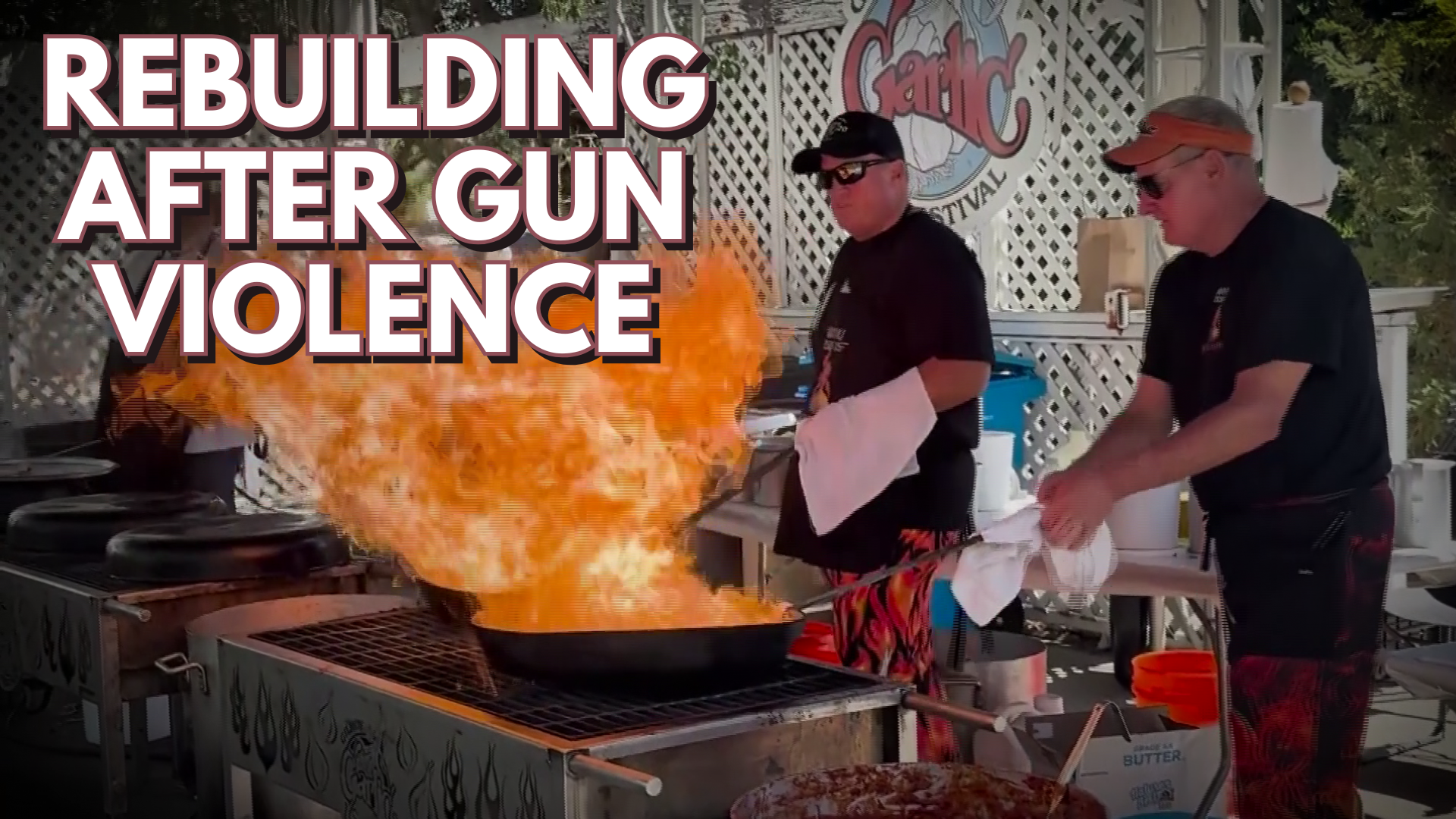
In Gilroy, summer is marked by familiar sounds — the wind through garlic fields and whistles on pool decks. For decades, those sounds were joined by the bustling crowds and music of the Gilroy Garlic Festival, which once drew hundreds of thousands of attendees annually, making it one of the largest food festivals in the country.
“It was an essential part of our identity, our core. Every summer was anchored by this,” said Ken Christopher, third-generation garlic farmer and Executive Vice President of Christopher Ranch, a family-owned garlic farm and company.
The event also represented a family legacy for Christopher. “That’s something that my grandfather built, created and grew,” he said. His grandfather co-founded the festival in 1979, while his grandmother did the marketing and advertising for it.
For swim coach Jud Shutts, the festival was vital for his team, a nonprofit organization. “It became our primary fundraiser,” Shutts said.
The National Investigative Unit is doing a yearlong series on how mass shootings and gun violence impact communities. Each story has a different focus. This story is specifically looking at (lesser-known) economic impacts that happen due to gun violence.
WHAT HAPPENED IN 2019
On July 28, 2019, the festival’s joyous sounds were shattered. A gunman opened fire, killing three people and injuring dozens more.
“We heard the noise, and I knew immediately it wasn’t firecrackers,” Shutts said.
The tragedy deeply affected the community. “That’s what small towns are all about. And we’re defined by this annual event. And it was violated, and we lost … we lost kids. It’s hard to bounce back from that,” Christopher said.
THE LESSER-KNOWN IMPACT
The shooting not only caused trauma but also disrupted the town’s operations. Gilroy Mayor Greg Bozzo explained the festival’s importance to local programs and organizations.
“This festival led to about $500,000 to $700,000 of fundraising in just three days, every single year for 40 years,” Bozzo said.
The funds supported food pantries, choir programs, and sports teams like Shutts’ swim team. But for six years, the festival remained dark due to security concerns and skyrocketing insurance costs.
“It basically shut down any income from the Garlic Festival,” Shutts said. “The income was cut, like, 25% or more.”
Christopher reflected on the impact of the festival’s absence. “The spirit of who we are, our identity, was gone. And there was no roadmap to the future,” he said.
REBUILDING
Last year, the festival finally returned, in a smaller, more controlled format at a different location. While the crowds and revenue were not the same, the reopening marked a significant moment for the community.
“I was able to tell the crowd, welcome home,” Christopher said.
Rebuilding the festival to what it once was is something many people hope happens.
“We have to remember what the mission of the Garlic Festival was. And that was to give back to nonprofits. That was to get back to philanthropy. That was giving back to our community. That’s helping support organizations that are doing so much good, that help hundreds, if not thousands of people, and right here in our own backyard,” says Christopher.
“With as many people that we had coming to Gilroy, it was once estimated years ago that the economic impact of this festival to Gilroy was six million dollars. That’s one of the reasons why a lot of us are working so hard to bring it back,” says Bozzo.
Christopher explained that the festival brought in money for laptops for local schools, new equipment for sports teams, support for choir programs and local theater groups, food for food pantries, etc. While companies and organizations, including Christopher Ranch, tried to step up and help, there was no way to replace what the funds from the Garlic Festival could provide.
Since the shooting, the Mariposas Resiliency Center, formerly the Gilroy Strong Resiliency Center, was established in January 2020 to provide long-term support for survivors, first responders, and other community members impacted by the Gilroy Garlic Festival mass shooting in 2019. The logo of the center shows three butterflies, representing the three lives lost that day.
Now, its services have expanded. The center is a trauma recovery center that provides support for survivors of violent crime, including victims of mass violence and domestic abuse.
“The resiliency of Gilroy, that’s what I’m most proud of. Bringing the Garlic Festival back is not just about fundraising, it’s not just garlic and not just food. Bringing the Garlic Festival back is important to us because now Gilroy is not just going to be remembered for a city that had something bad happen to it. It will be known for a city that responds well when something bad happens to it.” Bozzo says.
“For those communities that have gone through this, you know, this is unfortunately something that we have in common with you. We feel the pain, we feel the devastating effects of this epidemic that we have of gun violence in America,” says Bozzo. “At the local level, my hope is that communities do their best to continue believing in themselves and doing what they do best as a community.”
We visited Christmas Hill Park, the site of the shooting, with coach Shutts. It was his first time since the tragedy. “It makes me be much more aware of life, of the delicacy of our lives and how quickly they can change. So, cherish life,” says Shutts. “It’s a little strange in the sense that it’s bringing back some memories. I feel like there’s a little bit of closure because of this that maybe I didn’t realize I needed.”
This summer, Shutts continues coaching on the pool deck, and Christopher remains in the garlic fields. In Gilroy, the sounds of summer — and the community itself — are coming together again.

