A Secret Service officer saw a shotgun-wielding suspect fire his weapon toward the stairs that led to a hotel ballroom where President Donald Trump, members of his Cabinet and some of the nation’s top journalists had gathered Saturday for the White House Correspondents’ Association Dinner, federal prosecutors alleged in a new court filing Wednesday.Video above: DOJ releases new image, details ahead of WHCD shooting suspect’s detention hearing The filing, which laid out prosecutors’ argument for keeping suspected gunman Cole Thomas Allen in custody as he awaits trial, offered a more detailed timeline of the shooting than previously known, along with a thorough account of the weaponry he had amassed.Prosecutors argued there was “no combination of conditions that will reasonably assure the community’s safety” if the suspect were to be released, pointing to his extensive preparations and the possibility — avoided by “good fortune” — that he could have killed people and inflicted serious damage.They called his plot one of “extreme political violence.”“The defendant’s choice of targets demonstrates the deeply dangerous nature of his conduct,” the prosecutors wrote. “Attempted murder is always a serious crime, but when the intended victim is the President of the United States, as well as other high-ranking members of the U.S. government, the potential consequences are far reaching.”Later in the day, lawyers for Allen complained in a court filing to the judge overseeing the case that they’re having difficulty meeting with him as the warden for the Washington, DC, jail is keeping it locked down.So far, Allen has spoken to the lawyers only over a jailhouse phone, from a locked cell, where he is physically restrained in multiple ways, his lawyers say.“As the Court is aware, the D.C. Jail has housed many high-profile defendants. But none — to counsel’s knowledge — have been denied this essential right in the manner counsel experienced on April 28,” they wrote. “The prejudice to his defense grows with every passing hour.”Public defenders representing him at the initial appearance earlier this week noted in court that he had no prior criminal record.The judge later granted the lawyers’ request, allowing Allen “unrestricted legal visits” for the rest of his case.A month of preparation, investigators allegeAllen, a 31-year-old from California, is charged with attempting to assassinate the president and related counts in connection with the shooting. He has not entered a plea in the case yet, and his attorney did not immediately respond to a message seeking comment on Wednesday.Federal prosecutors alleged that he came to Washington, DC, after a lengthy cross-country train journey, eventually approaching the Washington Hilton ballroom on Saturday night with what they described as a “veritable armament.” That included a 12-gauge pump action shotgun, a .38 caliber pistol, multiple knives and daggers and a significant amount of ammunition for reloading, according to the new filing.By federal prosecutors’ account, Allen’s planning began weeks before the dinner. On April 6, a little over a month after Trump announced he was attending, Allen searched for information on the event, then booked himself a two-night stay at the Washington Hilton during the weekend it was to take place, they say.Federal prosecutors alleged he researched the dinner, the schedule, the host and expected attendees.Four days before the attack, on April 21, Allen departed Los Angeles on an Amtrak passenger train, which took him to Chicago, according to the court filing. On April 23, the filing says, he boarded a second train to Washington, DC.During his journey from Chicago to the nation’s capital, Allen passed time reading an article in a DC newspaper titled “Social Scene: Your Guide to the 2026 White House Correspondents Dinner Weekend,” according to the court filing. He arrived at Union Station on April 24, taking the metro to Dupont Circle and checking into the Hilton — which was hosting the dinner — at approximately 3:15 p.m., the filing says.The day of the dinnerOn the day of the dinner, according to the filing, Allen left his room several times and searched for the president’s schedule on his phone.At approximately 8:03 p.m., Allen took a photo of himself reflected in his hotel room mirror, showing weapons strapped to his body, the filing says.After checking the president’s schedule one last time, Allen left his hotel room at approximately 8:15 p.m., the filing says. About 12 minutes later, Allen was watching live videos on media websites showing the president arriving at the hotel. Federal prosecutors said he pre-scheduled an email outlining his intentions to land in the inboxes of family, friends and a former employer at 8:30 p.m.The attackMinutes after watching the president arrive at the hotel on his phone, at approximately 8:30 p.m., Allen approached the security checkpoint a floor above the ballroom where the president, Cabinet officials, and members of the media were seated, according to the court filing. Before he reached the checkpoint, he shed his long black coat, revealing the shotgun he was carrying, it says. He then sprinted through the checkpoint to the ballroom — a scramble that was caught on video released by Trump the night of the shooting.As Allen sprinted to the stairs, he raised the shotgun, and a Secret Service officer reported that he observed the man “fire the shotgun in the direction of the stairs leading down to the ballroom,” according to the court filing. The filing says the same officer “and others at the checkpoint heard the gunshot.”The officer fired five times at Allen, with none of the bullets hitting him, according to the filing. Allen fell to the ground and was soon arrested, the filing says.Defense requests discovery materials Also in a filing on Wednesday, the defense requested discovery materials.In a letter attached to the filing, they say that Acting Attorney General Todd Blanche has made public statements about the case “as a representative of the prosecution,” and point out that prosecutors allegedly did not describe shotgun ammunition related to the case in a detention memorandum. Allen’s attorneys requested a description of the ammunition, “because some of Acting AG Blanche’s statements indicate that the recovered ballistics evidence is inconsistent with aspects of the government’s theory, evidence collected by the government and/or statements made by witnesses.”In a filing in response, signed by U.S. Attorney Jeanine Pirro, states that the prosecution is “unaware of any such statements.” The response then discusses an April 27, DOJ press conference where Blanche was asked by a reporter, “Have you been able to determine whether the gunman fired shots and if so, how many he fired and whose bullets hit the agent?”The response states that Blanche, in response to that reporter, said, ” We’re still – we want to get that right. We’re still looking at that. It appears, and I don’t want to overstate because we’re still looking at this, that there were five shots that law enforcement fired. All the evidence is being examined very carefully and expeditiously, and we’ll know more soon. We do believe, as the complaint lays out, that the suspect fired his shotgun. But as far as getting into exacting ballistics, I’m not going to do that today because it’s still being looked at and finalized.”The defense requested a long list of common evidence items, including ballistics information.The response signed by Pirro states that an analysis of crime scene evidence and ballistics evidence isn’t complete yet.Specifically addressing ballistics, the response from Pirro’s office states, “The evidence gathered and analyzed to date establishes that your client fired his Mossberg 12-gauge pump-action shotgun at least one time as he ran past the magnetometers on the Terrace Level of the Washington Hilton hotel on April 25, 2026. When that weapon was recovered, it had one spent cartridge case in the chamber, which has been identified as having been fired in the Mossberg shotgun.”It goes on to say that preliminary ballistics and video analyses allegedly show that Allen fired a shotgun in the direction of the Secret Service officer who was shot.The government’s response says that at least one fragment was recovered from the crime scene that was “physically consistent with a single buckshot pellet.” Furthermore, it states that a fragment was recovered from a location at the scene consistent with Allen allegedly firing the shotgun in the direction of the Secret Service agent.The government response shows that five 9mm Luger cartridge cases were found at the scene. They were fired by the Secret Service agent with their service weapon, the letter states.The response says the preliminary analysis of the crime scene “is consistent with the government’s evidence” that Allen fired at least one shot from the 12-gauge pump-action shotgun in the direction of the Secret Service officer and that the officer fired his service weapon five times.In their filing, the defense attorneys for Allen asked for “any information as to whom the government is alleging were the targets of this incident.”The attorneys point out that prosecutors, in a detention memorandum, reference “‘high ranking members of the U.S. government’ as the defendant’s ‘intended victims and the significant roles they play.”They are asking the government to “identify the individuals that the government believes were the ‘targets’ and ‘intended victims.'”They asked the prosecution to specifically “advise whether the government has ruled out Acting AG Blanche and US Attorney (Jeanine) Pirro as targets and how the government has reached that conclusion.”In response, the government wrote, “your client is currently charged with 18 U.S.C. § 1751(c) (Attempt to Assassinate the President of the United States); he is not presently charged with committing crimes against any other individual.”
A Secret Service officer saw a shotgun-wielding suspect fire his weapon toward the stairs that led to a hotel ballroom where President Donald Trump, members of his Cabinet and some of the nation’s top journalists had gathered Saturday for the White House Correspondents’ Association Dinner, federal prosecutors alleged in a new court filing Wednesday.
Video above: DOJ releases new image, details ahead of WHCD shooting suspect’s detention hearing
The filing, which laid out prosecutors’ argument for keeping suspected gunman Cole Thomas Allen in custody as he awaits trial, offered a more detailed timeline of the shooting than previously known, along with a thorough account of the weaponry he had amassed.
Prosecutors argued there was “no combination of conditions that will reasonably assure the community’s safety” if the suspect were to be released, pointing to his extensive preparations and the possibility — avoided by “good fortune” — that he could have killed people and inflicted serious damage.
They called his plot one of “extreme political violence.”
“The defendant’s choice of targets demonstrates the deeply dangerous nature of his conduct,” the prosecutors wrote. “Attempted murder is always a serious crime, but when the intended victim is the President of the United States, as well as other high-ranking members of the U.S. government, the potential consequences are far reaching.”
Later in the day, lawyers for Allen complained in a court filing to the judge overseeing the case that they’re having difficulty meeting with him as the warden for the Washington, DC, jail is keeping it locked down.
So far, Allen has spoken to the lawyers only over a jailhouse phone, from a locked cell, where he is physically restrained in multiple ways, his lawyers say.
“As the Court is aware, the D.C. Jail has housed many high-profile defendants. But none — to counsel’s knowledge — have been denied this essential right in the manner counsel experienced on April 28,” they wrote. “The prejudice to his defense grows with every passing hour.”
Public defenders representing him at the initial appearance earlier this week noted in court that he had no prior criminal record.
The judge later granted the lawyers’ request, allowing Allen “unrestricted legal visits” for the rest of his case.
A month of preparation, investigators allege
Allen, a 31-year-old from California, is charged with attempting to assassinate the president and related counts in connection with the shooting. He has not entered a plea in the case yet, and his attorney did not immediately respond to a message seeking comment on Wednesday.
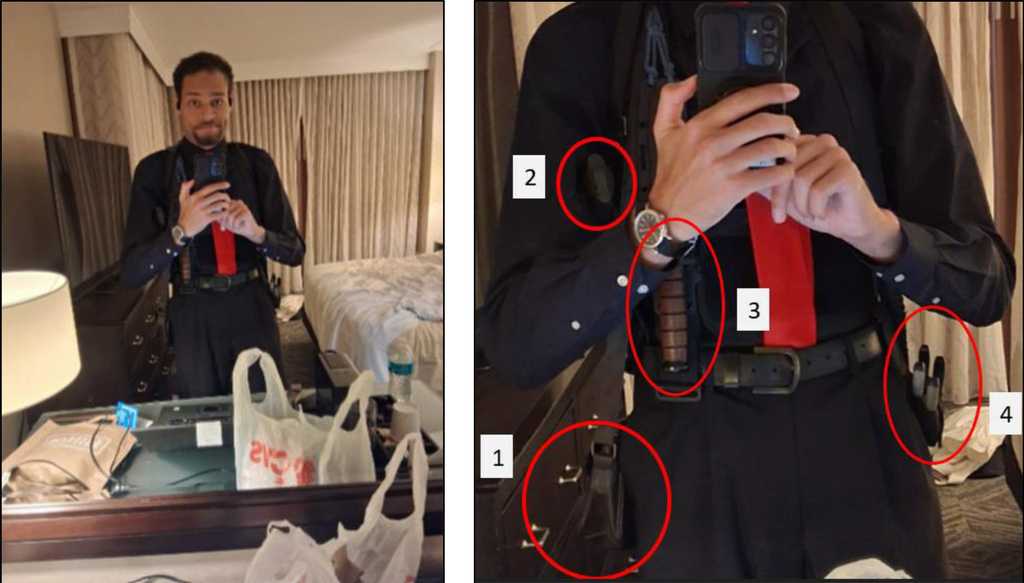
Federal prosecutors alleged that he came to Washington, DC, after a lengthy cross-country train journey, eventually approaching the Washington Hilton ballroom on Saturday night with what they described as a “veritable armament.” That included a 12-gauge pump action shotgun, a .38 caliber pistol, multiple knives and daggers and a significant amount of ammunition for reloading, according to the new filing.
By federal prosecutors’ account, Allen’s planning began weeks before the dinner. On April 6, a little over a month after Trump announced he was attending, Allen searched for information on the event, then booked himself a two-night stay at the Washington Hilton during the weekend it was to take place, they say.
Federal prosecutors alleged he researched the dinner, the schedule, the host and expected attendees.
Four days before the attack, on April 21, Allen departed Los Angeles on an Amtrak passenger train, which took him to Chicago, according to the court filing. On April 23, the filing says, he boarded a second train to Washington, DC.
During his journey from Chicago to the nation’s capital, Allen passed time reading an article in a DC newspaper titled “Social Scene: Your Guide to the 2026 White House Correspondents Dinner Weekend,” according to the court filing. He arrived at Union Station on April 24, taking the metro to Dupont Circle and checking into the Hilton — which was hosting the dinner — at approximately 3:15 p.m., the filing says.
The day of the dinner
On the day of the dinner, according to the filing, Allen left his room several times and searched for the president’s schedule on his phone.
At approximately 8:03 p.m., Allen took a photo of himself reflected in his hotel room mirror, showing weapons strapped to his body, the filing says.
After checking the president’s schedule one last time, Allen left his hotel room at approximately 8:15 p.m., the filing says. About 12 minutes later, Allen was watching live videos on media websites showing the president arriving at the hotel. Federal prosecutors said he pre-scheduled an email outlining his intentions to land in the inboxes of family, friends and a former employer at 8:30 p.m.
The attack
Minutes after watching the president arrive at the hotel on his phone, at approximately 8:30 p.m., Allen approached the security checkpoint a floor above the ballroom where the president, Cabinet officials, and members of the media were seated, according to the court filing. Before he reached the checkpoint, he shed his long black coat, revealing the shotgun he was carrying, it says. He then sprinted through the checkpoint to the ballroom — a scramble that was caught on video released by Trump the night of the shooting.
As Allen sprinted to the stairs, he raised the shotgun, and a Secret Service officer reported that he observed the man “fire the shotgun in the direction of the stairs leading down to the ballroom,” according to the court filing. The filing says the same officer “and others at the checkpoint heard the gunshot.”
The officer fired five times at Allen, with none of the bullets hitting him, according to the filing. Allen fell to the ground and was soon arrested, the filing says.
Defense requests discovery materials
Also in a filing on Wednesday, the defense requested discovery materials.
In a letter attached to the filing, they say that Acting Attorney General Todd Blanche has made public statements about the case “as a representative of the prosecution,” and point out that prosecutors allegedly did not describe shotgun ammunition related to the case in a detention memorandum. Allen’s attorneys requested a description of the ammunition, “because some of Acting AG Blanche’s statements indicate that the recovered ballistics evidence is inconsistent with aspects of the government’s theory, evidence collected by the government and/or statements made by witnesses.”
In a filing in response, signed by U.S. Attorney Jeanine Pirro, states that the prosecution is “unaware of any such statements.”
The response then discusses an April 27, DOJ press conference where Blanche was asked by a reporter, “Have you been able to determine whether the gunman fired shots and if so, how many he fired and whose bullets hit the agent?”
The response states that Blanche, in response to that reporter, said, ” We’re still – we want to get that right. We’re still looking at that. It appears, and I don’t want to overstate because we’re still looking at this, that there were five shots that law enforcement fired. All the evidence is being examined very carefully and expeditiously, and we’ll know more soon. We do believe, as the complaint lays out, that the suspect fired his shotgun. But as far as getting into exacting ballistics, I’m not going to do that today because it’s still being looked at and finalized.”
The defense requested a long list of common evidence items, including ballistics information.
The response signed by Pirro states that an analysis of crime scene evidence and ballistics evidence isn’t complete yet.
Specifically addressing ballistics, the response from Pirro’s office states, “The evidence gathered and analyzed to date establishes that your client fired his Mossberg 12-gauge pump-action shotgun at least one time as he ran past the magnetometers on the Terrace Level of the Washington Hilton hotel on April 25, 2026. When that weapon was recovered, it had one spent cartridge case in the chamber, which has been identified as having been fired in the Mossberg shotgun.”
It goes on to say that preliminary ballistics and video analyses allegedly show that Allen fired a shotgun in the direction of the Secret Service officer who was shot.
The government’s response says that at least one fragment was recovered from the crime scene that was “physically consistent with a single buckshot pellet.” Furthermore, it states that a fragment was recovered from a location at the scene consistent with Allen allegedly firing the shotgun in the direction of the Secret Service agent.
The government response shows that five 9mm Luger cartridge cases were found at the scene. They were fired by the Secret Service agent with their service weapon, the letter states.
The response says the preliminary analysis of the crime scene “is consistent with the government’s evidence” that Allen fired at least one shot from the 12-gauge pump-action shotgun in the direction of the Secret Service officer and that the officer fired his service weapon five times.
In their filing, the defense attorneys for Allen asked for “any information as to whom the government is alleging were the targets of this incident.”
The attorneys point out that prosecutors, in a detention memorandum, reference “‘high ranking members of the U.S. government’ as the defendant’s ‘intended victims and the significant roles they play.”
They are asking the government to “identify the individuals that the government believes were the ‘targets’ and ‘intended victims.'”
They asked the prosecution to specifically “advise whether the government has ruled out Acting AG Blanche and US Attorney (Jeanine) Pirro as targets and how the government has reached that conclusion.”
In response, the government wrote, “your client is currently charged with 18 U.S.C. § 1751(c) (Attempt to Assassinate the President of the United States); he is not presently charged with committing crimes against any other individual.”

