More than 21,000 murder cases in Florida remain unsolved, including 150 cold cases in Fort Myers, where families like Denae Hendley’s continue to search for answers. Hendley knows every detail of Lillie Street, the place where her 13-year-old son, Desmond Jones, was killed.”It was dark for me, it was dark,” Hendley said. Video above: Climate change is outpacing evolution. Scientists are using DNA to catch upDesmond, affectionately called “Lil Flame” by his Pop Warner football teammates, was the youngest in his family and known for his lively personality.”Very happy. Live! He was a live kid. Very goofy. Liked to joke around,” Hendley said. Reflecting on his short time playing football, Hendley said, “Not knowing it will be the last football, first and last, Pop Warner football for him.” In the early hours of April 27, 2011, Desmond was with friends on Lillie Street when he stepped in to defend a girl during a fight. He was shot and killed. “I had a friend who came and got me, knocking on the door, ‘Where’s Des at?’ I’m thinking Des is in the room. But he wasn’t,” Hendley said. Recalling the moment she saw her son, Hendley said, “When they lifted the sheet, and I saw them Jordan flip flops, I broke down. Lord, why me? Why me? Why?” Fifteen years later, Desmond’s case remains unsolved, sitting on Detective Richard Harasym’s desk as one of 150 cold cases his four-person team is working to close. “You just got to persevere. You’ve got to be a bulldog when it comes to cold cases,” Harasym said. Harasym remains committed to the families he serves, saying, “I will send them text messages on Christmas, on the date of the murder. Thinking of you today.” While dedication drives investigators, new DNA technology is offering hope to families like Hendley’s. A Texas-based DNA lab called Othram is revolutionizing how cold cases are solved, and Florida has partnered with the lab to tackle its backlog of unsolved murders. “For too long, many victims and their families have been left without answers,” said Florida Attorney General James Uthmeir. Othram’s technology has already helped solve thousands of cases nationwide.”You don’t need a suspect. You don’t need any leads at all. You read the DNA, just like you would watch a video camera, to see who was at a scene,” said Othram CEO David Mittelman. Through the partnership, law enforcement agencies across Florida can submit evidence directly to Othram, giving untested or previously unproductive DNA evidence a second chance.”Was all the evidence tested? Was there evidence that was tested that was unproductive before? But now, with new technology might be readable to learn clues as to who was there,” Mittelman said. For Hendley, the darkness of losing her son has not consumed her.”Prayer does work. When you have sincere people praying for you, you will come back. You will come back,” she said. Harasym praised Hendley’s resilience, saying, “That’s why we have people like Denae. She is out there pushing the envelope, doing the right thing on a daily basis.” For families still waiting for answers, hope is growing.”I don’t think it’s ever been a better time to have hope,” Mittelman said. Hendley remains steadfast in her purpose, saying, “I turn my pain into purpose. Because this is the son I had; he had a heart for people.” Southwest Florida Crime Stoppers continues to circulate a deck of cards in jails, hoping to generate tips that could help solve cases like Desmond’s. Anyone with information on his murder or any of Fort Myers’ 150 unsolved cold cases can contact Crime Stoppers (1-800-780-TIPS) anonymously and may be eligible for a reward. One call could give a grieving family the greatest gift imaginable: the truth.
More than 21,000 murder cases in Florida remain unsolved, including 150 cold cases in Fort Myers, where families like Denae Hendley’s continue to search for answers.
Hendley knows every detail of Lillie Street, the place where her 13-year-old son, Desmond Jones, was killed.
“It was dark for me, it was dark,” Hendley said.
Video above: Climate change is outpacing evolution. Scientists are using DNA to catch up
Desmond, affectionately called “Lil Flame” by his Pop Warner football teammates, was the youngest in his family and known for his lively personality.
“Very happy. Live! He was a live kid. Very goofy. Liked to joke around,” Hendley said.
Reflecting on his short time playing football, Hendley said, “Not knowing it will be the last football, first and last, Pop Warner football for him.”
In the early hours of April 27, 2011, Desmond was with friends on Lillie Street when he stepped in to defend a girl during a fight. He was shot and killed.
“I had a friend who came and got me, knocking on the door, ‘Where’s Des at?’ I’m thinking Des is in the room. But he wasn’t,” Hendley said.
Recalling the moment she saw her son, Hendley said, “When they lifted the sheet, and I saw them Jordan flip flops, I broke down. Lord, why me? Why me? Why?”
Fifteen years later, Desmond’s case remains unsolved, sitting on Detective Richard Harasym’s desk as one of 150 cold cases his four-person team is working to close.
“You just got to persevere. You’ve got to be a bulldog when it comes to cold cases,” Harasym said.
Harasym remains committed to the families he serves, saying, “I will send them text messages on Christmas, on the date of the murder. Thinking of you today.”
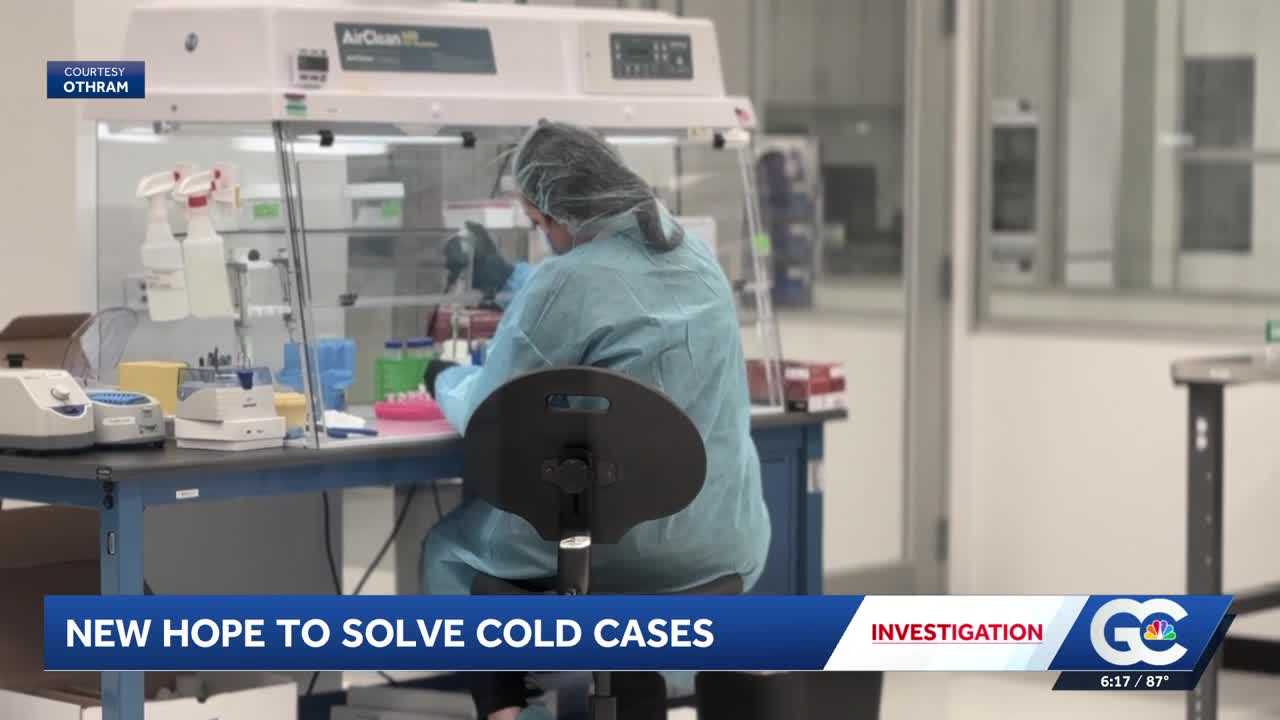
While dedication drives investigators, new DNA technology is offering hope to families like Hendley’s. A Texas-based DNA lab called Othram is revolutionizing how cold cases are solved, and Florida has partnered with the lab to tackle its backlog of unsolved murders.
“For too long, many victims and their families have been left without answers,” said Florida Attorney General James Uthmeir.
Othram’s technology has already helped solve thousands of cases nationwide.
“You don’t need a suspect. You don’t need any leads at all. You read the DNA, just like you would watch a video camera, to see who was at a scene,” said Othram CEO David Mittelman.
Through the partnership, law enforcement agencies across Florida can submit evidence directly to Othram, giving untested or previously unproductive DNA evidence a second chance.
“Was all the evidence tested? Was there evidence that was tested that was unproductive before? But now, with new technology might be readable to learn clues as to who was there,” Mittelman said.
For Hendley, the darkness of losing her son has not consumed her.
“Prayer does work. When you have sincere people praying for you, you will come back. You will come back,” she said.
Harasym praised Hendley’s resilience, saying, “That’s why we have people like Denae. She is out there pushing the envelope, doing the right thing on a daily basis.”
For families still waiting for answers, hope is growing.
“I don’t think it’s ever been a better time to have hope,” Mittelman said.
Hendley remains steadfast in her purpose, saying, “I turn my pain into purpose. Because this is the son I had; he had a heart for people.”
Southwest Florida Crime Stoppers continues to circulate a deck of cards in jails, hoping to generate tips that could help solve cases like Desmond’s. Anyone with information on his murder or any of Fort Myers’ 150 unsolved cold cases can contact Crime Stoppers (1-800-780-TIPS) anonymously and may be eligible for a reward.
One call could give a grieving family the greatest gift imaginable: the truth.

