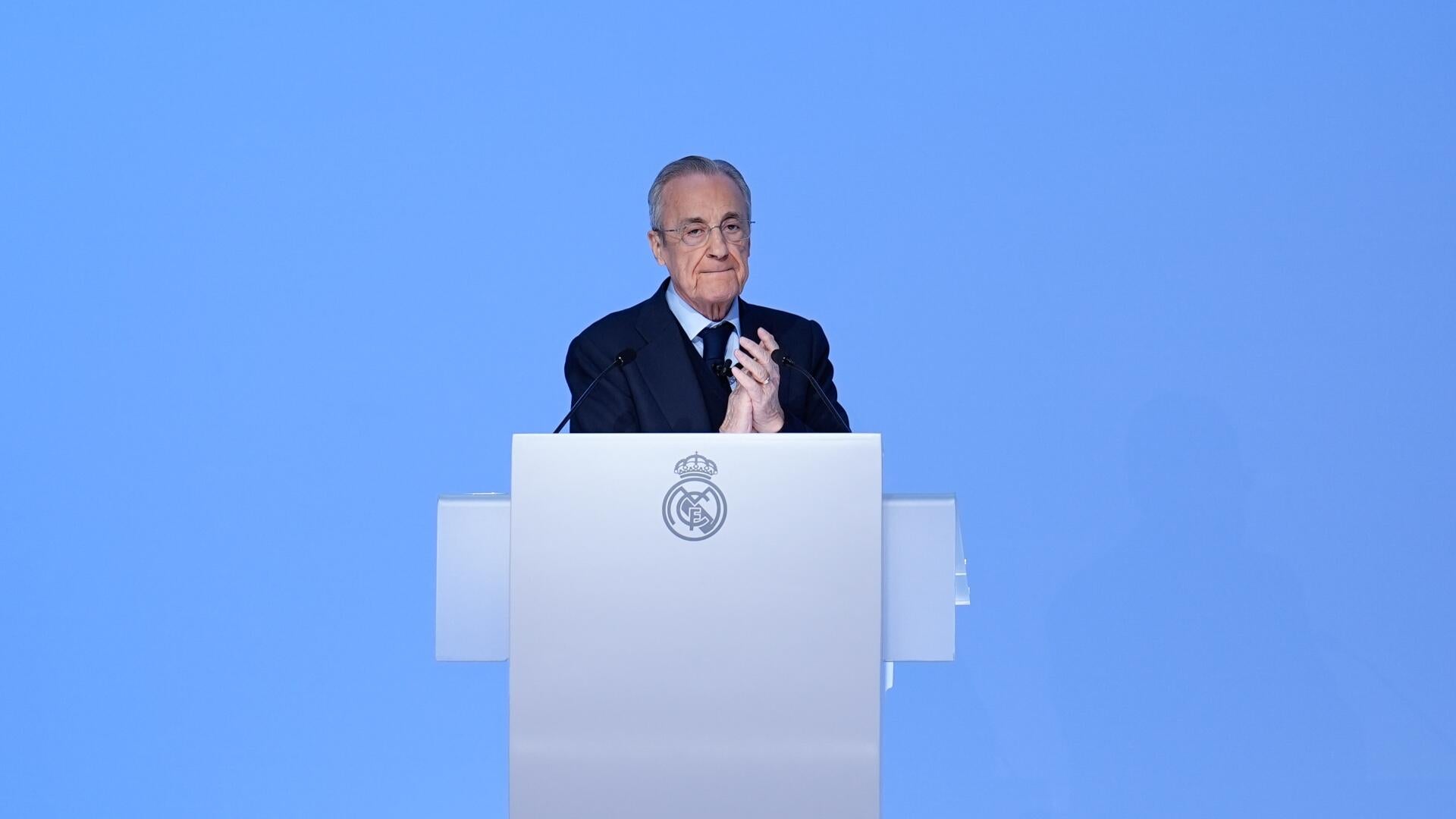
The Super League project is now officially over. It took almost five years to see it end and this was made official this week when Real Madrid and UEFA (the European governing body) both announced an agreement on Wednesday, ending the possibility of seeing an alternative competition around Europe in the coming years.
“Following months of discussions conducted in the best interests of European football, UEFA, European Football Clubs (EFC), and Real Madrid CF announce that they have reached an agreement of principles for the well-being of European club football, respecting the principle of sporting merit with emphasis on long-term club sustainability and the enhancement of fan experience through the use of technology,” the announcement said. “This agreement of principles will also serve to resolve their legal disputes related to the European Super League, once such principles are executed and implemented.”
Here’s a look back at what the Super League idea was, what it was supposed to look like and more:
What was the Super League?
The European Super League was a proposed breakaway soccer tournament announced in April 2021 by 12 of Europe’s biggest clubs. It was designed to rival (and effectively replace, for its members) the UEFA Champions League, allowing the clubs more control. The founding clubs were:
- Real Madrid
- Barcelona
- Atletico Madrid
- Manchester United
- Manchester City
- Liverpool
- Chelsea
- Arsenal
- Tottenham
- Juventus
- AC Milan
- Inter
The initial plan, which was received negatively by most of the fans around the world, was to create a closed competition, where the founding members would have permanent spots, and then there would be limited spots available for others based on the domestic league performances, but also threatening the value of the same leagues, something that was worrisome for many, especially smaller clubs. While most of the big clubs initially agreed on the project, some of the coaches and players of the teams linked immediately argued against the proposed project, supporting the backlash of the fans and other teams around Europe.
In particular, PSG and Bayern Munich opposed the idea and didn’t join the project while other presidents as Real Madrid’s Florentino Perez and former Juventus chairman Andrea Agnelli were the leaders of the new project. Agnelli, who stepped down from his roles in 2023, was serving as president of the European Clubs Association (ECA) when he helped launch the Super League project. He resigned from the ECA shortly after the announcement was made.
Why it didn’t work out?
After the initial fear among the fanbases and the clubs not involved, the situation got even more tense. The reaction from fans, players, coaches, and the media was overwhelmingly negative, and within 48 hours of the announcement, all six English clubs had withdrawn from the project, a clear victory for those against it with the intense backlash and the initiative’s poor planning and organization taking a quick toll. Manchester City were the first club that announced its decision to back out, two days after the first official statement.
“Manchester City Football Club can confirm that it has formally enacted the procedures to withdraw from the group developing plans for a European Super League,” the club announced.
Former Liverpool manager Jurgen Klopp was also one of the first big figures to speak up publicly about the project, and in typical fashion, he didn’t hold back.
“I hope this Super League will never happen. With the way the Champions League is now running, football has a great product, even with the Europa League. For me, the Champions League is the Super League, in which you do not always end up playing against the same teams. Of course, it’s economically important, but why should we create a system where Liverpool faces Real Madrid for 10 straight years? Who wants to see that every year?”
Klopp was followed by some players, including Manchester United’s Bruno Fernandes. The Portuguese midfielder posted a caption on his Instagram account that read “Dreams can’t be bought.”
Later, the Super League organizers, A22 Sports Management, a company formed to “sponsor and assist” in the creation of the European Super League, announced it would be exploring plans to relaunch the competition while the European Court of Justice ruled in December 2023 that a ban on the Super League could be in conflict with the European Union regulations.
However, the public perception of the Super League, as it was announced, shaped its reputation and led Real Madrid, the last club involved, to forget about the chances of a new competition in the coming years. In February 2026, Barcelona also announced their decision to leave the project a few days before the latest announcement made by Real Madrid and UEFA, putting an end to any small amount of life the project may have had.

