Crew of fatal US military crash included Alabama father recently deployed and several from Ohio
The United States is decimating the radical Iranian regime’s military in *** way the world has never seen before. Never before has *** modern, capable military, which Iran used to have been so quickly destroyed and made combat ineffective, devastated. We said it would not be *** fair fight and it has not been. As I stated during our first press conference on day 2, that was 10 short days ago. The combination of the world’s two most powerful air forces is unprecedented and unbeatable. Between our air force and that of the Israelis, over 15,000 enemy targets have been struck. That’s well over 1000 *** day. No other combination of countries in the world can do that. So today as we speak, we fly over the top. Of Iran and Tehran fighters and bombers all day picking targets as they choose as our intelligence gets better and better and more refined, looking up. The IRGC and Iranian regime. Sees only two things on the side of aircraft. The Stars and stripes And the Star of David. The evil regime’s worst nightmare. Iran has no air defenses. Iran has no air force. Iran has no navy. Their missiles, their missile launchers and drones being destroyed or shot out of the sky. Their missile volume is down 90%. Their one-way attack drones yesterday down 95%. And as the world is seeing, they are exercising sheer desperation in the Straits of Hormuz. Something we’re dealing with. We have been dealing with it and. Don’t need to worry about it. We’re on *** plan to defeat, destroy, disable all of their meaningful military capabilities at *** pace. The world has never seen before. But it’s not just that Iran doesn’t have *** functioning air force. Or that their entire navy is at the bottom of the Persian Gulf, or their missile force is shrinking daily. Even more importantly, they also don’t have the ability to build more. That’s the most important component I’d like to emphasize today. Soon and very soon all of Iran’s defense companies. Will be destroyed. For example, as of 2 days ago, Iran’s entire ballistic ballistic missile production capacity, every company that builds every component of those missiles has been functionally defeated, destroyed. Buildings, complexes, and factory lines all across Iran destroyed. So we’re shooting down and destroying what missiles they still have in stock, but more importantly, ensuring that they have no ability to make more. Their production lines, their military plants, their defense innovation centers defeated. Iran’s leadership is in no better shape. Desperate and hiding, they’ve gone underground, cowering. That’s what rats do. We know the new so-called not so supreme leader is wounded. And likely disfigured He put out *** statement yesterday, *** weak one, actually. But there was no voice and there was no video. It was *** written statement. He called for unity. Apparently killing tens of thousands of protesters is his kind of unity. Iran has plenty of cameras and plenty of voice recorders. Why *** written statement? I think you know why. His father, dead He’s scared, he’s injured, he’s on the run, and he lacks legitimacy. It’s *** mess for them. Who’s in charge? Iran may not even know. With every passing hour we know and we know they know. That the military capabilities of their evil regime are crumbling. They can barely communicate, let alone coordinate. They’re confused, and we know it. Our response, we will keep pressing. We will keep pushing, keep advancing. No quarter, no mercy for our enemies. Yet some in this crew in the press just can’t stop. Allow me to make *** few suggestions. People look up at the TV and they see banners, they see headlines. I, I used to be in that business and I know that everything is written intentionally. For example, *** banner or *** headline, Mideast war intensifies, splashing on the screen the last couple of days alongside visuals of civilian or energy targets that Iran has hit because that’s what they do. What should the banner read instead? How about Iran increasingly desperate, because they are. They know it and so do you. If it can be admitted. Or more fake news from CNN. Reports that the Trump administration underestimated the Iran war’s impact on the Strait of Hormuz. Patently ridiculous, of course. For decades, Iran has threatened shipping in the Strait of Hormuz. This is always what they do, hold the Strait hostage. CNN doesn’t think we thought of that. It’s *** fundamentally unserious report. The sooner David Ellison takes over that network, the better. Another example of *** fake headline that I saw yesterday, war widening. Here’s *** real headline for you for an actual patriotic press. How about Iran shrinking, going underground? See, you see, Iran’s leaders are hiding in bunkers and moving into civilian areas. The only thing that is widening. Is our advantage Not to mention our golf partners stepping up even more now going on the offense and have always been with us on the defense with collective and integrated air defenses. Our will It is unshakeable our options. Maximized and our capabilities still building, we’re going up. They’re going down As I said from the start, President Trump holds the cards. He’ll determine the pace, the tempo, and the timing of this conflict. His hand firmly on the wheel. As well as on the throttle setting. America first, peace through strength in action. From day one, as our nation expects and the president demands, our warriors have fought with lethality, precision, and rapid innovation. In fact, today will be yet again the highest volume of strikes that America has put over the skies of Iran and Tehran. The number of sorties and the number of bomber pulses, the highest yet, ramping up and only up. And quantity has *** quality of its own as we continue to ramp up. Every tool of AI, of cyber, of space, EW, counter UAS, you name it, we’re employing it, blinding, confusing, and deceiving our enemy. Because we know who the good guys are here. And the American people do too. And that makes my job simple. I serve God The troops, the country, the Constitution, and the President of the United States and answer only to those. All in service of victory on the battlefield and the military objectives that we’ve laid out from day one defeat the missiles, missile launchers, and defense industrial base which I laid out today, defeat the navy and deny Iran the ability to have *** nuclear weapon. Clear, decisive, achievable. And Admiral Cooper knows, the CEMCOM commander who we spent *** couple of hours with last night. That in pursuit of those objectives we have his back in every way. His commanders know that and so do the troops in harm’s way. Admiral Cooper gets what he needs the assets, the authorities, the munitions, you name it, we will stop at nothing to win. War is hell. War is chaos. And as we saw yesterday with the tragic crash of our KC-135 tanker. Um Bad things can happen American heroes All of them. And as I have with all of them, as we have, we will greet those heroes at Dover and their sacrifice will only recommit us to the resolve of this mission. But war in this context and in pursuit of peace. Is necessary, which is why each day on bended knee we continue to appeal to heaven. To Almighty God’s providence, to watch over and give special skill and confidence to our leaders and to our warriors. To those warriors who this nation prays for every single day, I hear from all of you out there who pray for them every day. Stay on bended knee and pray for them. I continue to say to them, Godspeed, may the Lord bless you and keep you and keep going. Mr. Chairman, over to you. Thank you, Mr. Secretary, and good morning, ladies and gentlemen, and thank you for joining us today. Uh, before I start with an update, I also want to address the tragic loss of our KC-135 refueling aircraft yesterday. The incident occurred over friendly territory in western Iraq while the crew was on *** combat mission and again was not the result, as Centcom has said, was not the result of hostile or friendly fire. We’re still treating this as an active rescue and recovery operation, as CENTCOM announced this morning. 4 airmen have been recovered, and the Air Force and US Central Command will provide updates as information becomes available. Please keep these brave airmen, their families, friends, and units in your thoughts in the coming hours and days. Our service members make an incredible sacrifice to go forward and do the things that the nation asks of them. It’s *** reminder of the true cost of the dedication and commitment of the joint force. We’re also aware of *** fire on board the USS Gerald R. Ford. We’re thinking about the crew there who were injured in the fire. We believe and hope that everyone will be OK, and we’re grateful for that. And for any further questions on that, we’d refer you to NASA or to the Navy. This morning we enter the 13th day of Operation Epic Fury, and we continue to make progress towards our military objectives. As the Secretary said, today will be our heaviest day of kinetic fires across the operating area. CENTCOM continues to attack ballistic missile and drone capabilities so that they are no longer *** threat to US forces, our bases, or our partners. They’re continuing to destroy the Iranian navy to ensure freedom of navigation. And this means going after Iran’s mine laying capability and destroying their ability to attack commercial vessels, and we’re targeting their defense industrial base so they cannot rebuild the capabilities that can harm America’s interests or our partners in the future. As Admiral Cooper said in his update on Wednesday, Iranian combat power continues to decline as *** result of the continued strikes, as the Secretary talked about. We’ve attacked over 6000 targets, and our strike packages continue to launch every hour, and we’ve maintained an unprecedented number of sorties up overhead of Iran. CENTCOM is now persistently over the enemy, and as *** result we’ve seen *** reduction in missile and one-way attack fires, as the Secretary said. In less than 2 weeks we’ve rendered the Iranian navy combat ineffective and continued to attack naval vessels, including all of their Soleimani class warships which were armed with anti-ship missiles and anti-aircraft weapons. We’ve made progress, but Iran still has the capability to harm friendly forces and commercial shipping. And our work on this effort continues, but I want to make something clear. The only thing preventing commercial traffic can flow through the straits right now, which there is some through the Straits, is Iran. They are the belligerents here holding, holding the straits closed, although there is some traffic moving through there. We’ve made it *** priority to target Iran’s mine laying enterprise. There are mine layers, the naval bases and depots, in addition to the missiles that could influence the straits, and CENTCOM continues to attack those efforts, and we continue to make progress on the industrial base to include factories, weapons, warehouses that are stored in, and we will continue to do so in the coming days, especially today. Now, as I often do, I wanna share *** little bit about our incredible joint force. Today I’m gonna talk about our incredible artillery force comprised of American soldiers and Marines who’ve been sinking ships, destroying depots, and launching Army tactical missile missile systems or. Precision strike missiles or prisms, and high mobility rocket systems or HAs from outside Iran, our army and Marine artillery men are hitting sites that Iran relies on to project power beyond their borders and protect our deployed. In just the 1st 13 days of this operation, our artillery forces have made history. They fired the first precision strike missiles ever used in combat, reaching deep into enemy territory. They’ve used Army attacks to sink multiple ships, including *** submarine, and they’ve done all of this with the precision and determination that comes from relentless training and trust in each other and in their weapons systems. Yesterday I had the incredible honor and privilege of speaking with some of our young soldiers from the 3rd Battalion, 27th Field Artillery Regiment out of Fort Bragg, North Carolina, the unit and the crew that fired the first precision strike missiles. The soldiers I met came from all over this great country, New York, Texas, Delaware, California. One had been in the army only 6 months and been in the unit for 2 months and was already deployed. He was the youngest at 20, but you would not know it from the way that they talked about their mission. The others were 22 and 28 years old. They spoke with *** sense of calm pride, purpose, and clarity that tells you clearly they understand the weight of what they’re doing and the people who depend on them. I asked them to walk me through *** fire mission. I asked not just what they do, but what they feel, especially those first crew members on this particular mission. These soldiers basically live in these vehicles behind us. The cab very tight. Two folks sit next to each other with the crew commander behind them. It’s jammed inside there with their personal weapons and kit, um, and they sit and wait for *** fire mission. And when that fire mission comes, they close the armored doors and begin to program the systems. Uh, they then throw 3 simple toggle switches and 10 to 15 ft behind them, *** rocket motor ignites and the round is headed, uh, downrange to do the nation’s work. I asked these youngsters, these young, awesome Americans, what does that feel like? And one of them just looked at me and said, it’s awesome. No drama, no hesitation in the middle of the day, in the middle of the night, in the sun, the rain, in the snow, flawless execution. Their marine counterparts are out there doing the same thing every night, same work, same pressure, same expectations, same results. And we hand tremendous and enormous responsibility to these young Americans, and they carry it with *** level of maturity, grit, professionalism, and tenacity that makes me incredibly proud to be *** part of their joint force. Their parents and families would and should be incredibly proud, and their leaders and I trust them to do the deeds that they must do in difficult circumstances every single time. I also want to touch today *** moment, uh, I want to touch for *** moment today on their leadership. These young Americans are led by extraordinary young leaders out at the tactical edge. Yesterday, the battery commander and her NCO were there with this crew on the same video screen. The two of them hardly said *** word. They didn’t have to. Their eyes, uh, and in particular the commander’s eyes, you could see the quiet, trust and confidence she had in these soldiers and the rest of their battery. It came through loud and clear, and we appreciate their leadership. When I asked these soldiers yesterday, what is it that you need from the secretary and I, they looked at each other, paused for *** moment, and looked back at me and said, More rounds, sir. It was awesome. So thank you to those soldiers and Marines out on the firing line supporting our mission and thank you to their families. Our joint force will continue today to deliver dynamic fires against the enemy from the land, sea, and air. We remain deeply grateful for their service and for the 3rd time today I’ll mention that today will be our busiest day. This mission remains complex, dangerous, and difficult, and every service member has *** family waiting for them to return home, and I want to thank all of the families today who are supporting their deployed forces and those doing the work here in the states. On *** personal note today, I also want to thank the joint staff and the team that I have the pleasure of working with, some of them right here in this room, they are working 24 hours *** day to deliver the options that we must to the secretary and to the president. Today as I close, I ask that we remember our fallen and those participating in the recovery operations to bring home our lost KC-135 crew, that we keep those service members and their families in their thoughts and prayers. Those are very, very, very tough days when that knock comes on the door for people on both sides of the door. Again, thank you to our deployed, thank you to, uh, our fallen and to their families and to the joint force and with that I’ll, uh, turn it back to you, sir Chairman. Alexander Ingersoll, One America News, um, can you tell us *** little bit more about the Strait of Hormuz and when it might be fully operational again and um how do we ensure our objective of denying Iran *** nuclear weapon if they continue to align with our adversaries? So I’ll take it and chime in, Mr. Chairman, if you’d like at all. Um, I, I wanna emphasize what the chairman said about that. The only thing prohibiting transit in the straits right now is Iran shooting at shipping. It is open for transit should Iran not do that. Now there’s *** reason why we chose as one of our primary objectives destroy the navy. We understood the ability to interdict shipping is something Iran has done for 40 years. It’s key terrain. They’ve used it as leverage. The world is seeing what they’ll do. Uh, to fight back in that context and so, um, we’ve heard them talk about taking various measures, uh, and we’re planning for all of them. So we have *** plan for every option here. We’re working with our interagency partners and, uh, that’s, that’s not *** strait we’re gonna allow to remain contested or with *** lack of, of flow of, of, of commercial goods. So we’re, we’re aware of that. We’re laser focused on our military. Objectives, but also want to make sure our partners across this government understand we’re working with you to make sure that energy flows, and that’s that’s an important part. And the second question was on the nuclear capability. As we said from the beginning, their strategy shifted just from defense of their nuclear facilities to *** conventional umbrella of so many missiles. Uh, that no one would challenge their ability to, uh, the opportunity to defeat their missile, their nuclear capabilities, and it was growing by the day. So with Iran at its weakest moment, taking, going at that ballistic missile capability creates an opportunity to ensure, uh, at any point in time that Iran give up their nuclear capabilities or if need be, you prevent them from doing it as the president has done once already with Operation Midnight Hammer, uh, obliterating those capabilities. So the conventional side is *** huge part of getting at. denying nuclear capabilities if you have anything you want to add, um, I appreciate the question. I’m not going to comment on what we may or may not be thinking about any options that the joint force could be tasked to do in the future, whether it’s on the nuke matter or anything else. Thank you though, but we have options. The mines that are in the Strait of Hormuz and and our ability to, you know. We, we retain *** range of options to solve *** whole variety of problems, um, and that is one set of options that we have, uh, uh, you know, that we hold on to. So thank you. Thank you, Secretary Hegseth. Mary Margaret with Daily Wire. Thank you both for the update. ABC News has updated its story from yesterday, clarifying that the FBI report on Iran possibly striking California was unverified. I just want to ask you what impact did that original reporting have on the public and does Iran even have the ability to conduct such *** strike? And then just really quickly on another note, um, what role did Vice President Vance play in counseling the president on this conflict? Can you speak to some of the media reporting suggesting that there is *** division there? That reporting on California, um, obviously had no impact on us. Uh, also, we’re used to bad reporting. We’re used to ill-informed reporting. And so it doesn’t change how we operate, but we engage with it to prove that it’s not true, as CEO has done so well. Uh, ultimately, uh, I look at the reports on *** daily basis of threat our in agencies all over it. My partners across government are all over looking for indications and warnings, keeping the American people safe. Uh, there’s *** lot of things Iran has said it can do for, for *** long time, um, thankfully, including engaging their proxies and getting them involved in the fight, which they haven’t been able to do. Uh, so we’re watching that very closely and as far as, as far as the vice president, uh, he’s an incredible member, leader of this team as well alongside the president and the secretary of state. I, I can’t say enough great stuff about this team, how it works together, how it provides options to the president, uh, and, and the vice president every single day is *** key voice in that, an indispensable voice in that actually. Um In the middle there, red tie. Yes, Michael Gordon, Wall Street Journal. Iran is thought to have 440 kg of highly enriched uranium in at least 2 locations and several 1000 kg of lower purity material. Can you conclude this mission successfully? Without physically taking control of that material, or are you counting on diplomatic negotiations to provide some measure of control leading to its removal? You’ve mentioned missiles, you’ve mentioned drones, military industry. You haven’t stipulated that taking care of that material is *** mission priority. We’ve said from the beginning deny Iran nuclear weapons as *** core mission. We have, we retain options across the spectrum to ensure that they never do, and President Trump has said that. And that’s why this mission actually couldn’t have been possible without Midnight Hammer. Without what those B-2s did going across and obliterating those facilities, that set the condition for the opportunity to do what we’re doing now. So he’s kept the president’s kept his eye focused on nuclear capabilities, and I will say we have *** range of options up to and including Iran deciding. That they will, uh, give those up, which of course we would welcome. They weren’t willing to do in negotiations. Uh, I would not never tell this group or the world what we’re willing to do or how far we’re willing to go, uh, but we have options for sure right next to them. No, right there, right here, sir, right here. I’ll take it corner zip right there, yep, no, you, yep, OK, thank you, sir. Um, can you please provide some guidance? Uh, it’s been 13 days in. Can you please provide some guidance, both of you, about the strike on the girls’ school? Um, there’s been reporting that indicates that preliminary inquiry, even though it’s ongoing, has determined that the airstrike was carried out, um, by the United States. Uh, given that there is another competing narrative, uh, that this was done intentionally, can you provide us with some guidance about whether. Of this, uh, was the case. Secondly, um, we are also getting, uh, we had heard yesterday from Energy Secretary Wright, uh, that said that the US Navy would not be ready until the end of the month to provide escorts through the state of Hormuz. Is that an accurate assessment? And if so, can you tell us why? Thank you. Well, with an issue on your first topic, an issue of such seriousness, um, we don’t, we’re not gonna let reporting lead us or force our hand into indicating, uh, what happened in *** particular situation because the truth matters. So I can report that CEO has designated an investigating officer to complete *** command investigation. Uh, the command investigation will take as long as necessary to address all the matters surrounding this incident, and the investigating officer is from outside CENTCOM and is ***, is *** general officer, but I will note. To this group and to the world, there’s only one entity in this conflict between us and Iran that never targets civilians, literally never target civilians. I look at the process that’s used on dynamic strikes or on boat strikes and others. We have *** very high fidelity process in that case, so we don’t target. Iran does. We will investigate. We’ll get to the truth and we’ll share it when we have it. Absolutely. And what was the second question Strait of Hormuz about the navy, uh, it’s *** tactically complex environment before I think we want to take anything through there at scale, we want to make sure that we do the work. Pursuant to our current military objectives to, to do, uh, to do that safely and smartly, so we’re continuing to develop and we do *** lot of work and like I said this is, uh, it is dynamic, but this is, I think almost by 20% the largest day of, of strikes. Uh, and as I said, our intelligence just gets better and better. That feedback loop feeds itself, and as we refine those targets, it, it exponentially increases what we can hit and why to include strategic things the world’s talking about and looking at. And it’s our job to have *** plan for it, which we do to address it, uh, and ensure that the president has options. Uh, we’ve done that from the beginning in this department. He’ll have options on that, on that topic as well right here that strike, sir. Um, an investigation is an investigation. That’s what it is. It doesn’t mean anything other than that. Yes, uh, Ryan Morgan with the Epic Times, uh, regarding today’s busy day of strikes, um, last week you guys discussed the. Progress of the air campaign to gain air superiority and to transition from these standoff weapons launched at range to more overhead strikes, can you now say that these strikes today are going to rely entirely on stand-in over the top weapons, or are standoff range weapons still in play? It’s *** great question. I can say based on the report I read this morning at 0600. Uh, only 1% of the munitions we’re using today are standoff munitions. The rest are over the top, um, the types of which we have *** plethora, uh, which was, which was our goal from the beginning. You use standoff which are more exquisite. You transition to *** much larger magazine depth, ensuring that you’re preserving all the capabilities you have and your options across, uh, the force. Absolutely. Has Iran placed any mines since the war started? Is Iran placing new mines? Um, we’ve heard them talk about it just like you’ve reported recklessly and wildly about it, um, but there’s, we have no clear evidence, we have no clear evidence of that. Thank you, sir. Uh, Mr. Secretary, given everything the US has accomplished in the last 24 hours, uh, as of today, how do you define success in this military option and has that definition changed from day one? And also regarding Iran government telling countries hosting USA American bases that they could face attacks, um, what is the Pentagon doing about that? First question is, what is the. Objective. How do you define success as of today? Yeah, I mean, we like, we define success again, 1312 days in, 13 days in. By reaching the military objectives that we’ve laid out, launchers, missile launchers, defense industrial base, their navy, the ability to project power in the naval sense, leading toward denying them to get *** nuclear weapon, and we’ve got internal metrics that look at that, that we represent to the president who then can decide, um, how, how long he’d like to continue in pursuit of those those military objectives. So that hasn’t changed. There’s *** lot of things *** lot of people talk about. Uh, what they want us to do or what we should do or what we should stay focused on, and again I’ve, I’ve addressed this before and I think it’s worth saying again, um, mission creep or expansive missions or prolonged timelines or democracy building or nation building, you, you name it, has not been part of what President Trump wants us to be involved in. We’re solving for something here, this particular mission set, uh, but also recognizing this country’s conditioned. To previous leaders, whether it’s George W. Bush or Barack Obama or Joe Biden, who had these expansive nebulous mission sets that kept changing all the time, so the timeline kept moving and we kept pouring more troops in and on the ground, and then pretty soon everyone wonders like I did in Afghanistan in 2012, what’s our mission here? I’m not, I’m not clear what it is. We’re, we’re taking the opposite approach here and saying we’ve defined these objectives. We’re pursuing those objectives. The president has his hand on the throttle and we’ll decide ultimately when they’ve been reached that serve the purposes of the United States of America, American interests first. Yeah, right here. Thank you, Secretary Hexeth. Polls show over 80% of Republicans support the president’s military. Action in Iran, but there’s some consternation in parts of the party, particularly from your fellow Fox News alum Tucker Carlson. He called the war disgusting and evil, and then said of unconditional surrender, which the president has called for, means foreign troops get to rape your wives and daughters. Have you heard these comments and what’s your reaction to them? We’re busy executing on behalf of great patriotic Americans with *** clear mission. Uh, that’s 47 years overdue, uh, and we’re gonna execute on that regardless of what people say about it. Yeah, right here, you have said that the US military has essentially, uh, aerial superiority, naval superiority over Iran, yet we’re not escorting ships to the Strait of Hormuth. Why? How did you not plan for this? We, we plan for it. We recognize it, um. Because ultimately, uh, we want to do it sequentially in *** way that makes the most sense for what we want to achieve and ensure that we’re, we’re sending the right signals, uh, to the world when we do so. So when Chris Wright speaks or we speak, it’s based on *** full assessment of, of what we’re, what we’re up against, what we want to say to the world, how we want them to see and understand the conflict. It’s like this whole idea. of the war widening, that’s what the press wants to make it look like, like it’s widening and chaos is ensuing. No, we’re actually closing in on grabbing hold of and controlling what, what objectives we want to achieve and how we want to achieve them. Shape, it’s called shaping operations and setting the conditions, but when you shape the environment, you don’t always tell, I mean, foolish political leaders. And foolish military leaders of the past will hang an exact deadline on it. Or here’s exactly when we’ll do what we’re going to do, or here’s how long it’s going to take us. And then if you meet that, uh, maybe you meet it, but if you don’t, you fail, and if you’re far beyond, we know exactly what we’re shaping and why. We’re sending those signals working across the interagency. The Strait of Hormuz is something we’ve paid attention to from the beginning. Uh, and the American people can rest assured, uh, we will ensure that our interests are advanced, no doubt. Yeah, right there, green jacket. Mike Mike Brest with the Washington Examiner. How many American casualties have there been and where were the American service members when they were injured? Um, Uh, I mean, it’s, uh, *** bunch of returned to duty, so we’ve had *** whole, the large, large majority have, uh, gone in for some medical treatment and returned to duty. We’ve had, uh, in Kuwait, uh, Jordan, uh, down across the southern flank *** little bit, *** variety of places, most from one-way attack, uh, strikes, but I want to clarify that. I think what we try to do here is clarify those numbers rather than saying, um. KIA or WIA wounded, be more clear about that because the overwhelming majority, almost 90%, thank God, um, are returned to duty, minor, minor injuries returned to duty and so that number can, can look *** certain way and our job is to add some fidelity to it right here, yeah. Thank you, Mr. Secretary. David Zia, Real America’s Voice, can you share what types of munitions have been used on the attacks on commercial shipping? Have any hit mines and are USVs on manned surface vehicles being used? And just *** quick follow up, were there any arrests, uh, in Fort Campbell with the drone thefts? I’m not familiar with the, the Fort Campbell thing. Uh, the, the, the strikes that Iran has taken on shipping up north in the vicinity of Kuwait have been, I, I believe, from surface to surface missiles up there. Um, we’ve not seen any USB activity out of Iran, that we’ve, we’ve seen in the Gulf at this point, nor have any ships hit mines or anything. There’s still flowing through. There’s been no, no strikes. One more time right here. Thank you so much, Heather Mullins, Linde TV. My first question is, uh, President Trump is set to meet with Xi Jinping in *** couple of weeks. How much support, if any, has China been given the Iranian regime? And then the second question, just, you know, I know President Trump calling for an unconditional surrender from Iran. Given that the US is working in partnership with Israel on this whole operation. Is Iran expected to meet demands of both countries or just the US, and what are those demands? Well, we’re proud to partner with the incredible cap capabilities the Iranians are. The Israelis have, uh, but our objectives are our objectives. And so when those are met, uh, as, as we meet those, we’ll, we’ll set the, uh, we’ll set the tempo of, of when those are met. What was the first question? Um, he’s meeting with Xi Jinping, the president has *** has *** historic relationship with President Xi. Um, they look forward to, to having *** dynamic conversation. Uh, 22 powers, um, President Trump ultimately, uh, has established terms of that relationship which advance the United States of America, and that meeting will continue to ensure we advance that. That’s all I’ve got. Thank you very much. I appreciate it.
A pilot from Alabama had just been promoted to major in January and had been deployed less than a week when the refueling aircraft he was aboard crashed in Iraq this week, killing him and five others, his brother-in-law said Saturday.Alex Klinner, 33, leaves behind three small children: 7-month-old twins and a 2-year-old son, his brother-in-law, James Harrill, said Saturday while confirming his death.“It’s kind of heartbreaking to say: He was just a really good dad and really loved his family a lot — like a lot,” Harrill said.The aircraft was in “friendly” airspace, supporting operations against Iran, when an unspecified incident involving another aircraft occurred, according to U.S. Central Command.Video above: Pentagon update on IranKlinner was one of three people killed in the Thursday crash who the U.S. government said were assigned to the 6th Air Refueling Wing at MacDill Air Force Base in Florida and who Alabama Gov. Kay Ivey said were stationed in Birmingham. On Saturday, the U.S. government identified the other two as Capt. Ariana Savino, 31, of Covington, Washington, and Tech. Sgt. Ashley Pruitt, 34, of Bardstown, Kentucky.Three additional deceased service members on the aircraft were assigned to the 121st Air Refueling Wing at Rickenbacker Air National Guard Base in Columbus, Ohio. They were identified by federal and state officials as Capt. Seth Koval, 38, Capt. Curtis Angst, 30, and Tech. Sgt. Tyler Simmons, 28.The U.S. government listed Koval from Mooresville, Indiana, while the Ohio National Guard listed his home Stoutsville, Ohio. The Ohio National Guard listed both Angst and Simmons from Columbus, Ohio, while the U.S. government listed Angst as from Wilmington, Ohio.The aircraft was in “friendly” airspace, supporting operations against Iran, when an unspecified incident involving another aircraft occurred, according to U.S. Central Command. The other plane landed safety, U.S. military officials said.A new father and a new majorKlinner, a graduate of Auburn University and an eight-year U.S. Air Force veteran from Birmingham, Alabama, had just moved with his family into a new home, his wife, Libby Klinner, said in an Instagram post mourning his death.An outdoorsman who enjoyed hiking, Klinner was also ready to help others. When Harrill last saw him in January, Klinner had shoveled Harrill’s vehicle out of the snow during a family wedding.“Alex was one of those guys that had this steady command about him,” said Harrill, of Atlanta, who helped set up a GoFundMe site for Klinner’s family. “He was literally one of the most kindest, giving people.”Libby Klinner said in a post that her heart is broken for their children, who will grow up not knowing their father.“They won’t get to see firsthand the way he would jump up to help in any way he could,” she wrote. “They won’t see how goofy and funny he was. They won’t witness his selflessness, the way he thought about everyone else before himself. They won’t get to feel the deep love he had for them.”A man with a ready smileSimmons was a boom operator responsible for transferring fuel from the tanker to the receiving aircraft, according to his Air Force biography.His mother, Cheryl Simmons, said Saturday that she was making funeral plans for her son.In a statement obtained by WCMH-TV in Columbus, Tyler Simmons’ family said it was saddened beyond measure to hear of the fatal crash.“Tyler’s smile could light up any room, his strong presence would fill it. His parents, grandparents, family and friends are grief stricken for the loss of life,” they said.The Ohio National Guard said Koval was an aircraft commander with 19 years of service. A graduate of Purdue University, he served in the Indiana National Guard before transferring to an Ohio unit in 2017, according to his Air Force biography.Angst was a pilot with 10 years of service who graduated from the University of Cincinnati, according to his Air Force biography provided by the Ohio National Guard.The refueling aircraft is a mainstay in the US militaryU.S. Central Command, which oversees the Middle East, has said the crash occurred on a combat mission but was over “friendly” territory in western Iraq. Military officials said it is being investigated and was “not due to hostile or friendly fire.”The KC-135 aircraft refuels other planes in midair, allowing them to fly longer distances and sustain operations without landing. The plane can also be used to transport wounded personnel and conduct surveillance missions, according to military experts.The Congressional Research Service says the Air Force last year had 376 KC-135s, including 151 on active duty, 163 in the Air National Guard and 62 in the Air Force Reserve. It has been in service for more than 60 years.
A pilot from Alabama had just been promoted to major in January and had been deployed less than a week when the refueling aircraft he was aboard crashed in Iraq this week, killing him and five others, his brother-in-law said Saturday.
Alex Klinner, 33, leaves behind three small children: 7-month-old twins and a 2-year-old son, his brother-in-law, James Harrill, said Saturday while confirming his death.
“It’s kind of heartbreaking to say: He was just a really good dad and really loved his family a lot — like a lot,” Harrill said.
Video above: Pentagon update on Iran
Klinner was one of three people killed in the Thursday crash who the U.S. government said were assigned to the 6th Air Refueling Wing at MacDill Air Force Base in Florida and who Alabama Gov. Kay Ivey said were stationed in Birmingham. On Saturday, the U.S. government identified the other two as Capt. Ariana Savino, 31, of Covington, Washington, and Tech. Sgt. Ashley Pruitt, 34, of Bardstown, Kentucky.
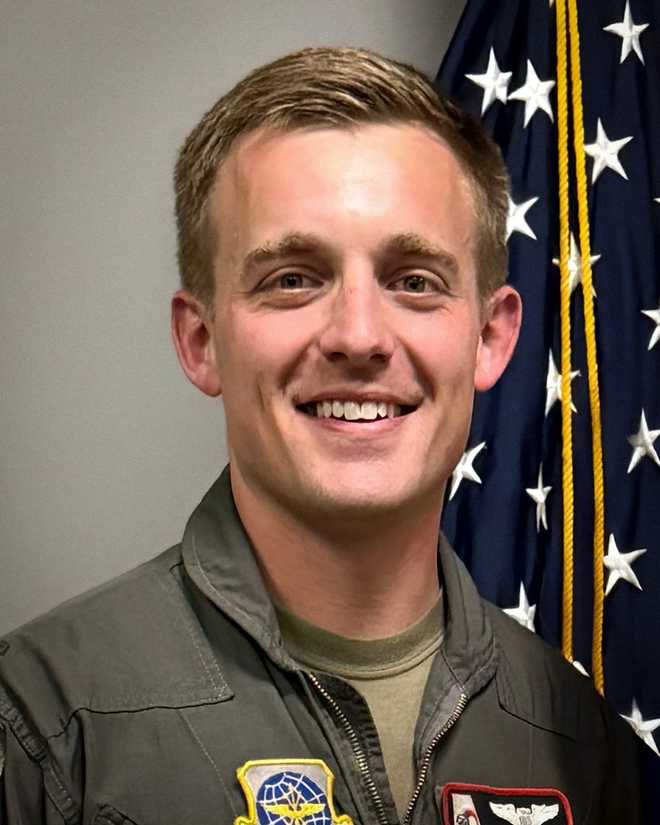
Three additional deceased service members on the aircraft were assigned to the 121st Air Refueling Wing at Rickenbacker Air National Guard Base in Columbus, Ohio. They were identified by federal and state officials as Capt. Seth Koval, 38, Capt. Curtis Angst, 30, and Tech. Sgt. Tyler Simmons, 28.
The U.S. government listed Koval from Mooresville, Indiana, while the Ohio National Guard listed his home Stoutsville, Ohio. The Ohio National Guard listed both Angst and Simmons from Columbus, Ohio, while the U.S. government listed Angst as from Wilmington, Ohio.
The aircraft was in “friendly” airspace, supporting operations against Iran, when an unspecified incident involving another aircraft occurred, according to U.S. Central Command. The other plane landed safety, U.S. military officials said.
A new father and a new major
Klinner, a graduate of Auburn University and an eight-year U.S. Air Force veteran from Birmingham, Alabama, had just moved with his family into a new home, his wife, Libby Klinner, said in an Instagram post mourning his death.
An outdoorsman who enjoyed hiking, Klinner was also ready to help others. When Harrill last saw him in January, Klinner had shoveled Harrill’s vehicle out of the snow during a family wedding.
“Alex was one of those guys that had this steady command about him,” said Harrill, of Atlanta, who helped set up a GoFundMe site for Klinner’s family. “He was literally one of the most kindest, giving people.”
Libby Klinner said in a post that her heart is broken for their children, who will grow up not knowing their father.
“They won’t get to see firsthand the way he would jump up to help in any way he could,” she wrote. “They won’t see how goofy and funny he was. They won’t witness his selflessness, the way he thought about everyone else before himself. They won’t get to feel the deep love he had for them.”
A man with a ready smile
Simmons was a boom operator responsible for transferring fuel from the tanker to the receiving aircraft, according to his Air Force biography.
His mother, Cheryl Simmons, said Saturday that she was making funeral plans for her son.
In a statement obtained by WCMH-TV in Columbus, Tyler Simmons’ family said it was saddened beyond measure to hear of the fatal crash.
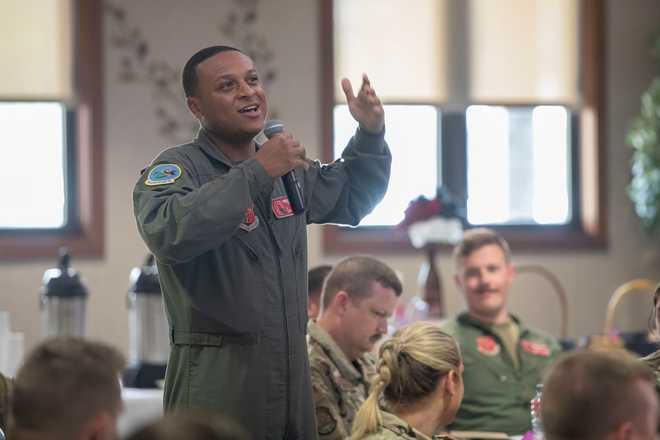
“Tyler’s smile could light up any room, his strong presence would fill it. His parents, grandparents, family and friends are grief stricken for the loss of life,” they said.
The Ohio National Guard said Koval was an aircraft commander with 19 years of service. A graduate of Purdue University, he served in the Indiana National Guard before transferring to an Ohio unit in 2017, according to his Air Force biography.
Angst was a pilot with 10 years of service who graduated from the University of Cincinnati, according to his Air Force biography provided by the Ohio National Guard.
The refueling aircraft is a mainstay in the US military
U.S. Central Command, which oversees the Middle East, has said the crash occurred on a combat mission but was over “friendly” territory in western Iraq. Military officials said it is being investigated and was “not due to hostile or friendly fire.”
The KC-135 aircraft refuels other planes in midair, allowing them to fly longer distances and sustain operations without landing. The plane can also be used to transport wounded personnel and conduct surveillance missions, according to military experts.
The Congressional Research Service says the Air Force last year had 376 KC-135s, including 151 on active duty, 163 in the Air National Guard and 62 in the Air Force Reserve. It has been in service for more than 60 years.

