Europe’s best and brightest lay in wait, but for now, the Champions League is off on a little sojourn as the knockout play off round begins on Tuesday night. For those who missed the top eight, but not the 24, the next eight days offers a second chance to reach the round of 16, but with altogether less room for wobbles this time around.
It was at this stage last year that big names such as Juventus, Milan and Manchester City fell and there will be a few big names intent on avoiding such slip ups this time around. Meanwhile the likes of Qarabag and Bodo/Glimt ready themselves for a first shot at the knockout stages of Europe’s most prestigious competition.
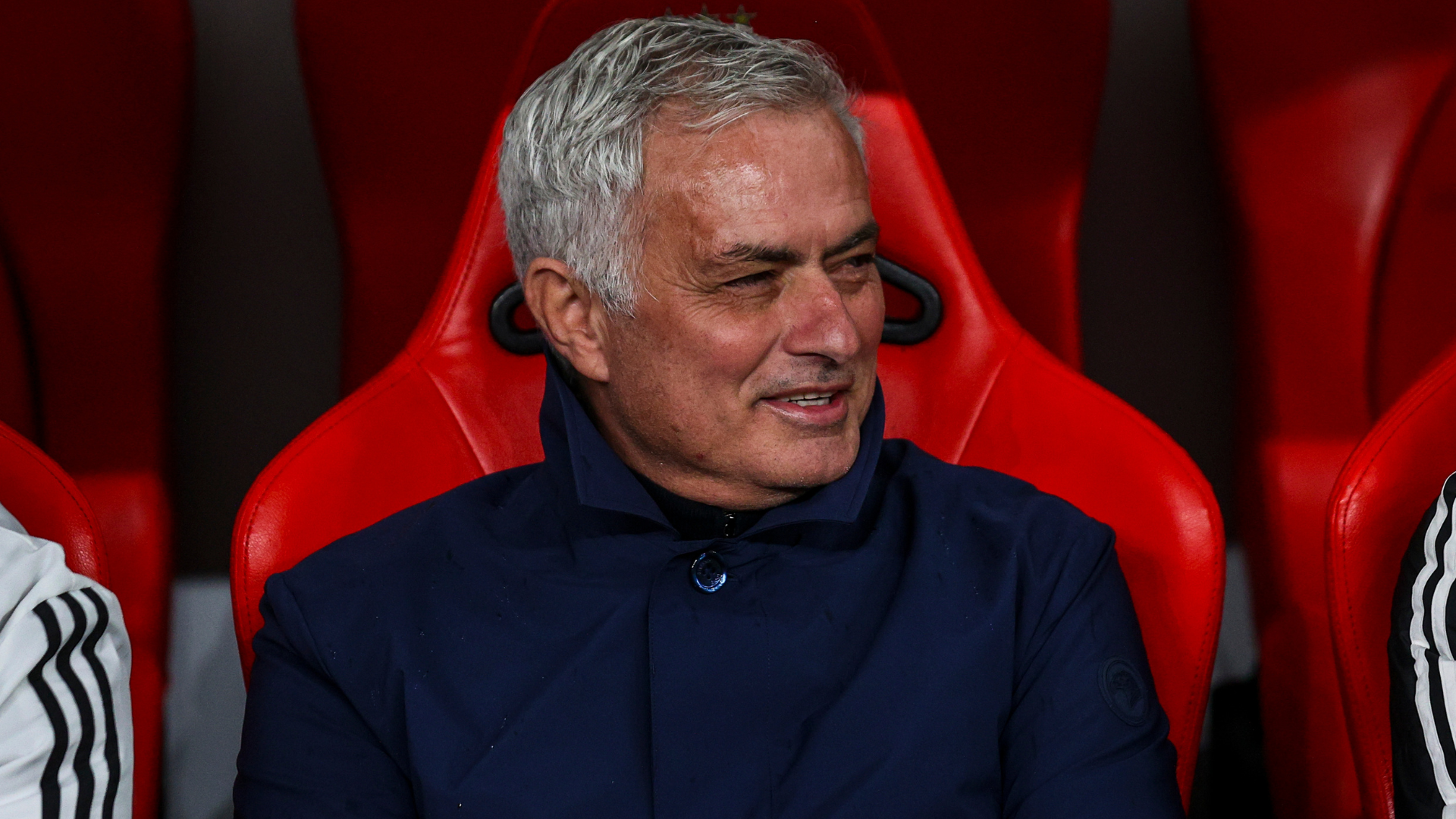
Before we get to them though, well, there’s only one place you can begin. It’s Jose Mourinho against one of his former employers. At whatever stage of whatever competition, that’s pure box office.
1. Can Jose Mourinho deliver another upset?
Nothing can erase the thrills of goalkeeper Anatoliy Trubin rising highest at the death to deliver the header that Benfica had just discovered they needed if they were to avoid extend their participation in the Champions League. It was the sort of searing in or out drama that critics said the league phase’s final day of 18 different cogs in the machine could not deliver. There is no way of eradicating European football’s Jimmy Glass moment.
If there were to be one, though, it would probably involve Benfica discovering that the reward for their late win over Real Madrid was to be stomped into the dirt by Real Madrid a few weeks later. After all, Madrid are in so many ways the Michael Jordan of the soccer world. Something, anything happens and “they took that personally.” If you don’t think that the Real Madrid hierarchy, coaching staff and players saw the joyous scenes at the Estadio da Luz and asked how it affects themselves, the main characters of this universe, then you don’t know this club.
Before we get to the matter of whether Madrid can inflict payback on Benfica it’s probably worth asking what Mourinho can do to them. Let’s start by assuming that we are not going to see the same approach from his team that we did in that final league stage game. That was one Benfica had to win to give themselves the best chance of reaching the knockouts. This time, well we’ve seen enough Mourinho knockout football to know that his basic approach still starts with whoever has the ball is the one that can make the mistakes. “I’m very used to these kinds of ties,” he said on Monday. “I’ve been doing it all my life.”
There have been some signs in domestic football of Mourinho softening with age. His Benfica side average over two a goals a game in the Primeira Liga but like so much associated with his homeland — from Viktor Gyokeres’ scoring form to how good Porto were in early 2003 — it’s just very hard to realistically assess Mourinho’s team in a competition with three near equals and an extremely limited field. Maybe we’re better off looking at the limited data pool of the league phase. Looking at the chart below does at least give you a sense of what has been apparent to those who saw Benfica after Mourinho took charge on September 18. The trip to Newcastle aside this was a team who could at least stop the other team from really testing them, allowing only 10.1 non-penalty xG in their eight games. Given that, you’d be hard pressed to believe that Benfica are going to ride out to meet the team their manager calls the “kings of the Champions League” in single combat.
CBS Sports
The question then is whether Real Madrid can overwhelm the defenses. The answer is, yes, they probably can. It’s not hard to make the case that appointing Alvaro Arbeloa lowered the ceiling that Xabi Alonso had built for this team in his brief tenure, the press and possess system that asked so much of his forwards replaced with something a little more up and down with fewer demands placed on the star forwards. Then again when you allow Kylian Mbappe and Vinicius Junior to freelance the results can be pretty awe-inspiring, especially when it’s an in-form Trent Alexander-Arnold getting the ball to them.
The latter’s presence could be an extremely powerful weapon if Benfica do as expected and sit off Madrid. No one in the sport can slide a cross through a low block like Alexander-Arnold, typified in his stunning cross for Gonzalo Garcia’s opener in the 4-1 win over Real Sociedad. Even before his return to the team you could see that Madrid were on the upswing as an attacking force, a function of first Alonso abandoning his system amid player disgruntlement and his sacking effectively handing the reigns to the star players.
TruMedia
Given that this Madrid team will have a point to prove and the attack to eventually hammer down Benfica’s defenses, you would be hard pressed to convince yourself of much Mourinho magic this time around. Then again, whoever would have seen Trubiin’s late heroics last month?
2. Are PSG able to peak at the right moment?
Twelve months ago, you could see the first signs that something special was bubbling at the Parc des Princes, Paris Saint-Germain coalescing in such a fashion that in a flash they had established themselves as quite clearly the best team on the planet, bound for that Champions League title they had long craved. The only question coming into this season was whether the past few months had been the birth of a dynasty or the sort of magical union of form and fitness that no team could realistically expect to hold up for several years in a row.
For most of 2025-26 it looks like the latter has been the more credible. Defeat at Rennes at the weekend saw the champions cede top spot in Ligue 1 to Lens. Meanwhile, two points from their final three league phase games saw Luis Enrique’s men fritter away a top eight berth and slide into a second successive play off against French opposition. As the xG charts below show (ignore that hot form early in 2024-25, we’re looking at a small data sample) there was a drop off at the start of this season, a serious upswing in the quality and quantity of shots being allowed resulting in a team that looked quite diminished compared to its all-conquering form.
TruMedia
At least it was easy to explain why PSG had fallen off. After a gruelling summer of Club World Cup commitments, injuries hit hard. Joao Neves, Fabian Ruiz, Marquinhos, Achraf Hakimi and Nuno Mendes all missed time at the start of the season as did Ousmane Dembele. The Ballon d’Or winner, reinvented from mercurial winger into ferocious leader of the pressing pack, was no less critical to the defensive excellence of the Champions League winners than the actual aforementioned defenders. The dip in their attacking oomph was also sustained from the final games of last season, many of which were more nervy than that rout of Inter in the final.
It was not just injuries that held back PSG. Luis Enrique seemed to do the same and that is not a critique. The coaching triumph of 2024-25 had been guiding his squad so that their fitness levels collectively peaked when Arsenal and Inter were on their last legs. If a few games had to be thrown early in the season to give his guys a post-Club World Cup breather, surely that would pay dividends in the spring?
The signs are that that is indeed the case. Since the return of Dembele and Desire Doue, PSG’s offensive output has swung upwards. The defense too has benefitted from more consistently selecting last season’s back four. Strange results might still happen — the 3-1 loss at Rennes saw PSG put up 3.58 xG and allow 1.39 — but at full tilt this is still a team that should back itself to beat any in Europe.
At full tilt is far from given and will require more than just Fabian Ruiz completing his return from a knee issue. It means their star players being fit and settled enough to excel rather than Dembele limping out with 16 minutes to go of the fightback at Rennes, a reminder that fragility has been the default for PSG’s star attacker. It also means no more trading of barbs across post-match media from Dembele, who called on players to “play for the club instead of thinking about themselves,” and his seemingly less than impressed manager. Europe saw what this team looks like when tensions are frayed in the autumn of 2024. It certainly wasn’t a Champions League winner in waiting.
PSG can be that again and there are signs in the data to suggest they might be so soon. It may, however, require a level of collective fitness that, even with Luis Enrique’s careful management, is far from normal at the business end of a season.
3. Are Newcastle on upset watch?
A final league table that wasn’t a million miles away from a European football power rankings means that the playoff round has not thrown up any early showdowns between juggernauts, no re-run of last season’s meeting between Real Madrid and Manchester City. That might mean this round lacks something of the high stakes tension that is the Champions League’s stock trade in the spring months, but it does afford us the prospect of an upset or two.
Galatasaray’s meeting with Juventus might be one to keep an eye out on, though it is not entirely clear that any team that features Victor Osimhen and Leroy Sane should consider themselves long shots to win a two-legged tie early in this competition. The forecast in Bodo suggests that Inter will have even more to worry about than just Norway’s finest.
The more intriguing left-field option might however be Newcastle United’s trip to Azerbaijan. After all, Qarabag are seasoned veterans of two-legged European ties and have won eight of their last 10. Even when they haven’t emerged victorious they’ve pushed big beasts like near-invincible Bayer Leverkusen all the way. In this season’s league phase only Ajax departed Baku victorious and Chelsea were made to pay the price for Enzo Maresca’s rotation in a 2-2 draw where Qarabag might have hoped for more.
TruMedia
There’ll be questions of rotation and resource allocation for Eddie Howe to consider on the 5,000 mile round trip to a city that is nearer to Delhi than Newcastle. That’s a long journey to recover from by 3 p.m. ET on Saturday, when Newcastle are due at Manchester City, trying to stay in the hunt for qualification to next year’s European competitions. Following the news that star player Bruno Guimaraes would miss up to two months with a hamstring injury, Sven Botman and Yoanne Wissa missed the FA Cup fourth round tie against Aston Villa, propelling the Magpies’ injury list to eight players. Now even without all those players they were able to win well at Villa Park and any team that rolls out the likes of Sandro Tonali and Anthony Gordon should be favorites against Qarabag. Still this might prove to be a fiddlier first leg than it looks, potentially setting the stage for a nerve-wracking night at St. James’ Park next week.

