Oil surpassed $126 a barrel Thursday, its highest price since 2022, as traders worried about a prolonged U.S.-Iran war following President Donald Trump’s decision to extend a blockade of Iranian ports.Brent crude, the global benchmark, was up more than 12% overnight into Thursday, before paring some gains to trade at $124 as of 2:28 am Thursday. WTI crude, the U.S. benchmark, was up more than 3%, surpassing $110 per barrel.Related video above: Pentagon estimates $25 billion spent in Iran war, defends proposal for $1.5 trillion in defense spendingThe latest surge comes as the national average U.S. gas price reached a four-year high of around $4.23, according to AAA data, as a result of the skyrocketing energy prices triggered by the U.S.-Iran war, which has driven prices up more than 27%.Global crude prices have risen in recent days as face-to-face negotiations between the U.S. and Iran broke down, keeping the Strait of Hormuz – a critical oil and gas shipping channel – effectively shut still.In a meeting between Trump and his top advisers, the president said he wanted the U.S. naval blockade of Iranian ports to continue, sources familiar with the talks told CNN, and his team has begun laying the groundwork for such an extension, including a longer-term closure of the Strait of Hormuz. Vandana Hari, founder of energy market analysis firm Vanda Insights, said oil prices have “nowhere to go but up” until the reopening of the strait comes into sight.“As of now, how and when that might happen is anybody’s guess,” she said, adding that another few weeks of stalemate is unlikely to sit well with Trump.Iran has dismissed the impact of the U.S. naval blockade, with the government saying there is “no worry” about the steady supply and distribution of fuel.“The enemy will achieve nothing through a naval blockade of Iran,” said Iranian Oil Minister Mohsen Paknejad, who urged the public to cut consumption as the country launches a broad energy-conservation campaign.A top military advisor to Iran’s supreme leader also warned that if the blockade continues, “Iran will respond,” according to state media. “Such a blockade has essentially achieved nothing and they have not been able to enforce it,” Mohsen Rezaei said, Iran’s state broadcaster IRIB reported.The possibility of further military action in the Middle East has put traders on alert, said Janiv Shah, vice president of oil markets at Rystad Energy.“Further escalation and any attacks on energy infrastructure could force benchmarks to gain rapidly,” Shah said. “Elements of demand destruction are already visible globally, which could accelerate with higher prices.”Daily transits through the Strait of Hormuz have reduced to near zero since the war began in late February, resulting in what the International Energy Agency called the “largest supply disruption in history” for global fuel markets.Since the U.S. and Iran reached a temporary ceasefire in early April, there has been a slight increase in the number of oil and gas tankers transiting through the strait, though they remained at single digit levels, according to data from S&P Global Market Intelligence.The prospect of prolonging the halt on Middle Eastern energy exports bodes poorly for the global economy, which is already suffering from fuel shortages, rising inflation and dampened consumer activity.With the Strait of Hormuz effectively closed for the past two months, analysts said that energy markets may take as long as a year to recover to normal supply and demand balances. Economists have warned that if the disruption extends into the second half of the year, it could trigger a global recession.With the June Brent contract set to expire at the end of Thursday’s session, trading volume has shifted to the July futures. That more active contract pushed above $113 a barrel Wednesday night, before falling to around $112 Thursday morning.Consumers could see rising pricesAs oil prices climb, consumers may face higher prices for everyday products that require energy to manufacture and materials derived from petroleum such as plastic, synthetic rubber or textiles. The current market shortage is already squeezing supplies of items like medical gloves, instant noodles and cosmetics, particularly in Asia, which imports most of its energy and makes most of the world’s goods.Higher crude prices will also likely force the U.S. Federal Reserve to delay cutting interest rates as inflation climbs, said Alicia Garcia-Herrero, chief economist for Asia Pacific at financial firm Natixis, which revised its expectations for a U.S. rate cut this week from July to September.Traders expect the Fed, whose two-day meeting ends Thursday, to hold the federal funds rate steady in what’s likely to be Jerome Powell’s final meeting as Fed chair.“Globally (oil prices above $125 a barrel) forces demand destruction, equity volatility, and central-bank dilemmas between inflation control and growth support,” Garcia-Herrero said.
Oil surpassed $126 a barrel Thursday, its highest price since 2022, as traders worried about a prolonged U.S.-Iran war following President Donald Trump’s decision to extend a blockade of Iranian ports.
Brent crude, the global benchmark, was up more than 12% overnight into Thursday, before paring some gains to trade at $124 as of 2:28 am Thursday. WTI crude, the U.S. benchmark, was up more than 3%, surpassing $110 per barrel.
Related video above: Pentagon estimates $25 billion spent in Iran war, defends proposal for $1.5 trillion in defense spending
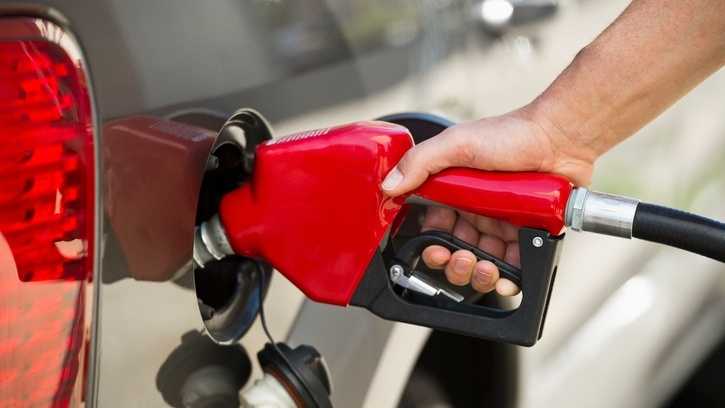
The latest surge comes as the national average U.S. gas price reached a four-year high of around $4.23, according to AAA data, as a result of the skyrocketing energy prices triggered by the U.S.-Iran war, which has driven prices up more than 27%.
Global crude prices have risen in recent days as face-to-face negotiations between the U.S. and Iran broke down, keeping the Strait of Hormuz – a critical oil and gas shipping channel – effectively shut still.
In a meeting between Trump and his top advisers, the president said he wanted the U.S. naval blockade of Iranian ports to continue, sources familiar with the talks told CNN, and his team has begun laying the groundwork for such an extension, including a longer-term closure of the Strait of Hormuz.
Vandana Hari, founder of energy market analysis firm Vanda Insights, said oil prices have “nowhere to go but up” until the reopening of the strait comes into sight.
“As of now, how and when that might happen is anybody’s guess,” she said, adding that another few weeks of stalemate is unlikely to sit well with Trump.
Iran has dismissed the impact of the U.S. naval blockade, with the government saying there is “no worry” about the steady supply and distribution of fuel.
“The enemy will achieve nothing through a naval blockade of Iran,” said Iranian Oil Minister Mohsen Paknejad, who urged the public to cut consumption as the country launches a broad energy-conservation campaign.
A top military advisor to Iran’s supreme leader also warned that if the blockade continues, “Iran will respond,” according to state media. “Such a blockade has essentially achieved nothing and they have not been able to enforce it,” Mohsen Rezaei said, Iran’s state broadcaster IRIB reported.
The possibility of further military action in the Middle East has put traders on alert, said Janiv Shah, vice president of oil markets at Rystad Energy.
“Further escalation and any attacks on energy infrastructure could force benchmarks to gain rapidly,” Shah said. “Elements of demand destruction are already visible globally, which could accelerate with higher prices.”
Daily transits through the Strait of Hormuz have reduced to near zero since the war began in late February, resulting in what the International Energy Agency called the “largest supply disruption in history” for global fuel markets.
Since the U.S. and Iran reached a temporary ceasefire in early April, there has been a slight increase in the number of oil and gas tankers transiting through the strait, though they remained at single digit levels, according to data from S&P Global Market Intelligence.
The prospect of prolonging the halt on Middle Eastern energy exports bodes poorly for the global economy, which is already suffering from fuel shortages, rising inflation and dampened consumer activity.
With the Strait of Hormuz effectively closed for the past two months, analysts said that energy markets may take as long as a year to recover to normal supply and demand balances. Economists have warned that if the disruption extends into the second half of the year, it could trigger a global recession.
With the June Brent contract set to expire at the end of Thursday’s session, trading volume has shifted to the July futures. That more active contract pushed above $113 a barrel Wednesday night, before falling to around $112 Thursday morning.
Consumers could see rising prices
As oil prices climb, consumers may face higher prices for everyday products that require energy to manufacture and materials derived from petroleum such as plastic, synthetic rubber or textiles. The current market shortage is already squeezing supplies of items like medical gloves, instant noodles and cosmetics, particularly in Asia, which imports most of its energy and makes most of the world’s goods.
Higher crude prices will also likely force the U.S. Federal Reserve to delay cutting interest rates as inflation climbs, said Alicia Garcia-Herrero, chief economist for Asia Pacific at financial firm Natixis, which revised its expectations for a U.S. rate cut this week from July to September.
Traders expect the Fed, whose two-day meeting ends Thursday, to hold the federal funds rate steady in what’s likely to be Jerome Powell’s final meeting as Fed chair.
“Globally (oil prices above $125 a barrel) forces demand destruction, equity volatility, and central-bank dilemmas between inflation control and growth support,” Garcia-Herrero said.

