In Omaha, Nebraska, one museum honors Black history all year. More than 3,000 dolls fill three rooms that make up Mama’s Attic off 42nd and Center streets.Executive Director and Founder LaVon Stennis-Williams says visits are by appointment only.”Mama’s attic started as me trying to pay homage to my mother’s legacy,” Stennis-Williams said.Stennis-Williams said her mother would collect artifacts of Black history, including Aunt Jemima or Mammy figurines.”She felt we should not be ashamed of this lady, which we refer to as Aunt Jemima or the Mammy figure,” Stennis-Williams said.It’s one of the first sections you’ll find in the museum.”So, the caricature that many people ridicule or feel is a stereotype was actually an enslaved woman that was very instrumental in the underground railroad in terms of helping people get to freedom,” Stennis-Williams said.The museum is more than just dolls. There are physical artifacts of Black history, like a newspaper clipping about desegregation in public schools.”And there’s other artifacts in there that talks about the Jim Crow, the pre-Jim Crow, pre-civil rights era,” Stennis-Williams said.Also featured are dolls from the 1800s with little to no facial features.”We see how dolls were first made, the simplicity of just maybe a sock with a piece of yard tied around for a neck area,” Stennis-Williams said.As time progressed, Stennis-Williams said features started to become more defined. “We went from being almost faceless and nameless to actually reflected as human beings,” she said.That reflection can be seen in dolls made in the 20th century. Cartoonist Jackie Ormes went to Lincoln, Nebraska, to create a doll with the Terri Lee Doll Company, “called Patty-Jo that was to honor her main character in her news, in her comic strip called Torchy Brown,” Stennis-Williams said.There’s an entire annex dedicated to Mattel’s famous Barbie. Stennis-Williams said the first Black Barbie was created in 1980.”The first dolls, the first Black versions of those dolls, were not allowed to be called Barbie because people wouldn’t purchase them,” she said. “So, they were called Francine, Kristie and Julia.”Some items in the museum are figurines of caricatures once used to dehumanize Black Americans.”They would oftentimes characterize or exaggerate their facial features and even the skin tones,” Stennis-Williams said.She says many of the figurines were donated.”At one time, people collected these as more of a status, to see who had the most gross caricature to now you have generations who are saying ‘No, I do not want this in my home’ and ‘Do you want it in your museum?'” Stennis-Williams said.She says acknowledging the past is how we create a brighter future.”Working together, we can evolve into a more wholesome America,” Stennis-Williams said.You can learn more about Mama’s Attic here.
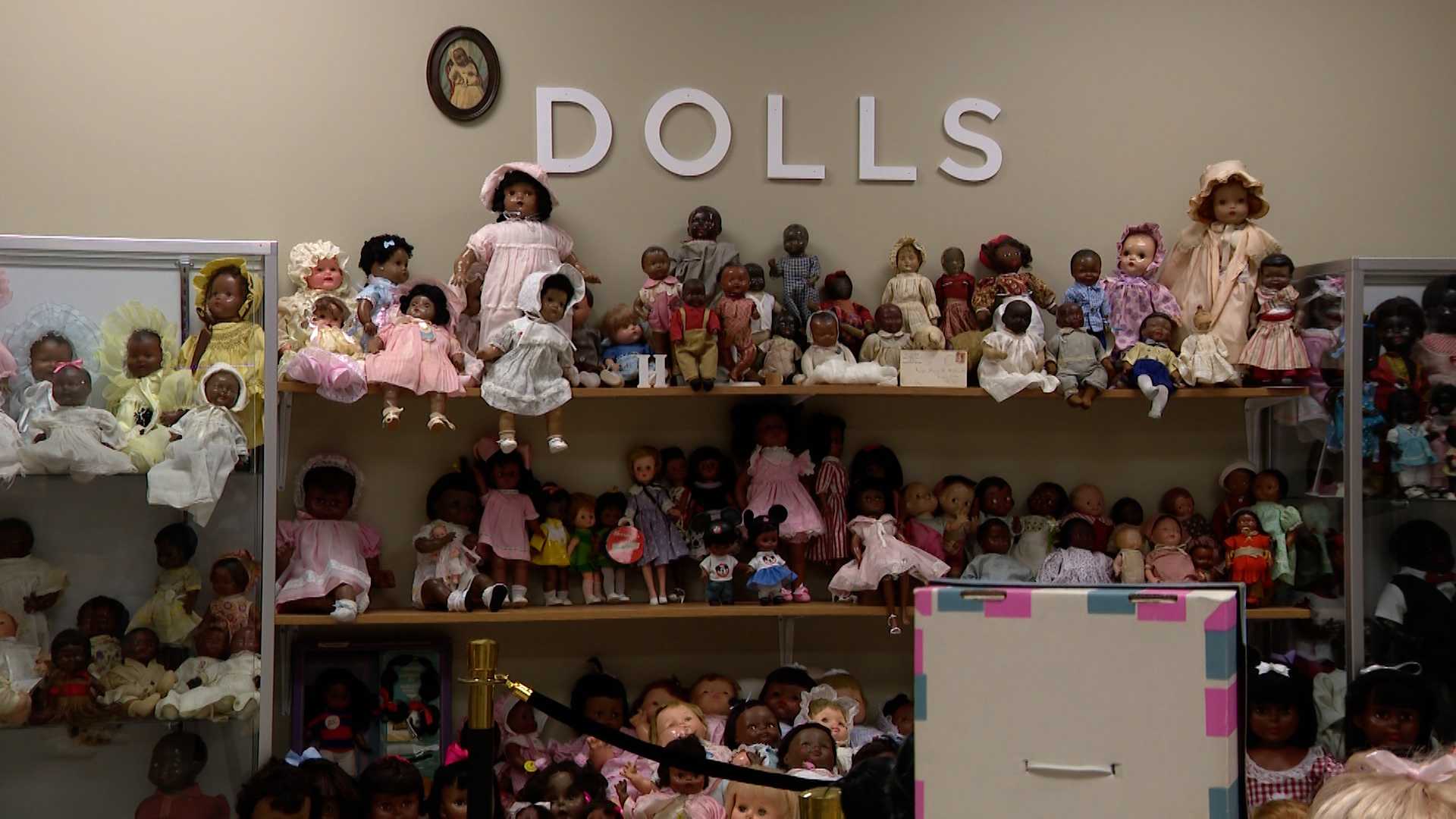
In Omaha, Nebraska, one museum honors Black history all year. More than 3,000 dolls fill three rooms that make up Mama’s Attic off 42nd and Center streets.
Executive Director and Founder LaVon Stennis-Williams says visits are by appointment only.
“Mama’s attic started as me trying to pay homage to my mother’s legacy,” Stennis-Williams said.
Stennis-Williams said her mother would collect artifacts of Black history, including Aunt Jemima or Mammy figurines.
“She felt we should not be ashamed of this lady, which we refer to as Aunt Jemima or the Mammy figure,” Stennis-Williams said.
It’s one of the first sections you’ll find in the museum.
“So, the caricature that many people ridicule or feel is a stereotype was actually an enslaved woman that was very instrumental in the underground railroad in terms of helping people get to freedom,” Stennis-Williams said.
The museum is more than just dolls. There are physical artifacts of Black history, like a newspaper clipping about desegregation in public schools.
“And there’s other artifacts in there that talks about the Jim Crow, the pre-Jim Crow, pre-civil rights era,” Stennis-Williams said.
Also featured are dolls from the 1800s with little to no facial features.
“We see how dolls were first made, the simplicity of just maybe a sock with a piece of yard tied around for a neck area,” Stennis-Williams said.
As time progressed, Stennis-Williams said features started to become more defined.
“We went from being almost faceless and nameless to actually reflected as human beings,” she said.
That reflection can be seen in dolls made in the 20th century.
Cartoonist Jackie Ormes went to Lincoln, Nebraska, to create a doll with the Terri Lee Doll Company, “called Patty-Jo that was to honor her main character in her news, in her comic strip called Torchy Brown,” Stennis-Williams said.
There’s an entire annex dedicated to Mattel’s famous Barbie. Stennis-Williams said the first Black Barbie was created in 1980.
“The first dolls, the first Black versions of those dolls, were not allowed to be called Barbie because people wouldn’t purchase them,” she said. “So, they were called Francine, Kristie and Julia.”
Some items in the museum are figurines of caricatures once used to dehumanize Black Americans.
“They would oftentimes characterize or exaggerate their facial features and even the skin tones,” Stennis-Williams said.
She says many of the figurines were donated.
“At one time, people collected these as more of a status, to see who had the most gross caricature to now you have generations who are saying ‘No, I do not want this in my home’ and ‘Do you want it in your museum?'” Stennis-Williams said.
She says acknowledging the past is how we create a brighter future.
“Working together, we can evolve into a more wholesome America,” Stennis-Williams said.
You can learn more about Mama’s Attic here.

