Arab states in the Persian Gulf are running dangerously low on interceptors to take down Iranian-fired missiles, two regional officials told CBS News. Governments in the region have asked the U.S. to expedite new supplies, and they’ve been told that officials in Washington are creating a task force to do so — but it isn’t happening as fast as needed.
The hundreds of drones launched by Iran are an added complication. The officials speculated that Iran is intentionally hitting the Arab states to get them to pressure the U.S. to end the war.
On Wednesday, Air Force Gen. Dan Caine, the chairman of the Joint Chiefs of Staff, pushed back on supply concerns and told reporters at the Pentagon that there were sufficient “precision munitions for the task at hand, both on the offense and defense.”
Reuters/Amir Cohen 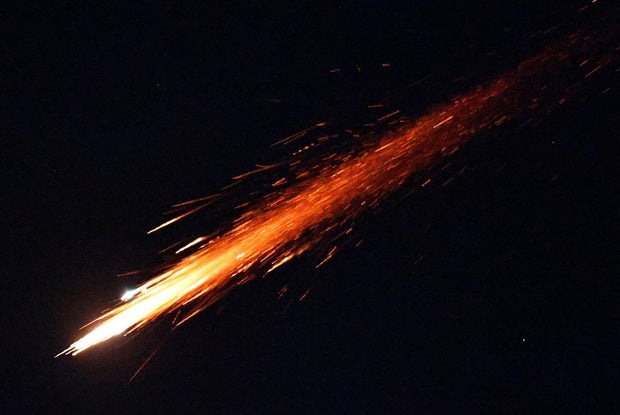
Three regional officials also acknowledged that communication is challenging as, despite being more than a year into his term, President Trump has not sent ambassadors to many of the countries, including Lebanon, Jordan and Qatar.
Due to the lack of nominations or slow-moving confirmations, Saudi Arabia, the United Arab Emirates and Kuwait are among the locations without a presidential representative in country and are relying on charge d’affaires.
Amer Ghalib, the former mayor of Hamtramck, Michigan, was nominated to be ambassador to Kuwait but faltered during confirmation hearings due to questioning about his past antisemitic and incendiary social media posts.
The National Security Council and the State Department are also thinly staffed compared to prior administrations, which leaves fewer points of contact. Mr. Trump’s envoys, Steve Witkoff and Jared Kushner, do not handle country management issues.
In addition to the Iranian-fired missiles, Kuwait has also had incoming fire from nearby Iraq, where militias have fired missiles and drones into civilian areas.
Meanwhile, 10 people believed to be Iranian agents were arrested Wednesday in Qatar on suspicion of planning attacks. There is concern about sleeper cells and radicalization among Shiite Muslim populations in certain countries such as Bahrain.
Also, many officials expressed broad concern about the Kurdish fighters expected to enter Iran, saying that injecting sectarian conflict into the already combustible situation will be detrimental and also cause friction with Turkey, which fears Kurdish separatists.

