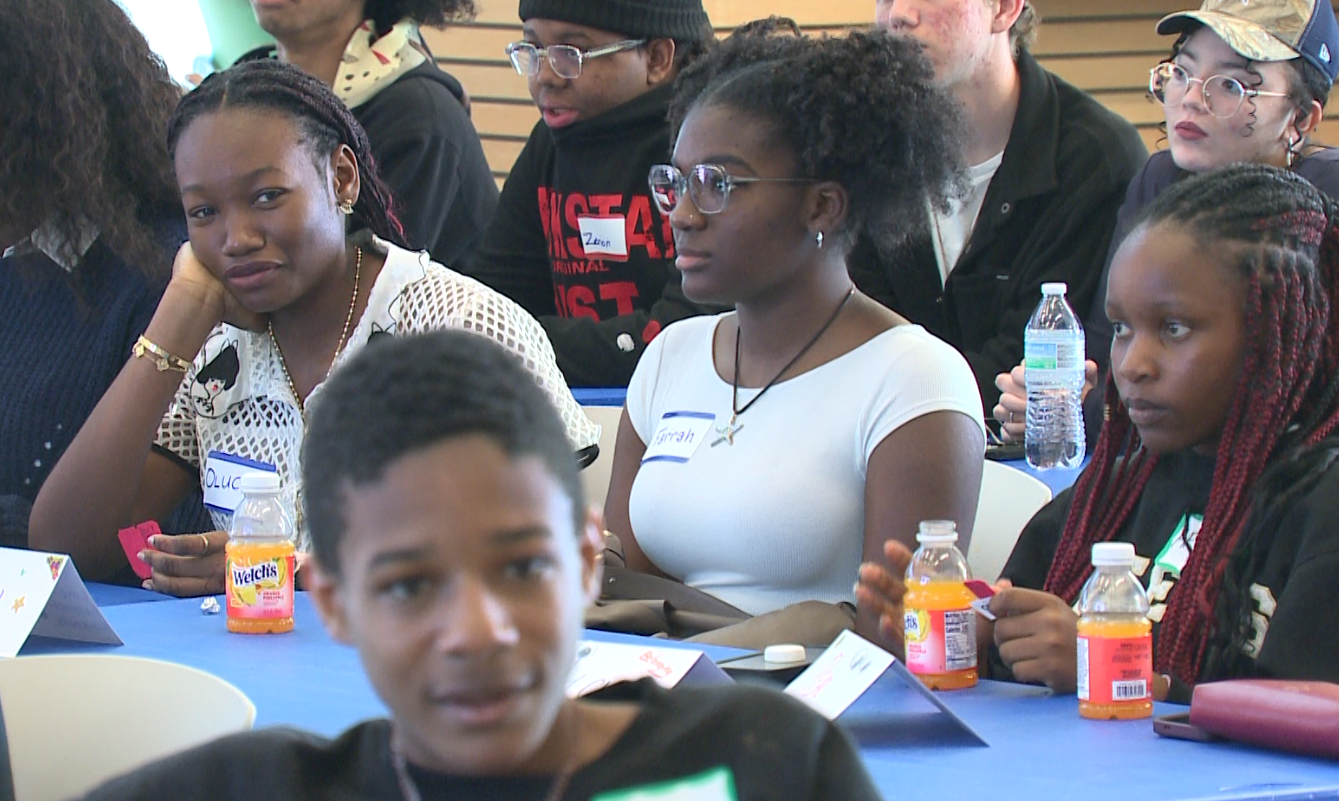
First and foremost, know who you are. That was a central message from a featured speaker at the African American Youth Empowerment Summit. Emmanuel Ehechi Asonye, owner of the online Omenka App and a youth mentor, came to the U.S. from Nigeria and used his own life experience to emphasize the importance of African American youth connecting with each other and others. “Naturally, we are all meant to be people of different colors, different races, different idealogies, and different cultural backgrounds,” Asonye told KOAT. “If that wasn’t important, nature and the maker of humanity wouldn’t have made us so right. And studies have shown that when people are able to identify their roots to belong to a community, they are able to be a positive contributor towards the community development, whichever way you look at it.”Without knowing who they are early in life, Asonye said African American youth “are prone to social vices, misdemeanors, and they are also prone to hate.”Asonye said his roots are with the Igbo community, which was absorbed by Nigeria during colonialism but regained its individuality. For all their youthful spirit and energy, Asonye said that finding their identity is what will help African American youth see that being a minority in a state with multiple cultures, languages, and differences means they have a lot to be proud of and opportunities to transcend what keeps them apart.”What is lacking in my opinion is that connectivity,” Asonye said, “that whatever we are doing, we should really try to harness their energy to teach them how to really connect with one another — people that look like you, people that do not look like you — and see the positive side of every person and know how you are going to hone in on and build a better synergy together.”
First and foremost, know who you are.
That was a central message from a featured speaker at the African American Youth Empowerment Summit.
Emmanuel Ehechi Asonye, owner of the online Omenka App and a youth mentor, came to the U.S. from Nigeria and used his own life experience to emphasize the importance of African American youth connecting with each other and others.
“Naturally, we are all meant to be people of different colors, different races, different idealogies, and different cultural backgrounds,” Asonye told KOAT. “If that wasn’t important, nature and the maker of humanity wouldn’t have made us so right. And studies have shown that when people are able to identify their roots to belong to a community, they are able to be a positive contributor towards the community development, whichever way you look at it.”
Without knowing who they are early in life, Asonye said African American youth “are prone to social vices, misdemeanors, and they are also prone to hate.”
Asonye said his roots are with the Igbo community, which was absorbed by Nigeria during colonialism but regained its individuality.
For all their youthful spirit and energy, Asonye said that finding their identity is what will help African American youth see that being a minority in a state with multiple cultures, languages, and differences means they have a lot to be proud of and opportunities to transcend what keeps them apart.
“What is lacking in my opinion is that connectivity,” Asonye said, “that whatever we are doing, we should really try to harness their energy to teach them how to really connect with one another — people that look like you, people that do not look like you — and see the positive side of every person and know how you are going to hone in on and build a better synergy together.”

