Welcome to From the Politics Desk, a daily newsletter that brings you the NBC News Politics team’s latest reporting and analysis from the White House, Capitol Hill and the campaign trail.
In today’s edition, Sahil Kapur dives into a Social Security debate that is particularly relevant for this year’s Senate candidates. Plus, Jonathan Allen examines the tricky position Democrats have put themselves in on corporate donations.
— Adam Wollner
Senate candidates run on raising Social Security taxes for higher incomes to prevent benefit cuts
By Sahil Kapur
A swath of Senate candidates across blue and red states are campaigning on raising Social Security taxes on higher incomes to prevent a benefit cut from taking effect in less than six years.
Currently, Americans are taxed on earnings up to $184,500 to fund Social Security. These candidates, most of them Democrats, are calling for lifting that cap in order to boost revenues, ahead of a fast-approaching 2032 deadline for insolvency.
Social Security is fully funded until the fourth quarter of 2032, according to its latest trustees report, after which benefits will automatically be cut by 22% — unless Congress takes action. The class of senators elected this fall will serve six-year terms ending January 2033, giving them power to address that deadline.
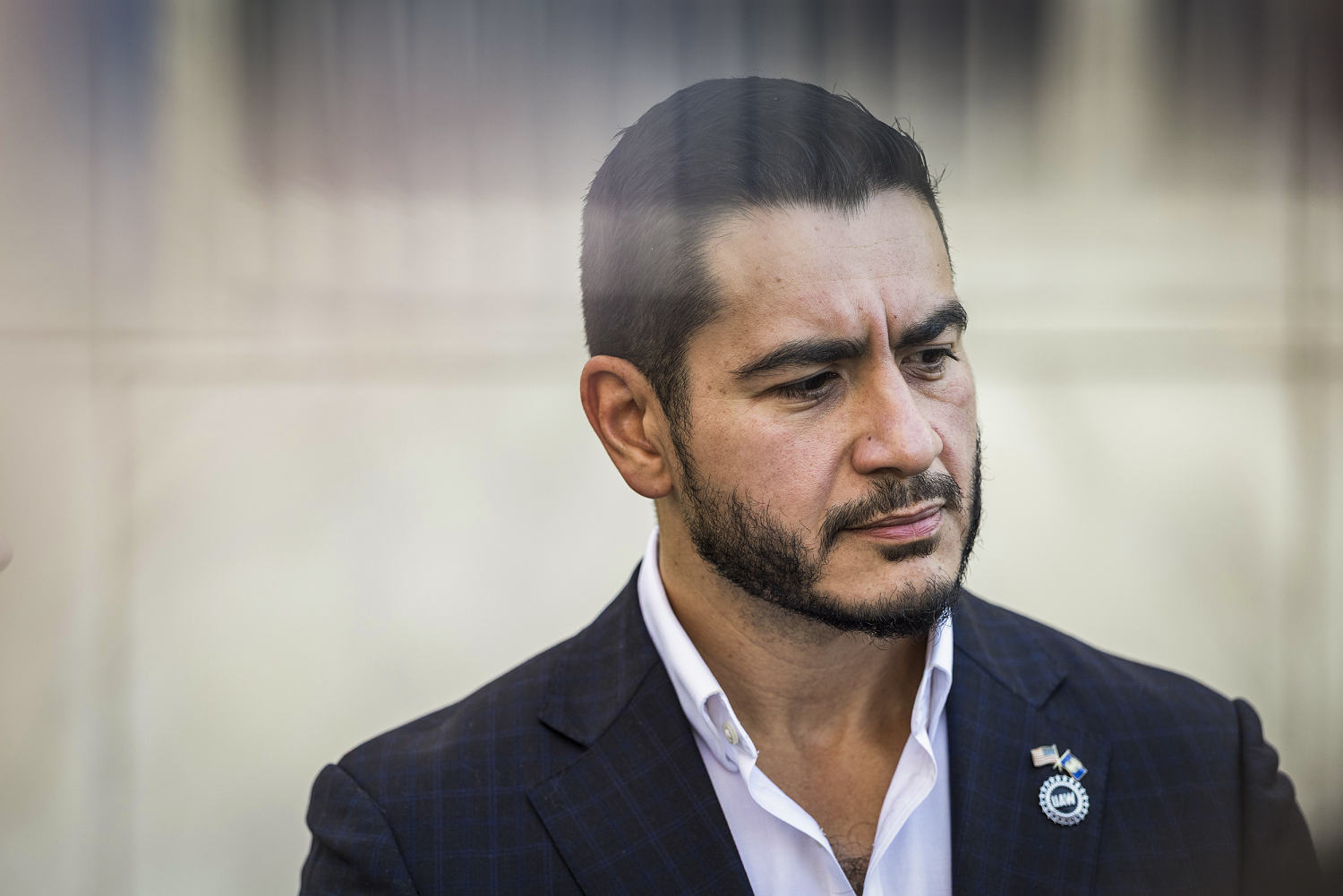
In battleground Michigan, Democratic nominee Abdul El-Sayed said in a statement that if elected this fall, “I will end the cap on Social Security tax to make sure the rich pay their fair share. That way Social Security can last for decades to come.”
He has called for nixing the cap in his official campaign platform.
In red-leaning Iowa, Democrat Josh Turek supports eliminating the payroll tax cap, a spokesperson said, adding that if elected senator, he “will protect Social Security by lifting the cap to make billionaires pay their fair share.”
And in the Republican stronghold of Texas, Democrat James Talarico is running on a platform to “ensure the wealthiest Americans pay their fair share into Social Security by eliminating the tax cap on those earning over $400,000 a year.”
Talarico’s proposal points to an early disagreement among supporters of the idea: Should they eliminate the cap entirely or move the new tax threshold up to $400,000? Some lawmakers — including plenty of Democrats — have been politically sensitive about raising taxes on incomes below that amount.
Democrats’ corporate PAC dilemma
Analysis by Jonathan Allen
Refusing to campaign contributions from corporate PACs has become an article of faith among progressives.
Setting aside for a moment the fact that corporate PACs can only give $5,000 per election directly to a candidate — hardly enough to influence races that turn on tens of millions of dollars — Rep. Ashley Hinson, R-Iowa, showed why that pledge isn’t quite as straightforward as it seems in a Senate debate last night against Democratic state Rep. Josh Turek.
Turek, she noted, is benefiting from massive ad buys by Democratic super PACs funded in large part by billionaires, corporations and dark money groups that don’t have to disclose their donors. In fact, the main Democratic vehicle backed by Senate Minority Leader Chuck Schumer, Senate Majority PAC, had raised $150 million, much of it from those sources, through the end of June, the most recent reporting period.
So, Hinson argued, Turek is misleading the public.
“He is basically taking laundered corporate PAC money,” Hinson said. “If you don’t want to take that corporate PAC money, because that’s how it flows. It flows through people like Chuck Schumer, right to support you.”
Turek ignored her invitation to call on corporate-funded outside groups to stop backing him.
Her challenge could be posed to Democrats in every pivotal Senate and House race. Technically, super PACs can’t coordinate directly with campaigns, but they are designed to amplify candidates’ messages. Republicans do the same thing, and this year they are raising a lot more money to do it.
Much of the public feels justified in wanting elected officials to be free of the binding ties that can be forged with political donations. That’s why so many Democratic candidates pat themselves on the back for refusing to take small direct contributions from corporate PACs, which are funded by employee donations.
But how does a candidate turn his or her back on a super PAC that spends tens of millions of dollars — much more than the $5,000 from a direct corporate PAC contribution? And, when it comes to Schumer, a bogeyman of the Democrats’ left wing, how could they turn their backs on him after he raised all that money for them?
Democratic voters may be surprised if Schumer wins a party leadership election next year after many candidates have tried to keep their distance from him. But they shouldn’t be. The election for minority leader or majority leader, depending on whether Democrats flip the Senate, will be conducted by secret ballot.
Maybe they’ll reject Schumer like they reject corporate PAC donations. But don’t bet the super PAC on it.
🗞️ Today’s other top stories
- 🏢 Data center debate: In the Nevada gubernatorial race, both candidates are now calling for restrictions on developing data centers. But Republican Gov. Joe Lombardo’s past deal with the Trump administration could make it easier to build them on public land. Read more →
- 🦡 On Wisconsin: The swing state’s race for governor between Democrat David Crowley and Republican Tom Tiffany remains tight, even as the political winds nationally are blowing toward Democrats. Read more →
- 🩺 Check-up: The flu has knocked Democrat James Talarico off the Texas Senate campaign trail for 12 days. Read more →
- 🍎 MAHA scorecard: Some supporters of the “Make America Healthy Again” movement have begun to publicly turn against their leader, Health Secretary Robert F. Kennedy Jr., and the Trump administration as a whole as they demand tougher crackdowns on food dyes and pesticides. Read more →
- 🎬 Take two: After suggesting that Iran could “take out” Los Angeles or San Diego, Trump recast his remarks. “We protect our cities. We protect our country. We’re not letting that happen,” he said at a rally last night. Red more →
- ⚖️ In the courts: A team of Justice Department lawyers is dedicating itself to aggressive legal action against states, cities or private entities that resist the Trump administration’s immigration policies. Read more →
That’s all From the Politics Desk for now. Today’s newsletter was compiled by Adam Wollner and Lauren Zola.
If you have feedback — likes or dislikes — email us at politicsnewsletter@nbcuni.com
And if you’re a fan, please share with everyone and anyone. They can sign up here.

