From stadiums to science: Taylor Swift now has an insect genus named after her. Meet Swiftiephylus
These newly discovered bugs are officially in their Swiftie ‘era’
A Grammy winner, a billionaire, and an international superstar, Taylor Swift has already dominated the entertainment world. Now, she’s officially in her insect “era.”
That’s because a University of California, Riverside doctoral student studying entomology has named a genus of plant-feeding insects from Australia that were previously unknown to science.
The genus, named Swiftiephylus, is one of 12 new species of insects described in a paper published Wednesday in the journal Insect Systematics and Evolution.
Related video above: Travis Kelce comments on wedding to Taylor Swift ahead of 14th NFL season
According to a release and article from UC Riverside’s Jules Bernstein, the genus of insect contains four species whose names are “inspired by the artist herself as well as several of her albums.” They are: Swiftiephylus taylorae, Swiftiephylus amator, Swiftiephylus intrepidus, and Swiftiephylus poetorum.
According to the university, the names are “Latin versions of Taylor, lover, fearless, and poets, respectively,” and the name of the genus combines “Swiftie,” which is the term for Swift’s fans, with Phylus, a name commonly used for this group of insects.
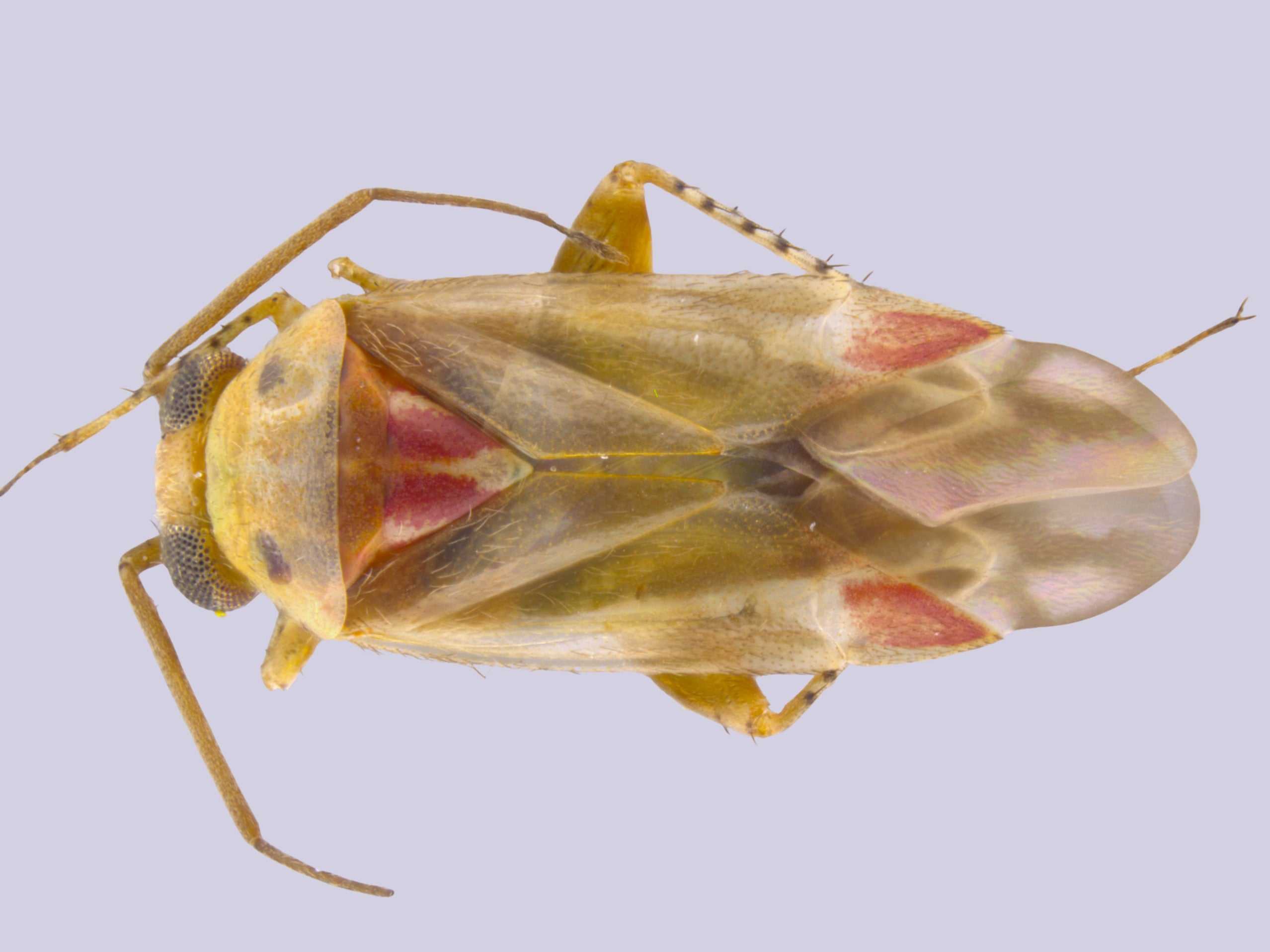
Sarah Schroeder/UCR
Swiftiephylus taylorae. (Sarah Schroeder/UCR)
The insects haven’t been observed to be pests to humans or animals, and they are part of the Miridae family, which is the largest family of true bugs, with more than 11,000 described species worldwide.
“The newly described species are closely associated with Australian she-oaks, trees and shrubs adapted to environments ranging from tropical forests to coastal dunes and extreme heat. Many plant bugs spend their entire lives on a particular host plant, from hatching through adulthood and egg laying. Though they feed off the trees, they aren’t known to cause them harm,” the university’s release states.
So why name the bugs after Taylor Swift?
Schroeder, who is a Swiftie herself, had a list of reasons for naming the bugs after the singer of hits like ““We Are Never Ever Getting Back Together,” “Shake It Off,” and “All Too Well.”
She believes the coloring of the insects “helps them camouflage among she-oak flowers, which feature spindly red to orange structures,” the university’s release states. And, the paper explains that similar cream-and-red coloration has been seen in distantly related bugs that live on the same plants. This suggests camouflage may have evolved independently multiple times, the university said.
“Taylor Swift’s iconic look is her blonde hair and red lips. These insects are pale yellow with accents of red throughout,” Schroeder said. “In the paper I refer to them as blonde.
Though the insects are new to science, the specimens themselves have been waiting decades to be formally described.”
While part of it has to do with their appearance and her fandom, Schroeder had a more important inspiration for choosing to name the insects after the superstar.
In a popular lyric in the song “Bejeweled” from the 2022 “Midnights” album, Swift says, “I can still make the whole place shimmer,” and in “Mirrorball” from the 2020 “folklore” album, Swift sings, “I’ll get you out on the floor, shimmering beautiful.”
Schroeder is hoping that naming the insects after Swift will shine “a little of her reflected light” on both the insects and the concept of insect conservation in general.
“It felt authentic to me as a lifelong Swiftie to honor Taylor in this way, as well as bring attention to the diversity of insects that has yet to be discovered,” Schroeder said.
The specimens of Swiftiephylus were among plant bug specimens collected between 1995 and 2004 during “a large biodiversity effort” that involved American Museum of Natural History researchers and Australian collaborators, the university explained. That collecting effort yielded more than 50,000 specimens, and many of them have required “years of taxonomic work to sort, study, and describe.”
Schroeder, with the help of her advisor and the co-author of the paper, UCR entomology professor Christiane Weirauch, examined 593 specimens that were borrowed from the American Museum of Natural History and the Australian Museum.
The university says Schroeder believes “the bug’s journey from Australian she-oaks to museum drawers and finally into the scientific record illustrates why the science of identifying and naming organisms, called taxonomy, remains essential.”
In its release, the university says there could be as many as 30 million insects that have yet to be documented.
Schroeder wants to connect that knowledge to conservation, the university said. And naming the bugs after an artist whose music has been with Schroeder since her childhood allowed connecting her scientific mission with something personal.
“Though it has been done for centuries, there is some controversy in entomological circles around naming parts of the natural world for humans. However, Schroeder felt strongly that the practice of doing so can be used in a positive way,” the university said.
Schroeder says that “taxonomy is the cornerstone of conservation.”
“If we don’t describe species, we don’t know they exist and can’t conserve them. Honoring Taylor through naming these species after her is a way to honor conservation science and bring attention to all the unknown diversity,” she said.

