Supporters of the historic Sunspot Observatory in southern New Mexico are urging the National Science Foundation to delay plans to demolish the site, arguing it still has value for research, education and tourism.The observatory, located in the Sacramento Mountains, was once a key site for solar research and space weather monitoring. Dave Dooling, president of the Sunspot Community Center, said advocates are trying to rally public support before demolition moves forward.”We’re trying to spread the word about the need to save Sunspot. There’s no necessity to have it demolished,” Dooling said.The push follows a mercury leak earlier this year inside the Dunn Solar Telescope. Dooling said the telescope used mercury as a bearing to help it rotate smoothly; one of those bearings leaked 186 pounds of mercury on Jan. 6.”The National Science Foundation is trying to fast-track this. So we are kind of in crash dive mode to rally people,” Dooling said.He also said the mercury spill was contained inside the telescope building and did not pose a risk to the surrounding area.”Nothing went outside the building. There’s no hazard to anybody outside the building,” he said.The observatory sits on U.S. Forest Service land, while the National Science Foundation owns the facilities. Dooling said earlier discussions about the site’s future included several options, such as forming new partnerships, closing down the facility or demolishing and remediating the campus.He said supporters believe the foundation is now moving toward full demolition.”Our understanding is that demolition is supposed to start in September, which is kind of a short time frame,” Dooling said.Supporters are asking NSF to pause demolition plans and give them more time to explore alternatives. Dooling said the site could potentially be repurposed for science education, astrotourism, academic retreats, business retreats, bed-and-breakfast lodging or forestry science.He also pointed to the Sunspot Observatory’s history in space weather research. Solar activity can disrupt radio signals, radar, satellites and power grids. Smaller telescopes at the site could still support research and help train students.”Just because you have a bigger telescope doesn’t mean the smaller ones are irrelevant,” he said.For now, supporters say their goal is to convince NSF to slow down and consider other options.”Don’t shut it down; give them some time. There’s no rush. Save yourself some money. Don’t rush,” Dooling said.In a statement, the National Science Foundation said its current priority is addressing the mercury.”Right now, NSF’s priority is making sure the mercury contained within the telescope is safely addressed. We are also conducting market research and acquisition planning for future requirements at the site, such as maintenance. Once the mercury has been safely removed, we will begin planning the next phase including demolishing the telescope and restoring the site so it can be returned to the U.S. Department of Agriculture, Forest Service. We are glad to share an update with the public once there is more to announce on the demolition.Our decision to demolish and restore the observatory was informed by the site’s environmental review. The environmental review included a public comment period where NSF collected input from the public, organizations, and other interested parties. Though no preservation or funding proposal came forward that was feasible to pursue, we recognize what this site has meant to the community and are grateful for their support and engagement with Sac Peak over the past 50 years. Through their support, the observatory helped propel the nation’s leadership in solar science and scientific excellence.”
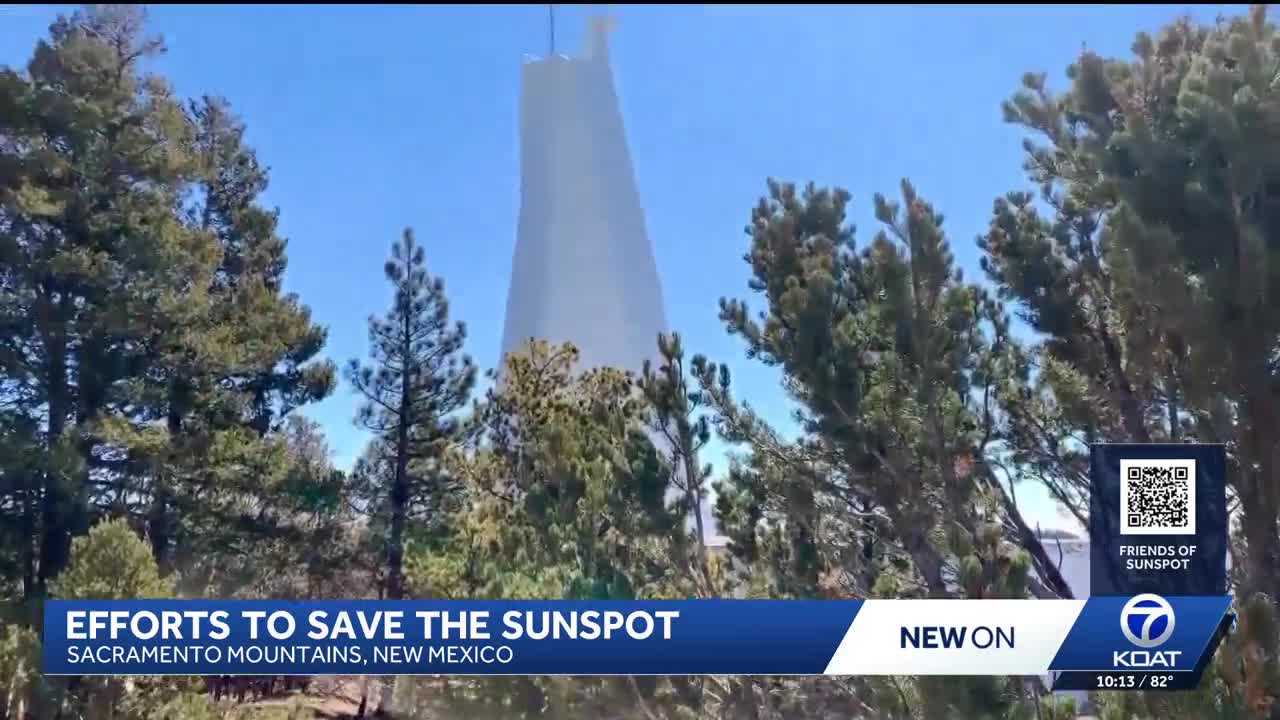
Supporters of the historic Sunspot Observatory in southern New Mexico are urging the National Science Foundation to delay plans to demolish the site, arguing it still has value for research, education and tourism.
The observatory, located in the Sacramento Mountains, was once a key site for solar research and space weather monitoring. Dave Dooling, president of the Sunspot Community Center, said advocates are trying to rally public support before demolition moves forward.
“We’re trying to spread the word about the need to save Sunspot. There’s no necessity to have it demolished,” Dooling said.
The push follows a mercury leak earlier this year inside the Dunn Solar Telescope. Dooling said the telescope used mercury as a bearing to help it rotate smoothly; one of those bearings leaked 186 pounds of mercury on Jan. 6.
“The National Science Foundation is trying to fast-track this. So we are kind of in crash dive mode to rally people,” Dooling said.
He also said the mercury spill was contained inside the telescope building and did not pose a risk to the surrounding area.
“Nothing went outside the building. There’s no hazard to anybody outside the building,” he said.
The observatory sits on U.S. Forest Service land, while the National Science Foundation owns the facilities. Dooling said earlier discussions about the site’s future included several options, such as forming new partnerships, closing down the facility or demolishing and remediating the campus.
He said supporters believe the foundation is now moving toward full demolition.
“Our understanding is that demolition is supposed to start in September, which is kind of a short time frame,” Dooling said.
Supporters are asking NSF to pause demolition plans and give them more time to explore alternatives. Dooling said the site could potentially be repurposed for science education, astrotourism, academic retreats, business retreats, bed-and-breakfast lodging or forestry science.
He also pointed to the Sunspot Observatory’s history in space weather research. Solar activity can disrupt radio signals, radar, satellites and power grids. Smaller telescopes at the site could still support research and help train students.
“Just because you have a bigger telescope doesn’t mean the smaller ones are irrelevant,” he said.
For now, supporters say their goal is to convince NSF to slow down and consider other options.
“Don’t shut it down; give them some time. There’s no rush. Save yourself some money. Don’t rush,” Dooling said.
In a statement, the National Science Foundation said its current priority is addressing the mercury.
“Right now, NSF’s priority is making sure the mercury contained within the telescope is safely addressed. We are also conducting market research and acquisition planning for future requirements at the site, such as maintenance. Once the mercury has been safely removed, we will begin planning the next phase including demolishing the telescope and restoring the site so it can be returned to the U.S. Department of Agriculture, Forest Service. We are glad to share an update with the public once there is more to announce on the demolition.
Our decision to demolish and restore the observatory was informed by the site’s environmental review. The environmental review included a public comment period where NSF collected input from the public, organizations, and other interested parties. Though no preservation or funding proposal came forward that was feasible to pursue, we recognize what this site has meant to the community and are grateful for their support and engagement with Sac Peak over the past 50 years. Through their support, the observatory helped propel the nation’s leadership in solar science and scientific excellence.“

