President Donald Trump arrived in Turkey on Tuesday morning to attend the annual NATO summit, where he is urging allies to increase defense spending and address their involvement in global security challenges. The president has expressed frustration that NATO countries are not contributing more to the Iran war and has called on alliance members to step up their defense budgets.During the summit, NATO leaders are expected to showcase new military projects worth billions of dollars in an effort to demonstrate increased defense spending. They are also set to announce new deals with U.S. defense companies. NATO Secretary General Mark Rutte is working to address Trump’s concerns by presenting evidence of the alliance’s commitment to strengthening NATO. “After years of underinvestment, we are producing real capabilities. European allies and Canada are now on a trajectory to equalize the defense spending with the United States. And not just that, they are taking on more leadership within NATO’s command and control structure,” Rutte said ahead of the conference.Another focus of this week’s summit is the Russia-Ukraine war, with concerns that NATO members could be targeted next if the Kremlin succeeds against Ukraine. Trump is set to meet with Ukrainian President Volodymyr Zelenskyy on Wednesday.NATO Spending a Longtime Issue for TrumpSince his first term, Trump has complained that NATO members weren’t meeting their commitment goals to the alliance. NATO set a 2% benchmark for investment of a member country’s economy on defense. That share will increase to 5% by 2035.The United States spends about 3.3% of its GDP on the military. Several NATO members exceed that level. The U.S. has said it does not intend to meet the 5% spending level. However, the U.S. has a larger economy and therefore a higher dollar amount.Last year the U.S. spent about $1 trillion on defense. The Trump administration is calling for $1.5 trillion in FY 2027, bringing its percentage of GDP spending on the military to 3.8%.NATO Reluctant to Get Involved in IranSince launching the war in Iran alongside Israel, Trump has complained that NATO allies have not gotten involved.”We asked them to come, and they weren’t there for us. So, we spent — it’s stupid that they weren’t,” Trump told reporters in June.Members of NATO have voiced frustration with Trump for launching the Iran war without consulting them.Despite this, Trump is still demanding loyalty from NATO countries after they refused to allow U.S. forces to use their bases for attacks on Iran.”Just be loyal. I just want their loyalty. We don’t need their money, we don’t need anything. We have the most powerful military in the world by far, but I just want loyalty,” Trump said during a recent meeting in Washington with Rutte.NATO is a defensive alliance. It only gets directly involved with a conflict if a member of the alliance is directly attacked. It’s been NATO’s most fundamental principle since 1949 that an attack on one is an attack on all, often referred to as Article 5. Despite Trump’s claims that NATO wouldn’t defend the U.S., the only time Article 5 was invoked was to defend the U.S. in Afghanistan, following the 9/11 attacks.
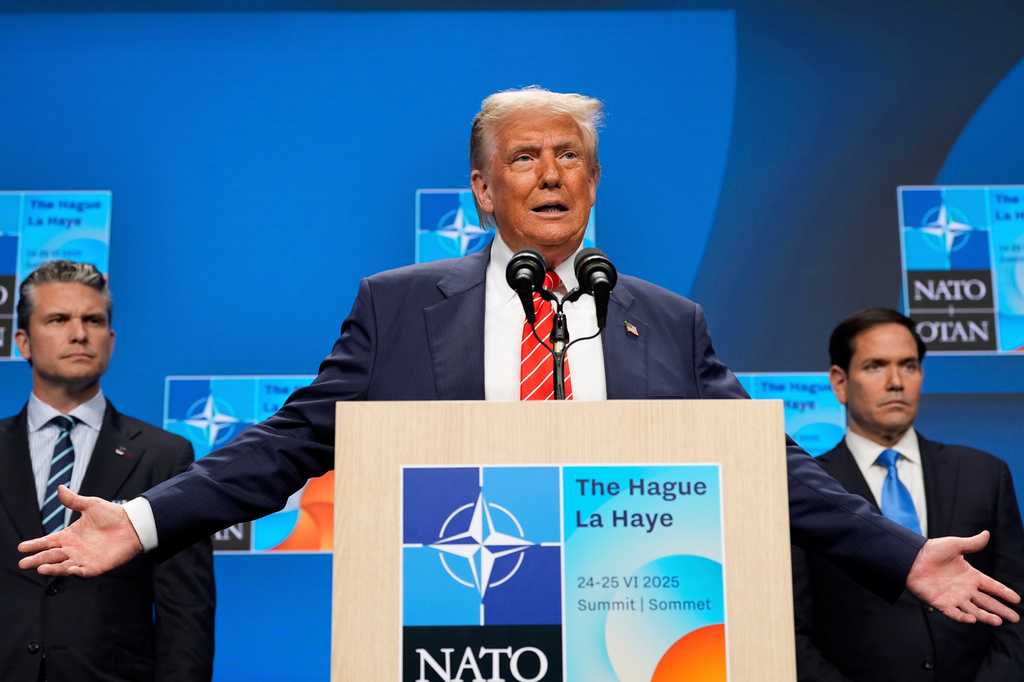
President Donald Trump arrived in Turkey on Tuesday morning to attend the annual NATO summit, where he is urging allies to increase defense spending and address their involvement in global security challenges.
The president has expressed frustration that NATO countries are not contributing more to the Iran war and has called on alliance members to step up their defense budgets.
During the summit, NATO leaders are expected to showcase new military projects worth billions of dollars in an effort to demonstrate increased defense spending. They are also set to announce new deals with U.S. defense companies.
NATO Secretary General Mark Rutte is working to address Trump’s concerns by presenting evidence of the alliance’s commitment to strengthening NATO.
“After years of underinvestment, we are producing real capabilities. European allies and Canada are now on a trajectory to equalize the defense spending with the United States. And not just that, they are taking on more leadership within NATO’s command and control structure,” Rutte said ahead of the conference.
Another focus of this week’s summit is the Russia-Ukraine war, with concerns that NATO members could be targeted next if the Kremlin succeeds against Ukraine. Trump is set to meet with Ukrainian President Volodymyr Zelenskyy on Wednesday.
NATO Spending a Longtime Issue for Trump
Since his first term, Trump has complained that NATO members weren’t meeting their commitment goals to the alliance. NATO set a 2% benchmark for investment of a member country’s economy on defense. That share will increase to 5% by 2035.
The United States spends about 3.3% of its GDP on the military. Several NATO members exceed that level. The U.S. has said it does not intend to meet the 5% spending level. However, the U.S. has a larger economy and therefore a higher dollar amount.
Last year the U.S. spent about $1 trillion on defense. The Trump administration is calling for $1.5 trillion in FY 2027, bringing its percentage of GDP spending on the military to 3.8%.
NATO Reluctant to Get Involved in Iran
Since launching the war in Iran alongside Israel, Trump has complained that NATO allies have not gotten involved.
“We asked them to come, and they weren’t there for us. So, we spent — it’s stupid that they weren’t,” Trump told reporters in June.
Members of NATO have voiced frustration with Trump for launching the Iran war without consulting them.
Despite this, Trump is still demanding loyalty from NATO countries after they refused to allow U.S. forces to use their bases for attacks on Iran.
“Just be loyal. I just want their loyalty. We don’t need their money, we don’t need anything. We have the most powerful military in the world by far, but I just want loyalty,” Trump said during a recent meeting in Washington with Rutte.
NATO is a defensive alliance. It only gets directly involved with a conflict if a member of the alliance is directly attacked. It’s been NATO’s most fundamental principle since 1949 that an attack on one is an attack on all, often referred to as Article 5. Despite Trump’s claims that NATO wouldn’t defend the U.S., the only time Article 5 was invoked was to defend the U.S. in Afghanistan, following the 9/11 attacks.

