Shelburne Museum is reflecting on a memorable chapter in the institution’s history that happened in 1986 — 40 years ago this year.”It must have been a really surreal image to see this huge silo floating over the state,” said senior Shelburne Museum curator Kory Rogers, referring to a helicopter flight that delivered a historic silo to the museum grounds.Today, the silo is a key part of the museum’s iconic round barn, which is one of the first things museum patrons see when they arrive on the museum grounds. The structure started its life as a working barn in the Northeast Kingdom community of East Passumpsic. It was built in 1901 using a multi-level round design perfected by the Shakers to maximize agricultural efficiency, Rogers explained.More than 80 years later, the barn was disassembled, and its pieces were relocated to the museum for reassembly. However, at the time, engineers and construction experts said the silo at the center of the barn was just too large and unwieldy to ride clear across the state on a flatbed truck. Instead, the museum turned to a helicopter to deliver it.Rogers explained that during the process, the wire the helicopter was using to transport the silo snapped.”When it came in and was being lowered into position, the helicopter pilot had to do it at an angle,” Rogers said. “It was really sort of a testament to his skill as a pilot.”The round barn formerly served as the museum’s visitor center and has hosted several special exhibitions over the years. Currently, it houses a collection of horse-drawn vehicles.Rogers pointed to another famous landmark at Shelburne Museum: the steamship Ticonderoga. He said since it was a complex undertaking in 1955 to move the 220-foot vessel over land onto the museum grounds, a similar bold approach was used in the 1980s to move the silo of the round barn.”That was a feat of engineering, having it moved into the property,” Rogers said of the Ticonderoga, which previously carried passengers on Lake Champlain. “And so it makes total sense that when we were confronted with the issue of how we preserve intact the silo of the round barn, that we would have this out-of-the-box way of thinking about it.”One of the featured exhibitions for 2026 at Shelburne Museum is titled “Norman Rockwell: At Home in Vermont.” That exhibition is open through late Oct. 25.
Shelburne Museum is reflecting on a memorable chapter in the institution’s history that happened in 1986 — 40 years ago this year.
“It must have been a really surreal image to see this huge silo floating over the state,” said senior Shelburne Museum curator Kory Rogers, referring to a helicopter flight that delivered a historic silo to the museum grounds.
Today, the silo is a key part of the museum’s iconic round barn, which is one of the first things museum patrons see when they arrive on the museum grounds. The structure started its life as a working barn in the Northeast Kingdom community of East Passumpsic. It was built in 1901 using a multi-level round design perfected by the Shakers to maximize agricultural efficiency, Rogers explained.
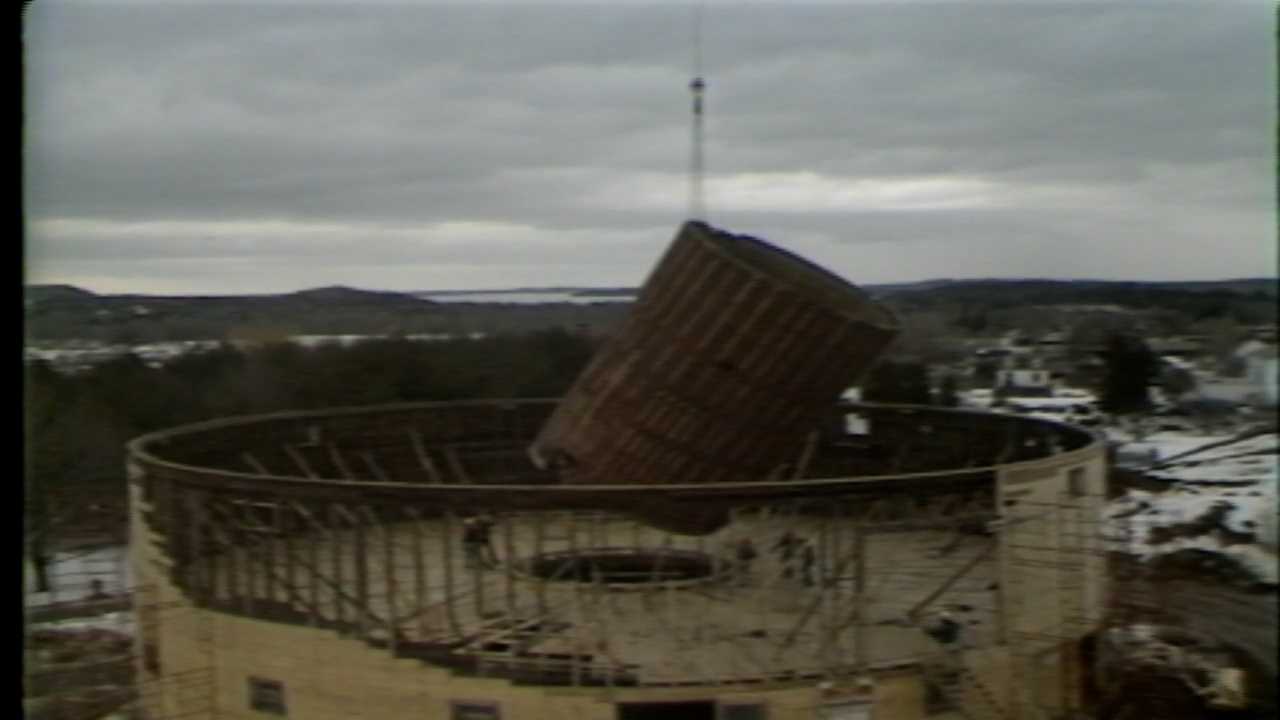
More than 80 years later, the barn was disassembled, and its pieces were relocated to the museum for reassembly. However, at the time, engineers and construction experts said the silo at the center of the barn was just too large and unwieldy to ride clear across the state on a flatbed truck. Instead, the museum turned to a helicopter to deliver it.
Rogers explained that during the process, the wire the helicopter was using to transport the silo snapped.
“When it came in and was being lowered into position, the helicopter pilot had to do it at an angle,” Rogers said. “It was really sort of a testament to his skill as a pilot.”
The round barn formerly served as the museum’s visitor center and has hosted several special exhibitions over the years. Currently, it houses a collection of horse-drawn vehicles.
Rogers pointed to another famous landmark at Shelburne Museum: the steamship Ticonderoga. He said since it was a complex undertaking in 1955 to move the 220-foot vessel over land onto the museum grounds, a similar bold approach was used in the 1980s to move the silo of the round barn.
“That was a feat of engineering, having it moved into the property,” Rogers said of the Ticonderoga, which previously carried passengers on Lake Champlain. “And so it makes total sense that when we were confronted with the issue of how we preserve intact the silo of the round barn, that we would have this out-of-the-box way of thinking about it.”
One of the featured exhibitions for 2026 at Shelburne Museum is titled “Norman Rockwell: At Home in Vermont.” That exhibition is open through late Oct. 25.

