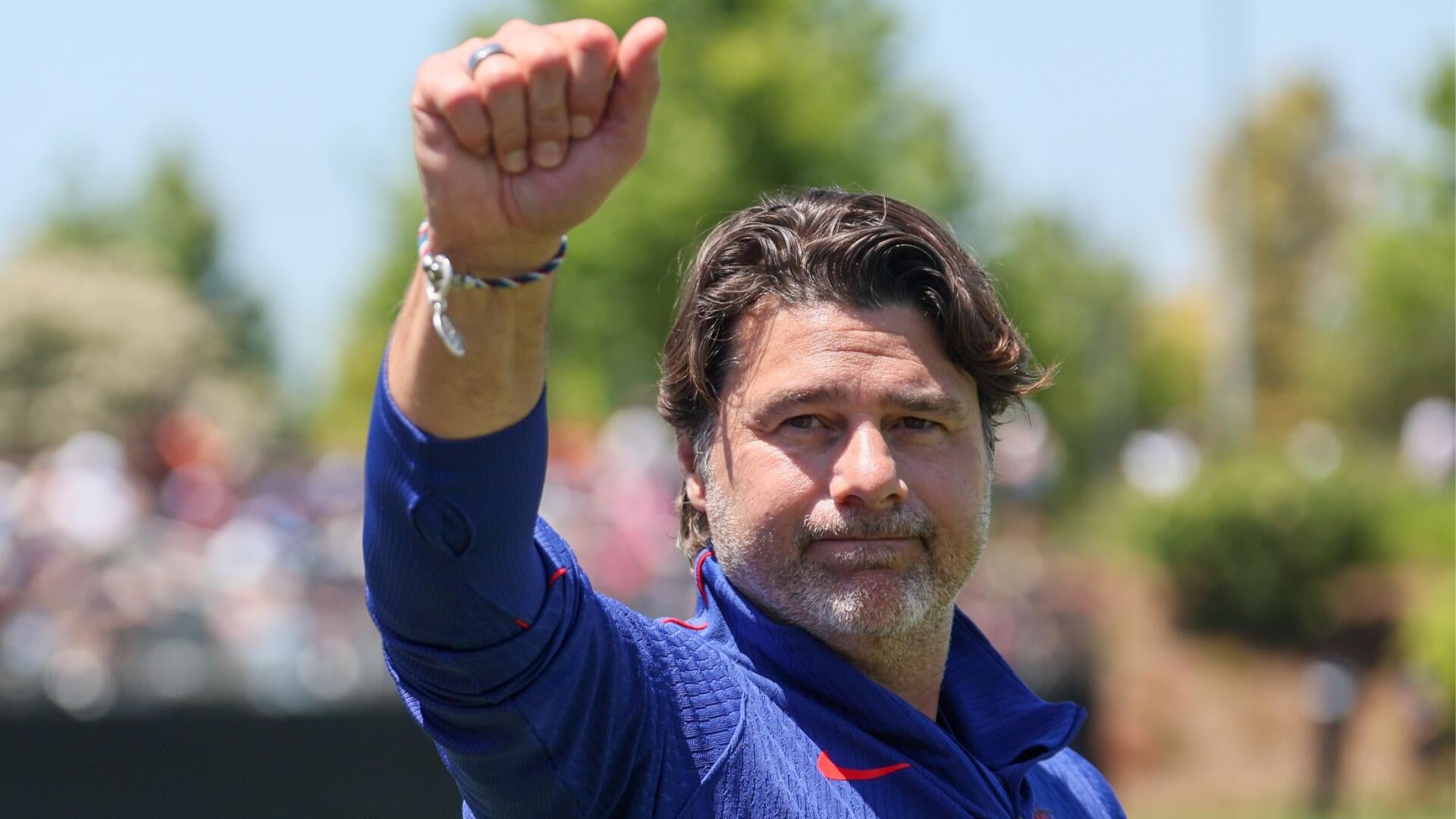
INGLEWOOD, Calif. – The U.S. men’s national team have yet to kick a ball at the World Cup, but in some ways, head coach Mauricio Pochettino’s job is already done.
“I already spoke. I already talked – too much. Too much,” he said on Thursday in a comment that rightfully elicited laughter from a room of journalists. It was not a comment that was fully made in jest, though.
“I said, ‘Don’t expect an unbelievable speech Friday,'” he said about a note he had for his players ahead of their World Cup opener against Paraguay at SoFi Stadium. “I think now is the moment where they need to build their way to prepare in an emotional and better way and I think everyone knows how to be ready. I think now they don’t need an external motivation or inspirational speech.”
This, he argued, was the culmination of nearly two years of work to reset a national team that was full of promise but had lost their way. Pochettino inherited the USMNT’s quote-unquote golden generation after a shocking group stage exit at the Copa America, as great a World Cup tune-up as they would get – and a litmus test they abjectly failed. Pochettino is a skilled tactician and when his U.S. team finally takes to the pitch on Friday, that will be clear to see. His diagnosis for the USMNT he inherited, though, was not ultimately about positional play. He believed the World Cup co-hosts were in desperate need of a mindset refresh, though he oversaw his fair share of tumultuous moments on the way to Friday’s game. He commended his players for a job well done in the very building he accused them of playing on autopilot 13 months earlier, the lowest point of Pochettino’s tenure after two lifeless defeats to Panama and Canada in the Concacaf Nations League. He has since picked out that miserable week as a crucial turning point and on the final day of their 17 training camp building up to the World Cup, the U.S. team’s identity finally clear.
Their recent friendlies, a 3-2 win over Senegal and a 2-1 loss to Germany, showcased the intense, attack-minded approach Pochettino has preferred during a coaching career that has spanned nearly two decades. The fact that they were running out of time may have helped but since September, the U.S. have won six of their last 10 games and even in defeat to Germany, the fundamentals Pochettino preached – both tactical and intangible – were quick to spot. His fix was not immediate but from the moment he took the job, Pochettino believed he had enough time. On the eve of their World Cup opener, he is close to proving it.
“When we were close to the World Cup, I think we started to evolve and do better and better and better,” he noted. “I think the last two games to think and to feel that it’s possible to do whatever we want, compete in our best and compete against big teams. When the competition is close, I think [it helps] the players to realize we needed to improve our standards and to start to be more serious in the way that we take [playing] for your national team.”
Pochettino’s Argentine sensibilities always kick in when he slips into national pride talk, spending much of his tenure with the USMNT sprinkling in reminders that representing his national team in friendlies was just as important as being selected for the 2002 World Cup. He is never out of place in a room full of soccer obsessives but he has never felt like a natural fit in the context of American sports, perhaps because he has otherwise never worked in the U.S. – he moved to Europe as a player before the turn of the century and has lived there since and until taking this job, had exclusively coached on that continent. The U.S. has likely felt as foreign to him as he has to those who are equally unfamiliar but he has been an enthusiastic newcomer, in large part because there is something about the country’s sports culture that suits him just fine.
In short, America loves winners – and much as he said in his opening press conference nearly two years ago, he has wanted his players to lean into that.
“When we signed in September of 2024, in that moment, we started to play in the World Cup but we wanted the players to start to play and the organization, too, but it was so difficult to put all in the same line,” he said, before proving that popular coaching talking points know no borders. “I think [in] the end, being consistent in our fight, I think that is why we can say we arrive in a very good condition and I’m so proud [of]] the players. All the players that were involved in that process, in one year and a half to today, I think they are much better players. The mindset starts to change and I think they embrace the culture of that country that is being the No. 1 in [being] competitive and not to play friendly games — playing non-official games or official games — and I think that is a massive step and it’s going to be massive for the future.”
The USMNT now enter the World Cup with no excuses, even down to team selection. Pochettino said all 26 players on his roster will be available for selection against Paraguay, including defender Chris Richards, who resumed full training on Monday after sustaining an ankle injury in the weeks leading up to the tournament. He has his starting lineup picked out, too – though he was tight-lipped about whether or not the players knew.
“Only if something happens before the game but [it’s] already decided,” he said. “I don’t know if they know because if I tell – if they know, you are going to start to call them.”
The players will not receive some big speech but Pochettino had some words of advice ahead of a moment when the world’s gaze will be fully fixed upon them, many waiting to find out if the USMNT’s golden generation actually has what it takes to live up to the billing.
“The players tomorrow need to go on the field and feel [like they are] in a bubble,” he said. “They need to perform and for [performance], to respect some rules but also the most important is not to be disconnected with your emotional relationship with the game and we were talking about that, about that they need to think tomorrow and to play like they are a child. Not [with] pressure. Not [with] responsibility.”
Pochettino has taken well to his role as the person with an outsider’s perspective performing an audit of the USMNT and now he feels the task ahead of him is a simple one – and one that strikes a perfect middle ground between the uniquely ambitious personalities that are born and bred in places like the U.S. and Argentina.
“For me, success is winning,” he said. “Win tomorrow and win after that and win. If we don’t arrive to the final and we don’t win the World Cup, to talk about [being] successful is — I don’t know … When we signed here, it’s because we wanted to come here and to be involved in that unique event but with the possibility to compete well and believe in winning. Believe in winning.”

