A flesh-eating insect has been detected in South Texas, according to a social media post from Agriculture Secretary Brooke Rollins, prompting concerns about the spread of the parasite. In a post on X, which was then shared on the USDA’s X page, Rollins said the USDA’s Animal and Plant Health Inspection Service (APHIS) “confirmed the detection of a New World Screwworm (NWS) fly in a 3 week old bovine in Zavala County, Texas. ”The confirmation came after a sample from the case in a 3-week-old calf in La Pryor, Texas, was sent to the USDA’s National Veterinary Services Laboratories in Ames, Iowa. It is the first time this parasitic fly – whose larvae feed exclusively on the tissue of warm-blooded animals – has been detected in U.S. livestock in decades.In her post Wednesday night, Secretary Rollins said the USDA and Texas Animal Health officials “are taking immediate action to contain and eradicate NWS from the area.”The news comes days after the USDA located a case of New World screwworm in a goat that was 25 miles from the U.S. border in Mexico.What is the New World screwworm?While the flesh-eating parasite usually infects livestock and other animals, humans can also become hosts in rare cases. The New World screwworm fly may look like a regular housefly, but it actually lays eggs on people and animals inside tiny wounds, noses, ears, eyes and mouths. Then, those eggs hatch into maggots that burrow in and eat living flesh. New World screwworms are not contagious and do not spread directly from animals to people or from person to person, according to the USDA.”Screwworm infestations begin when a female fly lays eggs on a wound or body opening,” according to the USDA. “Eggs hatch into larvae that burrow into the wound and feed on living tissue. After about seven days of feeding, larvae drop to the ground, burrow into the soil and pupate. The adult screwworm fly emerges from the soil after 7-54 days.”Screwworms are nothing new, but scientists eradicated them in the 1960s by breeding male flies that they had sterilized using radiation. Scientists then set them free, and they outcompeted native males to mate with female flies, who then laid eggs that couldn’t hatch.How are officials responding? The USDA said it has activated personnel on the ground in Texas to contain and eradicate the parasite, including a 20-kilometer infested zone and implementation of quarantines, movement controls and surveillance in the area. It’s also expediting targeted release of sterile flies, which are used to overwhelm fertile flies in the area to limit spread.“If we all work together and follow the animal treatment protocols and movement restriction guidance, there is no reason to believe that this incursion will result in an establishment of the pest in our country,” USDA Secretary Brooke Rollins said during a briefing Wednesday night.Rollins, on Wednesday, urged pet owners to keep a close watch for signs of discomfort, open wounds or larvae or eggs near body openings.The parasite is also a threat to wildlife and pets. Vets in Texas, Arizona and New Mexico have been told to be on the lookout for new infections, CNN reports.______CNN contributed to this report.
A flesh-eating insect has been detected in South Texas, according to a social media post from Agriculture Secretary Brooke Rollins, prompting concerns about the spread of the parasite.
In a post on X, which was then shared on the USDA’s X page, Rollins said the USDA’s Animal and Plant Health Inspection Service (APHIS) “confirmed the detection of a New World Screwworm (NWS) fly in a 3 week old bovine in Zavala County, Texas. ”
The confirmation came after a sample from the case in a 3-week-old calf in La Pryor, Texas, was sent to the USDA’s National Veterinary Services Laboratories in Ames, Iowa.
It is the first time this parasitic fly – whose larvae feed exclusively on the tissue of warm-blooded animals – has been detected in U.S. livestock in decades.
In her post Wednesday night, Secretary Rollins said the USDA and Texas Animal Health officials “are taking immediate action to contain and eradicate NWS from the area.”
The news comes days after the USDA located a case of New World screwworm in a goat that was 25 miles from the U.S. border in Mexico.
What is the New World screwworm?
While the flesh-eating parasite usually infects livestock and other animals, humans can also become hosts in rare cases.
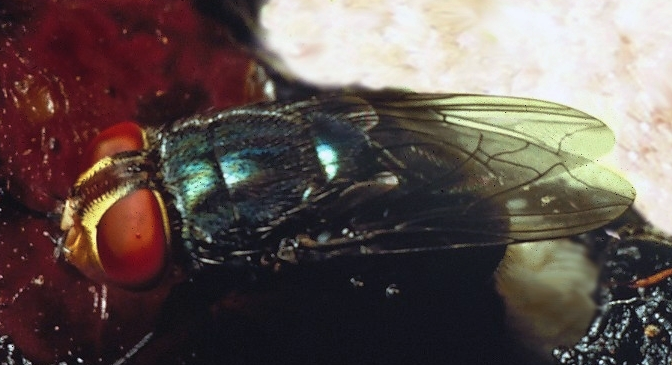
The New World screwworm fly may look like a regular housefly, but it actually lays eggs on people and animals inside tiny wounds, noses, ears, eyes and mouths.
Then, those eggs hatch into maggots that burrow in and eat living flesh.
New World screwworms are not contagious and do not spread directly from animals to people or from person to person, according to the USDA.
“Screwworm infestations begin when a female fly lays eggs on a wound or body opening,” according to the USDA. “Eggs hatch into larvae that burrow into the wound and feed on living tissue. After about seven days of feeding, larvae drop to the ground, burrow into the soil and pupate. The adult screwworm fly emerges from the soil after 7-54 days.”
Screwworms are nothing new, but scientists eradicated them in the 1960s by breeding male flies that they had sterilized using radiation.
Scientists then set them free, and they outcompeted native males to mate with female flies, who then laid eggs that couldn’t hatch.
How are officials responding?
The USDA said it has activated personnel on the ground in Texas to contain and eradicate the parasite, including a 20-kilometer infested zone and implementation of quarantines, movement controls and surveillance in the area. It’s also expediting targeted release of sterile flies, which are used to overwhelm fertile flies in the area to limit spread.
“If we all work together and follow the animal treatment protocols and movement restriction guidance, there is no reason to believe that this incursion will result in an establishment of the pest in our country,” USDA Secretary Brooke Rollins said during a briefing Wednesday night.
Rollins, on Wednesday, urged pet owners to keep a close watch for signs of discomfort, open wounds or larvae or eggs near body openings.
The parasite is also a threat to wildlife and pets. Vets in Texas, Arizona and New Mexico have been told to be on the lookout for new infections, CNN reports.
______
CNN contributed to this report.

