A new look at astronauts’ plans to return to the moon.NASA is hosting a news conference that started at 2 p.m. EST on Tuesday, May 26, to share plans for a lunar base and highlight progress toward a sustained presence on the lunar surface. Related video above: NASA releases new ‘Earthset’ and eclipse imagesAptly titled “Moon Base,” NASA calls it “a long-term lunar exploration and infrastructure initiative designed to enable sustained human presence and expanded scientific and commercial activity at the lunar South Pole.” The U.S. space administration says it “will send astronauts on increasingly difficult missions to explore more of the Moon for scientific discovery, economic benefits, and to build on our foundation for the first crewed missions to Mars.” The plans come in the wake of a change in strategy from the space agency.In March, NASA Administrator Jared Isaacman announced that the agency would shift its goal from sending a floating space station into lunar orbit and instead invest billions to build directly on the moon’s surface. NASA also announced it would launch a nuclear-propelled spacecraft to Mars by the end of 2028.”This time, the goal is not flags and footprints. This time, the goal is to stay,” Isaacman said. “We are providing a demand signal for frequent crewed missions well beyond Artemis V. We intend to work with no fewer than two launch providers, with the aim of crewed landings every six months and additional opportunities for new entrants in the years ahead.”During the recent Artemis II mission in April, astronauts on the mission’s Orion spacecraft broke the record for the farthest humans have traveled in space. The crew flew around the moon, capturing views of its dark side never before seen by human eyes, and returned safely.The follow-up mission — Artemis III — had been targeting a landing near the moon’s south pole by another pair of astronauts a year or two later. But with concern growing over the readiness of a lunar lander and moonwalking suits and long gaps between flights, Isaacman announced that the mission would instead focus on launching a lunar lander into orbit around Earth for practice in 2027.
A new look at astronauts’ plans to return to the moon.
NASA is hosting a news conference that started at 2 p.m. EST on Tuesday, May 26, to share plans for a lunar base and highlight progress toward a sustained presence on the lunar surface.
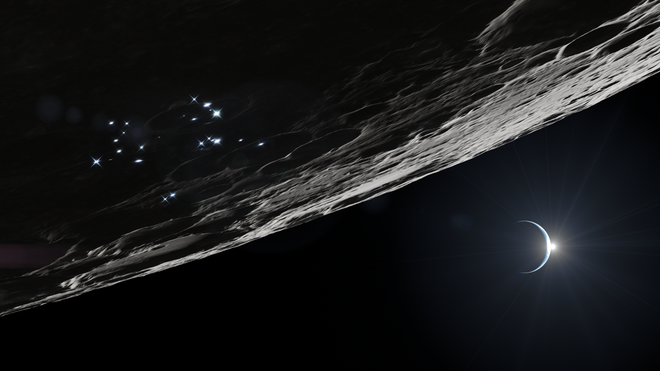
Related video above: NASA releases new ‘Earthset’ and eclipse images
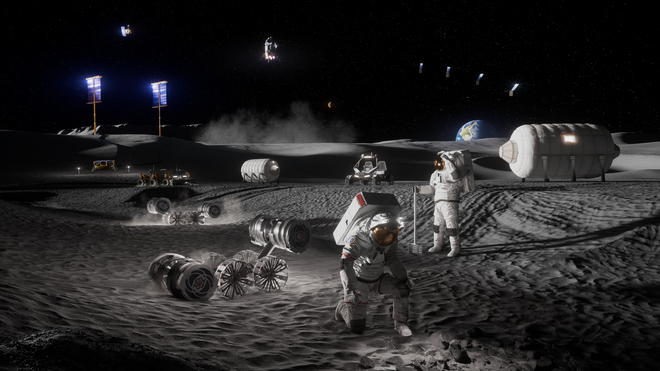
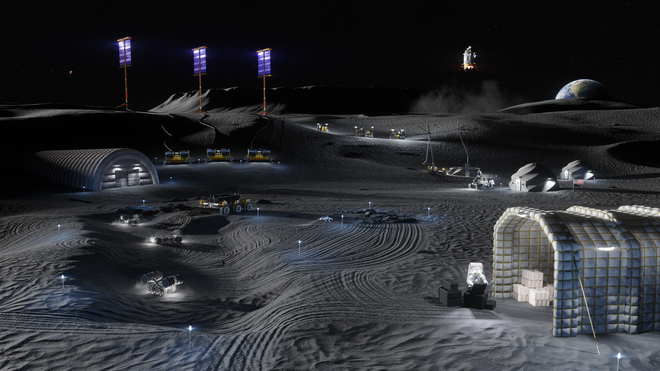
Aptly titled “Moon Base,” NASA calls it “a long-term lunar exploration and infrastructure initiative designed to enable sustained human presence and expanded scientific and commercial activity at the lunar South Pole.”
The U.S. space administration says it “will send astronauts on increasingly difficult missions to explore more of the Moon for scientific discovery, economic benefits, and to build on our foundation for the first crewed missions to Mars.”
The plans come in the wake of a change in strategy from the space agency.
In March, NASA Administrator Jared Isaacman announced that the agency would shift its goal from sending a floating space station into lunar orbit and instead invest billions to build directly on the moon’s surface. NASA also announced it would launch a nuclear-propelled spacecraft to Mars by the end of 2028.
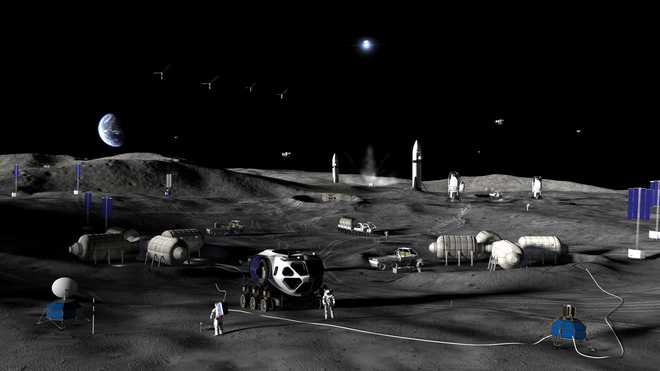
“This time, the goal is not flags and footprints. This time, the goal is to stay,” Isaacman said. “We are providing a demand signal for frequent crewed missions well beyond Artemis V. We intend to work with no fewer than two launch providers, with the aim of crewed landings every six months and additional opportunities for new entrants in the years ahead.”
During the recent Artemis II mission in April, astronauts on the mission’s Orion spacecraft broke the record for the farthest humans have traveled in space. The crew flew around the moon, capturing views of its dark side never before seen by human eyes, and returned safely.
The follow-up mission — Artemis III — had been targeting a landing near the moon’s south pole by another pair of astronauts a year or two later. But with concern growing over the readiness of a lunar lander and moonwalking suits and long gaps between flights, Isaacman announced that the mission would instead focus on launching a lunar lander into orbit around Earth for practice in 2027.