With Memorial Day near and beach weather ahead, shark experts are also gearing up for their busy season of research and public safety outreach.The Atlantic White Shark Conservancy and state shark researchers outlined their plans for the season Monday, including continued shark tracking, acoustic monitoring and public safety updates through the Sharktivity app, according to remarks from AWSC Senior Scientist Megan Winton and Massachusetts Division of Marine Fisheries Senior Marine Fisheries Biologist Greg Skomal.Researchers said Cape Cod, Massachusetts, remains one of the few white shark “hotspots” in the Northwest Atlantic and has become a critical area for studying the species because sharks return there predictably each summer and fall to feed on seals, according to Winton. “Cape Cod emerged as this seasonal aggregation site about 15 years ago,” Winton said. “White sharks now come here every year in the summer, in the fall, to feed on the locally abundant seal population.”The public can report sightings and stay informed on shark activity through the Atlantic White Shark Conservancy’s Sharktivity app.Sharks are already here The first white shark of the season was confirmed last week, after a seal washed ashore on Martha’s Vineyard with a bite wound on May 10, according to the New England Aquarium. “This is just the beginning of white shark season in New England, and it serves as a good reminder to be mindful of the presence of these sharks in inshore waters. Their numbers will continue to increase throughout the summer with peak activity occurring in the fall,” said John Chisholm, an adjunct scientist in the Aquarium’s Anderson Cabot Center for Ocean Life.In a statement last week, Chisholm emphasized that beachgoers should be “shark smart.” That includes avoiding areas where seals are present or schools of fish are visible, and staying close to shore, where emergency responders can reach you if needed.Tracking sharks in Massachusetts watersResearchers said their work this season will continue using satellite tags and underwater acoustic receivers that allow scientists to monitor shark movements along the East Coast and in Canadian waters.Skomal said Massachusetts waters now contain more than 100 acoustic receivers used to study multiple marine species, including white sharks. Tagged sharks transmit unique identification signals that are detected when they swim near the receivers. Winton said some of the real-time receivers are directly connected to the Sharktivity app, allowing shark detections to be shared immediately with researchers, lifeguards, town officials and the public. “Those are a really powerful outreach tool,” Winton said of the real-time monitoring stations. Researchers also said this year’s work will continue collaborations with scientists in Maine and Atlantic Canada as sharks travel throughout the Northwest Atlantic. Winton said researchers have documented an increase in shark detections in Canadian waters in recent years. Skomal said the broader research effort is helping scientists better understand shark behavior and migration patterns across the species’ historical range, including areas off Canada, the Gulf Coast and the Bahamas. “That’s really neat that having predictable access to this species allows us to learn about its movements, its biology, over its entire range using these various technologies,” Skomal said.Researchers said signs point to a recovering white shark population in the Northwest Atlantic after significant declines linked to fishing pressure decades ago, according to Winton. White sharks have been protected from retention in Atlantic waters since 1997, she said.
With Memorial Day near and beach weather ahead, shark experts are also gearing up for their busy season of research and public safety outreach.
The Atlantic White Shark Conservancy and state shark researchers outlined their plans for the season Monday, including continued shark tracking, acoustic monitoring and public safety updates through the Sharktivity app, according to remarks from AWSC Senior Scientist Megan Winton and Massachusetts Division of Marine Fisheries Senior Marine Fisheries Biologist Greg Skomal.
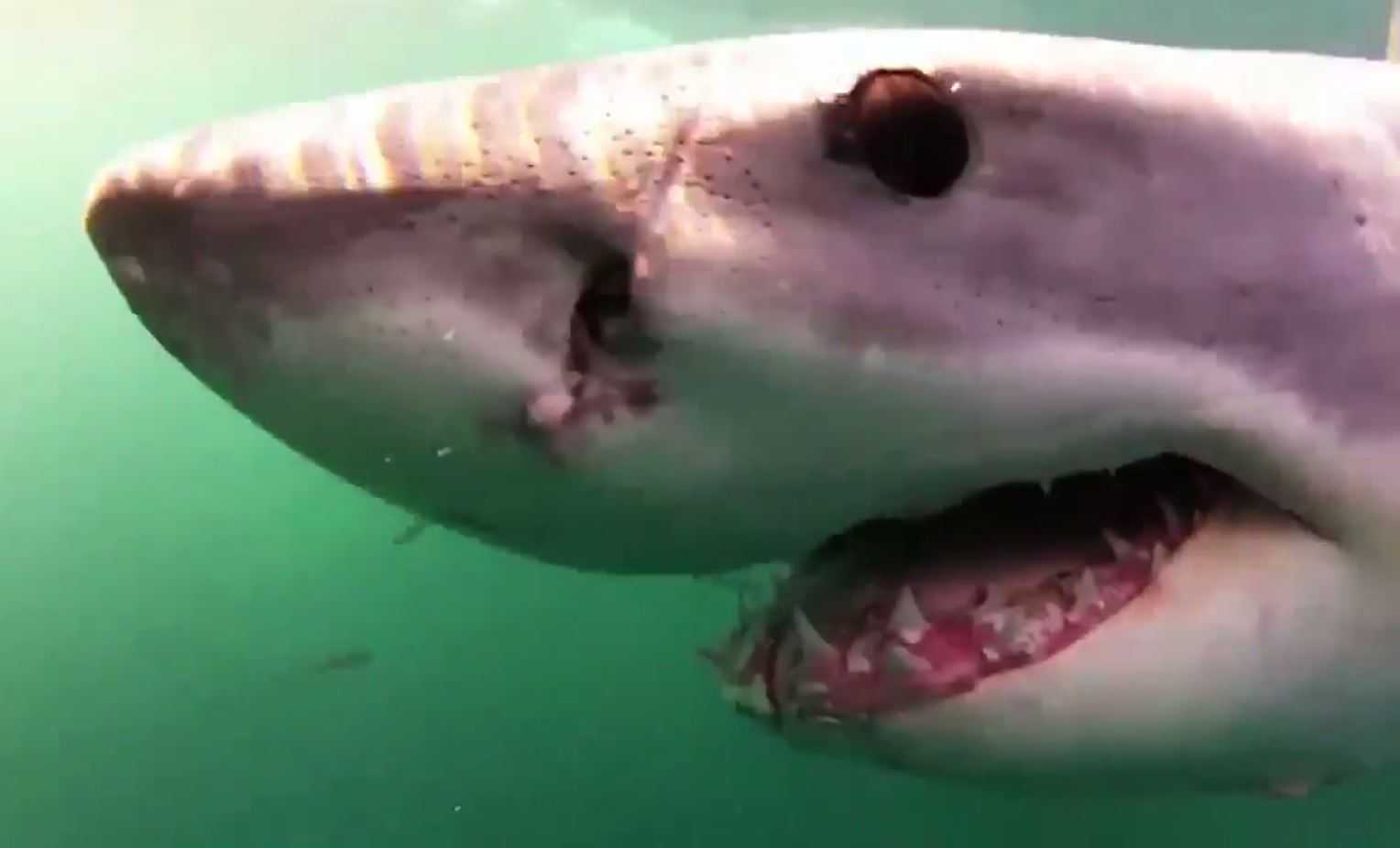
Researchers said Cape Cod, Massachusetts, remains one of the few white shark “hotspots” in the Northwest Atlantic and has become a critical area for studying the species because sharks return there predictably each summer and fall to feed on seals, according to Winton.
“Cape Cod emerged as this seasonal aggregation site about 15 years ago,” Winton said. “White sharks now come here every year in the summer, in the fall, to feed on the locally abundant seal population.”
The public can report sightings and stay informed on shark activity through the Atlantic White Shark Conservancy’s Sharktivity app.
Sharks are already here
The first white shark of the season was confirmed last week, after a seal washed ashore on Martha’s Vineyard with a bite wound on May 10, according to the New England Aquarium.
“This is just the beginning of white shark season in New England, and it serves as a good reminder to be mindful of the presence of these sharks in inshore waters. Their numbers will continue to increase throughout the summer with peak activity occurring in the fall,” said John Chisholm, an adjunct scientist in the Aquarium’s Anderson Cabot Center for Ocean Life.
In a statement last week, Chisholm emphasized that beachgoers should be “shark smart.” That includes avoiding areas where seals are present or schools of fish are visible, and staying close to shore, where emergency responders can reach you if needed.
Tracking sharks in Massachusetts waters
Researchers said their work this season will continue using satellite tags and underwater acoustic receivers that allow scientists to monitor shark movements along the East Coast and in Canadian waters.
Skomal said Massachusetts waters now contain more than 100 acoustic receivers used to study multiple marine species, including white sharks. Tagged sharks transmit unique identification signals that are detected when they swim near the receivers.
Winton said some of the real-time receivers are directly connected to the Sharktivity app, allowing shark detections to be shared immediately with researchers, lifeguards, town officials and the public.
“Those are a really powerful outreach tool,” Winton said of the real-time monitoring stations.
Researchers also said this year’s work will continue collaborations with scientists in Maine and Atlantic Canada as sharks travel throughout the Northwest Atlantic. Winton said researchers have documented an increase in shark detections in Canadian waters in recent years.
Skomal said the broader research effort is helping scientists better understand shark behavior and migration patterns across the species’ historical range, including areas off Canada, the Gulf Coast and the Bahamas.
“That’s really neat that having predictable access to this species allows us to learn about its movements, its biology, over its entire range using these various technologies,” Skomal said.
Researchers said signs point to a recovering white shark population in the Northwest Atlantic after significant declines linked to fishing pressure decades ago, according to Winton. White sharks have been protected from retention in Atlantic waters since 1997, she said.

