For as many Preakness races run over the years, Hearst sister station WBAL got a chance this year — for the very first time — to witness the transfer of the most valuable trophy in American sports.Here’s what it took to move the most famous trophy in American sports from Baltimore to Laurel Park.Video above: Preakness trophy got its start in LouisvilleThere were two rules: One, once the vase was first unboxed, we had to leave the room for inspection. Two, an obvious one, no touching the trophy.It wasn’t what we expected at Laurel Park, and yet it sure made sense.”Preakness is real when the trophy arrives,” Mike Rogers, executive vice president of 1/ST Racing, told WBAL.If you were transporting a $4 million trophy from the Baltimore Museum of Art, you’d rent an innocuous white van, too.”I think it’s more than a trophy. It’s a piece of art. The history to it is irreplaceable,” Rogers said. Carrying the Woodlawn Vase is a delicate undertaking with four men from 1/ST Racing who comprise “vase detail” — one man for every million it’s worth.The Woodlawn Vase, the thoroughbred of vases, is refined, pricey and pedigreed — and it wields celebrity status. Even Rogers, who has been around it for decades, is still in awe.”As this race has been run on many days of the year and goes back 100 years to different locations, the one thing that has been consistent is this trophy,” Rogers said.Tiffany and Co. created it in 1860 for a Louisville club known as the Woodlawn Racing Association. During the Civil War, it was buried in Kentucky to keep it from being melted into shot. It is 30 pounds of solid sterling silver, standing 3 feet tall, and is topped with the champion horse known as Lexington, whose offspring includes a horse called Preakness.The vase has been the official trophy of the Preakness Stakes since 1917.Every year, a replica of the vase is cradled by the winner between disbelief and elation.”It’s just, it’s incredible,” Rogers said.With 1/ST Racing passing the Preakness torch to the Maryland Jockey Club, Rogers said he thinks this may be his last time being so close to the priceless prize.”To be a part of it is an honor, for me, probably is one of the biggest honors of my career,” Rogers said.And so, as the Woodlawn Vase heads to the money room at Laurel Park — yes, that’s what they call it — the stewards of history proceed with caution, reverence and respect.”They take their job with enormous pride,” Rogers said. “It’s almost like their baby, and everyone holds this trophy in extremely high regard. That’s a testament to what it means to people.”
For as many Preakness races run over the years, Hearst sister station WBAL got a chance this year — for the very first time — to witness the transfer of the most valuable trophy in American sports.
Here’s what it took to move the most famous trophy in American sports from Baltimore to Laurel Park.
Video above: Preakness trophy got its start in Louisville
There were two rules: One, once the vase was first unboxed, we had to leave the room for inspection. Two, an obvious one, no touching the trophy.
It wasn’t what we expected at Laurel Park, and yet it sure made sense.
“Preakness is real when the trophy arrives,” Mike Rogers, executive vice president of 1/ST Racing, told WBAL.
If you were transporting a $4 million trophy from the Baltimore Museum of Art, you’d rent an innocuous white van, too.
“I think it’s more than a trophy. It’s a piece of art. The history to it is irreplaceable,” Rogers said.
Carrying the Woodlawn Vase is a delicate undertaking with four men from 1/ST Racing who comprise “vase detail” — one man for every million it’s worth.
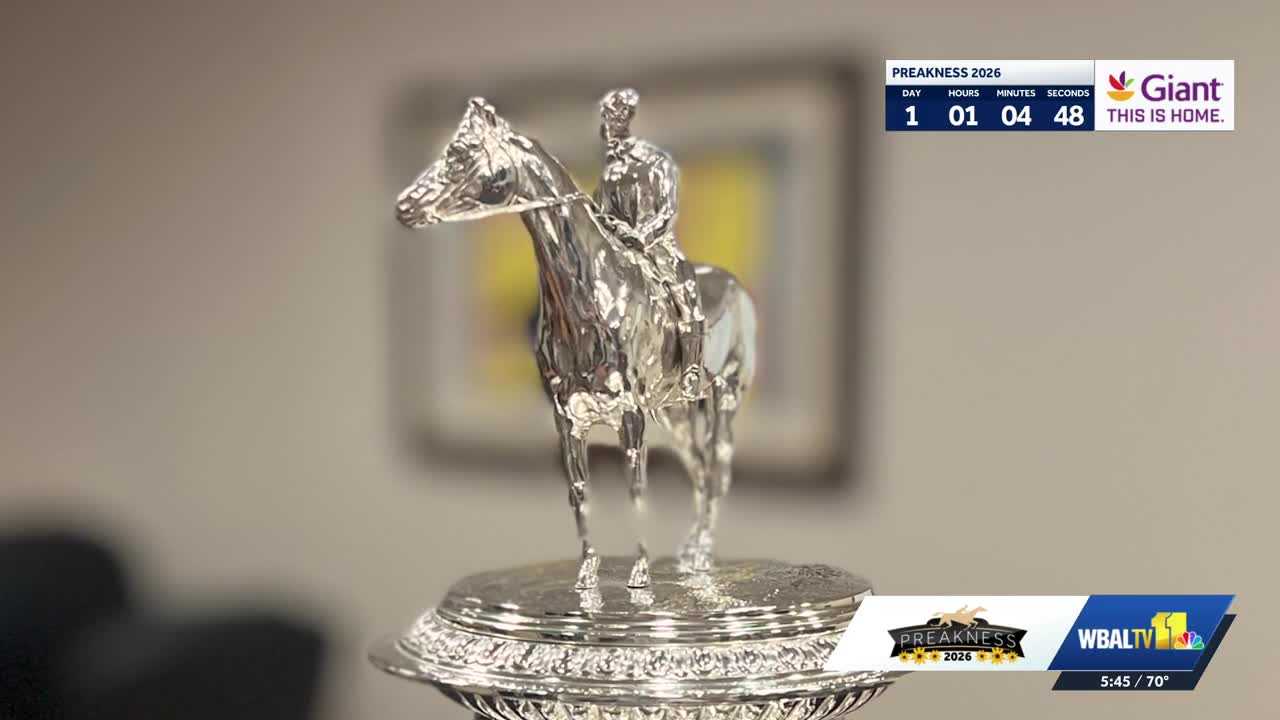
The Woodlawn Vase, the thoroughbred of vases, is refined, pricey and pedigreed — and it wields celebrity status. Even Rogers, who has been around it for decades, is still in awe.
“As this race has been run on many days of the year and goes back 100 years to different locations, the one thing that has been consistent is this trophy,” Rogers said.
Tiffany and Co. created it in 1860 for a Louisville club known as the Woodlawn Racing Association. During the Civil War, it was buried in Kentucky to keep it from being melted into shot. It is 30 pounds of solid sterling silver, standing 3 feet tall, and is topped with the champion horse known as Lexington, whose offspring includes a horse called Preakness.
The vase has been the official trophy of the Preakness Stakes since 1917.
Every year, a replica of the vase is cradled by the winner between disbelief and elation.
“It’s just, it’s incredible,” Rogers said.
With 1/ST Racing passing the Preakness torch to the Maryland Jockey Club, Rogers said he thinks this may be his last time being so close to the priceless prize.
“To be a part of it is an honor, for me, probably is one of the biggest honors of my career,” Rogers said.
And so, as the Woodlawn Vase heads to the money room at Laurel Park — yes, that’s what they call it — the stewards of history proceed with caution, reverence and respect.
“They take their job with enormous pride,” Rogers said. “It’s almost like their baby, and everyone holds this trophy in extremely high regard. That’s a testament to what it means to people.”

